Kate Harrold on the BBC’s Dracula and the life-draining effect of its modern twist…
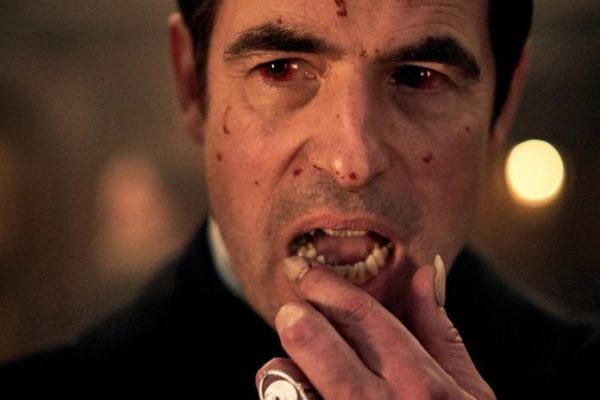
When it was first announced that Mark Gatiss and Steven Moffatt would be taking on the latest adaptation of Bram Stoker’s Dracula, expectations were set high. The duo had already demonstrated their affinity for literary adaptations with the hugely successful Sherlock, but what works for one doesn’t always work for another. Bram Stoker’s Dracula has been a continual success since its release all the way back in 1897. Having inspired both stage and screen adaptions, Stoker’s enigmatic Count clearly has the power to keep drawing us back in. Dracula considers timelessly relevant themes: sexuality, temptation, ideas of the other, morality, and fears over rapidly changing notions of modernity. These ideas raised by Stoker are just as relevant today – something Gatiss and Moffatt’s new adaptation was perfectly set to explore. Instead, the BBC’s Dracula highlighted an increasingly common issue in literary adaptations and one that drove a stake through the series’ third and final episode – the ineffective modern twist.
At the end of the second episode, Dracula (Claes Bang) finally makes his long-awaited arrival in Whitby. It’s here that Dracula begins its self-inflicted downfall. Gone is the 19th century setting as the Count is met on the beach by helicopters, cars, and armed mercenaries – cue shock. If executed well, such dramatic departures from the source text can prove to be exciting and welcomed changes, but Dracula’s modern twist lacks any rhyme or reason. Nowhere is this more evident than in the drastic changes made to the character Lucy Westenra. In Stoker’s novel, Lucy (best friend to Mina Harker) finds herself falling victim to an unknown illness – vampirism. In comparison to the passive and dutiful Mina, Lucy’s descent into vampirism allows Stoker to explore complex ideas of women’s liberation – both emotionally and sexually. The vampiric curse permits Lucy to exercise behaviour then forbidden of the Victorian woman.
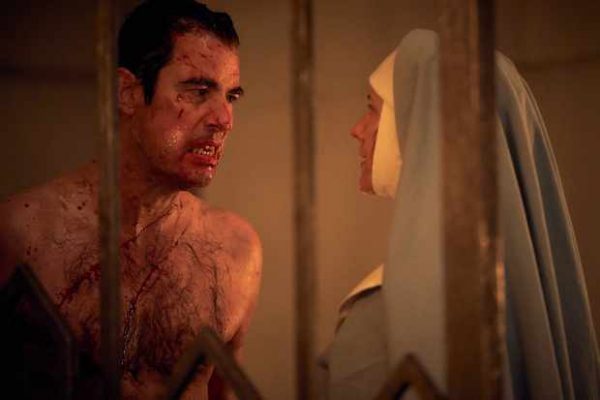
Cut to Dracula and any complexity in Lucy’s (Lydia West) storyline is erased. Now a 21st century party girl, Lucy’s only desire is for eternal beauty. How is it possible that this new adaptation is more archaic than the 1897 novel? The vampiric curse which once liberated Lucy now destroys any agency in the character. Her desire for eternal beauty is a dumbing down of the source material – and quite frankly, a trope we’d all hoped we’d seen the end of. The separation of Mina and Lucy in two different time periods defeats the purpose of having the two characters form such an anthesis to each other in regards to female conventions. Gatiss and Moffatt cast both characters aside in favour of being ‘edgy’ with their – completely unjustified – modern day twist.
Unfortunately, this is just one life-draining effect of Dracula’s time jump. We also had to sit through needless scenes of Lucy’s boyfriend drama, Dracula’s quips about the internet, and then there’s the mysterious – and ridiculously unnecessary – lab storyline. Stoker’s Dracula considers fears of rapid modernity and change through the character of Van Helsing whose entire life revolves around his fear and desire to understand the unknown. Dracula was operating much the same until came the need to introduce the mysterious lab which aimed to destroy vampires? … Or understand them? … Or use them as mercenaries? It really was that vague.
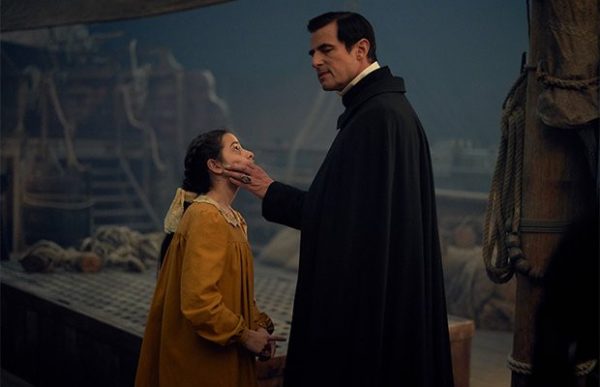
Up until the time jump, Dracula was a great success and rightly deserved its 5 star reviews. Gatiss and Moffatt’s interpretation expertly blended comedy with horror; Claes Bang’s Count was every bit as alluring as he was creepy; Dolly Wells played a fantastic, female Van Helsing. The series excelled in bringing to life Stoker’s ideas – if only all of that hadn’t been thrown away. There’s a reason Stoker’s novel and the story of Dracula continues to be so popular. Like so many other literary classics, Dracula‘s themes speak to audiences today. Dracula’s Agatha Van Helsing proves originality can still be created in a faithful adaptation, but the changes you make have to mean something. In a bid to be contemporary, Dracula (2020) rid its final episode of the very ideas which make it contemporary.
The desire to be contemporary is becoming a pervasive issue in literary adaptations – often mistaken with edginess. The BBC’s 2019 adaptation of A Christmas Carol suffers from a similar fate. Steven Knight’s addition of swearing and public urination to a well-known story added nothing. This was an attempt to be ‘edgy.’ When the show had the opportunity to really push that idea with the Ghost of Christmas Future – notorious for being the scariest of the spirits – it was a complete anti-climax. A Christmas Carol‘s lack of commitment to its modern twists undermined its version of the story. Following the triumphant success of Greta Gerwig’s Little Women, perhaps more writers should seek to identify what it is that resonates in a story. Let Dracula be the perfect example of why the modern twist should be put to rest.
Kate Harrold