Casey Chong with ten chilling religious horror movies you may have missed…
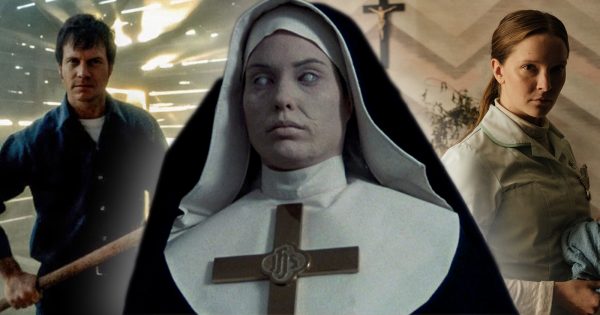
The horror genre encompasses a wide range of themes that allow filmmakers to explore specific subjects or mix and match them as they see fit. One of the recurring themes is the religious horror, which typically covers everything from faith to guilt, doubt and trauma that can be weaponized as a form of traditional scares, psychological or supernatural.
Well-known religious horrors, from Rosemary’s Baby to The Exorcist, The Omen, and The Conjuring, have dominated the horror cinema while influencing countless others, for better or worse. However, some of the religious horror movies were unfortunately forgotten or didn’t receive enough attention during their initial release. With that in mind, here are ten lesser-seen religious horror movies well worth adding to your watchlist…
God Told Me To (1976)
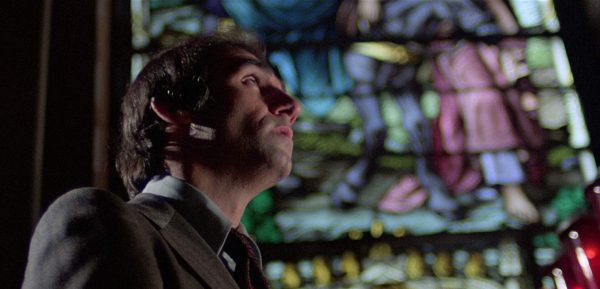
Writer-director Larry Cohen hit the ground running with a disturbing opening scene: a gunman randomly kills the unsuspecting pedestrians on the busy streets from the water tower above with a rifle. And what makes it even more uneasy is his bizarre motive, claiming that “God told me to”.
The movie starts off as a police procedural, which focuses on a Catholic NYPD detective (Tony Lo Bianco’s Lt. Peter Nicholas) as he investigates a series of random yet strange murders, all of which end with the killers confessing the same eerie remarks. Cohen’s chameleon-like direction subsequently slips into different genres, exploring eclectic themes from religious fanaticism to alien abduction in a series of unique tonal shifts that may feel like he’s throwing everything in a blender just for the sake of it. His unconventional, genre-defying approach is what elevates God Told Me To beyond your usual religious horror tropes.
Saint Maud (2019)
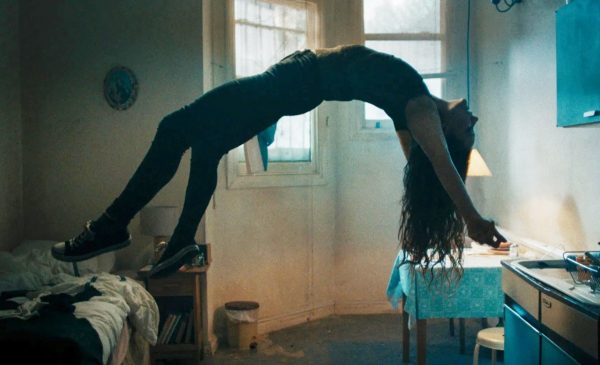
Rose Glass’ directorial debut follows the story of a devout Katie (Morfydd Clark), who changes her name to Maud upon taking up a job as a private nurse taking palliative care of a dying patient, Amanda (Jennifer Ehle), at home. She soon believes that God has chosen her to save Amanda’s soul, whose fixation becomes hazy between rational and blind faith. Glass approaches Saint Maud in a deliberate slow-burn as she explores the character study from Maud’s ambiguous perspective, suggesting that her deep-seated faith masquerades as a coping mechanism to manage her underlying guilt and social isolation.
The ominous dread is mostly stemmed from Clark’s committed performance along with Glass’ minimalist, less-is-more direction in building uneasy atmosphere through the subtle use of sound design, static camerawork, lingering close-ups, and religiously suggestive imagery. She also favors all things psychological over the conventional jump scares and in-your-face terror, only to save the latter for the visceral finale.
The Blackcoat’s Daughter (2015)
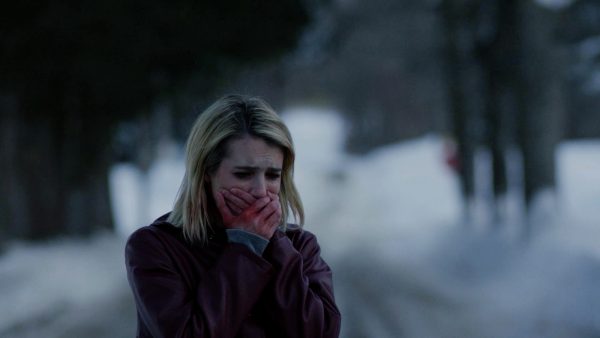
A promising but sadly underseen debut at the time of its release, Osgood Perkins already shows a firm grip as both writer and director in making a slow-burn horror that creeps up on you throughout its 93-minute runtime. He uses the power of visual silence and stillness to his advantage without relying on the traditional jump scares, which may come across as a turn-off for viewers looking for a familiar, in-your-face religious horror.
But his atmosphere-heavy direction works well in his favor while keeping the story intriguing, thanks to his non-linear structure that covers three timelines surrounding Kat (Kiernan Shipka), Rose (Lucy Boynton) and Joan (Emma Roberts). Kat and Rose are the only students left behind at the all-girl Catholic boarding school, leaving them all by themselves as the others have already gone for the long winter break. Their isolation allows Perkins to explore the underlying cause and effect of existential dread stemming from loneliness, abandonment and vulnerability both mentally and emotionally. Then, there’s a drifter named Joan, where her character serves as a deliberate introduction that gradually subverts the expectation as the story progresses.
Frailty (2001)
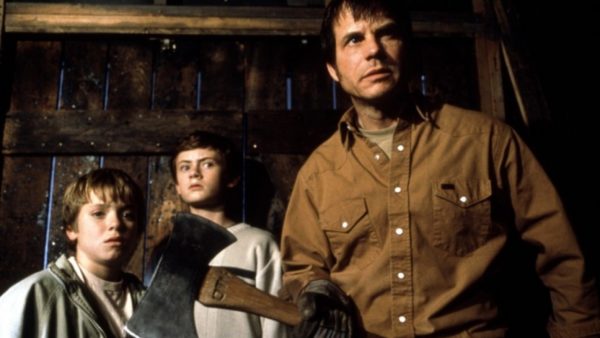
A great character actor, Bill Paxton proved he could be just as versatile as a director in his feature-length debut behind the camera in Frailty. Told through the eyes of Fenton Meiks (Matthew McConaughey), the story goes back and forth between the present (Fenton confesses to the FBI agent, played by Powers Boothe, that he knows who the “God’s Hand” serial killer is) and the past. The latter follows an elaborate flashback on how everything begins when he and his younger brother, Adam, were just kids, detailing his mechanic father (Bill Paxton) claimed he’s been visited by an angel of God that their family had been chosen to destroy demons disguising themselves as humans. His father is granted visions, allowing him to see the “demons” upon touching his bare hand on his kidnapped victims before he would hack them with an axe.
Paxton embraces the power of ambiguity that blurred the lines between reality and make-believe, making us wonder whether he is telling the truth about being chosen to fulfill God’s will or suffers from a severe delusion. The movie doesn’t provide easy answers, and that’s what makes Frailty deeply unsettling. Paxton doesn’t rely on jump scares to make his point, preferring the atmospheric dread with a sense of grounded realism while delving into the provocative theme of questionable faith vs. fanaticism.
The Sentinel (1977)
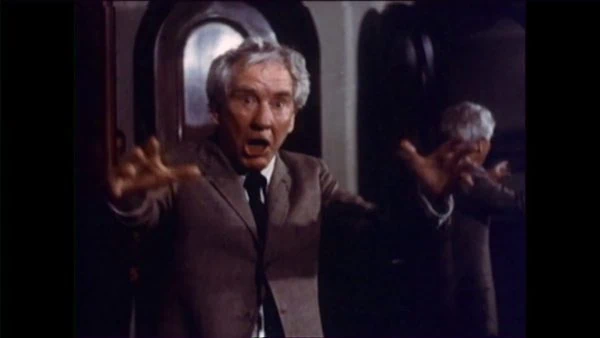
Michael Winner may have been famously known for directing the first three Death Wish movies starring Charles Bronson. But he also proves to be a versatile filmmaker in exploring different genres, including horror, seen in The Sentinel. Released at the height of the religious-horror boom, the story about a young woman – in this case, a fashion model named Alison Parker (Cristina Raines) – finds herself in a series of strange occurrences after recently moving into an apartment-style brownstone filled with odd neighbors, one of which played by Burgess Meredith as the eccentric yet effusive Charles Chazen, sounds like it’s ripping off from Rosemary’s Baby.
A few similarities aside, Winner knows well how to structure his movie in a deliberate slow-burn dread, mixing psychological unease and surrealistic moments with visceral shocks. The latter is especially true with the movie’s increasingly pessimistic ending that doesn’t shy away from disturbing imagery, notably Winner’s controversial insistence on using people with actual physical deformities to portray demons.
The Devil’s Doorway (2018)

By the 2010s, the influx of found-footage horror movies that flooded in the market was bound to end up with a few of them going under the radar. One of them is The Devil’s Doorway, which marked the directorial debut of Aislinn Clarke. Clocking in at just 76 minutes, this 1960s-set horror follows the two priests – Father John (Ciaran Flynn) and Father Thomas (Lalor Roddy) – who are assigned to investigate a reported miracle at a Magdalene Laundry in Ireland.
Clarke effectively blends the true historical basis of the Catholic-run Magdalene Laundries responsible for confining the “fallen women” for forced labor with a mix of religious horror using the found-footage format, giving the viewers an unsettling you-are-there vibe, like you are tagging along with the priests when it happens. The scares may have been familiar, but credit still goes to the director for exuding atmospheric dread through the use of dark and dimly lit spaces within the asylum. And yet, Clarke’s artistic choice of shooting her movie on 16mm film and its classic boxy 1:37:1 aspect ratio evokes the grainy, old-school look with a genuine sense of claustrophobia.
Apostle (2018)
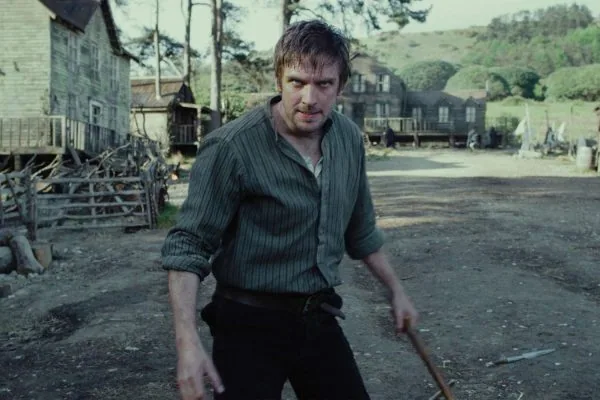
Gareth Evans made his name directing no-holds-barred action genre, notably the two Raid movies that put him on the international map. His follow-up after The Raid 2 may seem like a radical departure, but Apostle still bears his signature visceral mayhem in terms of executing the violence that reflects the obsession and brutality of a religious cult. The remote island setting, where the cult lives and swears by the disturbing power of blood sacrifice to keep their place fertile, adds both claustrophobic and menacing dread to the movie.
And so does his deliberate storytelling favor on build-up tension from the setting’s rustic but oppressive atmosphere before he finally goes for the jugular with enough graphic imagery and blood-soaked set pieces. Evans, who also wrote the screenplay, casts Dan Stevens as the protagonist who arrives on the island to rescue his sister. His committed performance here is one of the key successful factors in this movie.
The Seventh Sign (1988)
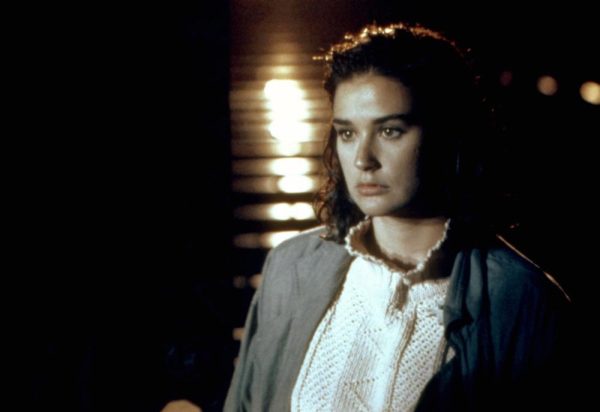
In the 1980s, a young Demi Moore was typically seen in the comedy genre, but The Seventh Sign marked an exception at the time, proving she could transition into a serious and mature role. A pregnant woman, to be exact, who is looking forward to her childbirth before the arrival of a man named David Bannon (a sinister-looking Jürgen Prochnow) slowly changes everything. The latter apparently has travelled the world, who possesses the ancient envelopes with seven seals. Each seal that he chooses to break open would trigger a biblical catastrophe, namely his appearance in Haiti causes the sea to be scattered with monumental death of aquatic life.
The fact that he rents a room at Abby and her lawyer husband, Russell’s (Michael Biehn) place has to do with her unborn child. As the protagonist of this movie, Moore’s Abby Quinn particularly stands out for her grounded performance, whose subtle emotional and dramatic weight helps to carry the movie. Despite its religious-horror theme, director Carl Schultz chooses to do away with familiar jump scares in favor of apocalyptic stakes that is more dread-inducing and psychological in execution.
The First Power (1990)
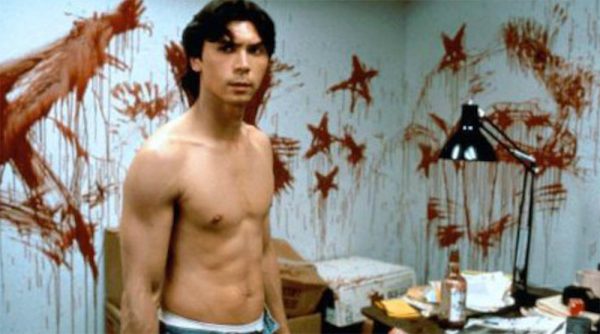
Writer-director Robert Resnikoff doesn’t waste time establishing his ominous premise right from the get-go in The First Power: A team of Los Angeles cops, led by Detective Russell Logan (Lou Diamond Phillips), has been tracking the notorious Pentagram Killer (a formidable Jeff Kober). The latter’s M.O. includes carving the shape of a pentagram in his victims’ flesh before committing murder. Interestingly, Resnikoff mixes things up by blending the religious horror underpinning with elements of police procedural, and even the 1990s action-movie tropes.
The genre-bending twist makes The First Power a unique entry, while it equally benefits from Lou Diamond Phillips’ engaging performance as the relentless cop, who later finds himself dealing with a greater force of evil than he could possibly imagine. This is especially true after the post-execution of the captured Pentagram Killer is resurrected as an unstoppable figure. The movie also features some thrilling stunt work from a jumping-off-the-building scene to the spectacular car flip.
The Vigil (2019)
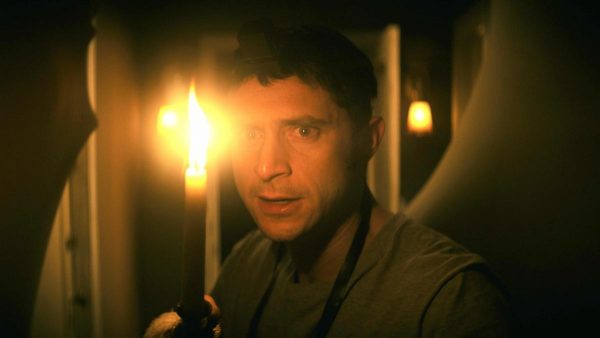
Years before he gave us a horrid remake of Firestarter, writer-director Keith Thomas did a better job in his promising feature-length debut in this Blumhouse-produced The Vigil. A refreshing change of pace from the usual Catholic and Christian mythology, the movie explores the Jewish tradition and folklore, particularly the demonic entity known as mazzik. The story, which takes place in Brooklyn’s Orthodox Jewish community, follows a struggling young man (Dave Davis’ Yakov) who is offered to keep vigil as a shomer (watchman) over a recently deceased Holocaust survivor, Mr. Litvak (Ronald Cohen).
Despite being granted only a limited budget, Thomas manages to conjure a few creepy scares by making good use of the dark interior, ominous sound effects and well-placed camerawork. He also favors a lot of long takes to build the slow-burn dread, while Dave Davis excels in his lead performance as Yakov, whose internal struggle with his own faith and personal trauma adds both psychological and emotional tension to the story.
What are your favourite religious horror movies? Let us know on our social channels @FlickeringMyth, and to check out our very own slice of religious horror, be sure to watch The Baby in the Basket, available to stream now in the US and UK…
Casey Chong