Tom Jolliffe looks back at Hirokazu Kore-eda’s debut narrative feature Maborosi from 1995 – a masterclass in the art of subtle, meditative storytelling…
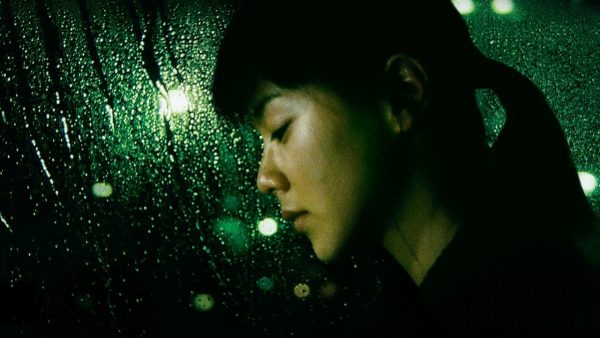
Hirokazu Koreeda struck a huge chord worldwide in recent years with the acclaimed Shoplifters. A melancholic, gritty and charming depiction of family and class. It travelled well outside of his native Japan and for many, would mark their discovery of Koreeda’s oeuvre. A former documentary film-maker, he made his narrative fiction debut with another film that gained no small amount of buzz and attention (though wasn’t as widely received as Shoplifters in 2018) in the form of Maborosi. The title itself, translates as phantasmic light (or more succinctly, trick of the light). The relevance of this is held as small nugget within the film, but the central focus of Koreeda’s strikingly stark and achingly beautiful debut, is grief.
We follow Yukimo. In the opening, she’s in the midst of a recurring nightmare, a moment from her past (as a young girl) when her ailing grandmother absconds and attempts to go home (away from the City, where she’s cared for by her offspring). It’s the starting point for a character with an innate connection with guilt. She has a distinct inability it seems, to coldly let go the unshakable weight of her part in tragic benchmarks in her life. In the midst of these opening recollections we also have a window into her longstanding connection with Ikuo, a local boy forever attached to his bicycle. In the present time, they’re now an adult couple and a baby is on the way. Already Koreeda has, with the most deft subtlety crafted an interesting look at repression and guilt. Here too, in the next phase of the film, we essentially see the decline of Ikuo’s will. It’s achingly portrayed. It’s there, not strikingly obvious nor played with any danger of hitting melodrama. Ikuo is withdrawn, distant. He’s not always present. Yukimo doesn’t quite see it, even when she acknowledges his quietness. They have some touching closeness, but always offset by this growing distance as Ikuo’s mind increasingly wanders.
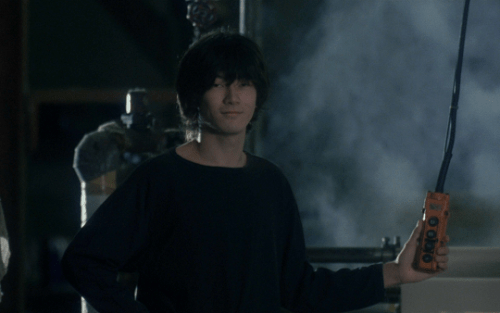
To the audience there’s perhaps no surprise, given our objectivity, that Ikuo ends up dead after a tragic accident along a train line. There’s never a confirmation it was suicide, but a strong suggestion (danced around) that he may have taken his own life. The restraint and deftness with which Koreeda portrays Ikuo’s increasing distance and fatalism (he bemoans his age, and the prospects of becoming lad some of the sad old co-workers he meets). The fact is too, suicide among young men is all too common in Japan, and it’s certainly not an idea without truth. Koreeda’s documentary background demands honesty. It demands realism and it’s something he brings fully into his work as a narrative film-maker. Morobosi, plays things with real controlled distance and so much emphasis on stillness and quiet.
On a stylistic level, whilst Koreeda undoubtedly keeps things deceptively simple, the film has a striking beauty in its framing and lighting. The majority of the film is still shots, with the occasional steadicam or track placed in at specific moments when we need to maintain focus on a character on the move (usually Yukimo). There’s nothing particularly elaborate here, but the film (not least because of some of the locations) is beautifully shot. So we’re in a setting captured very naturalistically but with a definite filmic look over looking fly on the wall. This adds to the feeling of authenticity we have about the characters and situations, aided further by the actors approaching their roles with perfect understatement. Makiko Esumi (Yukimo) says very little through much of the film, particularly after Ikuo has died. She retreats into a hermit like existence, eventually brought out by the widower Tamio. They soon become an item and join together their respective single parent units to become a small family when they relocate back to Tamio’s rural childhood home. Yukimo is still harbouring her grief and guilt, over Ikuo.
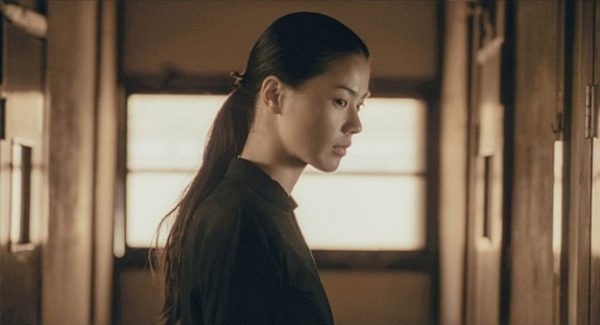
Her portrayal of a character being carefully pulled back to potential happiness, but still dragged into despair is exquisite. We begin to see a mirroring of Ikuo’s withdrawn nature prior, as she becomes increasingly distant with Tamio. It’s a slightly different grip of depression though, driven predominantly by grief and guilt over hopelessness (though there is that element that exists within her, in relation to feeling like she cannot fathom Ikuo’s reasoning). As in life, it can be impossible to understand an individuals mind-state fully, without the ability to tap directly into their feelings. Of course the ultimate paradox comes in that truth, that even those individual sufferers often don’t understand their own feelings. Recurring themes of death run through the film, from its opening recurring dream with Yukimo’s last encounter with her grandmother, to witnessing a local funeral in a moment of solitude. Mortality is inescapable. Reasoning is often unobtainable. There’s a sense of some epiphany for Yukimo by the end. Not that she has the answer about why Ikuo died, but in metaphor (something relating to the title) there’s this grey area where an answer may lurk, whether it makes sense of not.
Koreeda’s beautifully simple, intimate style certainly has shades of Ozu. It’s a starker more modern Japan he’s depicting with perhaps darker issues than Ozu might have touched upon in his heydey. Additionally the approach to the acting is a lot more stripped back to be as natural as possible, over broader acting. Some differences aside though, it has that emotional honesty that Ozu brought to his masterworks like Tokyo Story. The film is currently on the BFI player for British fans, and undoubtedly lurking somewhere for everyone else. It may be one many haven’t yet come across but its a beautiful piece of work. For the themes portrayed there’s rarely been anything quite this artistically subtle. Wonderful performances, nuanced storytelling and an exquisite soundtrack combine for a modern Japanese masterpiece. Even if it sounds grim, it never hammers its point into you or goes for big hitting moments. It goes for honesty.
Tom Jolliffe is an award winning screenwriter and passionate cinephile. He has a number of films out on DVD/VOD around the world and several releases due out in 2021, including, Renegades (Lee Majors, Danny Trejo, Michael Pare, Tiny Lister, Ian Ogilvy and Billy Murray), Crackdown, When Darkness Falls and War of The Worlds: The Attack (Vincent Regan). Find more info at the best personal site you’ll ever see here.
Originally published March 12, 2021. Updated November 15, 2022.