In the high-stakes world of Epic Pictures’ Lost Horizon, explosive action and emotional depth collide. The official synopsis for the film reads: A former soldier, now working for hire, fights to rescue the innocent in a land torn by war. Facing ruthless enemies and betrayal, he struggles for survival, justice, and redemption.
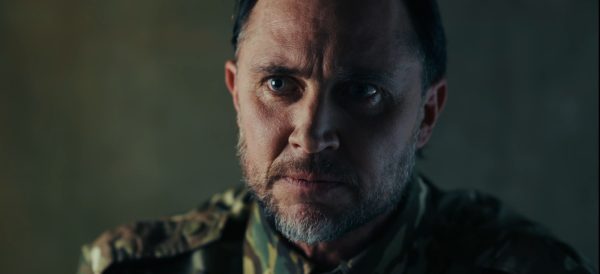
Lost Horizon was directed by Patrick Garcia (Hell Trip, Last Sacrament) and stars Tom Fairfoot (The Crown), Aimee Botes (Trailer Made), Kayla Osburn (Killsite), Lebohang Mzwimbi, Ryan Massie, Farai Chigudu (When Africa Meets You), Alonso Grandio (Diepe Waters), and Joseph Clarke with Saturn Media serving as the film’s production company. Also starring in the film is Llewellyn Cordier, who steps into the role of Major Thompson — a character whose impact is felt not through stunt-heavy spectacle, but through unwavering authority and quiet intensity. In the below interview, Cordier talks about everything from the unexpected path that led him to the role, to why sharing the screen with Tom Fairfoot and Alonso Grandio transformed the experience into a personal milestone.
Learn more about where you can watch Lost Horizon here…

What first drew you to the role in Lost Horizon? Was there something about the character that felt immediately compelling or challenging?
What first drew me to Lost Horizon was actually another character I initially auditioned for. I didn’t make the cut for that role, but when they offered me Major Thompson, I was still genuinely excited to be part of the film. Even though he’s more of a cameo within the bigger picture, there was something immediately compelling about him.
He’s strong, stern, direct, and carries a real sense of presence every time he steps onto the screen. I loved that about him. He’s the kind of character who doesn’t need many scenes to make an impact — he arrives, he holds the space, and he leaves a mark. That energy really appealed to me and made the role feel worthwhile and memorable.
How did director Patrick Garcia pitch the character to you, and how did your understanding of the role evolve once you got into rehearsals and early script work?
Patrick Garcia explained that Major Thompson would be a strong fit for me because of my on-screen presence, my energy, and the type of characters audiences have come to associate me with. He also felt that my extensive IMDb credit list — which is by far the largest of anyone on set — brought a certain level of weight and recognisability to the production. Having a name that audiences already know and respond to can be a real draw card for a film like Lost Horizon, and that was part of why the role was offered to me.
Because Major Thompson is more of a cameo appearance, the process wasn’t rehearsal-heavy. It was very much: arrive prepared, step into the character with confidence, deliver the moments with authority, and help move the story forward in a meaningful way. The goal was to make the character feel impactful even in limited screen time, and that became my focus from the start.
Lost Horizon blends intense action with strong emotional stakes. How did you approach balancing physical performance with the character’s internal journey?
To be honest, my character wasn’t heavily involved in the action side of Lost Horizon. His biggest “physical” movements were probably sitting down in his command chair and then standing up again — so from a stunt or action standpoint, it wasn’t physically demanding at all.
But for me, the real highlight was getting to share scenes with actors I’ve genuinely admired for a long time. Working opposite Tom Fairfoot was a personal milestone — I’ve wanted to collaborate with him for years. And being part of the same world as Alonso, who delivers such a powerful and grounded performance as the main protagonist, was a major draw.
So while the role didn’t require much in terms of action choreography, the experience of performing alongside those talents is what made it meaningful for me.
What kind of physical training or preparation did you undergo for the role — and did that training help you unlock aspects of the character’s mindset?
Once again, my role wasn’t physically demanding in terms of action or stunt work, but I did spend time preparing myself physically because I initially auditioned for the lead. I leaned out, improved my flexibility, and focused on sharpening my overall physical presence.
Even though I didn’t end up playing the lead, that physical preparation naturally carried over into my portrayal of Major Thompson. He’s a statuesque, grounded character — someone who stands tall, commands respect, and looks like he’s lived the discipline and structure of military life.
So while the role didn’t require intense physical training, the conditioning I had already done helped me embody that authoritative, Army-style presence that Major Thompson needed.
Were there any action sequences that pushed you out of your comfort zone or required you to learn a new skill?
There were actually no action sequences for my character at all, so nothing in this role pushed me out of my comfort zone physically or required me to learn a new skill. Major Thompson’s contribution to the story was far more strategic and authoritative than action-driven, so my focus was on delivering presence, clarity, and strength rather than physicality.
Without giving spoilers away, is there a particular scene that stands out as a turning point for your character?
It’s not a turning point in the traditional narrative sense, because Major Thompson isn’t positioned that way within the story. However, I do feel the character has a lot of potential for expansion in a future sequel, should the opportunity arise.
For me personally, the standout moments were every scene opposite Tom Fairfoot. I’ve admired his work for a long time, and finally sharing the screen with him was both an honour and a privilege. There’s a calm intensity to the way he works that elevates everyone around him, and I really valued that experience.
I also can’t overstate how much I enjoy working with Patrick Garcia. Whether the role is big or small, he has a way of pushing creative boundaries and encouraging you to find new angles within a character. His guidance on Major Thompson opened up a different approach for me — one that became an unexpected but meaningful shift in how I inhabit certain roles.
What conversations did you and Patrick Garcia have about the character’s motivations, flaws, and emotional arc?
The conversations Patrick Garcia and I had were centered around presence — how Major Thompson carries himself, how he enters and exits a room, what he sounds like, and the kind of authority he naturally commands. Patrick is someone I’ll sing praises for at any opportunity, because he always brings out the best in you as a performer.
Together, we really focused on the character’s physical and emotional weight. Even though Major Thompson doesn’t have an extensive arc in this film, we wanted every appearance to land with gravitas. You know when he’s in a scene — not because he says much, but because you can feel him. That sense of presence and power became the defining element of the character.
How did you build chemistry with the rest of the cast, especially during high-intensity or physically demanding sequences?
I know it sounds like I’m repeating myself, but once again, there were no physically demanding or high-intensity action sequences for my character. However, in terms of connection and on-screen chemistry, working with Tom Fairfoot and Alonso Grandio was absolutely pivotal for me.
I’ve wanted to collaborate with both of them for a long time. We naturally gravitated toward one another, and even though I kept mostly to myself on this project, my conversations with Tom and my time spent engaging with Alonzo were incredibly meaningful.
I’ve always had huge respect for Tom’s work, and finally getting the chance to perform opposite him was a genuine career highlight. Meeting Alonso, and even developing a friendship with him beyond the project, was equally significant. Their presence, professionalism, and talent made building chemistry effortless.
Did you draw inspiration from any other film performances — action or otherwise — to inform your approach?
When I was offered the role of Major Thompson, I drew inspiration from a couple of key performances by Tom Cruise — particularly his work in Collateral and Reacher. There’s a very stoic, controlled presence he brings to both roles, and that energy felt like the right direction for Major Thompson.
I also had the additional challenge of playing someone older than I actually am, as the character needed to be senior to the lead — who, in real life, is older than me. So I spent time sitting with the character, exploring how an older, more experienced man would move, react, and carry himself.
It wasn’t about slowing him down, but about making him more deliberate and precise. Major Thompson isn’t a fresh recruit — he’s an old dog who’s seen everything. Nothing surprises him, nothing rattles him, and nothing catches him off guard. That level of seasoned confidence became the foundation of how I portrayed him.
What surprised you most about making an action film, whether on set or in the final cut?
What always surprises me most about making an action film is seeing how everything comes together in the final cut. On set, you’re working in small, fragmented pieces — short takes, quick resets, in and out of scenes — and you rarely get a sense of the full scale in the moment.
Even though I wasn’t part of the action sequences themselves, I was close enough to some of them to hear about what was being shot or to witness pieces of the process. Then, when you finally watch the film, it’s incredible to see how all those individual moments are stitched together into something seamless, dynamic, and visually powerful.
That transformation from raw footage to a polished action sequence is always one of the most fascinating parts of filmmaking for me.
What do you hope audiences connect with most in your performance once they see Lost Horizon?
What I hope audiences connect with most is the impact Major Thompson leaves, even within his limited screen time. As I’ve mentioned, it really is a cameo performance, but one that’s designed to land with weight. He may not be on screen for long, but his presence is felt throughout the story, and his memory lingers long after his scenes are over.
My aim was to bring a grounded, honest, and authentic portrayal to the character — someone who feels real, lived-in, and essential to the world of the film, no matter how brief his appearance. If the audience walks away remembering him, feeling his presence, and understanding the truth he brings to the story, then I’ve achieved what I set out to do.
Lost Horizon is available to stream in the US from December 2nd 2025.