Robert Kojder chats with Crime 101 director Bart Layton…
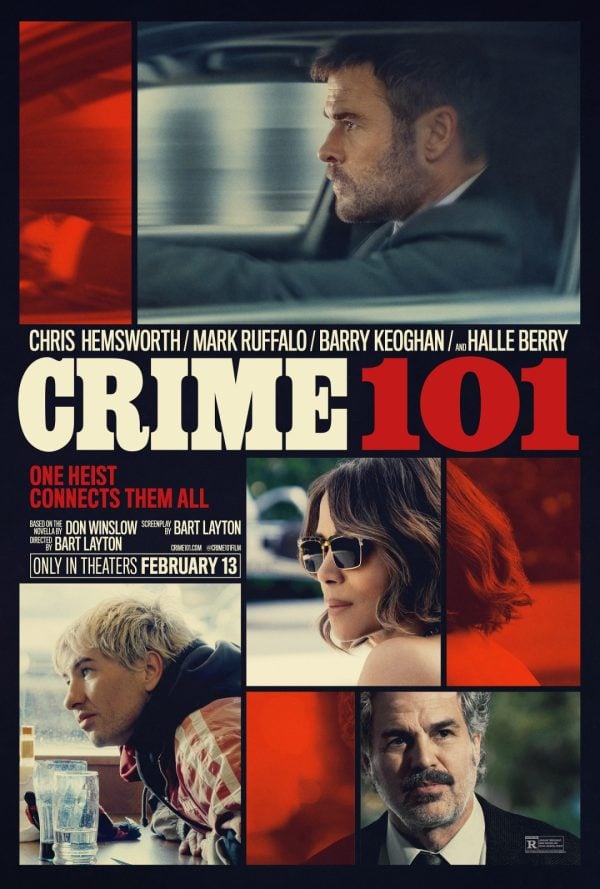
Primarily known for documentaries or blending such footage into a narrative feature (2018’s exceptional American Animals), Crime 101 marks director Bart Layton’s first film without any doc elements. Technically, it is based on a novella by Don Winslow, but still an exciting move for the English-born filmmaker. Considering that the ensemble is stacked with stars, and it is rare for Hollywood to put out slower, more character-driven crime thrillers, that should, theoretically, make this an appealing option at theaters. It is also simply pure entertainment, with some cast members playing roles somewhat against type (Chris Hemsworth showing a socially awkward side), the presence of Marvel co-star Mark Ruffalo, a sleep-deprived Halle Berry, and Barry Keoghan (re-teaming with the director following American Animals) leaning into his on-screen psychopathic tendencies.
Bart Layton was in town for an early Chicago screening of the film and was graciously available for interviews. It was a pleasure talking to him about crafting a complex narrative with several perspectives, the challenges of shooting pulse-pounding action along the titular 101, assembling the impressive cast, and more. Enjoy the interview below:
I have enjoyed your work since I saw American Animals at the 2018 Chicago Film Critics Festival, so it is a joy to get to talk to you today.
Thank you! Why wasn’t I there?!
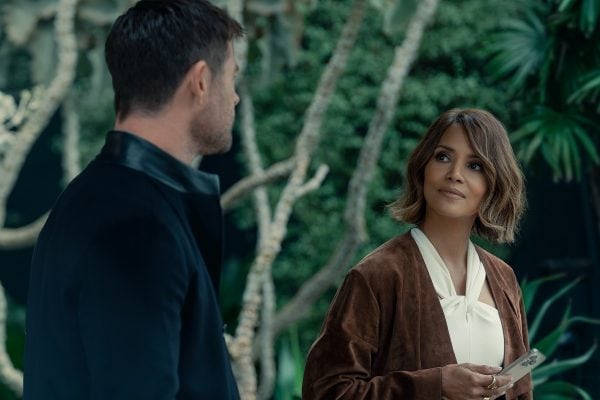
You should have come! Before getting into the questions, I need to say I felt seen by Halle Berry’s character because I, too, would have a terrible sleeping score if I used that app.
Really?
Oh yes.
All of those things are things that I draw on from experience. There are things you want to include, and they’re small clues to a character that give you quite a lot in terms of understanding them.
So I’m interested in what drew you into the novella, but more specifically, was there anything drawing you into making a movie where the 101 highway was an integral part of the story?
Yeah, I think the thing that really drew me was I felt like the short story offered something in the adaptation that could possibly lead to the kind of movie that I felt maybe we weren’t seeing many of in the cinemas anymore. And those were the kind of movies that probably made me want to make movies in the first place. Some of those go back to the 70s, 80s, 90s, and early 2000s, but we’re getting fewer of them. It just felt like there was a classic quality to it, and that you could have all of the kind of pulse-pounding white-knuckle ride that we want from a big fun night out of the cinema, but also characters that you can relate to that feel meaningful. Hopefully, we have smuggled in some substance as well. It’s not just an empty meal. It’s a nourishing one. You get a rollercoaster ride, but you also get the chance to come out thinking about some deeper ideas.
I agree that we don’t see many movies like this anymore. Do you think that’s what helped to draw in the stacked cast of Chris Hemsworth, Halle Berry, etc.?
Definitely. When you send a script out into the world, you really don’t know how actors are going to respond because it might not be what they’re looking to do. With every single person we approached, they all said, “Wow, I haven’t read anything like this in a long time, and this is exactly the kind of movie I want to be a part of.” So they were kind of instantly on board, which was crazy because you often expect to go through a list. You start shooting for the stars, then you go down a list, but that didn’t happen here. Literally, everyone we approached said yes.
Even though there are crime killer elements here, it really is about these characters who are stuck or are going through a crisis, and juxtaposing them against one another with crime being a common thread. This also shows up in the editing and match cuts. So, can you talk about crafting this film from a character-driven perspective?
Yeah. I think a great deal about the point of view. If I’m going to shape the scene, I need to have the answers to all of the important questions when directing a scene, which is, “Where do you put the camera? How, when, and where do you start, and when do you want to be, have a close-up?” The kind of thought that goes into the craft really has to come down to the point of view. “How do I want the audience to feel at a given moment? Who do I want them to feel most connected to?” There are different kinds of movie experiences. Somewhere you’re slightly on the outside watching, and that can be really fun as well.
But I wanted to make a film where you, as the audience, feel deeply connected to all the characters. And so that’s really how I approach most of those scenes. In terms of the match cuts that you’re describing, if I’ve got three or at times four characters, they’re all on a collision course. They’re gonna come together in a fairly explosive way, but you don’t quite know how. So I’m trying to find ways to segue between those characters in a very seamless way, so you’re not bumping from one story into another. It’s like a great piece of music; it’s propulsive, and you are enjoying the ride.
Tell me what you were looking for specifically and how you found the meditative self-help tape played repeatedly throughout the movie.
I was looking for things that felt emblematic to me of LA mythology and some of the messaging that you get in that town that you can have everything, and you should have everything. And maybe if you don’t have everything, you’re failing on some level. But the truth is that’s obviously not really a realistic expectation. So one of those things I felt was part of that culture was a wellness culture, and I liked the idea of a sort of almost godlike voice telling you that success is your divine right. I actually love all of that. I love that positivity. But I also think it’s not always realistic in terms of expectations, and LA is a place where status is king. It felt like it was part of the fabric of LA culture.
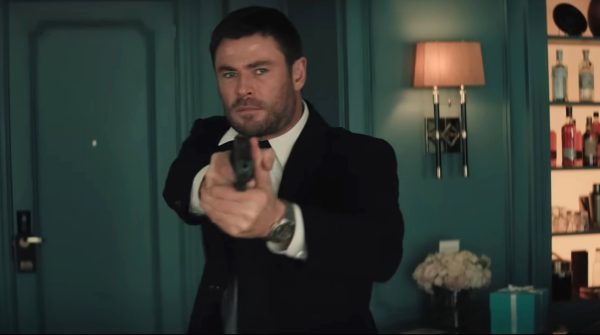
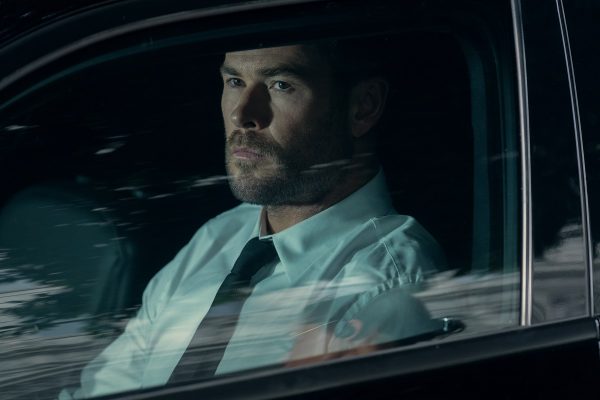
Talk to me about taking Chris Hemsworth, one of the most handsome and charismatic actors alive, and stripping that down into someone abused and awkward, who doesn’t really know how to enjoy simple pleasures in life or communicate with others. I think it’s a terrific performance.
I wanted quite a different Chris Hemsworth from anything that we had ever seen him do before. And I knew he could do it because I’d seen him do things that he made look easy, which I knew to be very difficult. The more I got to know him, the more I realized he was a very sensitive person with insecurities, like all of us. It comes down to research. We did a lot of research into the real people who do the job, if you can call it a job, who are dual thieves or high-end armed robbers. I wanted to make sure that he had real depth to that character… that it wasn’t like the James Bond of jewel thieves. That, actually, this is a guy who has flaws and vulnerabilities. Chris really embraced that. I hope there are many surprises in the movie. And I think one of the main ones will be how incredible an actor he actually is.
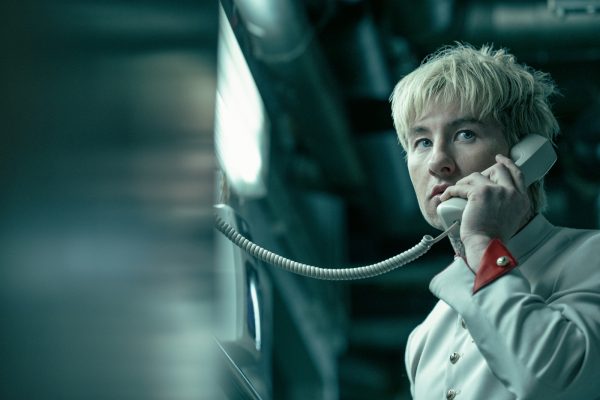
You have also worked with Barry before, of course. I remember loving him in American Animals. He plays a psychopath so well, and one thing that struck me here is how much of his sinister performance comes from the eyes, which are usually all we can see underneath the motorcycle helmet. Can you talk about weaponizing his eyes and crafting his overall performance?
That’s a very keen observation that you made. Barry is a very unusual actor because there aren’t many people who come from the background he comes from and make it to Hollywood or the big screen in a serious way. I don’t know how many people have come from real poverty and the mean streets of Dublin, where he’s come from, so he already has an innately unusual quality about him. And because he has grown up among, how shall I put it, people who have lived on the edge of criminality and things like that, he knows a lot about it. He knows those kids, he knows those people. He’s been part of that. And he has this very unique combination of unpredictable ability, danger; he feels dangerous sometimes, but he also has this childlike vulnerability in his eyes. I think that’s what you see. And I create situations where I make extensive use of that.
You have some exciting, tense chases around the city and highway here. What were some of the challenges of shooting some of those scenes?
I’m not a big guy for visual effects and CGI or AI or whatever.
Good! I love hearing that.
Yeah. So I will always try to do things as realistically as possible. My central kind of principle is what would this really feel like if you were in a car chase through downtown LA, 70, 80 miles an hour, and you were very narrowly avoiding disaster, what would that feel like to be in that situation? That’s the starting point and again comes back to that question and point of view. That’s the starting point. Then I design things around that. The good thing about shooting in LA is that you get the best stunt drivers in the world and the best second unit. I worked with a legend of a second-unit director, Darren Prescott, and we designed things that felt as real as possible. Then the other amazing thing is that, with Chris Hemsworth, he can really drive. I don’t know how many other actors have that level of adeptness. Once, during training, the stunt guys were like, “No, we can let him do this.” We can let him do a lot more than you would normally let an actor of that stature. So that’s why I think it all feels as visceral as it does.
I did not know that about Chris, but that’s exciting and cool. Thank you for your time. It was fun talking to you.
You. Thank you, Robert. Really, really good questions.
SEE ALSO: Read our review of Crime 101 here
Robert Kojder