It’s stunts aplenty with spinning kicks and punches, as we travel back to 1996 with these essential action movies…
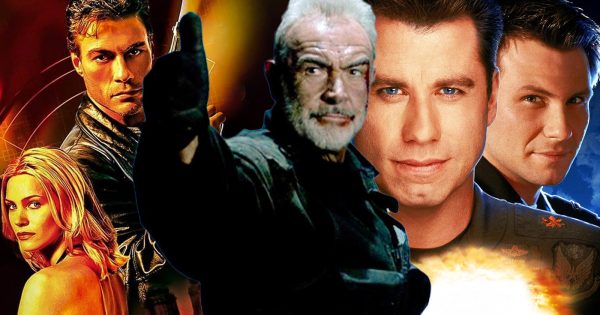
The action movie landscape of 1996 was pretty interesting. It saw a noticeable shift in the genre, stepping noticeably away from the previous decade and early 90s reliance on muscle-bound heroes. The beefy big boys like Sylvester Stallone and Arnold Schwarzenegger were on a noticeable downward trajectory, but still ploughing on with their ass-kicking exploits.
Some former theatrical stars, like Dolph Lundgren, were well housed in the straight-to-video realm, whilst others, like Jean-Claude Van Damme, were on a collision course with DTV land. However, it also proved to be a year of career shifts, gambles and interesting experiments. Here are ten essential action movies from 1996…
The Rock
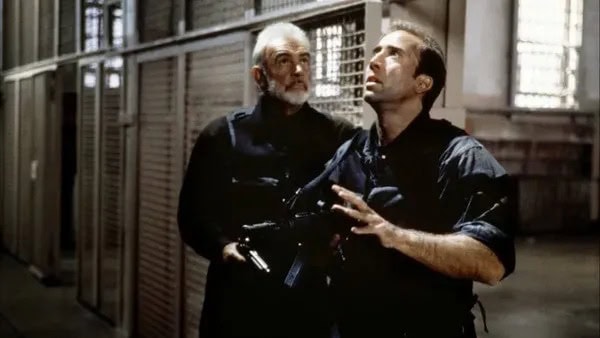
Michael Bay delivered an explosive and riotous introduction to his patented Bayhem with Bad Boys. A year later, he made his magnum opus, The Rock. Some might call this an unofficial entry into the James Bond canon, with Sean Connery playing a badass ex-agent of some kind who has been locked up in isolation for years, due to all the government secrets he knows (and something about a remote Island frequented by politicians and billionaires? No?). Okay, maybe it’s not really Bond, but I like that fan theory.
So Mason, with his first-hand knowledge of the guts of Alcatraz, is let out to help head up a team of spec-ops soldiers to take out a rogue former General (Ed Harris) who intends to launch a fiercely poisonous gas on San Francisco. The expert on the deadly chemical agent is Stanley Goodspeed, played by Nicolas Cage in a way only Nic Cage could play. This made Cage an unexpected but surprisingly effective action hero, which saw him go on a run of popular blockbuster movies. For Bay, it’s filled with all his isms, but it’s his most well-balanced, and his Hail Mary approach to action works brilliantly here.
Silent Trigger
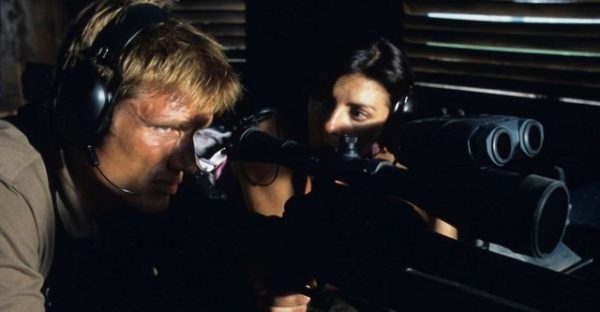
With great artwork featuring Dolph with an excessively large sniper rifle, and from the director of Highlander, some might have expected a better fate for Silent Trigger than straight to video land. Still, like many Dolph actioners of the time, it proved a big success with VHS tapes flying off the shelves. One might assume the film was an atypical, dumb as a box of frogs, DTV (direct-to-video) hitman film, but Silent Trigger is surprisingly esoteric and cerebral.
Initial drafts of the script were even more of a psychological chamber piece, but it got a little Lundgrenized with more action added (particularly via flashbacks). Though it never quite knows where to comfortably sit, Mulcahy’s moody and stylish visuals and Lundgren’s effectively pensive performance help give this one legs. Additionally, Stefano Mainetti’s score sounds unique and varied (along with some good soundtrack choices).
Eraser
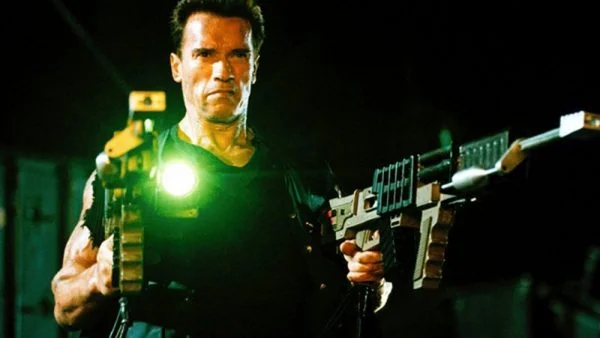
Having begun the decade with a string of successes, Arnold Schwarzenegger soon found himself in a confused place between status quo and reinvention. With Eraser, he went wholeheartedly back to the Quo. It’s a pretty routine action film with mild pretences of a tech thriller (which were becoming popular in the era), but the extent of that went no further than: “Give Arnold a big fuck off gun.”
With rock-solid, if unspectacular direction from Chuck Russell to keep things thundering along, and some enjoyable set pieces, Eraser isn’t peak Arnie by any means, but it’s a lot of fun. James Caan revels in having unfettered freedom to chomp scenery. It was a big, beefy blockbuster that did decent numbers, but like many of Arnold’s films, felt like it couldn’t get close to the kind of ticket sales of his Jim Cameron double, T2 and True Lies.
The Sweeper
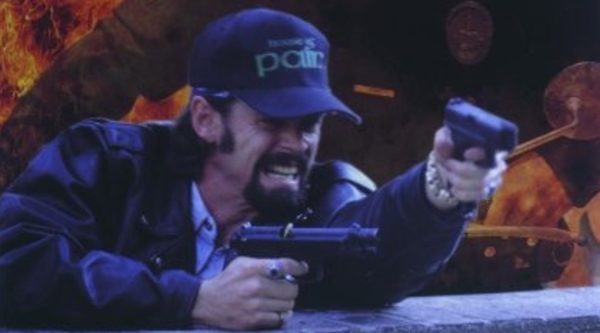
It would be borderline criminal to look back at the prime action selections of 1996, slap bang in the peak era of PM Entertainment and not mention one of their films. The specialists in straight-to-cable/video genre cinema were particularly effective at crafting high-action spectacle on a shoestring budget. What they produced with their cut-price budgets was often phenomenal, largely thanks to their stable of stunt specialists. Explosions, car flips and jaw-dropping high falls, to name just a few PM hallmarks.
C. Thomas Howell, by 96, a straight-to-video stalwart, provides some budget star power here in a film that pretty much rockets from exhaustively long action scene to the next. It’s all ruthlessly formulaic, but at least you know what you’re getting plot-wise. It’s the action that’s the real selling point, with some genuinely awe-inspiring stunts, particularly when looking back at these in the modern era of CGI-reliant action cinema. It also has a gleeful variety in action skits. Bikes, cars, trains, gun battles, planes, fight scenes. Tom Cruise, eat yer heart out.
Daylight
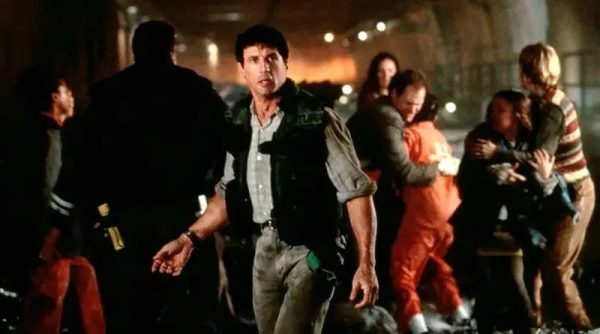
In the mid 90s, Stallone was trying to play more rounded characters but was hesitant to step away from the action genre completely. What happened was a run of films where Sly was kind of an interchangeable pensive hero with a haunted past, trying to live a quiet life but reluctantly thrust back into action. Demolition Man, Cliffhanger, Assassins, The Specialist and Daylight, Sly is basically the same character every time.
That’s not to say the respective films weren’t still solid (and occasionally great). Daylight, however, did take a slight left turn and made the villain of the piece a disaster when a New York tunnel is hit by an explosion and floods. It’s down to haunted everyman Sly to break into the tunnel from a predictably deadly access point, rescue the trapped publicans inside the flooding tunnel and somehow figure a way out. It’s filled with every disaster film cliche in the book, but it’s also incredibly well made with large-scale practical FX and water work. Stallone is commanding and is backed by a solid cast (with Viggo Mortensen a standout). Rob Cohen isn’t renowned for subtlety but he certainly knows spectacle. It’s a pretty underrated film in Stallone’s CV.
The Long Kiss Goodnight
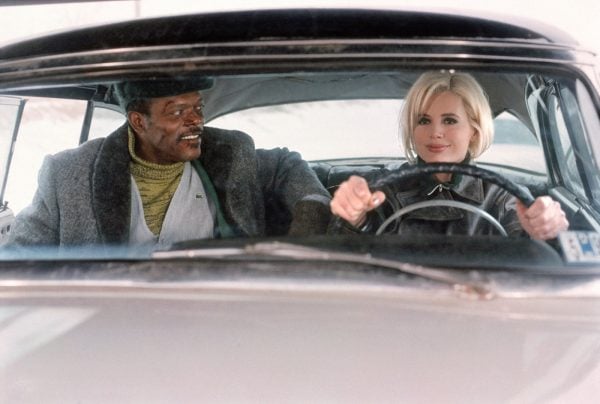
The mid 90s, where for a brief period, Geena Davis was being pushed as an action heroine. You know what? She kicked ass. With a Shane Black script and the confident visual stylings of Renny Harlin, there’s some real skill behind the screen, more than ably backed by the skill on screen and the dynamic between Davis and Samuel L. Jackson.
Davis is a suburban mom with no memory of her past who suddenly finds herself targeted by hit teams and begins to remember fragments of her past. Turns out she’s basically Jane Bourne. Some wild set pieces and killer lines provide loads of momentum here. It overstays a little at two hours, whilst some of the mid 90s CGI experiments look terrible now, but for the most part, this one really kicks ass.
First Strike
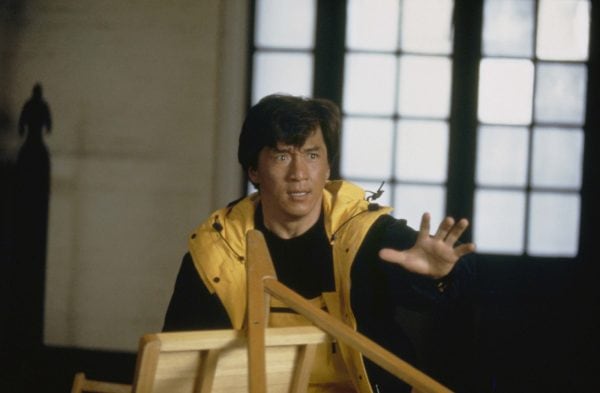
Also known in some territories as Police Story 4, this sort of demi-sequel sees Chan go from death-defying cop to unwitting international spy, dropped into a Bond/Mission Impossible-esque espionage plot. Worry not, though, because Chan doesn’t forget his all-important blend of physical comedy and frenetic fight sequences.
It’s Chan at the peak of his powers, at the point he was beginning to get more notice in the US (just before his mega breakout, Rush Hour). First Strike might not match up to the previous three Police Story films, but it does still have some wonderful action scenes loaded with Chan’s inimitable physicality and inventiveness. No one did it better.
Maximum Risk
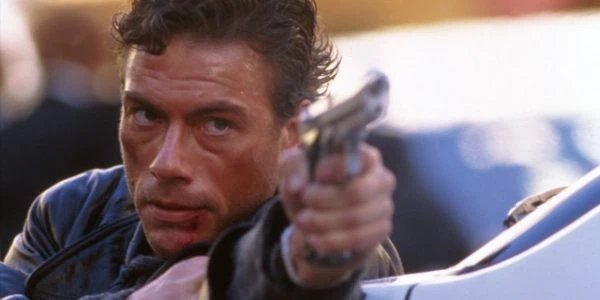
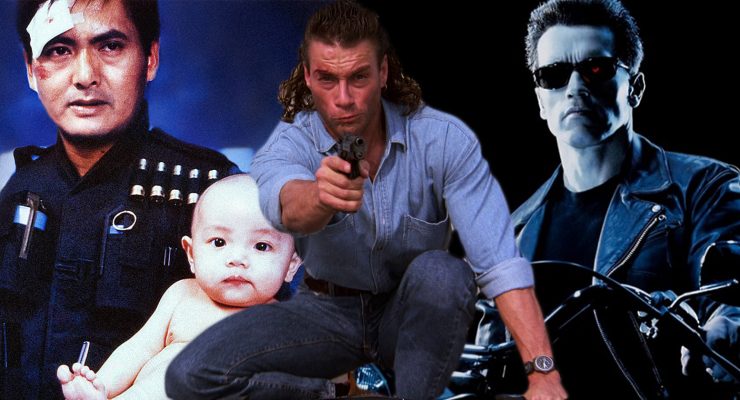
Jean-Claude Van Damme introduced Hollywood audiences to John Woo. A few years later, he ventured back to Hong Kong and brought Ringo Lam with him. Though Maximum Risk wouldn’t prove as popular or effective an introduction as the aforementioned Hard Target, Lam’s film is regarded by many as one of Van Damme’s most underappreciated films. For one, it’s one of the first films where Van Damme was really trying to hone his acting, and it also saw Lam adopt a far more grounded and gritty approach to the action sequences. This wasn’t the place for Van Damme to do balletic jumping, 360 kicks and crank up the slow motion. It wasn’t excessive muscle posing (even though he does fight almost stark Billy Bollox in a bathhouse).
The lack of flash and pizzazz makes it less popular among JC’s traditionalist fans, but it’s this reason, and the performance focus Lam gets out of JCVD, that make this one stand up so well. After arriving at a murder scene and a dead body, French cop Alain (Van Damme) is amazed to find his doppelganger deceased. Upon investigating, he discovers a long-lost twin with ties to the Russian mob in New York. Off he goes to investigate, running into Natasha Henstridge along the way, and frankly, there are way worse people to run into than the effervescent Henstridge. As he uncovers the truth, he inevitably upsets the apple cart and finds himself under threat from gangsters and corrupt Feds. Lam delivers some of Van Damme’s best set pieces, the main highlights of which are three gruelling hand-to-hand duals between Claude and man mountain, Stefanos Miltsakakis. The elevator fight alone is probably the best and most brutally unfancy fight sequence JC ever did.
Broken Arrow
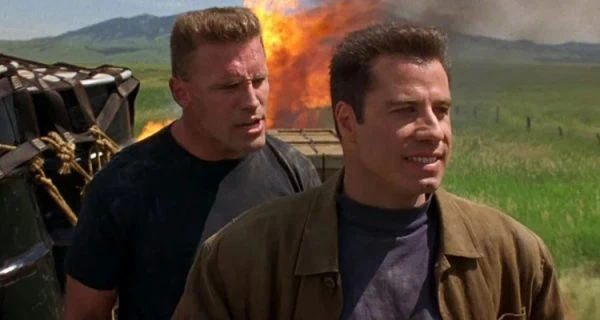
Speaking of John Woo, his big-screen follow-up to Hard Target came out in 1996. Broken Arrow pits Christian Slater against John Travolta, who goes all in as the chief villain who has stolen some nukes. Though the film feels a little Woo-lite, the set pieces are impressive. Slater makes a likeable, if slightly bland hero, but the pomp and ceremony of Woo’s style and the Hans Zimmer score propel this one.
There’s some heft in the supporting cast with Delroy Lindo and Bob Gunton, but this is all about Travolta making damn sure his Pulp Fiction momentum carried on, doing so by chomping the scenery like a ravenous dino. All good training for the following years, Face/Off opposite Nic Cage and frankly that film should have been called Chew Off.
Executive Decision
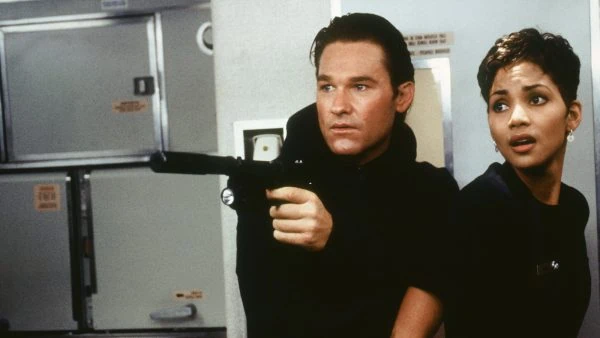
The humble Die-Hard clone. The 90s were stuffed with them, ranging from films like Under Siege to Air Force One. The former starred Steven Seagal, and the latter was set on a plane taken by terrorists. Which brings us to Executive Decision, a Die Hard clone starring Steven Seagal and set on a plane. However, hold your horses because there’s a caveat. Technically, Seagal never (spoiler alert) makes it to the plane. Mind you, he’s such an aggressively dour presence in the film that his demise proves welcome in the picture (and indeed to most of the supporting cast who endured his alleged on-set behaviour).
However, it’s left to Kurt Russell and his effortless charisma to save the day, with some help from Halle Berry. It’s a little bit of a forgotten 90s action thriller, but Executive Decision is really solid with plenty to enjoy. All helmed by editor turned director, Stuart Baird, who learned a thing or two about unobtrusive and efficient direction from being Richard Donner’s regular editor.
Honourable Mentions:
Mission: Impossible (less action-centric than the franchise to come but with some great set pieces), Last Man Standing, The Glimmer Man, Riot (PM again), Sworn to Justice, Barb Wire, The Quest, Sabotage, Black Mask, White Tiger.
SEE ALSO: 10 Essential Comedy Movies of 1996
What’s your favourite action movie from 1996? Let us know on our social channels @FlickeringMyth…
Tom Jolliffe