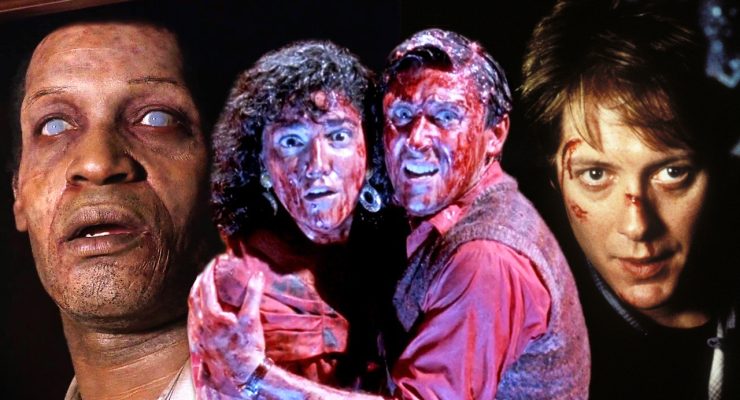
Adam Page unlocks the Lament Configuration for a deep dive into the Hellraiser franchise…
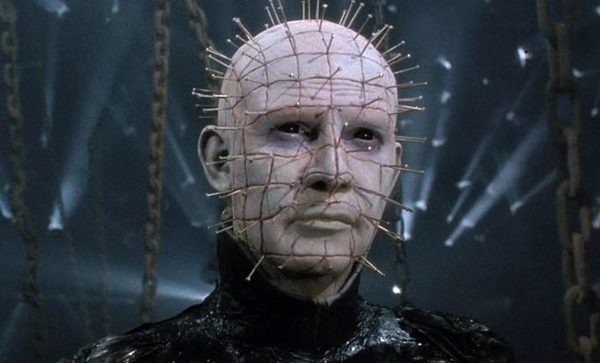
Shall we talk about something that was once genuinely frightening? Not in the jump-scare way, that cheap sugar-rush of a masked man hiding in a cupboard. No. I’m talking about the sort of horror that makes you feel complicit in your own dread. The horror that whispers maybe you really wanted this.
And that thing was Hellraiser. What happened with it is a story that deserves to be taught in film schools. I don’t mean as a cautionary tale about sequels, exactly, but more a case study in how something truly dangerous gets lovingly, slowly, and bureaucratically defanged. Like seeing a great restaurant get taken over by a hotel chain and replacing the chef’s handmade pasta with something from a meal box, all the while keeping the same name on the awning.
So pull up a chair. Because, appropriately, this is going to hurt.
We have to understand what the original Hellraiser was when it was released in 1987. Clive Barker, a novelist, painter, and one of those rare artists who seemed to have wandered out of some adjacent dimension, one much more interesting than ours, adapted his own novella The Hellbound Heart into a movie with a budget of pretty much nothing. He filmed it in a house in North London that I am sure had better plumbing than the production could afford. And the result was something that looked like no horror movie before it.
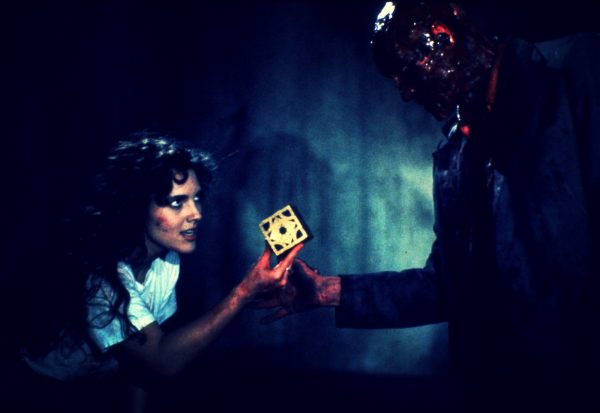
His premise was simple. There is a puzzle box. If you open it, creatures will come. Creatures dealing in sensation, and annihilating the boundary between pain and pleasure. And Pinhead, who in the novella is barely described, basically a walk-on, became one of the greatest icons of 20th century horror. Doug Bradley played him with a stillness and the sort of aristocratic disdain that made your skin crawl in the best way.
But something I think people forget about the original movie, something that is lost in the iconography, is that at its core, Hellraiser is a story of desire, adultery and resurrection gone rotten. Frank Cotton is a hedonist, one who has gone through every pleasure on earth and goes looking for something beyond the veil. He finds it in the puzzle box. It literally destroys him, tearing him apart in some extradimensional pleasure palace. Then Julia, his brother’s wife, resurrects him by bringing men back to the house and murdering them. Frank feeds on their blood as he tries to reconstitute himself. It’s a deeply weird, specific, deeply literary piece of work.
Pinhead and his associates, the Cenobites, are almost incidental to the plot. They’re supernatural authorities, a cosmic collection agency here to collect what’s theirs. What’s terrifying about them is not the fact they want to hurt you, but how they don’t understand why you’d object. They operate totally outside our human moral frameworks, and have transcended suffering into a thing which doesn’t have a name in any language you speak.
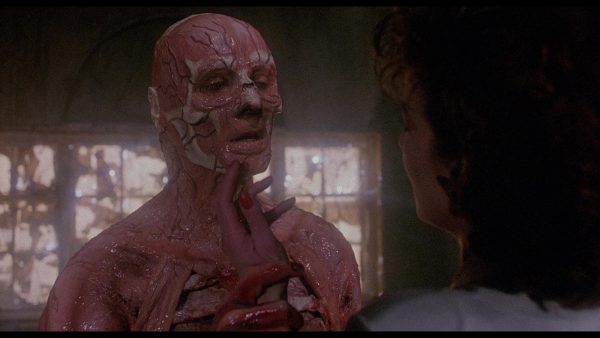
Barker referred to them as “explorers in the further regions of experience.” That’s more than a tagline, it’s a theology.
Hellbound: Hellraiser II arrived the following year in 1988 and still under the watchful and creative eye of Barker. He didn’t direct, but exec produced and the screenplay stayed true to the internal logic of the mythology. And to be honest, it’s ambitious in ways that sequels are simply not supposed to be ambitious. It goes deeper. Literally, as we journey into the labyrinthine realm of Leviathan, the Cenobite’s master, an enormous, diamond-shaped entity presiding over Hell like some malevolent corporate headquarters.
The movie takes risks and expands the mythology. It offers an origin of Pinhead that retroactively deepens rather than diminishes him. The revelation that Captain Spencer was a First World War officer who opened the box in a moment of despair and exhaustion is genuinely moving. There’s a human story, even in Hell.
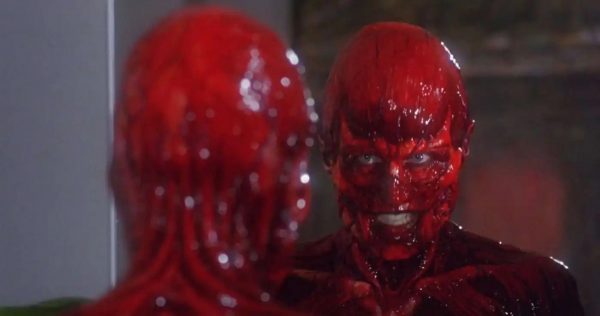
Hellbound isn’t a perfect movie. It’s overstuffed and incoherent at times. But it takes its mythology seriously and respects the architecture. If the first movie can be considered Barker’s manifesto, then the second is his world-building. Between them there is the framework of something that could have sustained at least a decade of really interesting horror.
In retrospect, this was the high-water mark.
Hellraiser III: Hell on Earth in 1993 is the moment we can point to. The moment we can see the franchise make a conscious decision to become something else. To become, in the vernacular of suit-wearing people who ruin things, “more commercial”.
Barker was pretty much gone from the production; he ended up with a “Clive Barker presents” credit. The studio, New World Pictures and later Miramax, held the intellectual property and make-up budget, but they abandoned the philosophy. It was replaced with an idea that seemed to misunderstand Hellraiser at its most basic level: the idea that Pinhead was a protagonist.

He is not the protagonist. He never was. He’s the consequence; what happens when your curiosity overrides self-preservation. To make him the hero is like making the cancer the protagonist in a story about smoking. Technically, it’s a choice. The wrong one.
In Hell on Earth, we get Pinhead in a nightclub, killing the ravers and making quips. Doug Bradley gamely delivers his lines, but even he can’t completely rescue a Pinhead who has been totally rewritten as a slasher villain with higher production designs. That alien and elegant menace from the first movies was replaced with something that rhymes with it but means something very different.
The new Cenobites in this movie; a DJ whose head becomes a CD player, or one whose head is now a nail-shooting camera, tell us all we need to know about what the franchise has become. The original Cenobites disturbed us because their bodily modifications seemed to come from desire, from the internal logic of flesh changed by sensation. These new ones are just visual gags, horror that has become cosplay.
And now, dear friends and neighbours, we arrive at genuinely dark territory.

Hellraiser: Bloodline in 1996 was the last in the franchise to get a theatrical release (although direct-to-video in the UK). It’s a movie that has, down in its troubled bones, the outline of something that could have been really interesting. Its concept of tracing the Lemarchand box across three time periods, 18th century France, to the present, to a space station in 2127 is audacious. A horror franchise reaching for scope, one that dares to have a centuries-spanning mythology.
However, its execution was so plagued with studio interference that Kevin Yagher, the director, had his name taken off the movie and replaced with the dreaded pseudonym “Alan Smithee.” Watching it feels like three different movies spliced together by someone who had read a quick summary of all three and was working from memory. There are moments, and I mean this, of the old Barker DNA, and the sense that the puzzle box had a history, and that history had weight.
But reportedly the studio demanded reshoots that changed a complex narrative structure into something more straightforward and a lot less interesting. The original cut from the director is something few have seen and is apparently a totally different movie.
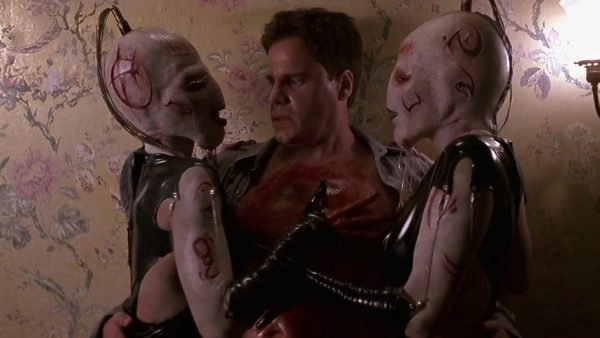
This is the horror version of letting Paul from Accounting run the kitchen. The concept and ingredients were there. Someone then looked at the budget, the projected returns, said, “We need more Pinhead in the first act,” and it all fell apart.
What we got after all that is something between a cautionary tale and an endurance test.
Inferno (2000). Hellseeker (2002). Deader (2005). Hellworld (2005). Revelations (2011). Judgement (2018).
There is a certain genealogy to these movies that once we understand it, explains all. Miramax had acquired the franchise, and discovered they had to regularly produce Hellraiser movies in order to keep the rights. And the most cost-effective way was to take unproduced, existing scripts, ones that had absolutely nothing to do with Hellraiser and had been written for totally different projects, and retroactively jam Pinhead and the puzzle box into them.
Sit with that for a moment. These aren’t Hellraiser movies that went wrong. They’re other movies, psychological horrors, generic thrillers, competent but unremarkable B-movies, that had the Hellraiser brand burned onto them in post-production. Pinhead turns up, speaks a few lines, a box is there somewhere in the plot, and roll credits.

That isn’t moviemaking. That’s labelling.
The analogy almost writes itself. Think of the greatest Thai restaurant you ever ate at. That one where the chef spent years developing a sensibility, a voice, a relationship with fermentation and spice that was completely her own. Now think of that restaurant being bought over and its name is licensed to a chain that makes fried chicken. Fried chicken is fine. But it’s not Thai food, or even related to it. But they’re using the same sign.
The tragedy, and it is a tragedy, is that the mythology Barker created is deep enough to sustain just the kind of franchise these movies should have been. The Cenobites lore, the history of the puzzle box, the cosmology of Leviathan and the Order of the Gash, all this material could have supported a decade of interconnected, ambitious horror stories. What it got instead was the cinematic equivalent of the skeleton crew who maintains a house so the bank can’t repossess it.
I need to be specific about what made Barker’s original vision so distinctive, because it’s that specificity which the sequels just couldn’t replicate.

Above all else, Hellraiser was about desire. Not the desire to live, which is the engine of most horror movies, that desperate animal need to keep breathing. Barker was more interested in the other kind of desire. The desire we have to experience what our known world provides. And to feel more. Frank Cotton doesn’t open the Lemarchand box because he wants to die, but because he’s run out of ways to feel alive and is more than willing to accept what comes next.
It’s deeply uncomfortable territory for mainstream cinema precisely because it implicates the audience. If Frank is wrong, okay, fine, a cautionary tale with the moral clearly stated. But Barker never quite says Frank is wrong. He tells us Frank is incomplete and the desire is real, maybe even admirable. What’s tragic isn’t the wanting, but the utter failure to understand the cost.
The Cenobites are the cost, and they aren’t villains. They’re the natural consequence of a transaction Frank willingly entered into.
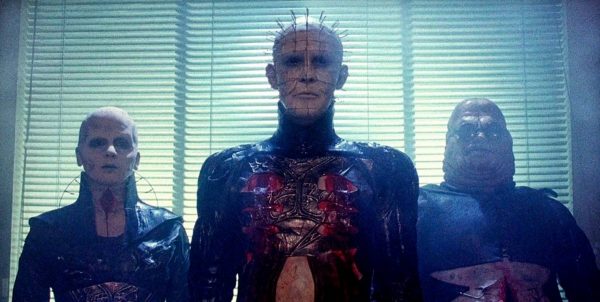
Not one of the later movies could figure out what to do with this. The iconography was kept and the philosophy thrown out. Pinhead was kept but the idea that Pinhead represented the logical and extreme conclusion of the human appetite for sensation was discarded. They changed a meditation on desire into a slasher movie franchise. And those sorts of franchises have rules which are incompatible with what Barker was doing.
In most slasher movies, the monster kills bad or unlucky people. However crude, there’s a moral framework. Hellraiser has no such comfort. The Cenobites come because you opened the box. You called them. Whatever happens next to you is what you asked for. Even if you didn’t know you were asking.
That’s truly frightening. That’s horror that won’t let you off the hook by establishing the victim was stupid, or promiscuous, or just in the wrong place. It asks us: what if the horror is in the wanting itself?

After Hellworld, Doug Bradley walked away from the franchise, reportedly not returning for Revelations due to script concerns. Unwilling to let even this major constraint slow production, the studio replaced him with a different actor. The franchise went on, without even the one human element that had consistently anchored it.
In 2022, a Hulu reboot directed by David Bruckner and written with clear care for the source material, suggested that something of Barker’s original vision could be recovered. It isn’t a perfect movie, but it was made by people who knew Hellraiser was about desire, transgression, and the awful intimacy of pain. Not about a man with pins in his skull doing violence to various interchangeable teenagers.
If this represents a real restoration or just a temporarily elevated standard before the sequel production machinery reasserts itself is a question the movie industry has not given a lot of reasons to answer optimistically.

What I keep coming back to is this: Clive Barker was 35 when Hellraiser was released. He already had six volumes of short fiction, two major novels and had established himself as one of the most original voices in horror literature. His movie debut was something genuinely new, a horror movie rooted in philosophy, with a coherent and disturbing cosmology. The idea that the real danger wasn’t the monster outside, but the desire within.
He gave the movie industry something incredible, and that industry, with its usual efficiency and indifference to what makes something worth having, went on to use it until it stopped making money, then used it past that point. Because throwing it away would mean them acknowledging the waste.
In its current historical form, the Hellraiser franchise is a monument to what happens when commerce is allowed to completely metabolise art. Not destroy it; it’s rare that commerce can destroy art so cleanly. But what it does is process it, take out what’s marketable, replicates it in ever more diluted form and keeps the lights on long after the original spirit has gone.

A franchise remains. A mythology is lost.
Somewhere, in the further reaches of experience, in the extradimensional palatial horror Barker originally conceived, I like to think the Cenobites are watching. Not angrily. They have moved beyond that.
More disappointed. In that certain Cenobite way. Which is much worse.
“We have such sights to show you.”
And they did. For one movie. Maybe two.
After that, all they had was the box.
Adam Page