The Devil’s Hand, 1943.
Directed by Maurice Tourneur.
Starring Pierre Fresnay, Josseline Gaël, Noël Roquevert, Guillaume de Sax, and Georges Chamarat.

SYNOPSIS:
A down-on-his-luck artist buys a disembodied hand on the promise that it will give him all he desires, but when the Devil comes knocking will he be able to pay the price?
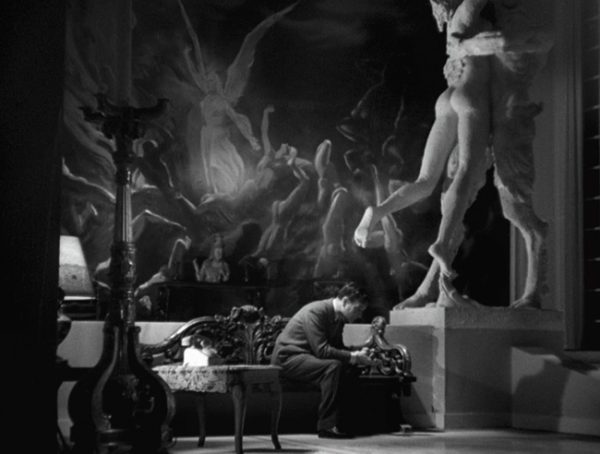
The Faustian tale of ‘be careful what you wish for’ has be done and redone hundreds of times over in books, plays and movies, and in 1943 director Maurice Tourneur – father of noted filmmaker Jacques Tourneur, who made the classics Cat People and I Walked With a Zombie for RKO around the same time as this movie was made – was hired by German producer Alfred Greven, who was head of the German-controlled French production company Continental Films, to make films for German-occupied France, which was a risky move considering that Tourneur was Jewish, but his reputation in the film industry was good and he was allowed to continue working.
Despite many of the movies that Continental Films put out being fairly workmanlike and inoffensive – for obvious reasons – there was the occasional gem that shone through, and The Devil’s Hand was certainly one of them. It opens in an isolated hotel cut off from the main roads due to an avalanche, and while the guests are settling down for dinner a man calling himself Roland Brissot (Pierre Fresnay) bursts in and books a room. Brissot is clearly distressed and not especially friendly, and the guests quickly notice that he is missing his left hand.
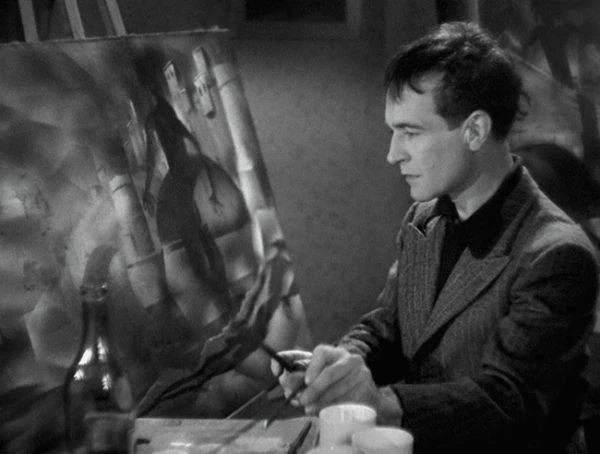
After enquiring if there is a cemetery nearby Brissot is called to the telephone, but when his back is turned there is a blackout and the small casket (or ‘coffin’, as he calls it) he was carrying goes missing. Clearly distraught, Brissot tells the patrons of the hotel his story, which begins when he was a struggling artist who couldn’t sell his work to anyone.
One day, whilst sat in a restaurant, Brissot is offered the chance to have all his dreams come true by buying a talisman in the shape of a disembodied hand kept in a casket, all for the cost of selling his soul. Very quickly, Brissot suddenly becomes attractive to his antagonistic girlfriend Irène (Josseline Gaël) as his paintings start to sell, so much so that before long his work is being exhibited in a Paris art gallery and he is making a ton of money, but there is a catch – Brissot must sell the hand before he dies, otherwise he will spend eternity in damnation, and there is nothing more frightening to an Atheist like Brissot than being confronted with the Devil, who wants paying.
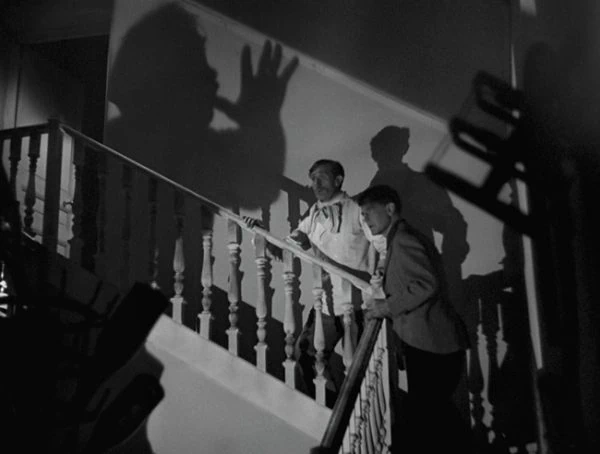
Considering it was made in France during the Nazi occupation, The Devil’s Hand is surprisingly subversive when you consider the various readings that could be interpreted from its story, although when taken at face value it is still a bleak and very pure horror tale. Taking its cues from German expressionism, the film is a visual treat as shadows are exploded into over-exaggerated sizes, surreal nightmares are brought to life as the ghosts of former talisman owners get to tell their stories, and there are even small flashes of animation used to convey the uncanny, which may not seem like much today but in 1943 it meant filmmakers could at least achieve certain effects that wouldn’t have worked with practical props.
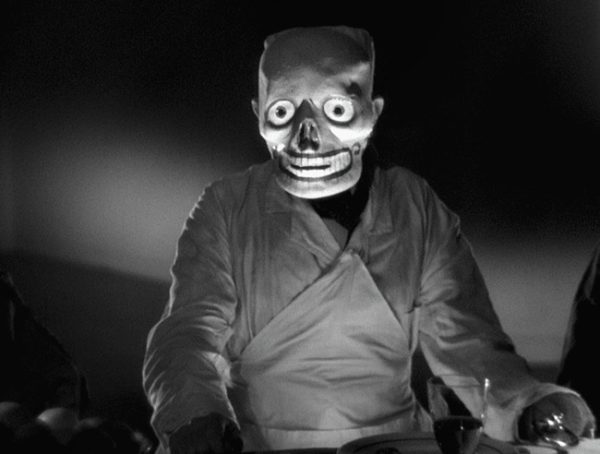
After the intriguing build-up in Brissot’s story we get to the main set piece, where he is confronted by the masked and costumed ghosts who tell their stories with wonderfully realised vignettes, the movie has to come to a close and it is those final few scenes of Brissot back in the hotel where the movie drops off a little, wrapping itself up a little too quickly and conveniently, like the end of a Universal or, later, Hammer horror movie. However, up until that point The Devil’s Hand is a fully engaging and exciting piece of European horror from a time that could easily have played a bigger part in its storytelling but, thankfully, didn’t.
For context, Eureka have included an audio commentary by film critic James Oliver, a video essay by film historian Samm Deighan that looks at French cinema from the early 20th century and La Continental, an archival documentary about Continental Films and the German occupation of France, all of which helps to serve the film but, ultimately, The Devil’s Hand is a fine piece of work regardless of its time and place in history and will now hopefully get to be seen by a wider audience thanks to this superb Blu-ray release.
Flickering Myth Rating – Film: ★ ★ ★ ★ ★ / Movie: ★ ★ ★ ★
Chris Ward