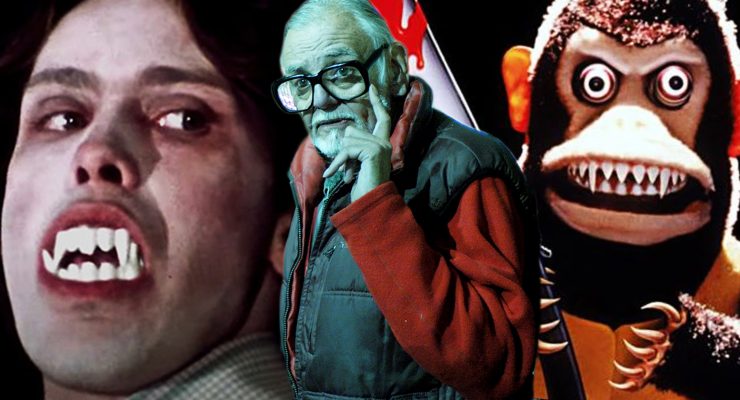
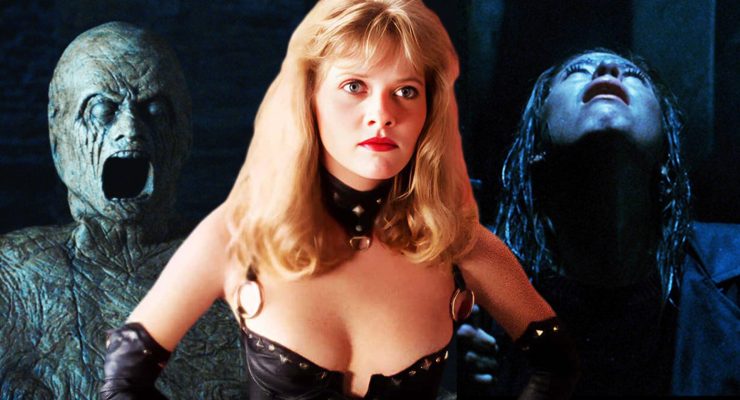
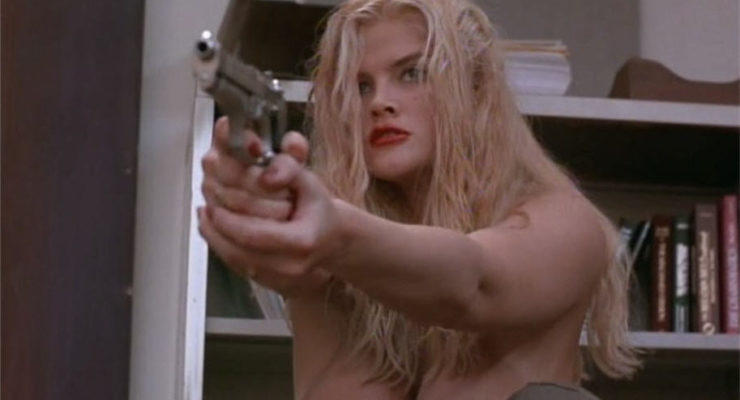
Adam Page on the unsung heroes of horror…
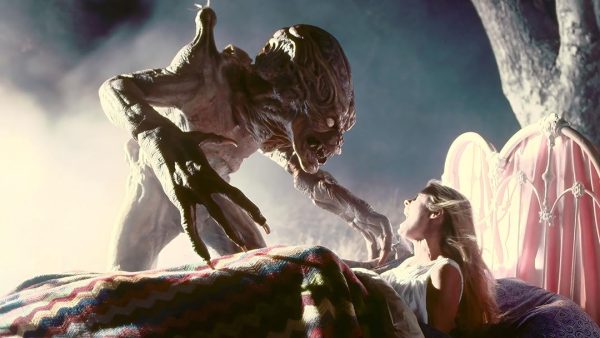
Obviously, I’m not going sit here and argue that Puppet Master 4 is Citizen Kane. I would insult both movies, and more importantly, I would miss the point completely. Because the direct-to-video horror boom of the 1990s wasn’t representing high art. It was something perhaps more important: It was pure and gloriously deranged freedom.
It was the last big goldrush of American genre moviemaking, a small window when the VHS market was hungry and fat. Video stores lined every strip mall in America and a movie could be made for $200,000, an awesome cover slapped on the box and turn a profit. No test screenings or focus groups. No tie wearing executive asking if maybe the demon could be more relatable. It was just you, a camera, some practical effects that may work and the stone-cold certainty that some fourteen-year-old was going to rent your movie based on how cool that cover art looked.
I miss it like I miss dive bars that didn’t care about anything artisanal.
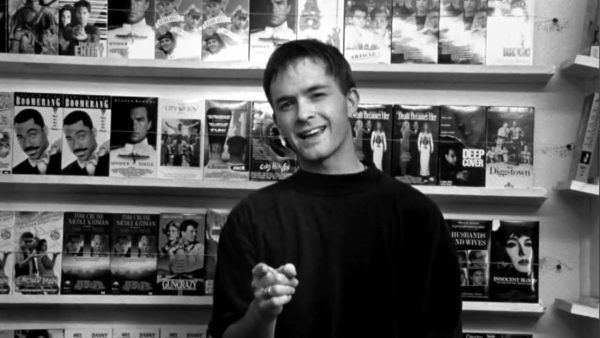
What we need to understand about the DTV horror revolution is that it was born from economic conditions that were perfect, and will never exist again. Home video had created a greedy beast that had to be constantly fed. Video stores, (remember those?) couldn’t exist on the fifteen copies of Terminator 2 they had on the shelf. Depth was needed. Variety was needed. They needed row after row of horror movies, each one promising blood, breasts and things that go bump with reasonable practical effects.
The math was beautiful and simple. Make a movie for under a half million dollars. Create a cover that looked as though it cost ten times that amount. Get it onto the shelves of Blockbuster and the thousands of independent video stores across the country. If you were smart, you’d time it to ride the coattails of whatever theatrical horror movie had just landed. Candyman has just been released? Fantastic, here’s Candyman 2: Farewell to the Flesh. Okay, that one did get a theatrical release. Bad example. But you get the idea.

Full Moon Features understood this better than most. Charles Band was a producer who had been around the block. He’d made Ghoulies, and knew that people would absolutely rent a movie about little monsters that lived in your toilet. His plan with Full Moon was total guerrilla capitalism: the budgets were low, the concepts were high, and for God’s sake keep them coming. Four or five movies a year, each one a potential franchise.
And franchise was the key word. Because the other beautiful thing about that time was if your movie made money, you made a sequel. Full stop. No worrying about whether a sequel would dilute the brand, you made it because you could, the numbers were good and those video stores needed fresh product.
Let’s talk about Puppet Master. The original movie was released in 1989 but really hit its stride in the early ‘90s. It concerns a puppeteer who finds the secret to bring his creations to life, and of course he uses that power to kill Nazis, and later various people who have wronged him. Or just those who are in the wrong place at the wrong time. The puppets themselves, Tunneler with his drill head, Pinhead (not that one) with tiny hands and normal sized strength, Blade with his knives, became icons of the era.

What made Puppet Master work wasn’t deep character work or sophisticated storytelling. It was the puppets themselves, created with practical effects that had real presence and weight on screen. When Blade scurried across the floor, knife slashing, you believed it. When the Leech Woman threw up her payload onto an unsuspecting victim, you viscerally felt it. It was handmade horror, made by artists who knew that the limitations of their budgets were creative opportunities.
There are fifteen Puppet Master movies. Fifteen. They went to Nazi Germany (Puppet Master III: Toulon’s Revenge) went to the Old West (Puppet Master: The Legacy; okay that one was all flashbacks). They went to the future, the past and finally just into strange recursive loops where the mythology consumed itself. And you know what? That’s good. Great, even. Because every one employed effects artists, actors, puppeteers, crew members. Each one gave a young moviemaker a chance to cut their teeth on something real.
And of course, the quality varied wildly. Some were honestly innovative. Others seemed as though they were written on a lunch break and filmed over a long weekend. But they existed. They found their audience. That’s more than a lot of movies can say.

If Puppet Master was about building a universe bit by bit, then Wishmaster was going for broke on a single killer concept: what if a Djinn granted wishes but was an absolute bastard about it? “Careful what you wish for” taken to a perverse extreme.
The 1997 movie, directed by Robert Kurtzman had a secret weapon: real pedigree. Tony Todd, Robert Englund, Kane Hodder; the Mount Rushmore of genre faces were here, giving it legitimacy. The effects were pretty good, it had a solid concept and Andrew Divoff as the Djinn brought a creepy malevolence which elevated the material.
Where it gets interesting is Wishmaster made money. Not summer blockbuster money, but steady, reliable returns that guaranteed sequels. Wishmaster 2: Evil Never Dies came along in 1999, still with Davoff and the core concept intact. Wishmaster 3: Beyond the Gates of Hell and Wishmaster 4: The Prophecy Fulfilled both arrived in 2002, both without Divoff and made a lot more cheaply, and both exist because the market still wanted them.

This is the DTV lifecycle in a nutshell: begin with a decent budget and ambition, get your money back then squeeze every last drop from the concept until you’re filming in Canada with a crew of thirteen and an effects budget which wouldn’t cover lunch on the original.
Is that cynical? Of course. But it’s also beautiful in its own pragmatic way.
What I love about this era, and I mean unironically and genuinely, is the variety of insanity that got funded. Because once you establish that Leprechaun works, and it did, you can pitch almost anything. Evil bong? Yeah, why not? Evil Bong has a franchise. Killer gingerbread man? The Gingerdead Man, with Gary Busey. Four movies. Four movies about vampires in Romania because it was cheaper than shooting in L.A? Hello, Subspecies.
The list is huge. Demonic Toys, The Creeps, Dollman, Curse of the Puppet Master. Each of them a swing at the plate, hoping to be the next Puppet Master, or at the very least hoping to make enough money for a sequel.

Some of these movies were awful. Objectively and honestly hard to watch. But they tried things, experimented with concepts that no big studio would touch. They were in the minor leagues, where odd ideas got to play and where moviemakers learned their craft.
Something we have to appreciate which has been lost: the vast majority of DTV horror from this time was done practically. Latex prosthetics, rubber suits, rod puppets, the works. It wasn’t an aesthetic choice from artistic integrity, but pure economics. CGI back then was expensive and looked bad unless you had serious money behind it. So the DTV creators did what moviemakers always did when constrained: they got creative.
The puppets in Puppet Master were real props manipulated by real puppeteers. In Wishmaster the transformations of the Djinn were prosthetic appliances applied over several hours. A decapitation in Subspecies? A practical effect using a fake head filled with tubing and whatever they could get for fake blood. It meant the sets were messy, with long setup times. And sometimes the effects didn’t quite work and you had to shoot around it. But it also meant everything had real presence. The camera could linger on it because there was something real there to photograph.

These movies were being made for less than the food budget on a mid-tier studio movie and they were doing practical effects. The Ghoulies movies featured real puppets that cost real money to build and operate. Demonic Toys had a working Baby Oopsie Daisy doll that could move and show emotions. Pumpkinhead II: Blood Wings had a full-body creature suit someone had to wear and act in.
The effects studios that worked on these movies, places like Magical Media Industries or Screaming Mad George’s operation, they kept whole crews employed. Sculptors, painters, engineers, mould makers, they were real jobs needing real skills and the horror boom of DTV kept them working right through the ‘90s.
And the thing that doesn’t get talked about enough? These artists were experimenting. If you’re working on a $200,000 horror flick, nobody expects Jurassic Park. And that freedom from expectation meant they could try strange techniques and push boundaries in ways the bigger studios wouldn’t allow. Some of the most inventive gore effects of the era came from these productions where the artists were told “we have $2000 and two days, we need a transformation scene” and got to work.

Even at the indie level, modern horror has pretty much abandoned this approach. It’s often cheaper and easier to just fix it in post. But something has been lost. The tactile quality that comes with the sense you’re watching real objects in real spaces. It’s gone, replaced with digital effects that look weightless, clean and less real, even if they’re technically more realistic.
That DTV horror boom in the ‘90s, looking back, was really the last great showing of practical effects in American genre cinema. We just didn’t know it. We were too busy laughing at the seams on the monster suits to realise we were witnessing the end of an era.
And the directors… Albert Pyun directed forty-three movies, officially. He made Cyborg with Jean-Claude Van Damme, sure, but he also cranked out Arcade, Dollman and Brain Smasher… A Love Story, along with dozens of others that kept him working through the decade.
David DeCoteau was the king of hunky supernatural horror with movies like Sorority Babes in the Slimeball Bowl-O-Rama, then moved to increasingly homoerotic DTV horror comedies that knew just what they were and never apologised.
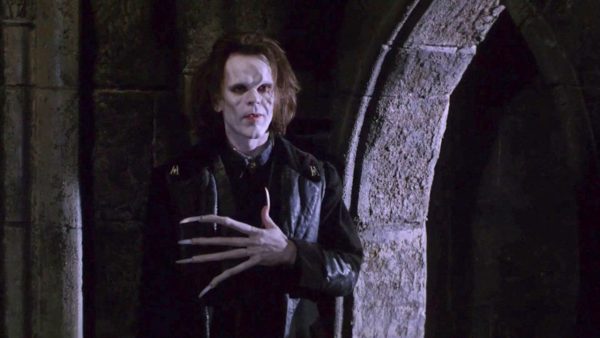
Ted Nicolaou made the Subspecies movies and built a genuine mythology around Radu, his vampire, with on-location filming in Romania that helped give a Gothic atmosphere which couldn’t be faked on a soundstage.
These guys weren’t Scorsese or Kubrick. But they were working moviemakers, putting out their products, employing crews and finding ingenious solutions to creative problems. They were journeymen directors and they deserve more credit than they’ve received.
Because what can’t be denied when you’ve made forty-odd movies: you get good at it. You discover what works. You create a style, even if that style is someone who has three weeks and $150,000 to make ninety minutes of watchable entertainment. That’s a skill. And one which has largely disappeared.
It couldn’t last, of course. Those exact conditions which made DTV horror profitable were based on a market that was already beginning to shift in the late ‘90s. DVDs arrived, replacing VHS and initially it seemed like a good idea. Better quality, and cheaper to produce. But with DVDs, shelf space became more precious. The video stores could stock more titles in the same space, and the paradox was that they became more selective. The massive shelf space of the VHS era shrank.

Blockbuster had always been a reliable market for DTV releases, and began to struggle. Then Netflix came along, first with mail-order DVDs then streaming. Independent video stores closed their doors by the thousands. The economics stopped working. Yeah, you could still make a cheap horror movie, but distribution was much harder. The DVD market became saturated and foreign sales dried up. The party was over by the mid-2000s.
And sure, some DTV horror movies are still being made. But it’s different now. The budgets have gotten even smaller, the distribution even more fragmented and the business model is harder to sustain. The brief window when it was possible to make a decent, middle-class living pushing out DTV horror has closed. Most likely forever.
I know I’ve spent an awful lot of words defending movies that others would consider trash. And I get it, these aren’t the most important movies in the grand history of cinema. You won’t have classes on Puppet Master vs. Demonic Toys taught in film school with The Seventh Seal.
But what we lost when that market collapsed is a training ground. A place where young moviemakers could make mistakes, practical effect artists could stay employed and actors could pay their rent. And we lost an experimental space, where unrestrained genre moviemaking didn’t have to answer tot algorithms or corporate IP strategies.

And this enabled a career trajectory. You could be a PA on Puppet Master, working your way up to an assistant director on Subspecies II and maybe direct whatever straight-to-video sequel needed a person behind the camera. It wasn’t glamorous and you sure as hell weren’t going to Cannes, but you were working, building a reel. You were in the industry.
So where does that person go now? YouTube? Self-distributing on Amazon Prime? A Kickstarter might fund a single feature if you’re lucky. The ladder was pulled up, and we’re all poorer for it.
We lost variety. The horror boom of DTV gave us hundreds of different nightmares, monsters, and approaches to scaring people. Demonic genies, murderous toys, Nazi puppeteers, gingerbread men with murder in mind and evil bongs. Some worked, most didn’t but all got their shot. They ended up on those video store shelves where some kid looking for anything different from the mainstream offerings could find them.
And now everything’s smoother and more professional. Netflix puts out horror movies based on audience analytics. Studios make sequels to movies that tested well with focus groups. Even indie horror now feels homogenised, all going after the A24 aesthetic, or whatever’s trending this month. And with all this polish and professionalism, it’s a lot more boring.

There’s no room left for beautiful failures, or ambitious misfires, or movies that had one good idea and 90 minutes to pull it off. The market doesn’t support it and the economics just don’t work. So we’re left with a genre landscape that technically is superior in every way, but it’s less alive, and less willing to take a risk on pure, uncut weirdness.
Direct-to-video horror movies in the 90s were not high art, that’s obvious. And rarely were they even competent art. But they were alive, and vital, and they represent something we’ve lost: a sustainable ecosystem for genre moviemaking that values creativity and productivity over perfection. They understood their audience and served them without condescension. They gave opportunities to people who would work hard, fast and cheap.
Wishmaster, Puppet Master and their ilk weren’t just movies; they proved the margins could be profitable, weird would work and you didn’t need $100 million to tell a story about deadly puppets or a horrific djinn.
In their own messy and imperfect way, they were beautiful. I miss them like I miss everything about that era: irrationally, intensely and knowing full well that even if I could get it back, it wouldn’t be as good as I remember.
But, damn, those video stores looked good.
Adam Page