Marc Cubelli is an actor, writer, and producer who served in all three capacities in the movie My Beautiful Bride (which is currently being distributed through Cinedigm Entertainment Group) and the upcoming Shooting Sid. As an actor he has appeared in such films as At The Jersey Shore, Chlorine, Kids vs. Monsters, A Girl Named Mara, and Captain Estupido. He has also written numerous screenplays that have been placed in many competitions including the Academy Nicholl Fellowships, the PAGE International Screenwriting Awards, and the American Zoetrope Screenplay Competition. He graduated from Boston College with a double major in history and communications and has studied acting at the Stella Adler Studio and the Baron Brown Studio. In an exclusive interview, Flickering Myth sat down with Marc Cubelli to talk about making movies and what we can see from him next…

Hi Marc Cubelli, welcome to Flickering Myth! What got you into filmmaking and made you realize that it was your chosen path?
In the back of my mind I always knew I wanted to be an actor, but I never really thought it was something I could make a career out of. I did plays in elementary school and high school, but I studied history in college, assuming I would be either a teacher or a lawyer. After I graduated college, I put out feelers to both occupations and realized that neither was my calling, and acting was all I really cared about.
How did you get fully started?
When I realized I wanted to be an actor I started taking acting classes in NYC. I got my first rep in NYC quickly, but I couldn’t even get an audition. That was when I started to write, because it was something I could do without anyone giving me permission. I booked extra work on One Life to Live and got my AFTRA card, and then the two unions merged, which made me SAG. Then the first screenplay that I wrote, a biopic of Andrew Jackson, was placed as a finalist in a screenplay competition. So, there were these little signs that I interpreted as me being on the right path. Then I attended an industry event in LA on a whim. I met 30 reps and one, just one, gave me her card and offered me representation if I moved out to LA. So I did, and that started the chain of events that eventually led to Shooting Sid. I could be wrong, but had it not been for that industry event, there’s a good chance we would not be speaking right now.
You are an actor and writer, but what came first, acting, or overall filmmaking?
Definitely acting, but when the parts failed to materialize, I turned to writing. The plan was to write a spec that would sell, but when I moved to LA I had my eyes opened to a whole world of DIY filmmaking, and I realized that I could make my own movie based on something that I could write. That was when I moved, organically, into producing.
How would you describe the projects that you typically prefer?
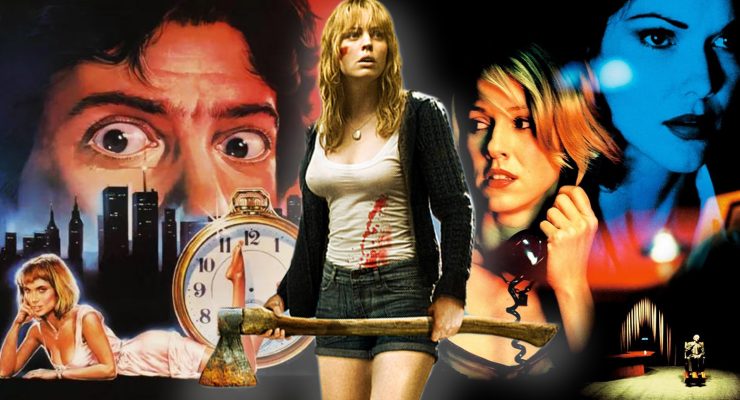
At a young age I was watching movies like Taxi Driver, Barton Fink and Blue Velvet, so I guess I am inclined towards the edgy and offbeat with characters to the like. I like Hollywood crowd pleasers as much as the next guy with your typical heroes and villains, but personally I prefer films where not everything is so black and white. Finally, as a history buff, I’m a sucker for a good period piece, and most of the scripts I’ve written fall into that genre in one way or another.
Tell us about the film Shooting Sid. Tell us about how that came about.
I wrote, produced, and starred in my first microbudget indie project, a thriller-film called My Beautiful Bride, and through that project I met Jaime Zevallos who became my collaborator, writing partner, industry mentor, and overall champion. Jaime came to me with the idea for Shooting Sid and together we wrote a spec called Guardian, which involves a homeless young boy building a time machine to rescue his parents who perish in a car accident. We optioned it, and it came close to getting made a few times, but it always fell through. In the meantime, I founded my own LLC, Hudson Street Films, and helped produce a few short films which Jaime wrote and directed and which I got to act in. I witnessed firsthand Jaime come into himself and really blossom as an artist and filmmaker. At a certain point the writing was on the wall, and Guardian became Shooting Sid.
Can you share any fun facts from working on the project?
The character of Sid was originally a ten-year-old boy, so when I was writing the original screenplay with Jaime, I was unwittingly writing a starring vehicle for myself. Me playing Sid was not on my bingo card, but anyone in this industry will tell you it’s one pivot after another. I also got to work with Austin Pendleton, who is one of the greats. Anyone who has followed his career knows he’s got a resume as long as his arm in the theatre, but of course when I was on the set with him all I wanted to talk about was My Cousin Vinny. He told me that he regretted playing that part because afterwards he got offered about twenty different roles with a stutter. For the record, I think he’s hilarious in that film (that almost goes without saying) so I’m glad he took that part, because I consider My Cousin Vinny to be an essential part of my childhood.
Watch the Official Teaser Trailer:
What do you hope audiences with take away from the film?
A few things. First and foremost, I hope audiences will walk away asking if time travel is really something mankind was meant to do. If some day, in the very, very, very distant future, it is indeed something we can do, should we move forward? What kind of can of worms would we be opening? Would we be able to move forward in an ethical and responsible manner?
On a more personal level, I’m hoping that audiences respond to the friendship that is depicted in the movie, and how the relationships we build with other people can be guardrails when we’re going through really dark periods in our lives.
As a proactive actor and writer in Hollywood, how important is it to generate your own projects rather than waiting for a knock at the door?
Oh, it’s paramount. The market is so saturated now that you must create a calling card for yourself to stand out. I’m a firm believer that attracting is better than chasing, and that goes double in this industry. On top of that, there’s really is freedom in being able to do your own thing. You can create a path for yourself and “find your tribe”, as the saying goes. You can really build your own little community that can sustain you when you’re navigating the stormy seas of this industry. Also, you can give hope and inspire others. When I first was pursuing acting, Brit Marling was setting Sundance on fire with Another Earth and Sound of My Voice (two projects that inspired Shooting Sid in different ways), and she was really the first one to inspire me to go out and find my own voice as an artist through making my own work.
In today’s Hollywood, there is a significant push for greater inclusivity and representation. How do you see your work contributing to this movement, and what changes do you still hope to see in the industry?
I’m very proud of our diverse cast and I’m very proud of my industry for pushing for greater inclusivity and representation. I know that Jaime is very proud of his Peruvian ancestry, and I hope that the success of this film inspires other Latino filmmakers to make their own stories and find their own voices. In the future, I would love to see various projects from different communities of filmmakers, because there are so many stories out there that have yet to be told, and I can’t wait to see them.
Just for fun! If you went back to the golden era of Hollywood, which actor do you resonate with most and why?
I’m obsessed with everything Brando (which is why I wrote a screenplay about him) and also Robert Mitchum. Both actors had a danger to them – it’s intimidating onscreen, but you can’t look away, either.
What’s coming up next for you?
I have a horror script called The Witch of Whitford, in which a man pressures his wife into having a threesome with a woman who turns out to be a modern-day witch. My favorite horror movies are ones that find the horror in everyday social situations, so I’m really excited to see it get produced. I also have a screenplay about Lee Atwater, the political strategist who managed George Bush’s controversial campaign for president in 1988. In these hyper-politicized times, I would like to think there’s a market for projects that depict how we got to the place we’re at now.
We are excited to see it. What’s the best way to follow you online?
I’m active on both Marc Cubelli (@MarcCubelli)/X and Instagram.
Our thanks to Marc Cubelli for taking the time for this interview, and to Liz Rodriguez from EMR Media for helping us put it together.