Love, 2015.
Directed by Gaspar Noé.
Starring Aomi Muyock, Karl Glusman and Klara Kristin.
SYNOPSIS:
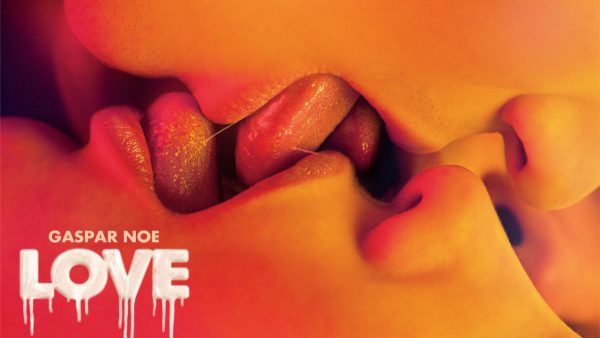
Murphy is an American living in Paris who enters a highly sexually and emotionally charged relationship with the unstable Electra. Unaware of the effect it will have on their relationship, they invite their pretty neighbour into their bed.
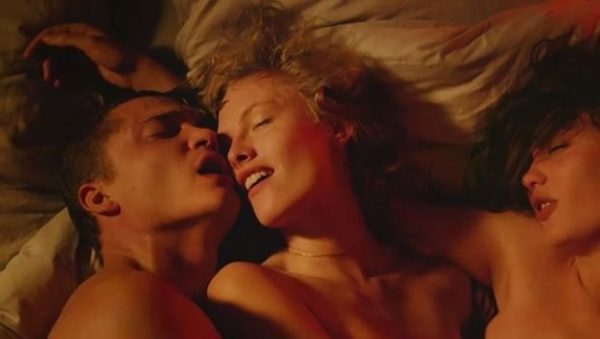
With the release of Love, some criticised Gaspar Noé (Irreversible, Enter the Void) as a practitioner of perversion, while others praised him for reflecting intimacy honestly, neglecting the constraints of censorship and the taboo of unsimulated sex. In reality the use of unsimulated sex in film has been around since the era of silent film and while its use clearly hasn’t changed, its intent to emphasise different themes or simply shock audiences has.
Using an eclectic combination of sexual explicitness and drama to controversially captivate his audience, Gaspar Noé’s Love ultimately walks too close between the lines of pornography and art, utilising sexuality for shock value more than for meaning. However, that isn’t to say that Noé doesn’t use it effectively in some areas. In portraying intimacy from the perspective of his protagonist looking back, Noé allows the audience to question where the boundaries of love lie and the duality of meaning in loves rhetoric.

If Gaspar Noe’s Love were to have a counterpart it would without a doubt be Mark Kozelek’s uniform, Sun Kill Moon. Mirroring the same unshifting melancholic emotions, Noé’s Love is almost an exact theatrical adaptation of Kozelek’s album Benji. It has the same introspective self-reflection of past relationships and retains the same melancholic tone throughout its entirety, focussing its energy on how the story is told. Perhaps the best way to summarise Love is to quote Noé’s protagonist; “I want to make movies out of blood, sperm and tears.” These lines explain the film better than any others, emphasising that the love can exist in the violence of possession, in the intimacy shared between two people and in the pain of it not being reciprocated. All of which are adequately explored and analysed in Noé’s signature form of visual storytelling.
Opening first to a shot of Murphy and Electra sharing their intimacy, Love wastes no time in emphasising that it has nothing to hide, quite literally. It dramatically identifies two things, the first being the symbiotism between both characters and the second being the tone of what to expect for the next two hours.
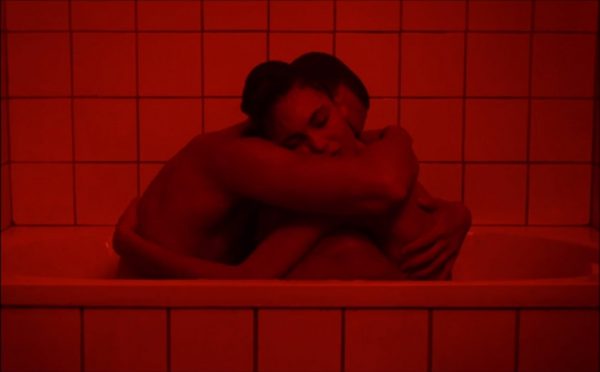
Noé’s film evaluates what love means in every facet, holding our attention to the plot line by uniquely choreographing it to emphasise the illegitimacy of Murphy’s love for Electra. Noé most notably does this by emphasising how possession and ownership are synonyms of love for Murphy as he refuses to accept that she might believe otherwise.
While the plot and storytelling are gripping, Murphy’s melancholic monologue does start to become tantalizingly tedious and repetitious, distracting audiences from the primary narrative. Even when Murphy takes ecstasy as a synthetic means to overcome the depression he feels remembering losing the love of his life, he continues to sway in a haze of misery, emphasising that any synthetic way to mimic love is incomparable to what he use to feel.
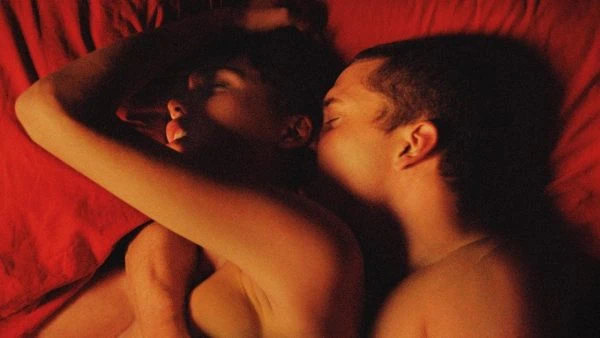
What remains unique to Love is the way Noé uses the rhetoric of relationships as a commentary on the duality of its meaning. Protection is a large theme of the film and is spoken as one of the last lines, highlighting how protection encourages feelings of possession and entitlement. These aspects of Love are by far its strongest attributes and make for a truly interesting viewing.
Overall the film’s greatest achievement by far is its soundtrack. Noé’s selection of psychadelica, progressive rock and classical music wonderfully denotes the evolution and downfall of Murphy and Electra’s relationship. Funkaledic’s ‘maggot brain’ is one of the most compelling parts of the film, fuelling the main drama of the film’s plot and creating such an atmosphere that no such scene comes close to topping its deliverance. Ultimately, despite exploring a number of compelling questions around what love means, Love uses sex far too much for its intent to be taken seriously, baiting its audience by appearing controversial.
Joshua Gill
Originally published June 1, 2021. Updated July 11, 2021.