As the film turns 40, Hasitha Fernando looks at the story behind Highlander…
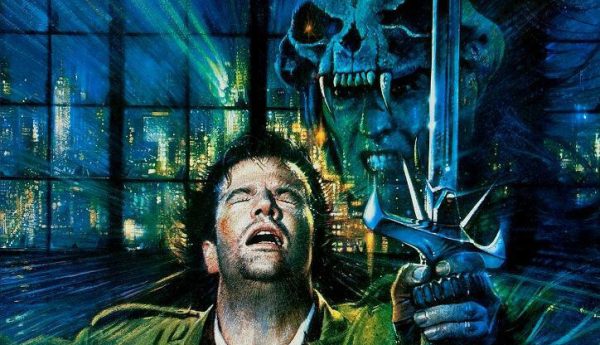
Highlander is one of those movies that had an indelible impact on any kid growing up in the 80s. I mean who wouldn’t enjoy sword wielding immortal heroes battling it out with larger-than-life baddies to the sound of Queen right? Sounds all kinds of awesome and that’s pretty much what Highlander was. As the cult classic fantasy adventure celebrates its 40th anniversary we look back at what went on behind-the-scenes during the making of the film…
The script was written as an undergraduate thesis assignment
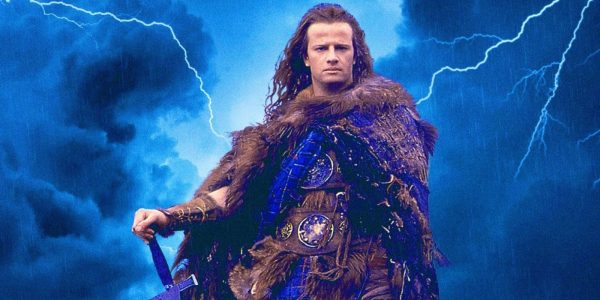
The original script for Highlander was actually written as a senior thesis assignment for the undergraduate screenwriting program at UCLA by Gregory Widen. It was then titled “Shadow Clan” and drew heavy inspiration from Ridley Scott’s 1977 period flick The Duelists, whose story centered around a decades-long feud between two swordsmen. He was additionally inspired during one of his vacations to Scotland, where he came across an impressive suit of armor at a museum in Edinburgh and wondered what it would be like if the man who wore it would be alive and kicking in the present day. Widen’s mentor was so impressed with what he read that he advised the budding writer to send it over to an agent for a looksee and eventually ended up selling the script for $200,000. This became the first draft of what would eventually become the final screenplay for the movie.
There were multiple changes to the script during development
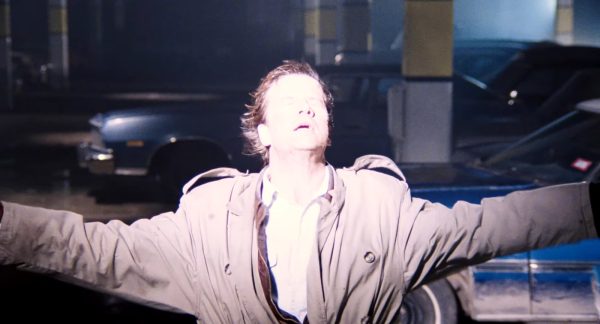
As with most feature films the script for Highlander too underwent multiple revisions before the final screenplay came out. Because of this Widen’s first draft and the shooting script differed from each other in a great many way. For one, Widen’s original narrative was much darker and contained more violence. Certain details of characters too were different in the final screenplay with Ramírez being a Spaniard born in 1100, instead of being an ancient Egyptian and the Kurgan being described more as a complex cold-blooded killer rather than a one-dimensional villain. Other elements that were changed during the course of script development were the immortals being able to have children and no energy being released when an immortal killed off another immortal.
SEE ALSO: Highlander: The Original Screenplay graphic novel announced by Titan Comics
Russell Mulcahy used music video techniques when directing the film
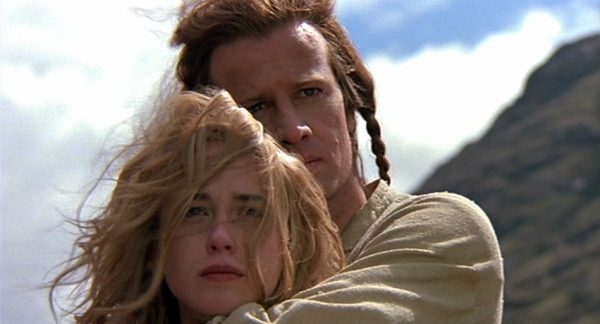
Russell Mulcahy developed an interest in filmmaking from a very young age, making short films with his 8mm camera along with his friends. His passion for the art continued even when he was schooling, so much so that he worked as a part-time film editor in Australia’s Seven Network after school. As time progressed Mulcahy became a much sought after director in the music video industry and before transitioning to the world of feature film he had worked with the likes of Duran Duran, Elton John, AC/DC, Culture Club, the Human League, the Stranglers and Sex Pistols. Mulcahy’s iconic music video for the Buggles’ Video Killed the Radio Star incidentally became the first music video to be played on MTV in 1981. The young creative transitioned to feature film with the 1984 Australian nature horror Razorback which went on to become a cult hit despite being a box office failure. Mulcahy next went on to helm Highlander, two years later, and incorporated many of the styles scenes in his music videos which include – fast cuts, neo-noir lighting, long tracking shots and windblow drapery.
Christopher Lambert knew very little English when he was cast
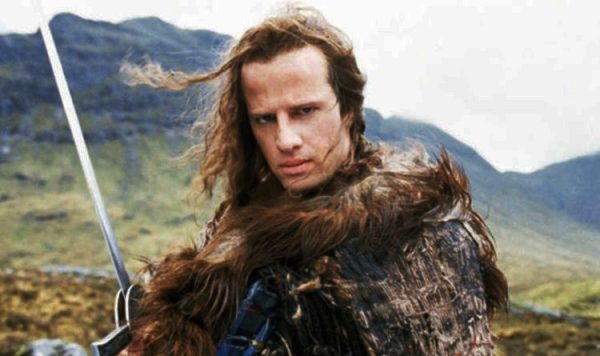
Christopher Lambert started his career playing supporting roles in French movies before gaining international recognition for portraying Tarzan in 1984’s Greystoke: The Legend of Tarzan, Lord of the Apes. The role of Connor MacLeod was first offered to none other than Kurt Russell, but at the insistence of Goldie Hawn the actor dropped out. One day when Mulcahy was flipping through the pages of a magazine he saw a photograph of the dashing Christopher Lambert from his recent role of Greystoke: The Legend of Tarzan, Lord of the Apes, and at that very moment the director was convinced Lambert was the guy he needed to play Connor MacLeod. There was one issue though. Lambert was not too fluent in English and Highlander had a lot more dialogue than Greystoke: The Legend of Tarzan, Lord of the Apes. But the actor took it as a challenge and started brushing up on his spoken English. He even spent time with a dialogue coach to develop an accent which wasn’t country-specific and sounded different. In preparation for his role Lambert also trained extensively with British Olympic fencer Bob Anderson to master sword fighting. Prior to Lambert’s casting other actors considered for the role of Connor MacLeod were Michael Douglas, Ed Harris, Kevin Costner, Scott Glenn, Mel Gibson, Peter Weller, Mickey Rourke and William Hurt.
Sean Connery had to shoot all of his scenes within the span of one week
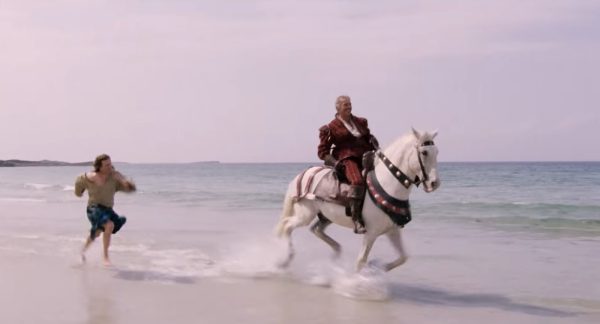
Sean Connery is an actor that requires no introduction. The gruff Scottish actor who launched his career playing the suave secret agent James Bond plays an instrumental role in Highlander playing the flamboyant Juan Sánchez-Villalobos Ramírez, an immortal of Egyptian origin who trains Connor MacLeod to defeat the Kurgan. Due to Connery’s constant demand and busy schedule the filmmakers had only one week to shoot all his scenes for the film but director Russell Mulcahy and his crew achieved the impossible by doing just that. Connery even had a bet with Mulcahy thinking he would not accomplish this feat, but the talented filmmaker ended up winning the bet. Connery was handsomely compensated to a tune of $1 million for one week’s work on Highlander. The actor and Christopher Lambert became close friends during this short time period and at Lambert’s suggestion Connery even reprised his role for Highlander II: The Quickening.
Clancy Brown got paid “nothing” for playing the Kurgan
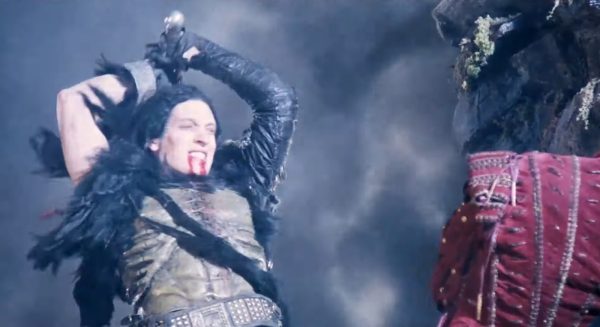
In a career that spans four decades Clancy Brown has made a living primarily playing villainous and authoritarian roles. Brown made his screen debut in the 1983 crime drama Bad Boys, opposite Sean Penn and Esai Morales. He followed it up with the cult hit The Adventures of Buckaroo Banzai Across the 8th Dimension the following year, and shortly after was cast to play the Kurgan in Highlander. Brown almost turned down the role since it required prosthetics and he previously suffered an extreme allergic reaction to prosthetic glue on the set of 1985’s The Bride, where he portrayed Frankenstein’s monster. The actor was hired by Mulcahy based on the recommendation of musician Sting, who’d worked previously with him in The Bride. After being cast Brown had wanted his portrayal to be something more than ‘moustache twirling villainy’ and even suggested the Kurgan be dressed in a suit and bowler hat instead of a biker outfit. Writer Gregory Widen has also revealed in later interviews that the Kurgan was a more complex and tortured villain as opposed to the cackling psychopath we see in the movie. Arnold Schwarzenegger, Rutger Hauer and Nick Nolte were some of the actors considered to play the Kurgan until Brown nabbed the role, with the actor stating in a 2021 interview that he was paid next to “nothing” for his work. Regardless, to say Brown made the character his own would be an understatement of monumental proportions.
Budget constraints, near decapitations & other production drama
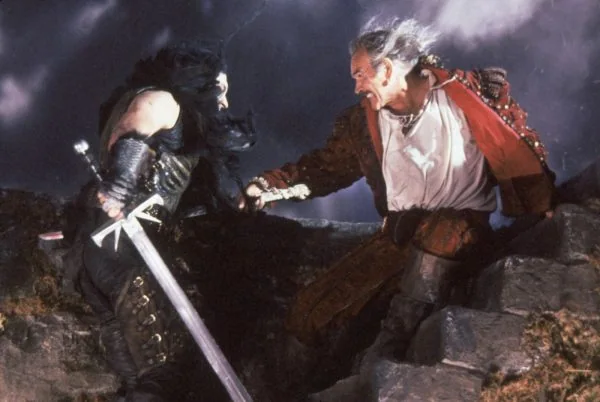
The total production budget for Highlander was a very modest $13 million, put up by Thorn EMI Screen Entertainment. And considering a sizeable chunk of that budget went to pay Sean Connery’s involvement meant that Russell Mulcahy & co. had to be smart, creative and resourceful with how they utilized their limited budget. Due to the budgetary constraints the producers shot the movie very fast in Scotland, London and New York City, which was reminiscent of “guerrilla-style” filmmaking. During one particular scene that was being shot, Connery was nearly decapitated by Clancy Brown, when Brown’s character burst through the door and cut the candelabra instead of the table prop, like he was supposed to. This mistake nearly cost Connery his life and the veteran actor was not too pleased with what transpired, but both parties reconciled amicably afterwards. According to Christopher Lambert and Russell Mulcahy, Connery was occasionally drunk during a portion of the Scotland shoot as well.
Queen was not the original choice for the film’s soundtrack
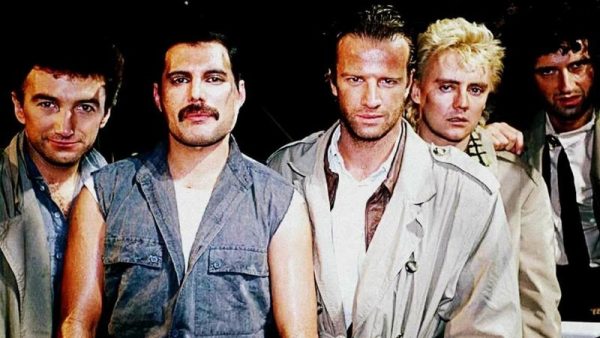
Although Queen’s songs have become synonymous with the Highlander franchise, you will be surprised to know that they were not the original choice to craft the film’s soundtrack. Prior to hiring Freddie Mercury and his band, the producers were thinking of working with David Bowie, Sting, Marillion and Duran Duran instead. Queen was originally supposed to record just one song for the movie, but after viewing footage of the film the band was inspired to write more. Each band member of Queen had a favorite scene from Highlander and composed songs specifically for that moment. Brian May composed “Who Wants to Live Forever” after seeing the film, and Roger Taylor used the line “It’s a kind of magic”, which served as the basis for the end title song.
Middling reviews, cult status & the birth of a franchise
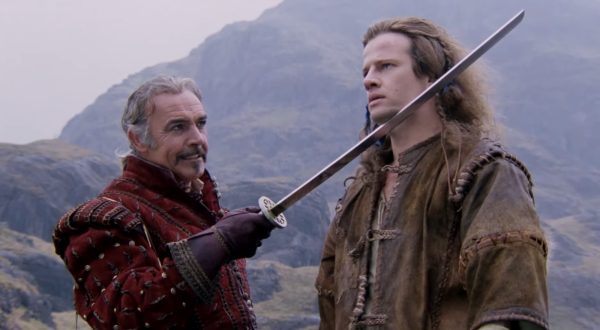
Made on a production budget of $13 million, Highlander went on to make $19 million at the worldwide box office, which was decent for an original IP all things considered. Even the critic reviews for the effort was middling in nature at the time it debuted. But with the passage of time the movie took on a life of its own thanks to its popularity in home video platforms and thus Highlander transformed into a cult film which prompted film critics to reappraise the movie. As of currently, Highlander boasts 69% on the review aggregator site Rotten Tomatoes with the site’s critical consensus summarizing, “People hate Highlander because it’s cheesy, bombastic, and absurd. And people love it for the same reasons”.
The enduring nature of the IP’s popularity invariably led to the creation of a franchise with Highlander II: The Quickening releasing in 1991 to mostly negative reviews, and Highlander III: The Sorcerer released three years later which disregarded the events of its predecessor and functioned as a direct sequel to the original. Around this same time a spin-off series Highlander: The Series kicked off in 1992 featuring a new character Duncan MacLeod played by Adrian Paul and ran for a total of six seasons before ending in 1998. Highlander: The Animated series which aired from 1994 to 1996 was a loose adaptation of the original film set in the 27th century and earth being reimagined as a post-apocalyptic wasteland. A reboot of the property is currently in the works with Man of Steel alum Henry Cavill playing the lead role and Chad Stahelski of John Wick fame directing.
What are your thoughts on Highlander? Let us know on our socials @FlickeringMyth…
Hasitha Fernando is a part-time medical practitioner and full-time cinephile. Follow him on Twitter via @DoctorCinephile for regular updates on the world of entertainment.