Adam Page on the 80s horror obsession with with suburbia…
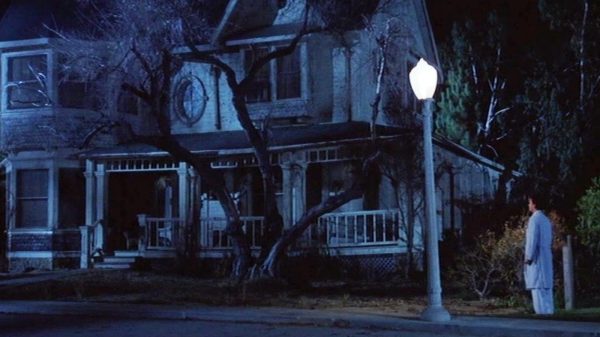
Horror cinema puts us in some uncomfortable places. It always has. Whether it’s digging up the freshly buried body of your child killed by a speeding tanker, or standing in the shower, soap in your eyes while you reach for a towel and find a large knife being held by an even larger killer.
But even with all these scenarios, there is nothing, really nothing, that creeps me out more than the American suburbs. The unnaturally green, pristine lawns. The identical houses, all marching in formation like some lunatic architectural Nuremberg Rally. Everything about it smells like a lie. A lie that’s been wrapped in vinyl siding, and fertilised with the shattered dreams of anyone who ever wanted something more than the two-car garage.
Moviemakers in the 1980s knew this. They understood, with the clarity of an early-morning hangover, that there was something deeply wrong with the suburbs. Not in the obvious sense, nobody was starving to death, schools had funding and kids could ride their bikes until the streetlamps came on. The wrongness went deeper. It was more insidious. It was the wrongness of a thing that looks perfect on the outside, but all the while something rotten incubates underneath.
So they made a few movies about it.
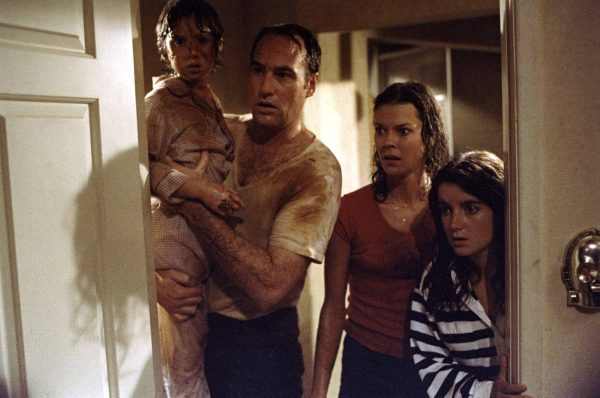
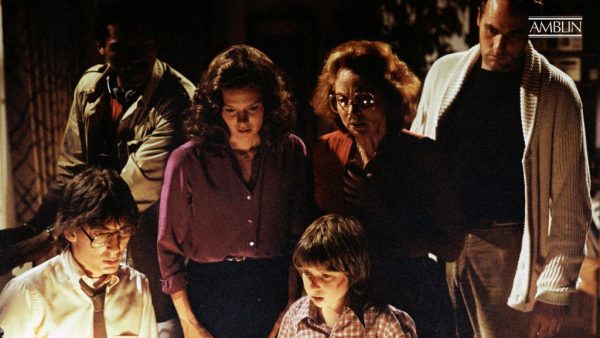
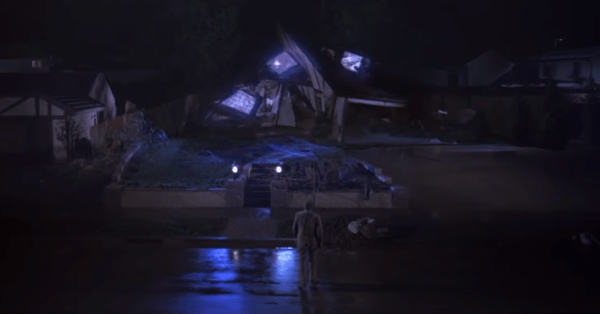
In 1982, Poltergeist arrived like a Molotov cocktail hurled through the picture window of Reagan’s USA. Here was Tobe Hooper, or Steven Spielberg, depending on how much you’ve had to drink and who you ask, taking the most anodyne and sanitised version of suburban success and pulling it inside out like a dirty sock. The Freeling family lives in Cuesta Verde, a housing development so new, you can still smell the freshly-cut lumber and paint fumes. Dad sells houses and mom’s a homemaker. The TV babysits when mom is occupied. The American Dream running on autopilot, and so smoothly that nobody notices they are living on top of a graveyard.
It was the 80s, so of course they were.
We learn that the developer moved the headstones but not the bodies. The perfect metaphor for suburban development, no substance and all surface. Take the land and scour it of any history, drop some cookie-cutter houses on it and sell the fantasy. Just ignore what came before. Ignore the Indigenous burial ground and the toxic waste dumps and foreclosed farms. Move the headstones and call it progress.
In Poltergeist, the horror doesn’t come from outside; it comes from the TV. The glowing oracle of consumer culture that sits in the living room like a malevolent member of the family. Little Carol Anne gets dragged into the TV, literally consumed by the same technology meant to entertain her. Even the house itself turns against the family. The skeletal tree outside the bedroom turns predatory, the swimming pool fills with rotting corpses and the cupboard is now a portal to hell. Everything that was supposed to provide safety and comfort has been weaponised.
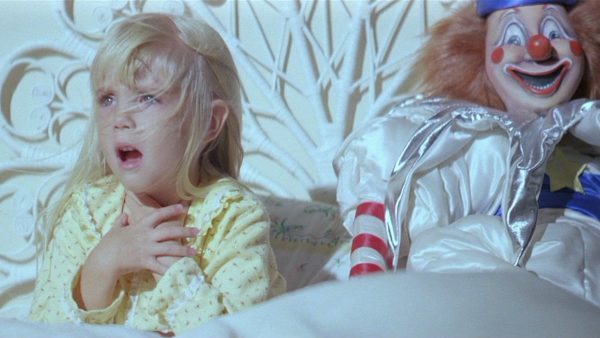
And what makes it truly terrifying is, the Freelings did everything right. They bought the house and paid the mortgage. They believed in the system, and the system devoured their daughter anyway.
The facade was showing serious cracks by 1989. The ‘Burbs from Joe Dante took the next logical step by asking, what if the real horror isn’t supernatural at all? What if it’s just the neighbours?
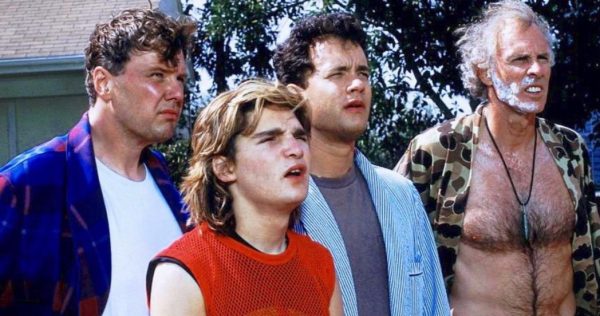
Tom Hanks stars as Ray Peterson, suburban everyman, who has a week off work and decides to take that time doing what any normal person would do. Obsessively surveil the neighbours and build elaborate conspiracy theories about them. The Klopeks, the reclusive family who recently moved in next door, are the focus of Ray’s increasing demented investigations. They keep odd hours. They don’t mow the lawn. They have a weird furnace.
In the suburbs, these are capital crimes.
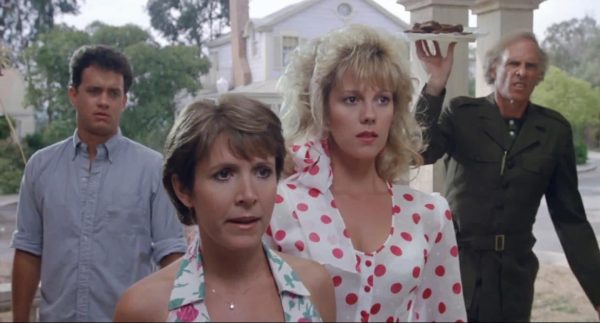
Now, sure The ‘Burbs is a comedy. But it’s comedy in the same way Dr. Strangelove is. Laugh too hard and you just might cry. Joe Dante understood the particular kind of madness suburban life can breed. When everyone’s house looks the same, when they drive the same cars and send the kids to the same school, and shop at the same supermarkets, well, difference becomes threatening. There is a demand of conformity in the suburbs, and anything that disrupts that conformity must be investigated, contained and finally eliminated.
Ray and his neighbours, played with crazy intensity by Bruce Dern and Corey Feldman, change into a lynch mob without the slightest evidence of any crime. They break into the Klopeks house. Rip up their yard. Wild theories involving serial killers and Satanic cults are created, just because these people don’t quite fit the suburban mould.
The genius of the movie is Dante never really lets us off the hook. Yeah, the neighbours are paranoid and are breaking every principal of civil society. But, and this is the crucial point, they may be right. The Klopeks are weird. There is something off about them. Living in the suburbs has created a situation in which suspicion is entirely reasonable and completely unjustified.
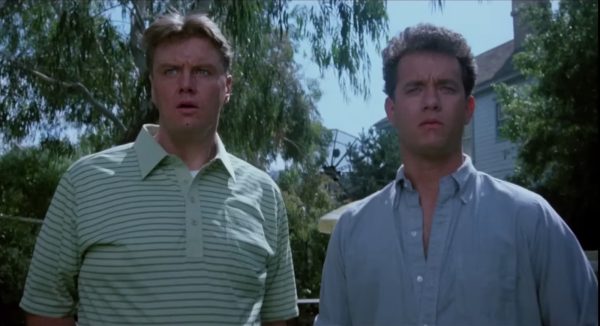
It’s Rear Window brought into a sunny cul-de-sac. The voyeurism is cranked up to pathological levels, and the murder has been replaced with the slow death of community trust.
Then we have The People Under the Stairs, from Wes Craven in 1991. This took suburban horror and gave it a good, healthy dose of class consciousness. This isn’t subtle moviemaking; Wes Craven has about as much interest in subtlety as a sledgehammer has in needlepoint. But occasionally you have to hit the nail right on the head, especially when that nail is American capitalism.
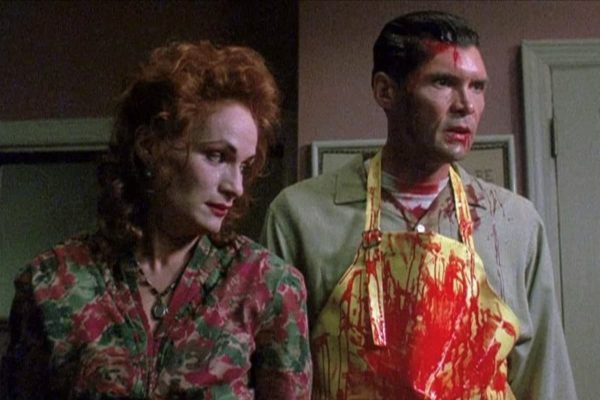
We follow a young African-American kid nicknamed Fool, played by Brandon Adams. Fool and his two associates break into a suburban house to rob from the wealthy white owners, only to find the house is a nightmare factory, with kidnapped kids, cannibalism, incest and enough repression to fill up a thousand therapy sessions. The owners, just known as Mom and Dad because Craven doesn’t mess around, created their own horrific kingdom in their suburban fortress. They steal children from poorer neighbourhoods, trying to force them into the idealised version of perfect offspring.
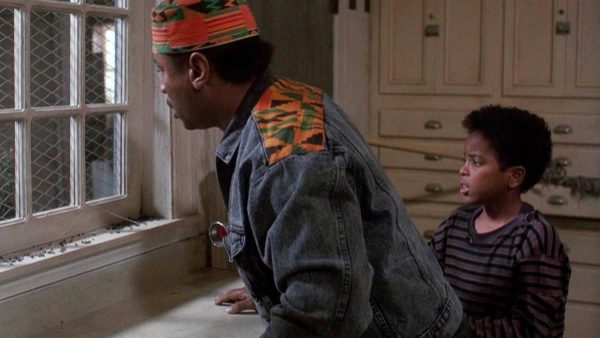
The kids who don’t comply end up in the basement. Or the walls. It’s a little complicated.
The People Under the Stairs made explicit what other movies only really hinted at. That the suburban dream is built on exploitation. That manicured lawn in front of the pristine house, it all requires someone else to suffer. The landlords who own the apartment building where Fool lives are the same ones who own this suburban horror fortress. They take wealth from the poor in order to build their isolated paradise, and imprison the children of the same people they exploit.
The house ends up as the perfect symbol of American class dynamics. It’s gleaming on the outside while rotting within, sustained with hidden violence and the constant abuse of those without power. The people under the stairs are the literal underclass. Confined to small spaces, without freedom or light and made animalistic while the owners sit upstairs, counting money and polishing their delusions.
So why, in the 1980s, did they fixate on suburban horror? Why turn that apparent safety of middle-class life into a source of terror?
The answer, like everything in America, is complicated. Part of it comes down to timing. The suburbs of the 80s were the direct descendants of the post-war boom, those huge developments that crawled along the landscape like kudzu vines, promising every family their very own plot of paradise. That promise had curdled by the 80s. That post-war boom was starting to falter. The lifetime, guaranteed manufacturing jobs that had funded suburbia’s expansion were beginning to be sent overseas. The American Dream was becoming more expensive and, for a lot of people, unattainable.
On the other hand, those who achieved it were beginning to wonder if this was really all there was. So you got the house and spouse, kids, lawn and car. Then what? It’s still you, with all your anxieties and barely suppressed rage. The suburbs promised fulfilment. Instead you got isolation. They promised community. You got conformity.
The horror movies of this era tap into that cognitive dissonance. You were told that your suspicions were correct and the dream is hollow. The house is haunted and the neighbours are watching. The TV is poisoning your children and even the ground beneath your feet is contaminated. All that you worked for is built on a foundation of lies. Sooner or later, the bill comes due.

There’s another part of these movies that’s worth exploring, and that’s the role of media and technology. In Poltergeist, the TV is a conduit for evil. Not a metaphor, the TV literally takes Carol Anne, dragging her into some kind of static-filled underworld. There are three TVs in the house, including in the kids room that Carol Anne talks to like an imaginary friend. The screens are always on, filling the silence with false noise.
For 1982, this was pretty prescient. Cable was starting to expand. MTV had just landed on our screens. VCRs were turning living rooms into private cinemas. The suburbs were becoming more connected to media and pulling away from real human contact. Hooper and Spielberg knew this wasn’t any sort of progress, it was a slow-motion car crash. We were inviting something we didn’t fully understand into our homes, which could reprogram our children and reshape our desires. Something that could ultimately consume us.
The ‘Burbs takes this even further, giving us neighbours who communicate mainly through surveillance and suspicion instead of actual conversation. They peer at each other through their windows and spy with binoculars. They build up narratives about each other based on assumptions and fragments. It’s just like social media before it existed, paranoia and tribalism and dehumanisation. But with hedges instead of hashtags.
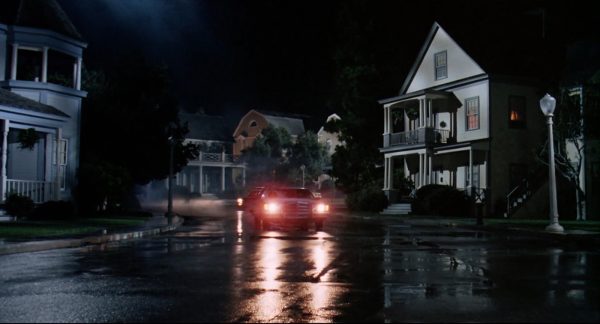
In all these movies, the house acts as a refuge and a trap. It’s supposed to be the grand symbol of success and stability. If you own a home, you’ve made it. A real adult, with a real stake in society. But these movies show us the house as a prison. The Freelings can’t get away from their haunted house as they have sunk everything into it. Ray Peterson is actually on vacation from work but can’t stop obsessing about neighbourhood safety and property values. The kids in The People Under the Stairs are physically trapped in a house turned into a monument to the owners’ pathology.
The dark truth about home ownership in America is that it chains you. You are invested financially, emotionally and even psychologically in maintaining those property values, keeping up appearances and looking after your investment. You can’t just walk away, because the house own you just as much as you own it.
The suburbs in America were designed to create this dynamic. Built after World War II, they were partially a way to make society stable, to allow workers a stake in capitalism and change any potential radicals into property owners, with a healthy mortgage to pay and a lawn to mow. And it worked. People stopped demanding revolutionary change and started demanding better school districts.
But everything comes with a price. The house is a gilded cage, and the neighbourhood is a panopticon, with everyone watching everyone else to make sure they comply. The dream becomes nothing more than a 30 year debt. And that’s assuming you don’t miss a payment or lose your job or get sick or get divorced or don’t do any of the thousand things that could collapse your carefully calibrated plan.
The reason these movies endure isn’t just their craft. Although Poltergeist is still a triumph of practical effects. The ‘Burbs is quotable as hell and The People Under the Stairs has a crazed energy that Craven’s later movies would lack. No, what makes them endure is their honesty regarding suburban life.
They acknowledge the appealing parts; comfort, security and pride of ownership, while at the same time they show us the costs. There is the conformity which crushes individuality. Isolation masquerading as privacy. Competition which destroys community. They show us that the real organising principal of everyday life is fear. Fear of declining property values, fear of crime. Fear of the wrong type moving in next door.
They suggest that the horror was always there, part of the concept from the very beginning. Individualism can’t be mass-produced. Community can’t be achieved through isolationism. And you can’t build paradise on stolen land and not expect it to turn around and bite you in the ass.
The ghosts in Poltergeist aren’t random spirits out for kicks on a Friday night; they’re people whose graves were paved over in the name of profit. It isn’t baseless paranoia floating about in The ‘Burbs, but rather the logical end result of a social system that prioritises property over people. And the nightmare situation in The People Under the Stairs is not some random aberration, it’s capitalisms internal logic pushed to its ultimate conclusion.
With these movies, where I turn and stare thoughtfully out of the window is when you realise they offer no solutions. The Freelings manage to escape their house when it pulls itself apart, but they’ll buy another one. Probably on another development that should have been left alone. Ray Peterson sees the error of his paranoid ways for around six seconds before we see the Klopeks are actually murderers. His suspicions are validated, and he will never trust another neighbour in his life. Fool manages to escape Mon and Dads house, but the system that helped create it is still there, still ready to grind up a new generation.
The suburbs always endure. They sprawl out, consuming farmland and forests, always promising that same dream to new generations of buyers. The horror movies of the 80s tried to warn us, to show us what we were really buying into. We watched them with some nervous laughter, then went out and mowed the lawn.
Because the awful thing about the American Dream is; even when you’re certain it’s a nightmare and you can see the bodies under the foundations, when you can see the chains disguised as property deeds and the madness behind the curtains, even with all that, it’s still the only dream on offer. You can recognise the horror. You just can’t escape it.
The television is always on. The suburbs always expand. The house always wins.
And right now, somewhere a family is moving into a nice new development. There will be good schools, low crime rates and a homeowners association to keep everything looking perfect. Boxes are being unpacked, and they are wondering what colour to paint the nursery.
They have no idea what’s buried in their back yard.
But, eventually, they will.
Adam Page