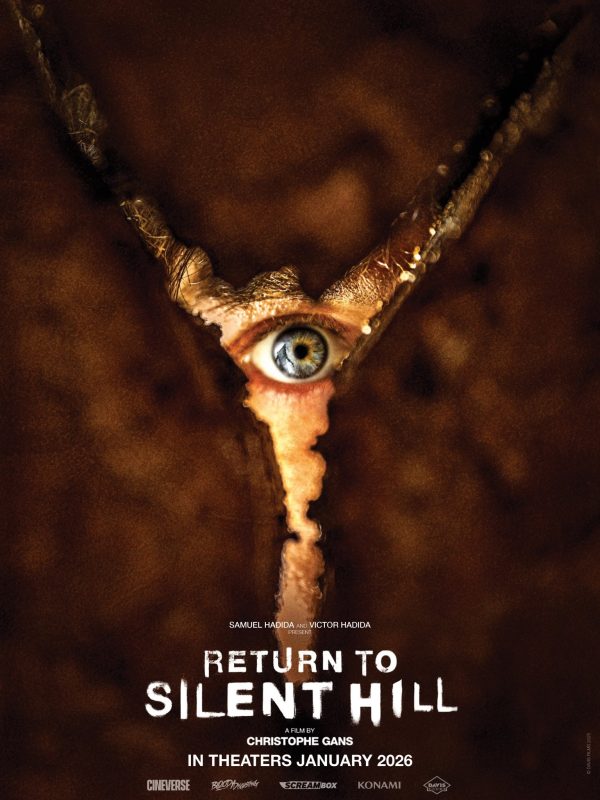
Return to Silent Hill, 2026.
Directed by Christophe Gans.
Starring Jeremy Irvine, Hannah Emily Anderson, Evie Templeton, Pearse Egan, Eve Macklin, Robert Strange, Emily Carding, Martine Richards, Howard Saddler, Matteo Pasquini, Melissa Graham, Lara Duru, Karya Duru, and Nicola Alexis.
SYNOPSIS:
When a man receives a mysterious letter from his lost love, he is drawn to Silent Hill, a once familiar town now consumed by darkness.
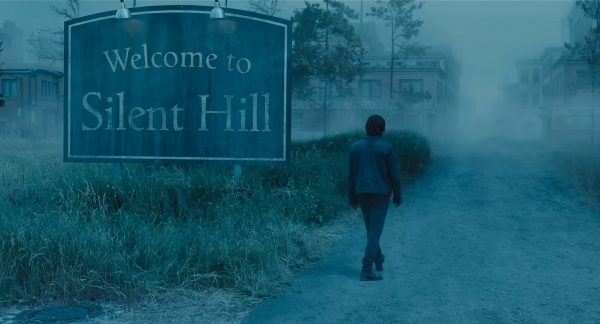
Director Christophe Gans understands Silent Hill so arrestingly and vividly when it comes to visual nightmare fuel that it makes it all the more frustrating that he still doesn’t “get” what he is adapting, not only from a place of psychology, but in the case of Return to Silent Hill, the story itself.
One would also presume that adapting the standalone sequel Silent Hill 2 (a game of top-shelf psychological horror, capable of standing tall along works from respected auteurs such as David Lynch) without any major studio backing would solve a lot of what went wrong the first time around, like probable mandates forcing the insertion of the Red Pyramid (monstrously imposing, carrying a gigantic blade so long it needs to be dragged across the ground, who has a metallic red pyramid for a head, and is now played by Robert Strange) into a narrative where he didn’t belong (his significance is tied to this particular story, which makes it all the more insane that he doesn’t get much screen time here).
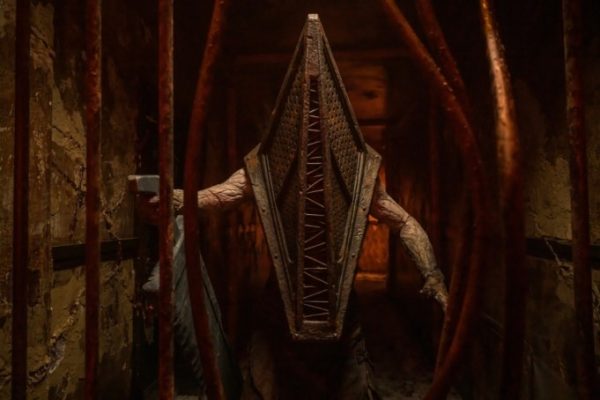
It turns out that it’s likely more plausible that Christophe Gans made those choices in the first film himself. Here, he is like the ESRB when assigning a rating for the original game, missing subtle sexual symbolism (though the game’s main one is, thankfully, delicately handled here). Take the sexualized feminine mannequin monsters from the game, which consist of two sets of legs (one above the torso and the other, obviously, below); they aren’t even here despite what they represent being vital to a key character.
Traces of that are present in this adaptation. However, it becomes clear early on when Red Pyramid is on the prowl and encountering a different type of monster in an apartment room while our protagonist looks on while hiding in a closet, and pummels it to death rather than doing something else highly suggestive (whether the game’s director Masahiro Ito intended it to be perceived that way or not) that won’t be spoiled (for anyone who would rather experience the much better game from writers Keiichiro Toyama and Hiroyuki Owaku or its excellent 2024 remake), either the filmmakers (which includes screenwriters William Josef Schneider and Sandra Vo-Anh) are afraid to embrace some themes of the story or have missed them all together.
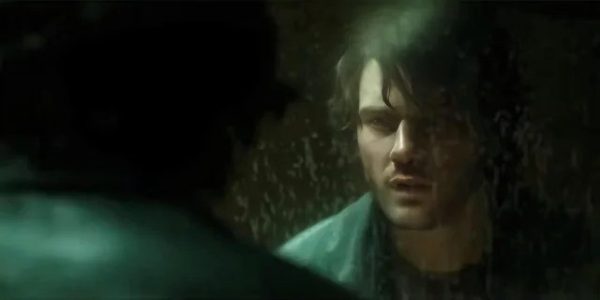
The filmmakers do know this: the story centers on James (Jeremy Irvine), who has received a letter from his wife, Mary (Hannah Emily Anderson), inviting him to reunite in Silent Hill. Theoretically, the existence of such a letter should be impossible, considering Mary died from a terminal illness, sending James into a depressive spiral. With more time to fill and opportunities to provide more context and backstory, the filmmakers do take advantage of this, even if it is a questionable decision to begin the film with a meet-cute rather than the game’s phenomenal opening, in which James questions his sanity internally, desperate that this is real.
However, I have zero qualms with Christophe Gans wanting to shake things up and approach the narrative his way. If anything, his idea to launch into flashbacks whenever James enters a building or area of the town that holds significance for their relationship, so we can get a sense of what that love and this town were like under normal circumstances, is a solid one in theory. However, it isn’t necessarily used for that purpose; rather, it shoehorns in aspects of the town cult to tie it back to Mary and problems with the relationship. It’s hokey stupidity that cheapens the merits and themes of this narrative. And that’s why it’s an issue; the original story still contains enough abstractness and room for individual interpretation that there is no need to change it altogether. It is baffling that someone would even consider adapting this game without realizing that part of its effectiveness stems from its standalone restraint and minimal references to town lore, which keep it functioning as a personal hellish journey of repressed guilt, repression, and trauma.

Nevertheless, James also encounters other characters called to and stuck in Silent Hill, ranging from Angela (also played by Hannah Emily Anderson) in search of her mother (the supporting cast is so shortchanged here, I’m not even sure if she mentions that), Eddie (Pearse Egan) puking inside the apartment, Laura (Evie Templeton reprising her excellent voiceover work from the remake in this live-action cinematic version), a young girl who seems to know something about Mary’s whereabouts, and Maria (also Hannah Emily Anderson), walking around this cold, ashy town looking like a sexualized version of Mary, which is about the closest this game comes to invoking James’ sexual repression. All of these characters are missing key scenes and have zero resolution to their plot arcs, even though their stories are intended to thematically intersect with James’ personal journey into hell. Technically, this change is for a reason, but not a good one.
And yet, roughly 800 words in of mostly negativity, it must be admitted that Christophe Gans has nailed the atmosphere and brought the monsters that are here to life with impressive practical effects. With a knack for trippy editing, stringing James along from one location to another or bringing him into the Otherworld (a depiction of the town consumed by rot and darkness, ramping up the amount of monsters around town), Return to Silent Hill is still downright terrifying at times.
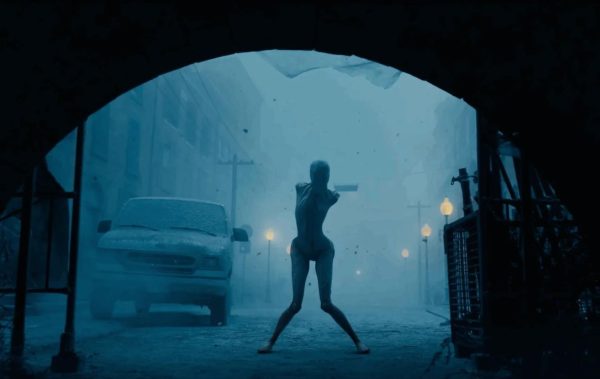
There are even some poignant scenes with humans (the relatively unknown cast tap into some strong performances during the material that works, horrendous cosplay costume design be damne) and monsters alike that demonstrate a simpler, yet still somewhat effective, emotional core (typically elevated by using pieces of the original score from Akira Yamaoka, though not nearly enough of it, and with so many pivotal scenes missing for them to be deployed).
However, for as watchable and visually striking as this film is, the heart of this story is not nearly as complex or grounded in psychology, relationships, repression, and impossibly difficult, mentally draining situations as it should be. Those passionate about the source material will most likely be disappointed. Meanwhile, newcomers will almost certainly see some unrealized potential in Return to Silent Hill, or at least something that hints at why the game is still heralded in some circles as the peak of psychological horror. Those people should accept the call to Silent Hill and play the second game immediately.
Flickering Myth Rating – Film: ★ ★ / Movie: ★ ★ ★
Robert Kojder