As the film turns 50, Hasitha Fernando looks at the story behind Martin Scorsese’s Taxi Driver…
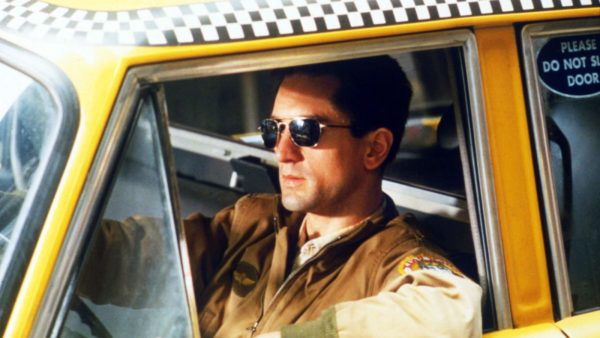
Taxi Driver has been hailed as one of the greatest cinematic efforts of the 1970s, and that’s certainly saying something. In a decade driven by auteur cinema which include such efforts as The French Connection, All the President’s Men, The Godfather, Jaws and Chinatown, this neo-noir, psychological drama helmed by Martin Scorsese still holds a special place in the hearts of many cinephiles. As the film celebrates its 50th anniversary we revisit the story behind the story and what went on behind-the-scenes, all those years ago…
Paul Schrader’s screenplay was partly autobiographical
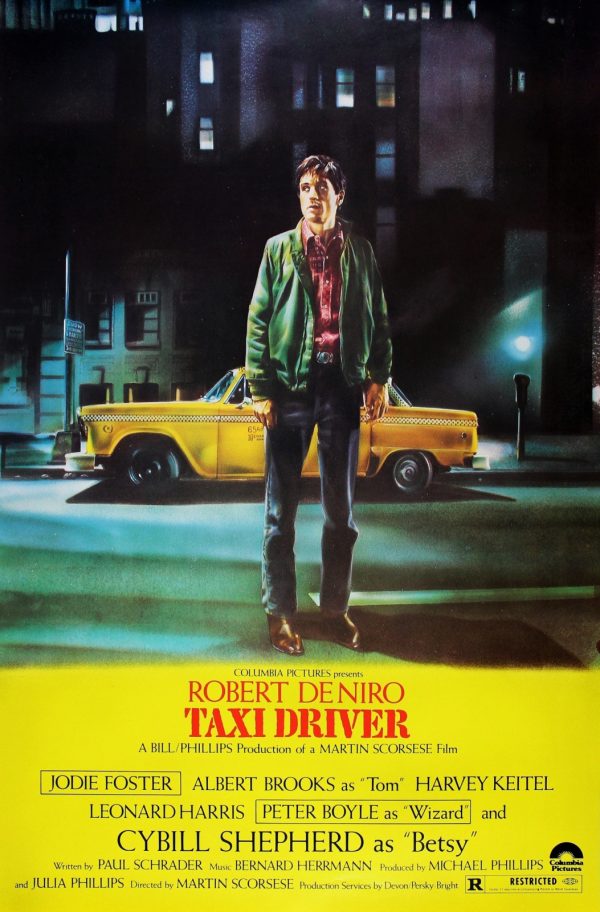
Paul Schrader first pursued a job as a film critic following his M.A. in film studies at the UCLA Film School, before becoming a screenwriter. In 1974 Schrader got his big break when he and his brother Leonard co-wrote the screenplay for the neo-noir crime drama The Yakuza; although a commercial failure it brought the young writer to the attention of the crème de la crème of 70’s filmmaking. As a result, Schrader ended up writing treatments for the likes of Brian de Palma and Steven Spielberg, who sometimes liked his ideas whilst some others did not. In between gigs and getting fired from his job at AFI Schrader received more bad news. His then girlfriend also parted ways with the young writer while he was in the midst of an ongoing divorce. Things, honestly, couldn’t get worse for Schrader, but it did; and all those sleepless nights and chronic stress resulted in a stomach ulcer for which he had to get admitted and treated for. After getting discharged from hospital, Schrader decided to channel all his frustration and pent-up-anger into something productive – and that was how the screenplay of Taxi Driver came into being. Schrader wrote a 60-page-script in less than fourteen days but over the coming weeks he kept on adding more details and nuances to the characters and building up the story. Very soon he realized that the story he was hammering out was more or less semi-autobiographical in nature.
Martin Scorsese connected deeply with Travis Bickle’s story
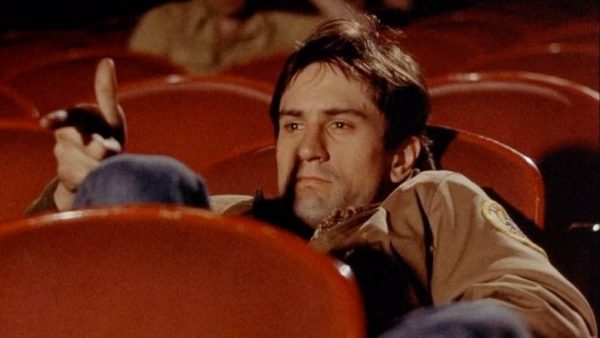
Schrader decided to make his antihero cum protagonist a Vietnam war veteran because such an individual – suffering from intense post-traumatic combat stress – would perfectly justify the paranoia and anger of Travis Bickle. Schrader penned several more drafts inspired by convicted criminal Arthur Brenner’s diary, Henry Chapin’s song Taxi and the French flick The Pickpocket. It was during this period of uncertainty that Schrader got introduced to Martin Scorsese, by their mutual friend Brian de Palma. After the initial introductions Scorsese and Schrader became good friends, and the latter showed the former what he was working on and Scorsese immediately connected with Travis Bickle’s story seeing parallels between Alain Delon’s Jef Costello in Le Samourai.
Dustin Hoffman, Jeff Bridges, & Al Pacino were considered for Travis Bickle
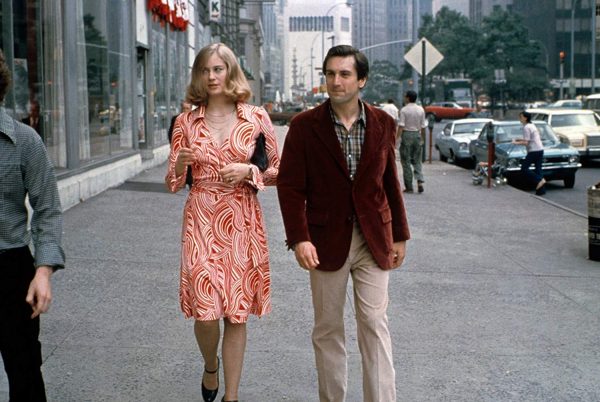
Although now, we cannot conceive of anyone else playing Travis Bickle than Robert De Niro, the legendary actor wasn’t the first performer considered for the role when casting was underway. Dustin Hoffman was one of the first actors considered for but the guy turned down the offer since he though Martin Scorsese was “crazy”. Although Hoffman had, in later interviews expressed his regret for turning down Scorsese, the veteran performer did pretty well for himself that same year with back-to-back hits thanks to All the President’s Men and Marathon Man. Al Pacino, Jeff Bridges and Jason Miller were also considered for the now iconic role.
Robert De Niro’s method acting was truly something else
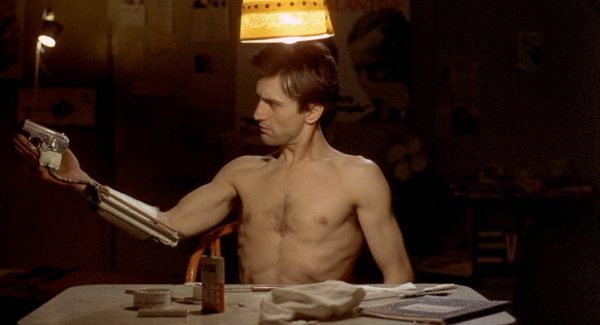
Robert De Niro’s extreme dedication to the art is the stuff of legend, and when it came to Taxi Driver the actor truly lost himself in the character to achieve the unforgettable performance that we now know and love. De Niro prepared for his role by working shifts as a late night cabbie and at one point clocked fifteen hour days driving cabs for a period of one month. He did all this whilst wrapping up filming on Bernardo Bertolucci’s 1900 in Italy. He lost 35 pounds specifically to achieve that lean, gaunt look of a blue collar insomniac working a graveyard shift. During this method acting process the actor also listened to tape recorded readings of Arthur Brenner’s diary as a regular habit, to get into the mindset of an unhinged radical. De Niro even went to the extent of studying mental illness and even visited a US Army base in Northern Italy to have conversations with soldiers from the Midwest so he could work on a similar accent for the film.
Paramount Pictures nearly pulled the plug following De Niro’s Oscar win
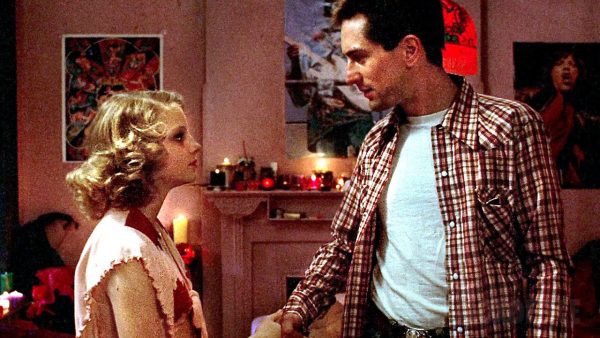
It’s hard to believe, but it’s true. At one point Paramount Pictures, who were bankrolling the film, nearly cancelled the project because they were afraid that De Niro would demand a bigger paycheck following his Academy Award win for The Godfather Part II. Fortunately, De Niro being the gentleman that he was, agreed to play Travis Bickle for the price of $35,000, which was the fee that was promised to him originally. Along with De Niro many other cast and crew members such as Cybill Shepard and Martin Scorsese also took pay cuts in order to bring the project to life. Because of this, the movie was able to be produced within the original budget of $1.9 million without much hassle.
Jodie Foster was 12 years old when the movie was filmed
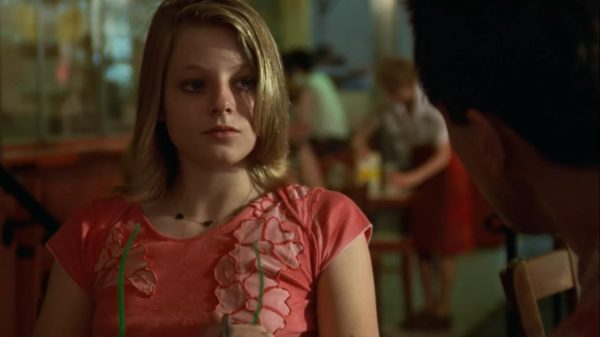
That’s right people. The Academy Award winning actress of Silence of the Lambs was 12-years-old when she starred in Taxi Driver. Since Foster was playing a teen prostitute in the story, she was required to attend counselling sessions prior to playing her character, so as to prepare the young actress for the demands of the role she’d be playing. As she was underage, Foster could not do some of the more explicit scenes described in the screenplay. So, her older sister Connie Foster acted as the body double for those scenes. Foster even shadowed an actual prostitute in preparation for her role and one of the many quirks she picked up was adding sugar to her toast which was already smothered in jelly, and this was because the prostitute she shadowed was an actual heroin addict and one way the individual quelled her addiction to the drug was by adding extra sugar to her meals.
That scene in Taxi Driver was completely ad-libbed by De Niro
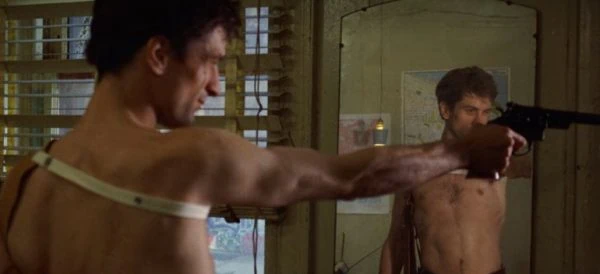
Anyone who’s watched Taxi Driver or knows something about the movie knows “the scene” I’m referring to, because it is one of cinema’s most unforgettable moments that has since been etched in the annals of modern day pop culture. For the uninitiated, the scene in question plays out roughly 50-60 minutes into the film and takes up about 45- 60 seconds of screen time where Travis Bickle talks to himself in the mirror. Schrader’s screenplay detailed the moment as “Travis looks in the mirror” but De Niro brilliantly ad-libbed how the scene played out… and the rest, as they say, is history.
The film showcased Bernard Herrmann’s final score
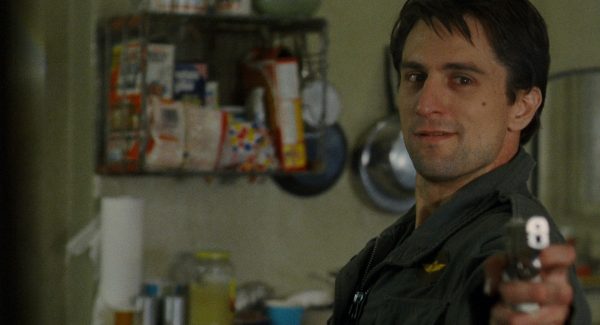
Film composer Bernard Herrmann is someone who requires very little introduction. The gifted musician had been the talent behind some of the most iconic scores for the likes of Orson Welles, Alfred Hitchcock and Brian de Palma. And it was de Palma who introduced Herrmann to Scorsese when he had concluded scoring on his latest flick Obsession. Initially, Herrmann wasn’t too keen on writing music for Taxi Driver saying, “I don’t write music for car movies.” The veteran performer only accepted the assignment after he read Schrader’s script and boy-oh-boy did he churn out a fantastic score or what. Granted this was certainly Herrmann’s most jazz heavy work to that point, but it also had a very atmospheric, dissonant feel that mirrored the protagonist’s conflict and inner turmoil. It’s certainly safe to say that Herrmann’s score brilliantly complimented Scorsese’s monumental effort in every single way.
The movie had more than its fair share of controversies
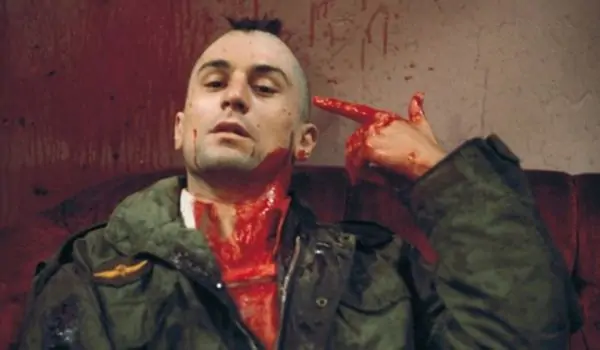
Being a fairly violent film that dealt with some very dark themes, Taxi Driver obviously had its share of controversies to deal with. The MPAA for one, felt that the movie’s climactic shootout was intensely graphic and therefore wanted to slap the effort with an X rating. Therefore, to obtain the R rating they needed Scorsese decided to desaturate the colors in the flick to make the brightly hued blood appear less prominent. Taxi Driver was also part of the delusional fantasy of John Hinckley Jr., who made an assassination attempt on President Ronald Reagan’s life in 1981. The film was also met with boos and walkouts during the 1976 Cannes Film Festival, for its polarizing subjects matter and intense violence but despite the negative reaction it was awarded with the coveted Palme d’Or by the jury.
Universal critical acclaim, awards glory & an undying legacy
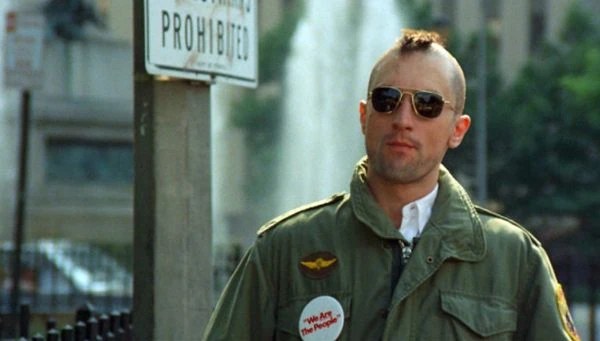
Made on a modest production budget of $1.9 million Taxi Driver went on to make a respectable $28.6 million at the box-office, which isn’t bad at all considering the flick was a hard R-rated affair. Taxi Driver received universal critical acclaim when it debuted and as of writing boasts an approval rating of 89% on Rotten Tomatoes based on 162 reviews and an insane average rating of 9.1/10. Roger Ebert, of the Chicago Sun-Times praised the effort as one of the greatest films he had ever seen and wrote the following: “Taxi Driver is a hell, from the opening shot of a cab emerging from stygian clouds of steam to the climactic killing scene in which the camera finally looks straight down. Scorsese wanted to look away from Travis’s rejection; we almost want to look away from his life. But he’s there, all right, and he’s suffering”. Pauline Kael of The New Yorker described it as a “fevered story of an outsider in New York, a man who can’t find any point of entry into human society”.
Come awards season Taxi Driver garnered many nominations from the Oscars, BAFTAs and Golden Globes and walked away with the Palme d’Or at the Cannes Film Festival. Over the years, a renewed appreciation of the craftsmanship of Taxi Driver and the cast and crew that made it happen has taken place. As a result multiple media polls have included the movie in many of their “Best of” lists such as the American Film Institute, Empire and Time Out. Schrader’s complex story which explored themes of alienation, existentialism, masculinity and urban decay have been also received great praise from film historians, critics and casual cinephiles alike. And of course, the movie owes much to Scorsese and De Niro, two creative powerhouse who came together to form an incendiary brew of captivating storytelling, compelling performances and exquisite direction and 50 years later Taxi Driver still remains a landmark of American cinema.
What are your thoughts on Taxi Driver? Let us know on our socials @FlickeringMyth…
Hasitha Fernando is a part-time medical practitioner and full-time cinephile. Follow him on Twitter via @DoctorCinephile for regular updates on the world of entertainment.