Simon Thompson presents ten adaptations that failed their source material…
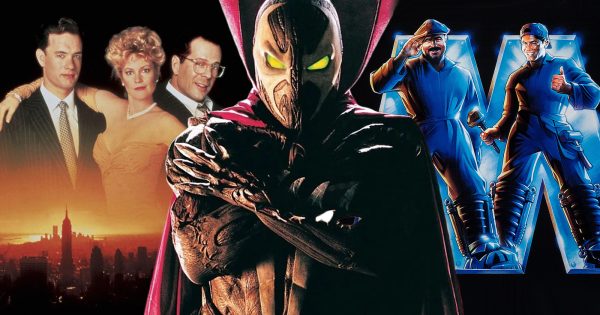
The science of what makes a good adaptation is a bit like cooking a complicated stew with an ultra-specific recipe, in the sense that you can have most of the right ingredients, but if even one or two things are a little off what you end up with is a far from desirable outcome. For every Shawshank Redemption, One Flew Over The Cuckoo’s Nest, or The Godfather there are scores of godawful adaptations that completely miss the mark, so whittling them down to just ten is going to be a challenge.
This list will feature a wide range of lacklustre movie and TV adaptations, ranging from books, comics, video games, and anime all tied with the common thread of being lumbered with a botched screen treatment…
Spawn (1997)

Todd McFarlane’s Spawn was the biggest American comic book property of the 1990s. When McFarlane, the wonder kid of the big two who had helped re-establish Spider-Man for a new generation defected from Marvel to form his own company, Image Comics in order to give him more creative freedom, he created Spawn, a brooding lovelorn antihero.
Al Simmons was a government killer who died and went to Hell for his various crimes against humanity. Longing to return to the mortal world to be with his wife Wanda, Al makes a deal with Malebolgia, a lord of Hell who offers to return Al to the world of the living if he agrees to becoming the leader of Malebolgia’s army. Al of course agrees and is sent back to the living world, but it turns out to be a trick as Malebolgia transports him back five whole years after his death, makes him completely unrecognisable to those who knew him, and removes his memories. Al, however, sees his predicament as a chance at redemption, renames himself Spawn, and decides to use his new found demonic abilities for good.
From issue #1, Spawn was an instant smash hit with McFarlane’s own toy company producing extensive best selling merchandise, and issues of Spawn regularly outselling the likes of Batman, Spider-Man, X-Men, and Superman. Naturally Hollywood came calling, with director Mark A.Z. Dippe helming an adaptation for New Line in 1997.

The Spawn movie failed for two reasons, the first being that New Line imposed a PG-13 edict, removing much of the original comic’s exploration of dark themes, violence, and edge in the process. The second is that when it was produced in the late 90s, CGI was still in its infancy and for every Terminator 2 or Jurassic Park which helped to advance computer generated special effects, most Hollywood Studios didn’t really get the hang of combining CGI with live action until The Matrix and Lord of the Rings trilogy.
Because of the choppy CGI, the action feels less like a slick Hollywood blockbuster and more like watching an episode of Ultraman drunkenly produced on Windows Movie Maker.
Produced on a $40-45 million rough budget, the movie grossed $87 million back, and while those may sound like decent numbers, when you factor in marketing and distribution costs, that $40-45 million was probably far more than that, putting it in the box office bomb range.
As bad as Spawn (1997) is, McFarlane’s original comics are still fantastic, and unlike a few of the other adaptations on this list, the HBO animated version from late 90s with Keith David voicing the title role is an incredible adaptation (that should have had way more than just 18 episodes) and has helped to atone for just how poor the movie was.
I Am Legend (2007)
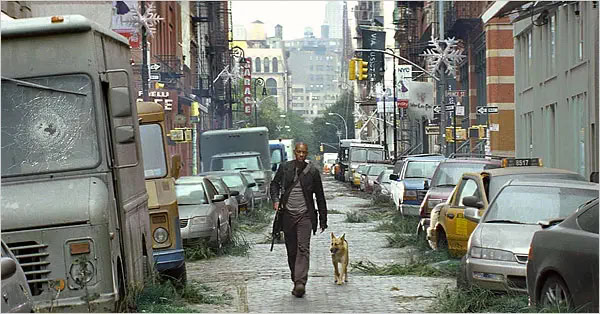
I Am Legend is writer Richard Matheson’s masterpiece, a science fiction horror hybrid that burrows into your consciousness long after you’ve finished reading it. Originally published in 1954, it tells the story of Robert Neville, the last human survivor of a global pandemic (which took place twenty years before the book’s start) which decimated the Earth’s population and turned the infected survivors into vampires.
Neville must contend with not only the external threat of the infected, but also the internal effects of prolonged isolation, depression, and alcoholism as he tries to survive his hellish environment.
I Am Legend is one of the most influential pieces of American horror fiction ever produced, inspiring everybody from George A. Romero to Stephen King to Dean Koontz to Alex Garland, and is arguably the first ever post-apocalyptic genre novel. While Matheson’s original story has been adapted into The Last Man On Earth (1964) and The Omega Man (1971) neither of those were particularly liked by fans of Matheson’s work or by Matheson himself, as both movies barely adapt the book.
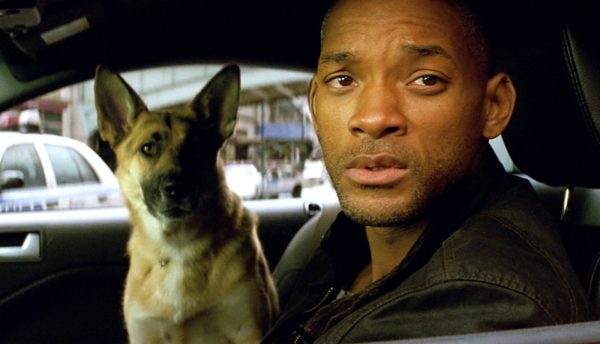
After an attempt at a new adaptation directed by Ridley Scott fell through in the late 90s, I Am Legend found its way on screen again directed by Francis Lawrence, the ‘genius’ behind Constantine (which was a serious candidate for this list), starring Will Smith, and written by Mark Protosevich and Akiva Goldsman.
What makes this adaptation so mediocre is that it takes the brooding and contemplative atmosphere of Matheson’s book and turns into an action blockbuster, giving it a more Hollywood focus group friendly happy ending to boot. Will Smith is completely miscast as Neville, with the character being less of a super capable action hero who can handle himself and more an out of shape alcoholic who, being no dunce, has survived for as long as he has by his wits and avoiding conflict as much as possible.
The tone, atmosphere, and specific moments from the I Am Legend book have been repurposed and given homage to such a large extent since it was first published seventy years ago, that making an ultra-faithful film or TV adaptation by this point would just be redundant. If the premise of Matheson’s novel intrigues you, Romero’s Dead Trilogy and 28 Days Later have far more in common artistically with Matheson’s story then any of its actual adaptations.
Jeremiah (2002-2004)
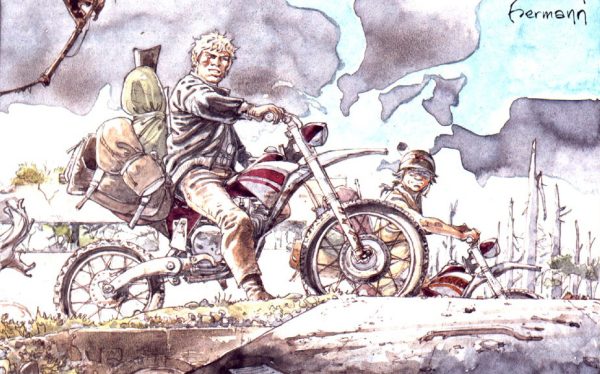
Hermann Huppen is one of the most acclaimed and respected authors/illustrators in the world of bande dessinée. Hailing from Belgium, he’s a gifted storyteller and artist at the same time, working across multiple genres such as: westerns, notably in the series Comanche where he made his name; historical fiction; with his masterful medieval epic The Towers of Bois Maury; and war; with his one shot album Sarajevo Tango chronicling the atrocities inflicted upon the Bosnian people during the Yugoslav wars of the 1990s.
His most famous and best-selling series, however, is the science fiction/post-apocalyptic western epic Jeremiah. Set in an alternate United States ravaged by nuclear war, and, in the atomised rubble now a fiercely divided society across racial and religious lines, it chronicles the adventures of its eponymous protagonist and his friend Kurdy Malloy, as they try and survive a completely broken society.
While he is cruelly under translated in the English speaking world, Hermann’s work is ridiculously popular in France and Belgium and various other mainland European countries, to the extent that producer Scott Mitchell Rosenberg snapped up the tv rights to Jeremiah in a probable attempt to introduce Hermann’s work to a wide English speaking audience.
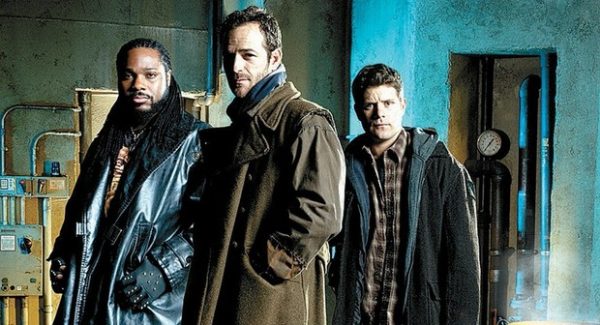
Bringing in the high powered talent of Babylon 5 creator J. Michael Straczynski, as showrunner for a TV adaptation for Showtime seemed like a recipe for success, but the end result was anything but. Straczynski and the rest of the show’s writers took practically nothing from Hermann’s original albums apart from Jeremiah and Kurdy’s names, and completely altered the unique tone and aesthetic of the comics, changing its western crustpunk hybrid look for the generic blue-green misery filter that so much bad 2000s science fiction seems to have.
Luke Perry and Malcom Jamal Warner were also completely miscast in their roles as Jeremiah and Kurdy respectively. Perry was far too old to be portraying Jeremiah who is basically in his late teens/early 20s for most of the albums, and casting Malcom Jamal Warner as Kurdy, a small skinny, ginger redneck, is a bizarre choice to say the least.
Eventually the show was scrapped when Straczynski and Showtime mutually fell out, and while the show achieved a decently sized fanbase relative to its limited marketing, Straczynski’s adaptation is a poor representation of what makes Hermann’s original bande dessinée so special.
Midnight in the Garden of Good and Evil (1997)
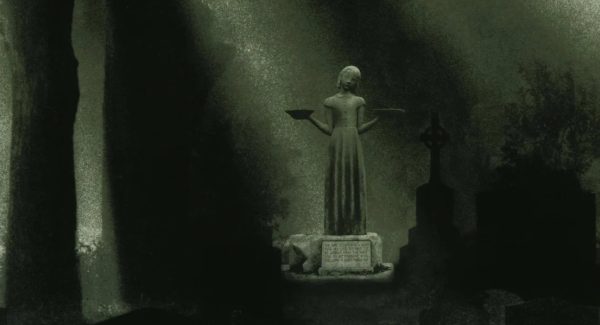
Writer John Berendt’s Midnight in the Garden of Good and Evil is easily my favourite piece of non-fiction. The book is an account by Berendt of the trial of wealthy eccentric Savannah antiques dealer Jim Williams, who is on trial for the murder of his younger lover, a male prostitute named Danny Hansford. Due to William’s wealth and standing within Savannah the trial engulfs the town and becomes a massive talking point amongst its various eccentric residents.
After meeting Jim Williams when he was on trial in 1982, Berendt realised his life and circumstances would make for a great story, so he moved to Savannah and immediately began interviewing the town’s residents to paint a picture of both Savannah itself and the case. After a slightly rocky road to publication with Berendt’s initial agent rejecting it for being too local, the book was published by Random house in 1994, becoming an instant bestseller.
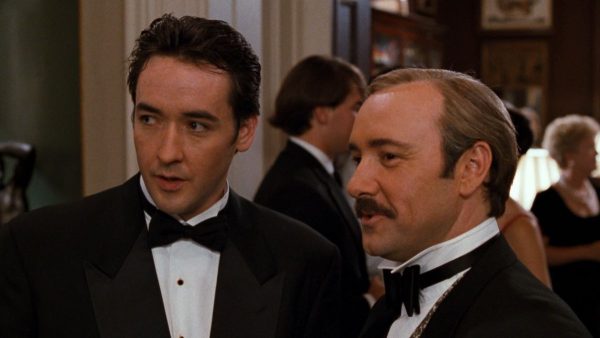
Naturally Hollywood came calling, with Warner Bros. winning the battle for the movie rights, bringing in the legendary Clint Eastwood to direct. Midnight in the Garden of Good and Evil suffers from scriptwriter John Lee Hancock’s addition of a love interest for the movie’s Berendt stand in (played by John Cusack) and changing around various details from the book’s plot – the majority of which are crucial to understanding the story.
The movie’s biggest issue however, is the casting of Kevin Spacey as Jim Williams, with the actor portraying him as if he were half asleep most of the time – a far cry from the energetic real Williams who Berendt so skilfully wrote about.
While this movie does have some good things going for it, such as Eastwood’s direction and steadfastness in keeping some of more outlandish real life characters from the book, such as a guy who walks an invisible dog and a voodoo priest, as well as Cusack’s performance in the lead, sadly despite the talented cast and director this adaptation pales in comparison to Berendt’s book.
All The Pretty Horses (2000)
Cormac McCarthy is one of those writers who has become so esteemed that people who are only superficially familiar with his work don’t realise that he spent the first few decades of his writing career toiling in semi obscurity. McCarthy’s work for the most part is bleak, strange, violent, and terse, putting him at arm’s length from the literary establishment. It wasn’t until 1992, when his book All The Pretty Horses was first published, that he become a critically and commercially successful household name – at the age of 59.
Set in late 1940s Texas, All The Pretty Horses tells the story of John Grady Cole, a teenage cowboy raised on his grandfather’s ranch by a Mexican family, becoming bilingual as a result. When John’s grandfather dies, the ranch is due to be sold, but not wanting to abandon his life as a cowboy and move into town John decides to ride across the border to Mexico with his friend Lacey Rawlins to find work on a ranch. Their journey begins to take a dark turn, however, when they meet Jimmy Blevnis, a younger teenage boy riding a massive bay horse that is far too good a steed to be the legal property of a teenage runaway.
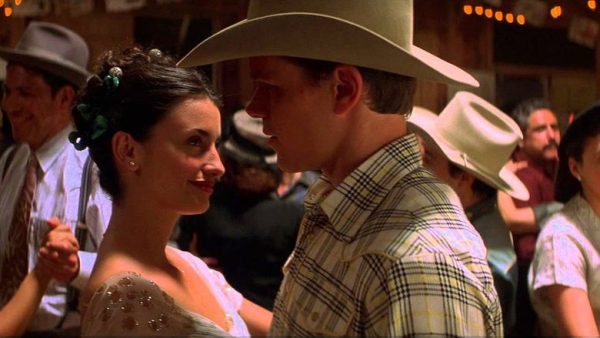
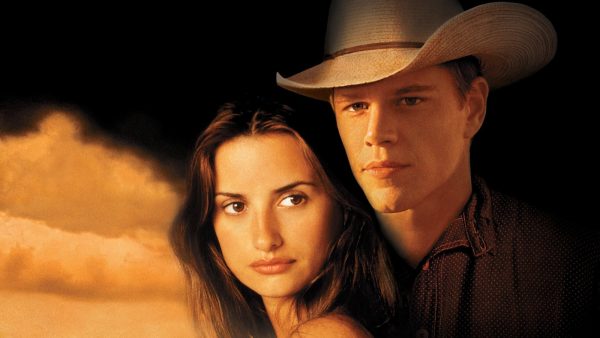
Because of the buzz around that book and McCarthy’s masterpieces from previous decades such as Blood Meridian (1985), Suttree (1979), and Child of God (1973), Hollywood studios immediately started to clamour for the movie rights to his work. Miramax bought the rights to All The Pretty Horses, and handed the project to Billy Bob Thornton who, as a director, was fresh from the indie success of Sling Blade. With an all star cast of Matt Damon and Penelope Cruz and based on an acclaimed novel, Miramax thought that they had an awards candidate, mid budget hit on their hands.
This version of All The Pretty Horses fails as an adaptation for two main reasons. One is that the tragic romantic subplot between John and a Mexican farmer’s daughter is hindered by Damon and Cruz’s complete lack of chemistry, and the other is that McCarthy’s sparsely minimalist writing style simply doesn’t lend itself well to screen adaptation.
Budgeted at $57 million and grossing only $18 million, as well as being critically derided, All The Pretty Horses was a disaster for both Miramax as well as adaptations of McCarthy’s work in general, until the success of the Coen Brothers’s No Country For Old Men and The Road several years later proved that screen adaptations of McCarthy’s books could work if handled properly.
Cowboy Bebop (2021)
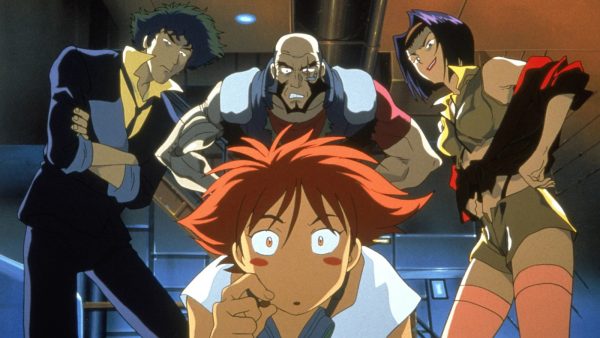
Shinichiro Watanabe’s Cowboy Bebop (1998) is one of the most beloved and acclaimed anime series of all time for good reason. It’s a mixture of brilliant writing, breathtakingly fluid animation, as well as being a love letter to genre storytelling and music, all eclectically soundtracked by the wonderful score of Yoko Kanno and her band Seatbelts.
Taking place in 2071, after a hyperspace accident has made Earth uninhabitable, Cowboy Bebop follows the dynamic duo of bounty hunters Spike Spiegel and Jet Black. Spike is burdened by a tragic criminal past, whereas Jet in contrast is a former cop who, disillusioned by the corruption of his fellow policemen, quit the force. The pair spend their days on a decaying starship named the Bebop as they try and eek out a living.
Through various circumstances their ship ends up becoming home to three additional passengers, Faye, an amnesiac scam artist, Ed, a hyperactive technology enthusiast, and Ein, a genetically engineered Corgi, who, as a result of experimentation has equivalent intelligence to that of a human.
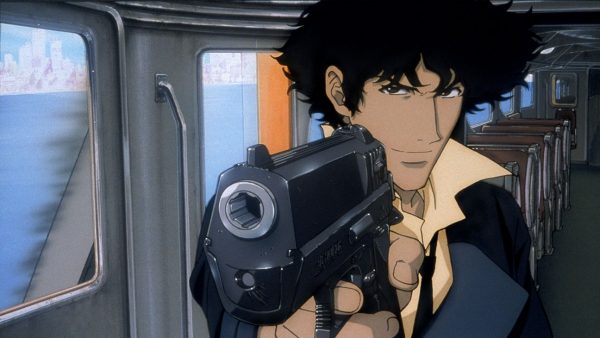
The show succeeds in blending science fiction, noir, westerns, martial arts movies, blues & jazz, and even horror on occasion, into a big gumbo, with every single episode showing Watanabe’s gift at understanding tone and genre. While some episodes function as science fiction screwball comedy, the show’s core theme is one of existential loneliness in a dystopian future, with Spike, Jet, and Faye all either physically or metaphorically wearing the scars of their tragic pasts.
Watanabe’s talent as a storyteller is so good that he can produce a twenty minute episode of madcap comedy that will have you laughing until it hurts, and then three episodes later, produce a story so beautifully melancholic and evocative that it stays with you forever.
Cowboy Bebop, alongside the likes of Ghibli, Akira, Ghost In The Shell, Evangelion, Macross, and Dragonball etc was one of the most prominent examples of anime making its way to a western audience. Due to airing on Adult Swim and being one of the few animes with an actually good English dub, Cowboy Bebop developed a considerable global cult following throughout the 2000s.
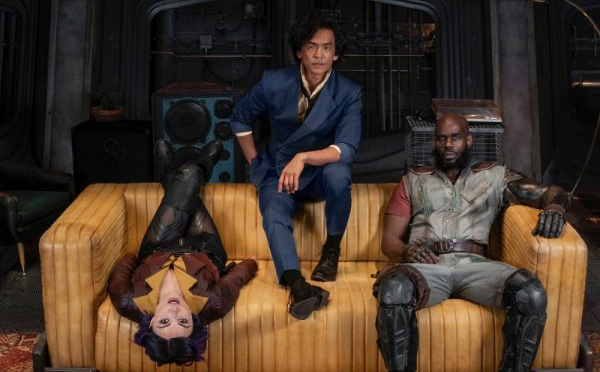
Because Hollywood is largely creatively bankrupt and unoriginal, various attempts for a live action adaptation had been tried and then abandoned – the most prominent being a version starring Keanu Reeves as Spike. Eventually in 2017, Netflix got the rights and produced a live action version, released in 2021, that goes to show why the term ‘Netflix adaptation’ is the epithet that it is.
Among this adaptation’s list of crimes are, the complete bastardisation of Watanabe’s original story and characters , being stuffed to the gills with insufferable millennial writing about as funny as unanaesthetised kidney surgery, the removal of any cigarette aesthetica, completely misunderstanding the original’s tone, the entire cast being horrifically unsuitable in their roles (especially a 49 year old John Cho playing a 29 year old Spike), and to top it all off, the show’s writers/actors throwing a hissy fit when fans of the original rightfully tore apart their horrible interpretation of one of the greatest animes ever made.
Even in the interminable landscape of slop that has defined the vast majority of big budget film and television for the last decade, Netflix’s Cowboy Bebop is still bad enough to stand out as truly one of the worst Hollywood live action adaptations of an anime this side of Dragonball Evolution.
Clockers (1995)
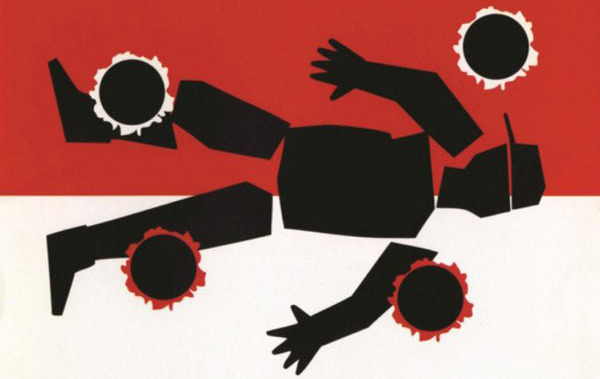
Novelist/screenwriter Richard Price is no stranger to the movie business or adaptations of his work in general. As an author Price is known for his ear for dialogue and compassionate depiction of American modern urban poverty. First making his name in 1974 with his debut The Wanderers, Price drifted away from novel writing in the mid-1980s to
concentrate on movie scripts, penning titles such as Scorsese’s The Colour of Money (1986) and Al Pacino’s comeback vehicle, Sea of Love (1989). It was his work on Sea of Love, however, that inspired him to return to writing books again, with his comeback novel the 600 page crime epic Clockers, published in 1992, being seen as his career masterpiece by critics and devotees alike.
Set in New Jersey, Clockers is a dual narrative between Rocco Klein, a miserable, white, middle aged, alcoholic homicide detective and Strike Dunham, an intelligent 19-year-old, black, small time drug dealer with a perforated ulcer and a reformed stammer. These two disparate individuals are brought together by the murder of Strike’s fellow dealer Darryl Adams in a local fast food restaurant, orchestrated by Strike’s intimidating boss Rodney as a power play.
When Strike’s law abiding brother Victor comes forward to confess to the crime, Rocco immediately smells a rat and begins a Phillip Marlowe-esque one man investigation in order to clear Victor’s name and uncover Strike as the true culprit.
Clockers is both an enthralling murder mystery and a forensic examination of the dynamic between drug gangs and the police (extensively researched by Price, including meeting with both the New Jersey police and a retired drug dealer), as well as a searing look into racism/class in modern American society.
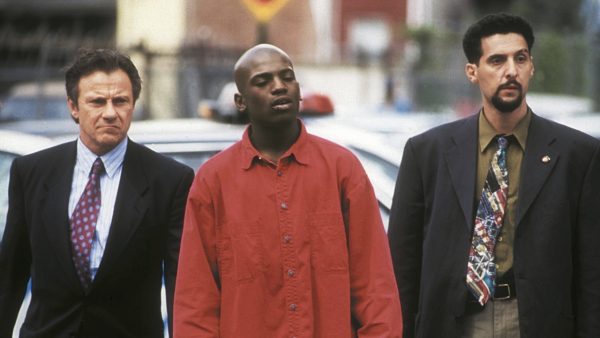
The book was a critical hit, so naturally, a movie adaptation with Price as the lead writer was agreed before he could even blink. Initially Martin Scorsese was attached to direct, but eventually he dropped out to concentrate on Casino, setting up Spike Lee to lead the project instead.
Lee’s adaptation completely simplifies the themes of Price’s original book, turns Strike from an interesting and thoughtful character into an idiot (completely removing his stammer and almost everything else that made his book counterpart so fascinating in the first place), turns Rocco into a loud mouth stereotypical bigot, and speeds up Price’s careful plotting and scene setting which made the novel so immersive.
The one saving grace this movie has is Delroy Lindo’s mesmerising performance as Rodney, who completely captures both his fatherly affection for Strike but also his ruthlessness at the same time.
While the actual adaptation of Clockers made a lamentable mess out of a thought provoking crime novel, David Simon and Ed Byrne’s groundbreaking crime drama The Wire, which was inspired by the book, and for which Price himself has written several episodes – is as close to an accurate adaptation of Clockers as we are going to get.
Super Mario Bros. (1993)
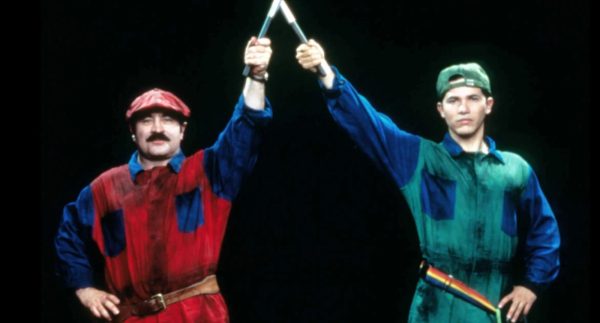
Abysmal TV and movie adaptations of video games are ten a penny, various beloved franchises such as Resident Evil, Silent Hill, and Halo all suffering from putrid Hollywood adaptations lazily trying to make a quick buck off of a built-in fanbase. But if I were to nominate a Mona Lisa of atrocious live action video game adaptations that dubious honour would go to Super Mario Bros.
As the games industry was reaching new heights of innovation and quality during the mid1980s-90s, Hollywood realised that they needed to both compete and capitalise on a rapidly expanding new avenue of creative expression. When super producer Roland Joffe acquired the rights to Nintendo’s Super Mario series in the late 1980s, Buena Vista set out on a course of poorly adapting one of the most iconic video game franchises in the history of the medium.
Casting Bob Hoskins in the title role – under duress, John Leguizamo as Luigi, and Dennis Hopper as Bowser, Super Mario Bros. turns the bright, colourful world of Shigeru Miyamoto’s superlative design into a dark, dingy, depressing industrial metal music video set, that looks as if someone commissioned a bad HR Giger impersonator to redesign a remote branch of Chuck E Cheese.
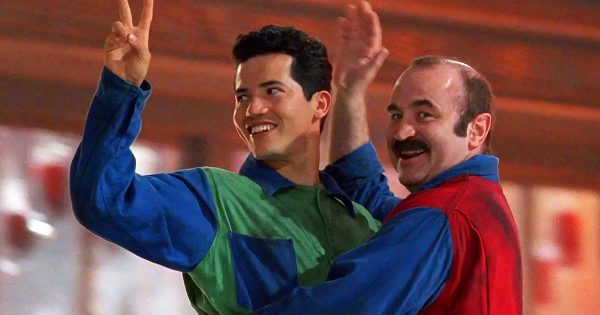
The production was an absolute dumpster fire, with Hoskins himself describing the shoot as “a fuckin’ nightmare. The whole experience was a nightmare. It had a husband-and-wife team directing, whose arrogance had been mistaken for talent. After so many weeks their own agent told them to get off the set! Fuckin’ nightmare. Fuckin’ idiots.” Both Hoskins and Leguizamo drank heavily during the entire production, and the script went through dozens of different writing teams before a final draft was produced.
When the movie escaped into the public in 1993, critics rightfully called it a poor interpretation of the games, and it failed to make back its well over $42 million budget at the box office. This is a movie so bad it scared studios away from video game adaptations of any kind for years afterwards, and caused Bob Hoskins to suffer a professional existential crisis.
Dylan Dog: Dead of Night (2007)
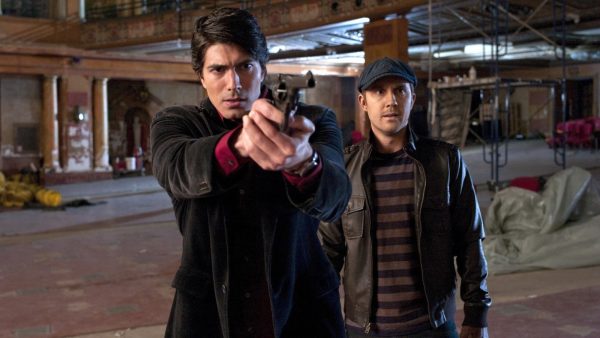
Tiziano Schalvi’s long-running Dylan Dog comics are one of the most beloved Italian pop culture properties, both in Italy (where it outsells the likes of Batman regularly) and across the rest of Europe – except the UK, for some stupid reason. Set in an eccentric Italian man’s idealised version of London, the series follows its eponymous protagonist, a Rupert Everett drawn-alike Byronic, recovering alcoholic, lovelorn, private investigator who takes on cases involving the strange and paranormal, alongside his best friend Groucho, who funnily enough is a Groucho Marx impersonator.
From Schalvi’s original run to the various writer-artist teams that have followed, Dylan Dog is a series revered for its combination of black humour, horror, surrealism, and romantic melancholy. With celebrity fans such as Umberto Eco, it’s a comic which I would happily thrust into the face of someone who denigrates comic book storytelling as a serious artistic medium worthy of respect.
Sadly, Dylan Dog has had a rough time being translated into English, with only a few stories by Dark Horse in the 1990s and then a few more recently by Epicentre Comics being all that’s available to readers in the English speaking world. This hasn’t stopped film studios from trying to capitalise on the series’ popularity everywhere else however, with Freestyle Releasing acquiring the rights in the late 2000s to produce a film version titled Dylan Dog: Dead of Night.
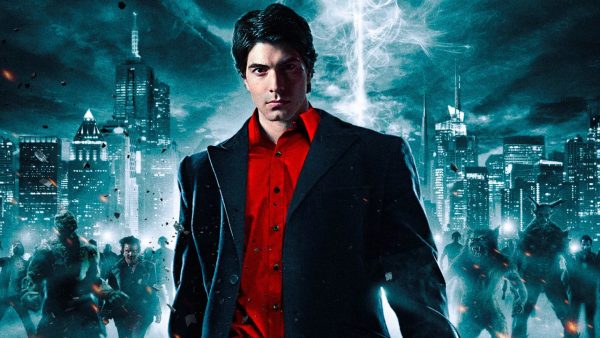
Released in 2011, the script written by Thomas Dean Donnelly and Joshua Oppenheimer, which is a fitting last name given this movie’s nuclear reputation, completely misunderstands and stupidly changes everything that makes the Dylan Dog comic so great.
This movie contains a multitude of ill thought through decisions, from changing the setting from London to New Orleans in a stupid attempt to pander to American audiences, casting Brandon Routh, an American, as Dylan, a hero as quintessentially British as James Bond or The Doctor, removing Groucho entirely, and to top it all off completely scrapping the psychological introspection that makes Dylan such an interesting character, in favour of turning him into a generic action hero.
The movie was both a critical and a commercial disaster grossing only $5 million from a $20.5 million budget and was panned by Italian critics for its glib interpretation of its revered source material. Thankfully Tiziano Schalvi’s movie Cemetery Man (1994) exists, which is ironically far closer in tone, spirit, and leading man to Dylan Dog than the actual Dylan Dog adaptation.
The Bonfire of the Vanities (1990)
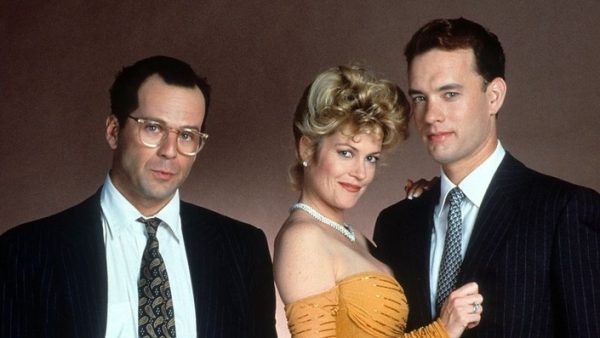
New Journalism pioneer Tom Wolfe’s 1980s New York zeitgeist satire The Bonfire of the Vanities is one of my favourite books, and while some aspects of it might be somewhat dated given that it was written decades ago, its satirical meditations around the nature of power and wealth, and its early foresight into the rise of the 24 hour news cycle still ring as true today as they did back then.
The novel tells the story of Sherman McCoy, a successful bond trader, who, due to his position in an elite Wall Street firm and multi-million dollar annual salary sees himself as a “master of the universe”. That begins to chip away however, after one fateful night when he drives to the airport to pick up his mistress Maria. Sherman takes a wrong turn and ends up in the South Bronx, and after the pair racistly assume that a young black teenager trying to help is attempting to rob them, Maria panics and totals the car, hitting and hospitalising the teenager in the process.
The hit and run incident quickly becomes a local media circus, with various parties such as Peter Fallow, an alcoholic expatriate British tabloid journalist, Larry Kramer, a miserable middle aged district attorney, and the Al Sharpton style Reverend Bacon all exploiting the incident for their own gain.
Serialised in chapter form in Rolling Stone in the mid-80s, before being finally published as a completed book in 1987, Wolfe’s panoramic cynical satire was a huge hit with both critics and readers alike. Naturally, Hollywood wanted in on a prestige adaptation of a best seller, with Warner Bros. gaining the rights during the tail end of the decade.
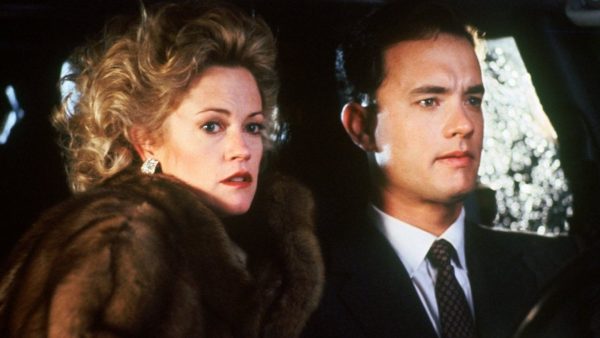
The production of this adaptation is something that I would describe as being Murphy’s Law in action. First the studio hired Brian De Palma as director, whose sensibilities and suspense thriller background completely clashed with the tone and sensibilities of Wolfe’s book. Then, the casting of Tom Hanks as McCoy and Bruce Willis as Fallow was a disaster, with neither one of them accurately portraying or even semi resembling their book counterpart.
To top it all off, Warner Bros. imposed an edict that the entire cast of characters (especially Sherman McCoy as the protagonist) be made far more likeable and sympathetic than the ones that Wolfe originally wrote about, missing the entire point of the novel. What with enormous clashes between De Palma and Willis on set, the shoot running God knows how much over budget, and various other disasters that would take a separate article to cover, the movie was practically dead on arrival.
Released in 1990, to a critical drubbing, stark box office failure, and complete contempt from fans of the book, the legacy of The Bonfire of the Vanities is that it has a become a byword for ill thought- out and excessive Hollywood mega productions. Maybe, just maybe, trying to whittle down an expansive, 700 page, uncompromising, panoramic satire into a crowd-pleasing two hour movie wasn’t a good idea.
What are your thoughts on this list? What other adaptations are worthy of inclusion? Be sure to let us know your thoughts on our social channels @FlickeringMyth…
Simon Thompson