Casey Chong with a selection of forgotten erotic thrillers of the 1980s that are worth revisiting…
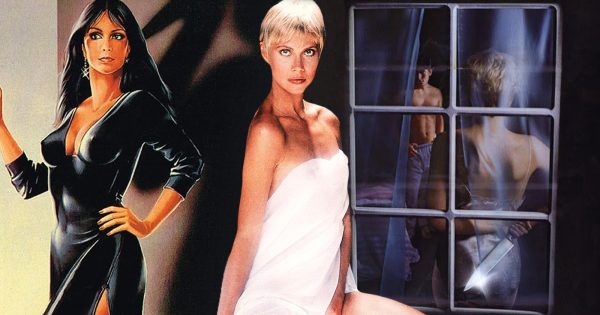
The 1990s may have been the decade when the erotic thriller genre flooded the market not only in mainstream cinema but also in direct-to-video distribution. But let’s not forget about the decade before – the 1980s, that is – as notable examples like Brian De Palma’s Dressed to Kill and Body Double are worth mentioning here. And so too others such as Body Heat, The Postman Always Rings Twice, and American Gigolo.
The 80s erotic thriller era, of course, was famously peaking with Adrian Lyne’s Fatal Attraction starring Michael Douglas and Glenn Close, the latter of whom delivers a performance of a lifetime still and one still remembered to this day today. But buried beneath the more recognizable and famous titles lie plenty more of the erotic thrillers that didn’t get to enjoy much publicity or went under the radar. And here are the 10 lesser-known erotic thrillers of the 1980s…
Perfect Strangers (1984)
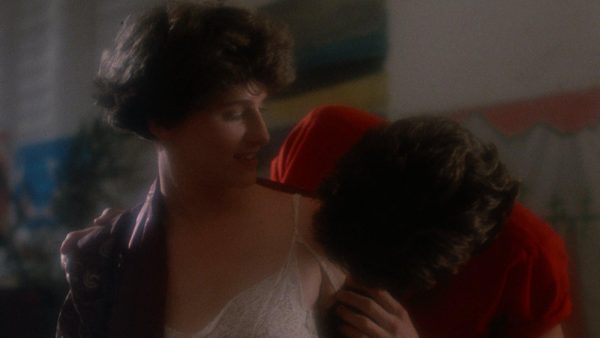
What if a two-year-old boy who barely speaks witnesses a murder? That’s the premise in Perfect Strangers, where the boy (Matthew Stockley) sees Johnny (Brad Rijn), a mob killer, fatally stab a person in the alley. Although Johnny doesn’t view the boy as a threat, his mob boss still pressures him anyway by wanting him to romance the mother (Anne Carlisle), earn her trust, before use the opportunity to kill the boy. It doesn’t take rocket science to see where this is going. Romance subsequently blossoms between Johnny and the boy’s mother, complete with a stylized sex scene, which served as one of the earlier precursors that will later dominate the 1990s erotic thriller boom.
Perfect Strangers benefits from Rijn’s perfectly brooding bad-boy persona, contrasting well with Carlisle’s more reserved character. The movie may have been a little too slow for an erotic thriller, but writer-director Larry Cohen still manages to bring out his distinct directorial flair by incorporating female empowerment seen from Carlisle’s character’s point of view while making good use of the New York City setting to give it a gritty, yet grounded feel.
Night Games (1980)
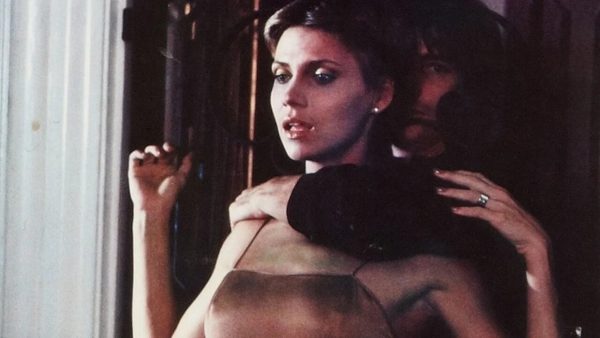
Veteran director Roger Vadim is no stranger to the erotic film genre, having directed international sex symbols like Brigitte Bardot in And God Created Woman and Jane Fonda in Barbarella. He did it again in the otherwise underrated Night Games, featuring then-newcomer Cindy Pickett in her first feature role. She plays Valerie, a sexually reserved woman who is still haunted by her traumatic past – a daring career shift compared to her soap opera days in TV’s Guiding Light. Her marriage to her wealthy husband Jason (Barry Primus) is frequently hindered by an unfulfilled sex life, especially when Valerie suffers from a recurring flashback of her sexual assault.
The movie soon takes a turning point when Jason departs for an extended period, leaving Valerie all alone in the mansion. A lingering sense of paranoia, coupled with various sexual fantasies, begins to fill in her mind, allowing Vadim to play around with different visual and costume stylings from the Roaring Twenties era to a scene of her being seduced by a mysterious masked man in a bird suit. With cinematographer Denis Lewiston responsible for lensing the film, Vadim brings a distinctly soft-focus visual style to Night Games.
The Trap a.k.a La Gabbia (1985)

A reunion turns into a masochistic horror in The Trap, which follows an American businessman (Tony Musante’s Michael Parker) living with his girlfriend Hélène (Florinda Bolkan) in Italy. Things get complicated when Michael reunites with his former lover, Marie (Laura Antonelli), with whom he had an affair over a decade ago. True to its title, the movie is primarily a chamber piece that takes place within the confines of a locked apartment. This is especially true after Michael’s initial reunion with Marie becomes something else altogether after the latter decides to hold him hostage.
Co-written by Lucio Fulci, who was supposed to direct the film but was forced to back out due to contracting hepatitis at the time, the movie doesn’t shy away from the perverse nature of the story as Marie desperately wants to take control over him both sexually and psychologically. Beyond its recurring erotic elements, the story equally explores the psychological and emotional toll that can deeply scar a woman like Marie being abandoned by her lover, resulting in an obsessive payback. The movie even goes as far as adding a conflicting, yet bizarre love triangle between Michael, Marie, and the latter’s adult daughter Jacqueline (Blanca Marsillach).
The Drifter (1988)
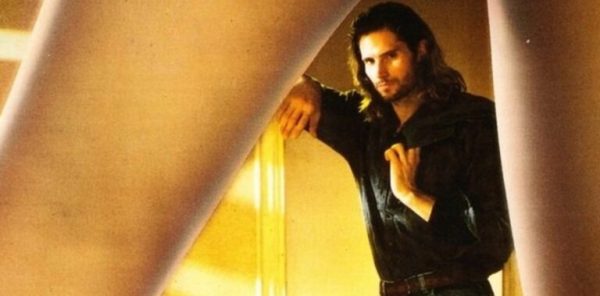
The familiar age-old advice of “never pick up a hitchhiker” takes on a subversive approach in The Drifter, the title which refers to Miles O’Keeffe’s character, who calls himself Trey. The story follows an up-and-coming fashion designer, Julia (pre-NYPD Blue fame Kim Delaney), on her way back to Los Angeles from San Francisco. There, she reluctantly picks up a handsome hitchhiker after the latter helps her change her flat tire. Her decision subsequently leads to a one-night stand, a result that doesn’t end well after she returns to Los Angeles. Trey just can’t stop calling her, an initial charmer turning into an obsessive stalker.
The Drifter benefits from Delaney’s engaging performance as the vulnerable protagonist caught in a high-stakes scenario, where her life is in danger under the constant threat of the titular drifter. The latter equally deserves mention for his mysterious role as the persistent hitchhiker with a seemingly hidden agenda. But what makes this movie a standout is the way writer-director Larry Brand, who also shows up as private investigator Morrison, subverts our expectations in this deceptively straightforward story about a stalker like Trey preying on the helpless Julia.
Half Moon Street (1986)
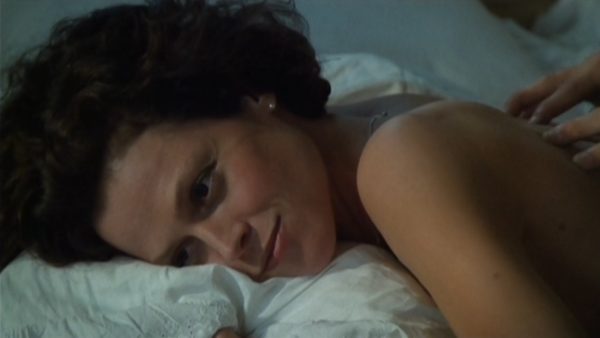
The erotic thriller genre would be the last thing that comes to mind when associating with Sigourney Weaver. In the ‘80s, she was riding high with her career trajectory, transcending from mainstream success (Ghostbusters, Aliens) to critically-acclaimed works seen in the likes of The Year of Living Dangerously and Gorillas in the Mist. Then, there’s Half Moon Street, proving the actress’s versatility in playing a Ph.D.-level academic struggling financially with a low-paid job, to the point of having trouble paying her apartment rental.
Desperate time calls for desperate measures as she’s willing to join an escort agency after receiving an anonymous mail containing a videotape. The tape in question promotes the lucrative benefit of working as an escort, prompting her to give it a shot. From here, director and co-writer Bob Swaim blends multiple genres, alternating between an erotic thriller and a complicated romance between Weaver’s character and a wealthy House of Lords member, played by Michael Caine, with a dash of political intrigue. The result may have been a mixed bag, but Weaver and Caine’s above-average performances manage to hold everything together.
Thief of Hearts (1984)
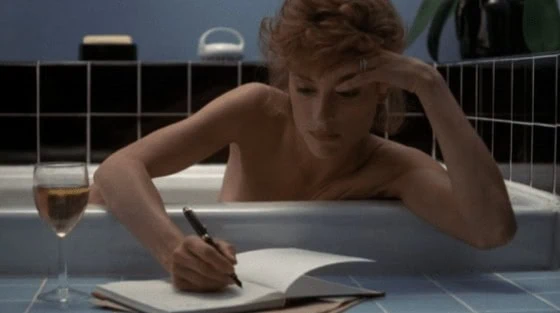
Produced under the Don Simpson and Jerry Bruckheimer production banner, it doesn’t come as a surprise that Thief of Hearts looks slick with the kind of moody and stylish 1980s aesthetics. Written and directed by Douglas Day Stewart, best known for his screenwriting work in An Officer and a Gentleman, the story revolves around Scott (Steven Bauer), a professional burglar who partners with his friend Buddy (pre-NYPD Blue fame David Caruso, in a perfectly unhinged supporting role) to rob a wealthy couple’s home.
Among the items that Scott steals is a diary belonging to the interior-designer wife, Mickey (Barbara Williams), which contains her words about sexual fantasies. The diary somehow interests Scott to start pursuing her by posing as the CEO of school supplies. Bauer and Williams look good together, oozing enough charm and sexual tension between these two attractive strangers before they eventually fall for each other. The movie is equally notable for Andrew Laszlo’s atmospheric cinematographer, bringing a distinctly neo-noir touch, while Harold Faltermeyer adds a lush, yet evocative score which reflects the smoldering passion of the movie.
The Surrogate (1984)
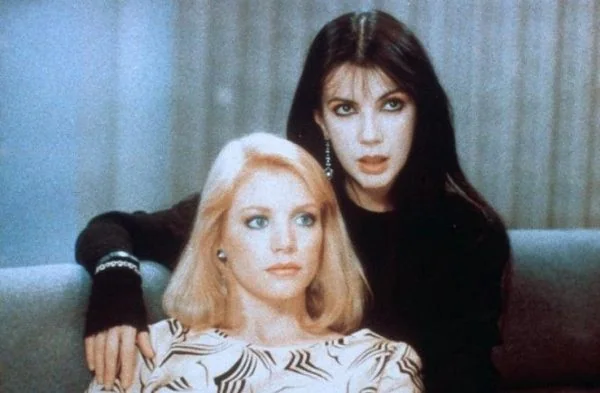
Those who lived through the 90s era will probably be familiar with the name Shannon Tweed, a staple for B-movie erotica that flooded the video market at the time. But even before the 1990s, Tweed already got her early start as early as 1984 in the little-seen Canadian erotic thriller, The Surrogate. She isn’t the one who plays the titular character however, as that role falls to rather Carole Laure, who gives an alluring performance as Anouk Van Derlin. The latter turns out to be an expert in using an unorthodox sex therapy to help troubled couples like Frank (Art Hindle) and Lee (Tweed). The couple in question has been suffering from a sexless marriage, where the two initially do not feel comfortable addressing their problems to a stranger like Anouk.
The Surrogate may have been relatively tame by Tweed’s standards, especially when you compare this work to her future 1990s output. But it’s hard to deny the underlying sexual tension that drives the movie, thanks to Don Carmody’s genre know-how direction. Tweed effectively showcases a mix of dramatic and sexual range in her role, while Laure strikes a perfect contrast to Lee’s repressed wife as an unconventional sex therapist who isn’t afraid of breaking out of the norm to “help” her clients.
Call Me (1988)
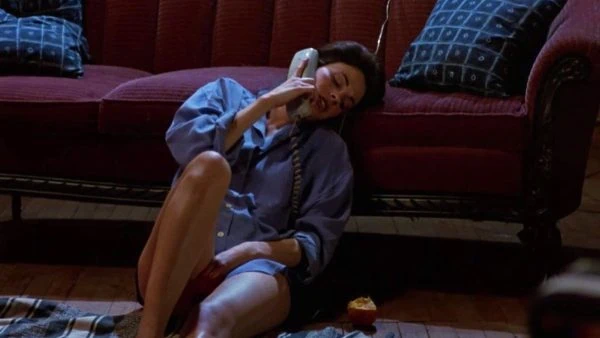
The salacious title may come across as one of those throwaway erotic thrillers used to pop out during the ‘80s and ‘90s era, but Sollace Mitchell’s directorial debut effectively mixes sleaze and intrigue in this better-than-expected Call Me. The story follows journalist Anna (Patricia Charbonneau – you might remember the actress from her breakthrough performance in Desert Hearts or shows up in an uncredited role billed as “RoboCop Technician” in RoboCop 2), who receives a series of obscene phone calls from a stranger. She thinks it’s her boyfriend, Alex (Sam Freed), but it isn’t him who called her, leaving Anna to guess the identity of the perverted caller who likes to talk dirty. Could it be the charming but lethal Jellybean (Stephen McHattie)? Or perhaps her best friend, Bill (Boyd Gaines), or even her editor, Sam (David Strathairn, in one of his earlier roles)?
Karyn Kay’s screenplay does a good job incorporating several red herrings to keep us guessing, even though the crime-thriller subplot – the one revolving around the missing money — feels like it’s too much of a narrative diversion. Call Me works best when it sticks to the build-up of the erotic nature of the story, initially depicted Anna who doesn’t feel comfortable with the raunchy phone calls, only to grow increasingly aroused with the voice on the other end of the line as the movie progresses. The highlight includes the intimate use of an orange, and credit also goes to Charbonneau for her mesmerizing performance.
The Girl in a Swing (1988)
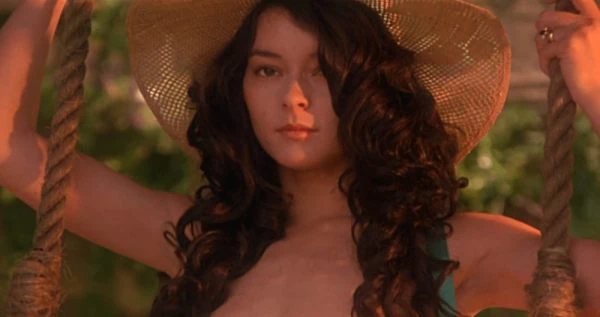
The enigmatic personality of Karin, played by Meg Tilly in a heavy German accent, drives this combination of mystery with erotic and supernatural underpinnings, adapted from Richard Adams’ 1980 novel of the same name. The gist of the story revolves around Alan (Rupert Frazer), an antiques dealer who falls in love with a young German girl (Tilly) while traveling for business in Copenhagen. They eventually get married, but Karin constantly finds herself being haunted by traumatic past and a deep secret that Alan tries to make sense out of it.
The Girl in a Swing can be a frustrating experience due to an ambiguous narrative style that makes you wonder all the whys, whats, and hows, with the mystery is kept under lock and key. The kind where questions are more than answers, and yet, but it’s hard to deny the solid metaphorical themes of obsession and guilt that linger throughout the movie. What really keeps things together is Tilly’s overall captivating performance, whose alluring sense of the unknown within the erratic nature of her character makes her all the more fascinating to watch.
Crimes of Passion (1984)
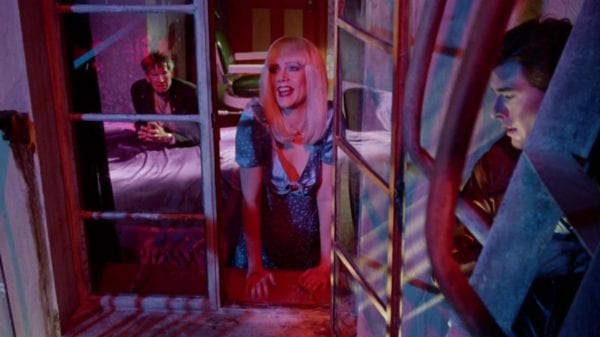
The exploitation-sounding title sees director Ken Russell, who is no stranger to controversy, push the boundaries for depicting the sex work seen through the eyes of China Blue (Kathleen Turner), a prostitute who specializes in fetishes. There’s no sugarcoating or romanticization in its taboo subject matter, as China Blue isn’t a victim of circumstances or doing it out of financial desperation. Instead, Turner’s character moonlighting from a fashion designer by day to a sex worker by night allows her to assert dominance and power dynamics over his clients. The movie follows her routine where she role-plays to fulfill various sexual fantasies and excitement from dressing up as a beauty pageant to becoming a “rape victim”, and at one point, engages in a provocative S&M activity, complete with the infamous use of a nightstick.
Turner gives it her all in Crimes of Passion – a daring performance that she’s ever done in her career. She is backed by a solid supporting cast, notably Anthony Perkins in his go-for-broke, deranged turn as a reverend, who frequents peep shows, and particularly has a thing for China Blue to “save” her from sin. Russell has an eye for neon-drenched, fever-dream atmosphere that establishes a unique tone between surrealism and matter-of-fact honesty related to sex and obsession. Crimes of Passion may have been positioned as a mix of neo-noir and erotic thriller, but the movie equally excels in defying genre conventions by incorporating pitch-black comedy and a psychological drama filled with morally ambiguous characters.
SEE ALSO: 10 Forgotten Erotic Thrillers Worth Revisiting
What are your favourite forgotten erotic thrillers of the 1980s? Let us know on our social channels @FlickeringMyth…
Casey Chong
Originally published January 15, 2026. Updated January 21, 2026.