For three consecutive years it was a huge Christmas big screen event, so how does The Lord of the Rings trilogy hold up today?
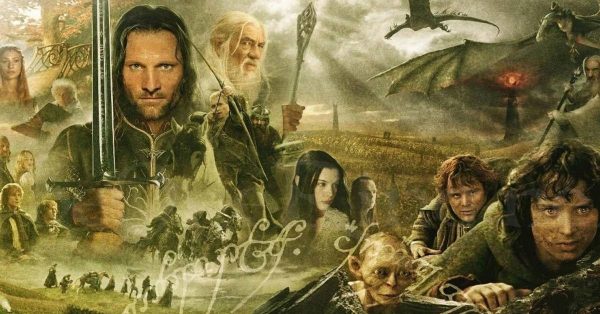
Does it sometimes feel like the Christmas season can lack a really standout, all-consuming big screen event? Over the years, there have been some huge movies drop over the Christmas holidays which have enticed families to make that trip to the big screen. Right now, Avatar: Fire and Ash is following where its two predecessors left off in coining it in over the festive period. There’s a sense, however, that Avatar brings with it a sense of apathy among many – even some of those who watch it and enjoy it.
So what was the last great Christmas big screen event? We’ve had Spider-Man adventures, Star Wars sequels and spinoffs and more, but there’s one franchise that ruled Christmas for three years straight and is probably more universally loved than any others from this century. The Lord of the Rings trilogy saw Peter Jackson jump from being a cult movie filmmaker working on modest budgets to doing a trilogy of almost incomparably epic scale.
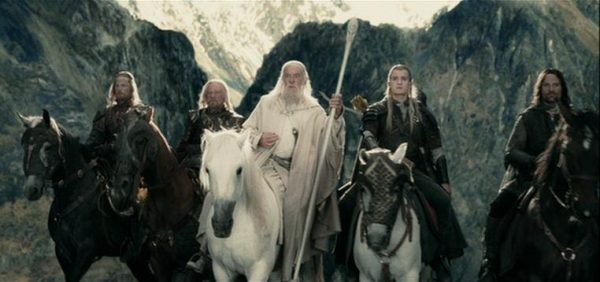
It wasn’t even just the fact that the first live-action journey into Middle-earth was so great, it was that it was followed with bated breath and feverish anticipation by two more films in the next two years. The legacy still remains, not even watered down by the wholly underwhelming The Hobbit trilogy that fell almost aggressively short of The Lord of the Rings trilogy.
For me, nothing since has hit cinemas in the Christmas holidays that was absolutely essential to see, nor of such greatness that it’s still adored many years later. Seriously, Avatar seems to come and go these days with almost no anticipation, make a tidy couple of billion, and then get forgotten about. It’s baffling. But is Jackson’s original trilogy still as majestic as it was back in the day? It’s time to take a look back…
The Fellowship of the Ring
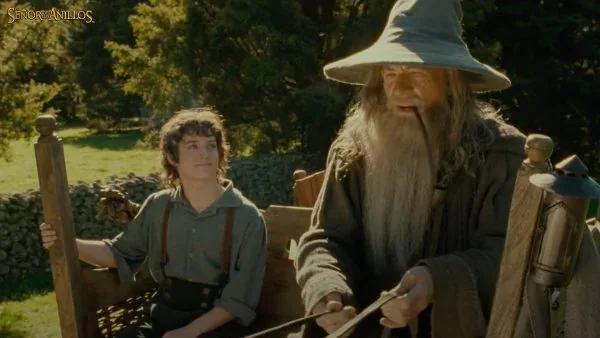
Bringing J.R.R. Tolkien’s books to life was long deemed an impossibility. The Rings trilogy was epic in length and visual description, and jam-packed with characters and places. Inevitably, some things were glossed over or omitted by the time the film came out, whilst other moments were embellished for dramatic license.
Likewise, the sheer scale required the very best in groundbreaking CGI, in conjunction with sets, props, costumes and real locations on a gargantuan scale. Shortly before the release of The Fellowship of the Ring, another fantasy novel (aimed at a slightly younger audience than Tolkien), Harry Potter got its first big screen adaptation. The Philosopher’s Stone was good, setting a pretty respectable bar for Jackson to meet. It was a bar he didn’t so much leap over, but broke the roof of the stadium, too.
From a rousing and evocative prologue to a quaint and enjoyably patient introduction to Hobbiton, Jackson absolutely nailed immersing us in the world, setting out a bit of history and pretty quickly establishing the stakes in the impending journey to come. Bilbo Baggins (Ian Holm) passes on the seemingly powerful ring he once found to his nephew Frodo (Elijah Wood). As it transpired, the Ring of Power (which all and sundry fail to resist the temptation of) is sought by dark forces that want to bring it home to Sauron.
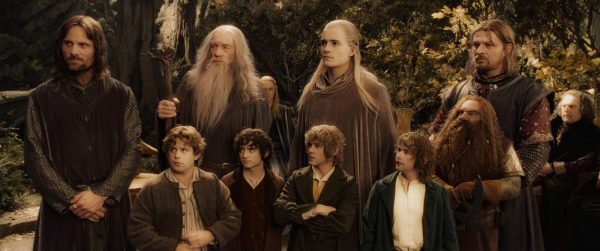
As far as world-building cinema goes, Jackson nailed the scale, range and complexity of this world with skill, and never forgetting that, among all the exposition drops, new faces, and places, that this thing also needed spectacle. From evading Ring Wraths to navigating the Mines of Moria, right up to the final epic battle. It’s still an utterly masterful movie that doesn’t just do the fantasy genre exceptionally well, but is, all told, a superb film with engaging characters, drama, tension and rollicking action.
The cast to a person is also pitch-perfect. Ian McKellen as Gandalf is just pure charismatic gravitas, whilst there’s an alternative universe where Stuart Townsend probably does an okay Aragon, but thankfully in our world, his late replacement (after being let go), Viggo Mortensen, is magnificent.
This was a big screen experience that was mesmerising, which evoked in the 20-year-old me, a sense of wonder and escape in the cinema I’d not felt since that film about the Dinosaur theme park.
The Two Towers
One good thing about the trilogy was the fact that consistency felt like a certainty. It wasn’t like the Star Wars sequels/spinoffs (of the Disney era) or even the Potter franchise, which jumped between different directors or had long gaps between movies. It was all shot back-to-back by Jackson. If the trilogy was effectively one big movie cut into three (big) movies, then one area that could have proved troublesome would be giving a sense of a good final act in the first and second films, and ensuring the films individually could still be enjoyed on their own (whilst, of course, adequately dropping some suspense for the next one).
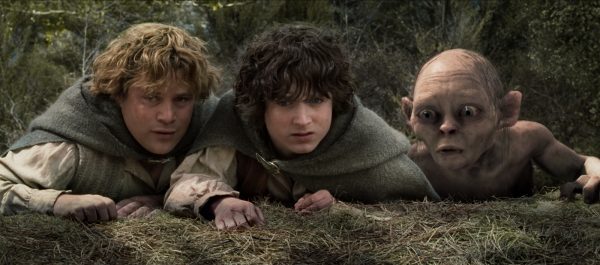
The film with the most difficult task was always The Two Towers. It’s the middle part of the overriding story, but as a movie on its own, it still needs to have a distinct beginning, middle and end. Although there’s a slight sense of middle-film-itus here, it’s still consistently brilliant like its predecessor. Though there were huge set pieces in Fellowship, it was a fairly intimate, focused story. The Two Towers sees the evil forces expand and the world falling into war; we see the Fellowship break into different groups, all experiencing a different adventure. The Two Towers feels huge, sprawling, and the Battle for Helm’s Deep is jaw-dropping to say the least. It should also be said, too, that for the most part, the CGI work in the film holds up pretty well.
Then, there’s Gollum as played by Andy Serkis. It was the first mocap performance of its kind, and so groundbreaking and eye-popping that Serkis became a go-to for people who wanted an actor capable of bringing a CGI character to life. It gets to the point where you are so swept away by Gollum, you forget he’s CGI.
The Return of the King
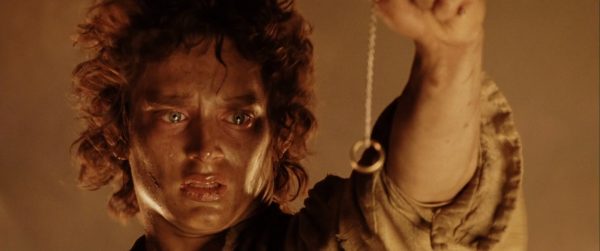
Going into Return of the King on Boxing Day 2003 was something of a bittersweet experience. The previous two years, this mega event with its epic run time had swept me (and the family) away to Middle-earth. It had also proved unforgettable to that point, and the subsequent DVD releases with the exceptionally put-together extra features (of incomparable depth) were essential. So knowing this epic quest was closing was both exciting and sad, because I knew something then which has been proven true since, nothing else would come close as a Christmas period blockbuster event. The kind of films everyone wants to see, that almost everyone loves and that manage to be that good.
Likewise, The Lord of the Rings was a journey that left audiences (in a good way) exhausted and needing final closure. This had to nail its landing, and it absolutely did. A rousing and sweeping finale with twists, turns and danger at every turn. Gripping moments of drama and tugs of the heartstrings. Jackson’s ability to deftly incorporate light humour, or gleefully dark moments of horror, was sublime but has also since left many wondering if he’ll hit anything like those levels again (he hasn’t, not even close).
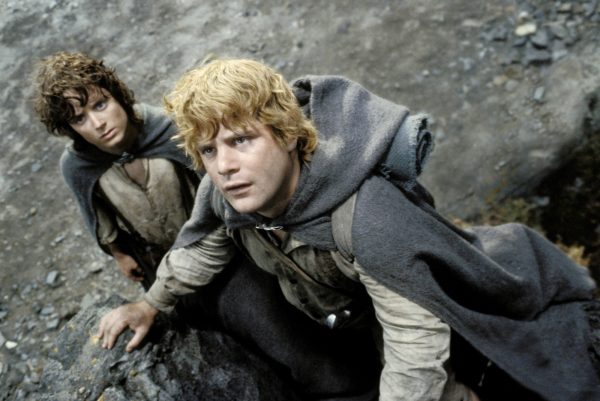
Upon rewatching this trilogy, it was also abundantly clear that the sheer mastery of its technical aspects, its storytelling, acting and (not forgetting) incredible score (Howard Shore), are still as great now as they ever were. The impact of some pop cultural cinematic movies dampens over time. Some films are made to entertain people in the moment, with nary a thought for a lasting legacy. Honestly, will people still recall Spider-Man: No Way Home with the same fondness in 10-20 years as on its release? Hell, as a trilogy, the Holland Spider-Man movies and the use of ‘Home’ in every title only adds to the feeling that they’re all a slightly forgettable and indistinguishable franchise. Jackson’s Rings trilogy was simply built differently.
What are your thoughts on The Lord of the Rings trilogy? Is it the best Christmas season big screen franchise ever? Let us know on our social channels @FlickeringMyth…
Tom Jolliffe
Originally published December 25, 2025. Updated December 27, 2025.