Chris Connor chats with Pluribus composer Dave Porter…

Pluribus was one of the biggest hits of 2025 for Apple TV+. The series reunited composer Dave Porter with Breaking Bad and Better Call Saul showrunner Vince Gilligan, and we spoke with Dave about scoring this most unique of sci-fi shows, the evolution of his collaboration with Gilligan and influences on the show’s sonic palette.
Can you talk us through your starting process for Pluribus and your first steps?
Yeah, you know, I think if you’re knowledgeable about film music, you know that film music often is the last thing that happens. But I tried to get them to keep sort of in touch with where things are going, as much as they’ll tell me. We work in a very secretive bubble, as you might imagine. I had some early conversations along with Thomas Golwhich, our music supervisor, with Vince and the writers. We like to go have lunch with them early on, while they’re kind of in the writers room and working out things, just to talk about tone and general thoughts and directions, and particularly for this one.
Obviously, I’ve been working with this group of people for decades now, which is such a blessing, but this is the first time since the pilot of Breaking Bad that we’re really starting fresh. This is a whole new universe, obviously; all the prior shows were very different, but they had a threat of commonality to them, but Pluribus was a whole new universe and a complicated one that they were putting together from scratch. So, I asked a lot of questions, and we talked about a lot of different ways to approach music for the show, and we tried to really rethink how we’ve been using music and what kind of music we were going to use for the show relative to the others.

Can you talk us through scoring the opening episode as the situation begins to unravel?
It was a super fun playground for us to do that, and we really wanted to approach it like a big thrill ride. That first episode in particular, I was leaning into musically, you know, all of the things that an audience wants and expects from a from a big set piece like that, a big sci fi moment, a big horror movie moment, all of those things, because it was really important, A) to have fun, but at the same time B) set up the scope and the scale of the devastation and this totally bizarre and crazy predicament that Carol finds herself in, because obviously that’s the backbone for everything that follows. So yeah, musically, we were leaning into some of my favourite film scores, going back to Bernard Herrmann and that era, but with definitely a modern twist that is hopefully uniquely mine.
The tone of the show as with Vince’s previous work shifts through genres. Can you talk us through capturing the different styles the show incorporates?
I think the trick always with working on a Vince Gilligan show is that things are always adapting and changing and going places you don’t imagine. That’s the beauty and what’s special about them. It’s also the big challenge for the score in particular, and more so on this this series than the prior ones. I think we’re shifting even more dramatically, and we have, I think, a broader range of emotions that we’re showing than we have in the past.
There’s genuine fear, of course, and terror, but there’s genuine warmth. We’re being, I think, more obviously humorous, overtly humorous, than we’ve been in the past. At the same time, there’s a lot of love and humanity and passion in this show that was maybe much more subdued in Breaking Bad and Better Call Saul. So to be able to shift those gears was the tricky part, and for that I leaned on a lot more human performances than I did in the others. There’s a lot less of the technology and the synthesisers, which I love and used a lot more in the prior shows, particularly Breaking Bad, actually better call saw a lot of live players, but they tended to be soloists and singular individuals playing, whereas here, now we’re leaning into the size and scope again of the show. We’re playing a lot with the back and forth between large groups and soloists, to kind of give that impression, of course, of the big dichotomy that we’re playing here, up against the others and the singular survivors that remain. A lot of use of the human voice, of course, too, because what’s more human than the human voice?
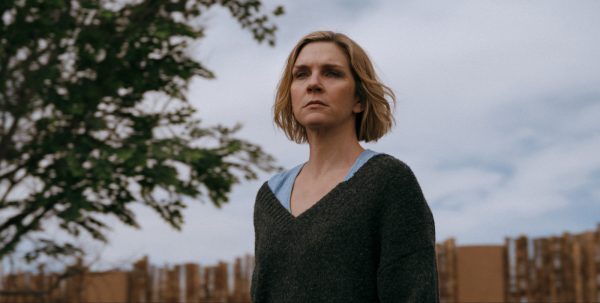
There are some similarities in terms of the setting, although the tone of the show couldn’t be more different. How did you find approaching Albuquerque and those locations here?
I think, actually, interestingly, I’m trying to ignore Albuquerque in this show. It was obviously such a big player in the previous two series, and it is in this one too. But it’s a very different Albuquerque that we’re seeing for the most part. It’s a suburban, more upscale, and, honestly, more homogenous version of Albuquerque, and the show just has a much more global feel, especially as it goes on, because we’re following characters who are survivors, located all over the planet. They went and shot some amazing places in this first season, particularly later on, you’ll see, and so I didn’t want to be pinned down to just New Mexico, because the story is much, much larger than that. New Mexico is near and dear to us for sure, and there is something about those blue skies that’s so inviting for writing a big score, and I definitely try to take advantage of that where we can.
This is more intimate than your other collaborations in some ways. How did you find focusing more on Carol’s story?
That’s absolutely true. This is more focused on fewer actors who have more to carry. I mean, obviously, there are some incredible performances, going back to Bryan Cranston, and those shows would not be those shows without those actors. Just the nature of this story, we spend a lot more time on singular storylines. So again, because it’s a Vince Gilligan show, these characters are rarely the same from one episode to the next. They’re constantly evolving and changing. So, for me, the way I approach that is usually by having a palette of sounds that I lean on for specific characters, rather than overt themes, because the themes would have to adapt so much and so often that I felt it would be distracting. So you’ll find that, you know, obviously I have themes for situations and moments, there’s a particular theme I’m using for Carol and her partner, Helen, for example, that appears at different times, and that’s a recurring moment and backbone of the show that we’re always trying to remind people of. It’s so foundational to Carol’s situation and her behaviour.
For Manousos, I’m using more brass and just showing kind of his metal and his determination, particularly as he hits the road. But all these things evolve and change, and these characters come together and are flung apart. So it’s a little dance that we’re doing with the music all the time, but hopefully I’m keeping these threads interesting and intertwined enough and with a micro view of every moment, but then also a macro view that helps when you sit down to watch the show, you hopefully know that the score is the Pluribus score and it clues you into what you’re watching and gets you in into our world as quickly as possible.
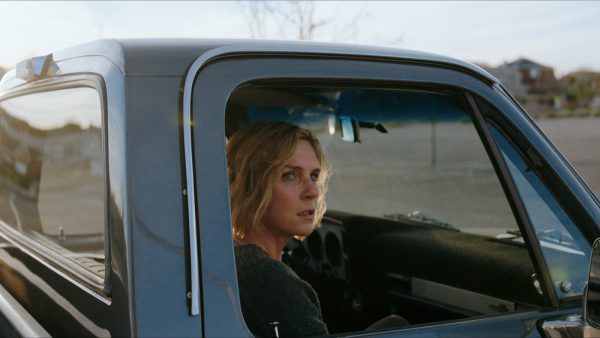
The bulk of the narrative is linear, but we do have sequences that take place before the joining. How did you find, you know, scoring those? They have to stand apart from the main narrative.
In the first few episodes, we don’t have as much of that, actually, as we used to do in our old shows. Interestingly, but it is a staple of of storytelling for Vince Gilligan, which are amazing. Love them. And yes, in the in the one most specific instance of that, actually, there’s two I can think of, certainly, that we go back and we are introduced to Zosia. Originally, in episode two, she makes her long journey to become Carol’s chaperone, if we may, but we just actually decided not to score that at all, and we left that a big mystery by design. We do that a lot. Then the beginning of Episode Three is another flashback with Carol and Helen at the ice hotels. There I actually went interestingly, I went a very different direction, and went a little more modern and a little more sound design, rather than overt score, just to kind of make it set apart, as you point out, right from the rest of the story and help us feel, as we’re watching it, that, where is this different? Why is this different? This is different because it happened in a universe that no longer exists.
How did you find scoring the hive mind as it’s such a unique thing?
It is, what is the sound of everything, that’s just one thing, all right? I think it is a combination, and again, a lot of dichotomy we’re playing with the back and forth. I’m using the voices a lot for them, for sure, and we’re using a lot of unison at times. But then Unison that dissolves into cacophony and a tonal mixes of things and vice versa, sometimes, starting with with things that don’t feel like they’re all together, but then the hive mind pulls them together into it, into unison, using a lot of just syllables and utterances, never real words, just trying to give that impression of humanity that’s trying to figure itself or it feels alien to us, and so the choir I picked out to use for this is just nine people, and no bases are just mostly women, sort of tilted towards the higher end of the spectrum frequency wise. They’ve been fantastic, but I view them sort of as my 1970s New York minimalist crew. It’s a very Steve Reich inspired, Philip Glass inspired world that I grew up studying and love and just is a fun playground that feels a little off kilter at times and a little strange, but at the same time, has a warmth and just a humanity about it that only voices could bring you.
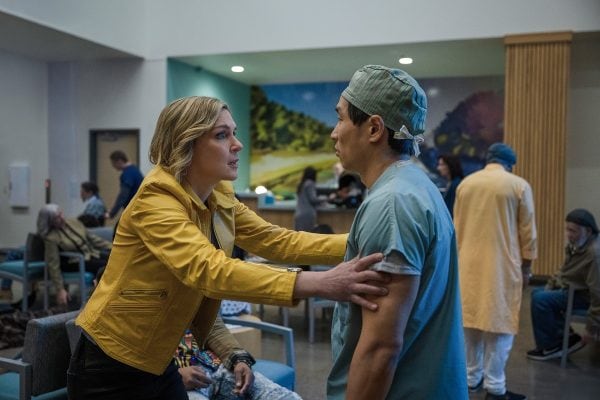
Were there any particular sci-fi films or shows that were particular touchpoints for you?
No, I can’t say there are any specific ones. We were thinking really about The Twilight Zone if anything, I know it certainly was a touch point of things that we talked about a little bit, particularly, again, in the first episode. We were leaning in a little bit to situations and feelings and a story that, at least, hopefully, for the first 95% of that first episode, are fun and even a little familiar by design. Certainly, the way Vince shows it and tells it is, is unique, but it’s it’s a story we almost expect and we know is coming when it starts to fall apart, and then we want it, of course, to take that very hard right turn at the end of the first episode. Then from there, the score really changes along with the story. And we’re striving to do something a little more unique and modern and its own thing.
Have you found a difference working with Apple vs Netflix?
Interestingly, the studio behind us is Sony Pictures Television, so they have not changed. They’ve been around with us for a long time. Our original airing partner for the early shows was actually AMC, which is a network here in the States. Most people, I think, are more most aware of it from Netflix. Now we’re at Apple. We’ve been great new partners to us. I think in part because Vince has earned it, but also because, these folks who we’ve been working with our terrific collaborative partners, they’ve done what Vince has said, I know publicly, has given us the two greatest gifts that they can give us, which are trust and time. They’ve been very patient with us and understanding about the ways and the pace at which we work and the way we work together, because we’ve just been a group that’s been together for so long, for we’ve just we have ways that we do things that we have found to work for us, and they’ve been wonderful for us and directed us wonderfully and been super supportive, and hopefully we’ve rewarded that trust, amazing.
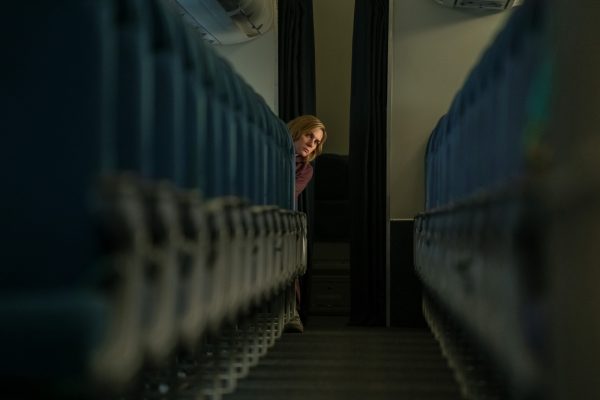
Was there anything you particularly wanted to spotlight on Pluribus score?
I’m very proud, of course, of the show’s main title theme, which we spent a long time trying to find because this is really tough, as always, to pin down the essence of a very complicated show in 20 seconds, which is the part of the main title theme that we show at the beginning of the episodes, is very tricky. Again, here playing with all the dichotomies that we’re presenting. It’s just a simple two-parter. It starts with two part vocal line, one mostly in the left channel, one mostly in the right, and it’s a little bit of a fugue, almost back and forth to each other, but very crucially, sung by the same woman. So it’s two sides of the coin from the same voice,
Kenya Hathaway, who has this amazing voice, obviously a professional singer, but she has this quality about her voice. It’s also feels very relatable, and almost has a little childlike innocence in it. She might be mad at me for saying that, but it is perfect for this. She’s just a wonderful addition to the show. And we were so lucky to have her.
What do you think makes this show stand out? The reaction has been so overwhelmingly positive. What do you think makes this show so special?
You know, I just feel like Vince Gilligan has always had this, whether he knows it even or not, he has this incredible ability to have a sense of where we are as a people, and what we’re feeling and what we need, and what, what’s that spark or that, that I don’t know, that hot stove right, that we’re that we might touch, that that sets us off to be thinking. It’s a sense of this innate nature of knowing where the zeitgeist is at. That was true certainly with Breaking Bad, and again, with Saul, just very different shows with different themes, but, but he always seems to know, or at least he’s always thinking right at the same time as the rest of us, and we’re so gratified by the response to Pluribus, especially because it was a big swing, right? It’s a it’s a big it’s taking a lot of risks. It’s taking a big chance, and just we didn’t, you know we love it for sure, but we had no idea, you know, how many other people were going to love it and so. Clearly, it has touched a nerve it’s really has, and that’s such a neat thing to see. I’ve just been amazingly blessed to be a part of that a few times in a row now. That’s all down to Vince, for sure,.
Many thanks to Dave Porter for taking the time for this interview.
Chris Connor