Simon Thompson delves into the career of Brian De Palma…
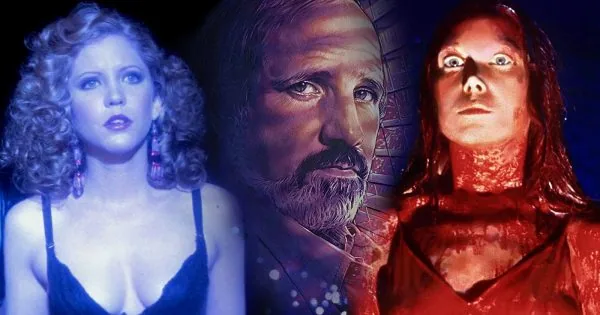
Brian De Palma is a filmmaker whose career is a Rorschach ink blot for various commentators to project their own perceptions on. To some he’s a brilliant and daring master of suspense, an American Alfred Hitchcock, while to others he’s a cheap purveyor of sex and death, producing work without any artistic merit. Whether you love or hate De Palma, there is one thing that is for certain – if you remove his work from the history of American cinema it is an altogether different and frankly, less interesting place.
De Palma’s issue is that he works within genres that various Mark Lawson types deem unworthy of merit and attention. Because of this ingrained snobbery, the intellect, technical proficiency, and versatility of his work went completely unnoticed until a new generation of directors (Guillermo del Toro, David Fincher, Quentin Tarantino, Noah Baumbach, Edgar Wright, Nicolas Winding Refn) championed his work as a seminal influence on their own.
A part of the esteemed movie brat generation, featuring the likes of Martin Scorsese, Francis Ford Coppola, George Lucas, Stephen Spielberg, and John Milius, De Palma’s importance to American cinema sits comfortably alongside his distinguished contemporaries.
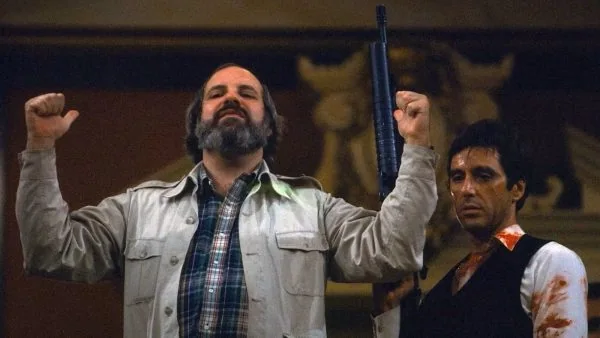
Born in 1940 in Newark, New Jersey, as the youngest of three boys to Vivienne De Palma, a housewife and Anthony De Palma, an orthopaedic surgeon, Brian De Palma spent his childhood on the move, residing in Philadelphia, various parts of Pennsylvania, and New Hampshire. De Palma had a troubled relationship with his father due to his belief that he was being unfaithful to his mother. De Palma’s suspicion reached the point where he was secretly following and filming his father’s whereabouts – with his suspicions about his fathers’ infidelity being sadly confirmed.
De Palma’s distrust of his father informs the atmosphere of obsession and paranoia that feature in much of his best work. Unlike other filmmakers whose obsession with the medium usually begins at an early age, De Palma spent his teenage years more interested in building computers than spending time at the cinema, winning a regional science fair project in high school and enrolling at Columbia University to study physics.
When De Palma arrived at Columbia, his passion and priorities completely changed after seeing Orson Welles’s Citizen Kane and Alfred Hitchcock’s Vertigo around the same time. This is when De Palma fell in love with filmmaking, and once he earned his undergraduate degree, applied for a masters in theatre development at Sarah Lawrence College.
The drama masters proved to be invaluable to the young De Palma’s development as a director, taking inspiration from the works of Michelangelo Antonioni, Godard and the Maysles brothers. Like his new wave hero Godard, De Palma’s early entries into directing were made on miniscule budgets and shot on location.
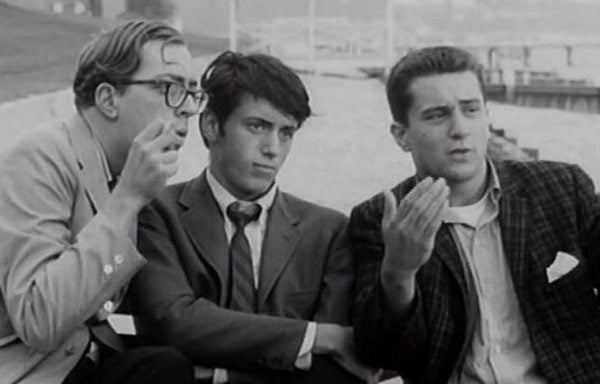
De Palma’s debut The Wedding Party, a movie he made in 1963, was bankrolled by his mentor Stanley Borden, the boss of American Films, a company that took a chance on young independent filmmakers and exploitation fare. Borden’s financial investment allowed De Palma to make the movie on a favourable schedule.
The Wedding Party is a story of a soon to be married couple (Robert De Niro and Jill Clayburgh), and their respective families. This $43,000 film provided a small stepping stone in the careers of both De Palma and Robert De Niro in the sense that it gave both of them necessary early experience that would help them as they rose in prominence.
De Palma’s 1960s output is the complete opposite of what he would become known for. Instead of thrillers, during this decade the young director was largely known for documentaries, directing the critically acclaimed Dionysus in ’69 (1969) and The Responsive Eye (1965). Even in these early documentaries you could see the first signs of De Palma’s stylistic flourishes, however, such as his use of split screen and quick editing.
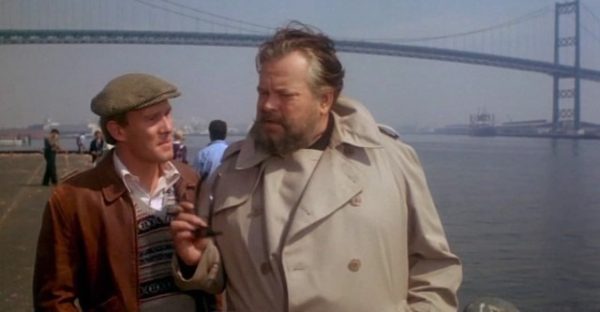
That it isn’t to say that he produced no feature films at all though, as at around at the same time he directed Greetings (1968), a dark satire about a group of men avoiding the draft to Vietnam and the social comedy Hi, Mom! (1970). Both these films did well enough on the independent circuit for various Hollywood types to notice, with Warner Bros. in particular scouting the young De Palma to direct a big studio comedy starring Orson Welles, Get To Know Your Rabbit (1970). At just 30 years old, De Palma had now entered the big time.
Get To Know Your Rabbit is the story of a businessman (Tom Smothers) who is sick of the repetitive and soul crushing nature of the corporate world, and so decides to quit his job to learn magic from a master magician (Orson Welles). Get To Know Your Rabbit provided De Palma with his first experiences of major studio directing, and the origins of his distaste for it.
De Palma and Tom Smothers constantly clashed over what direction the movie should take, with Smothers believing that the director didn’t have enough experience to be involved with a major studio film. Warner Bros were also dissatisfied, and secretly had producer Peter Nelson recut it and insert an extra scene not present in De Palma’s cut. This gave De Palma both a career long distrust of studio hire ups and a harsh lesson about the cruelty of the film industry at the highest level.
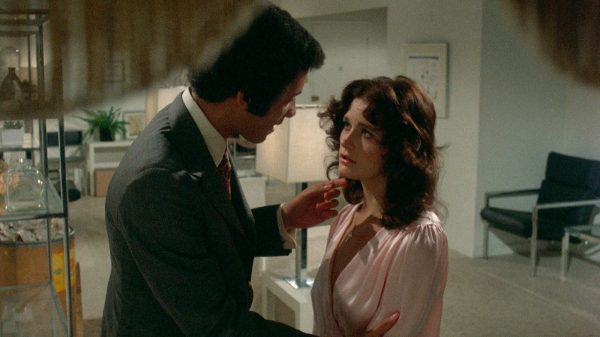
De Palma’s subsequent film, Sisters (1972), represented his first foray into the horror genre, the mode of filmmaking that has predominantly characterised his career. Sisters is a bizarre and uniquely disturbing narrative, about Dominique Blanchoin (Margot Kidder) a conjoined twin separated from her sister, successful French Canadian model Danielle Breton (Margot Kidder), who finds herself the prime suspect in a grisly murder witnessed by a newspaper reporter (Jennifer Salt).
Shot on location in Staten Island at the peak of New York’s economically depressed 1970s, Sisters, alongside the likes of Scorsese’s Taxi Driver and Paul Schrader’s Hardcore later on, represented a new mould of urban thriller. In homage to his great idol Alfred Hitchcock, De Palma hired Bernard Hermann to compose the score as well employing an extensive use of split screen, long uninterrupted tracking shots, and point of view shots filmed at unconventional angles to create a feeling of voyeurism.
Although the split screen and point of view shots were greatly inspired by Hitchcock and Max Ophuls, the main impetus behind De Palma’s choice to shoot Sisters in the way that he did was watching the American conflict in Vietnam on the news: “I really got the idea from watching the Vietnam war on television – watching a war that nobody really knew about except that we watched it every night on the 7 o’clock news. It was really a very voyeuristic war, and I think it says a lot about the way we perceive things. We are very much controlled by the media which present things to us. And those can be manipulated.”
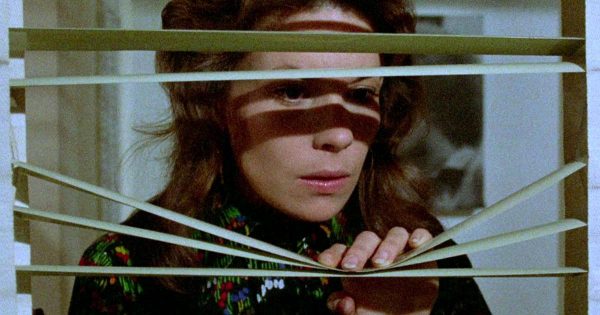
Sisters perfectly chimed with the end of the 1960s optimism that America was experiencing by the early 70s, and although it only achieved a modest box office ($1 million from a $500,000 budget) it became a cult favourite and was critically praised for its daring nature by the likes of Roger Ebert and Vincent Canby, the latter of whom called it a “good, substantial horror film”.
Sisters helped to position De Palma’s career outside the mainstream again, an area that the young director was more than content to be in. Phantom of the Paradise (1974) is one of the strangest movies in De Palma’s filmography but it’s one you can’t quite help yourself from coming back to. A bizarre genre hybrid of horror, rock musical, comedy – and a playful reworking of the myth of Faust, The Picture of Dorian Grey, and Phantom of the Opera, it’s a film which is not easy to categorise.
Songwriter Winslow Leach (William Finley) is ambitious and talented yet completely naïve. When a famed music producer, Swan (Paul Williams) hands Leach a contract, Leach mistakenly signs over his life’s work to Swan. Through unfortunate circumstances Leach is left drastically disfigured, leading to him adopting a new persona as the Phantom haunting Swan’s club The Paradise and insisting that the venue’s number one performer, Phoenix (70s horror icon Jessica Harper) be the only one to perform his songs.
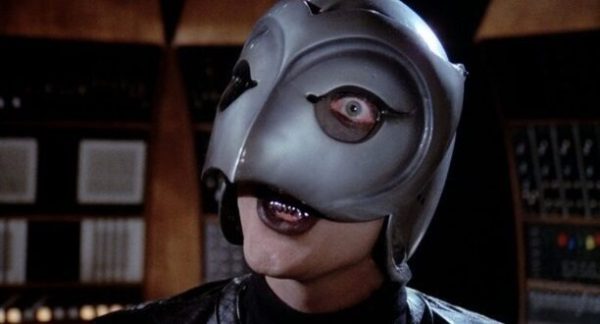
Phantom of the Paradise is the kind of American movie that could have only been made in the 1970s. It’s such a well-constructed narrative because the original score compliments the action rather than being clumsily inserted. Unlike most genre hybrids, that usually fall flat on their faces, Phantom of the Paradise is both scary and a hilarious satire of the music industry, at the same time balancing horror and comedy in a way that was fairly unusual for the time.
De Palma’s opulent visuals and sets give the movie a uniquely operatic quality, which, when paired with his usual stylistic flourishes, makes for an unforgettable viewing experience. The heavy use of reds, neon, and other bright colours give the movie a comic book style feel that suits the tone that De Palma is attempting to create.
Although some prominent critics, such as Pauline Kael and Kevin Thomas, championed Phantom of the Paradise, others, such as Gene Siskel, believed the satire to have fallen flat. Despite opening to underwhelming box office during its original release, the movie has become an endearing cult classic, influencing the likes of Daft Punk, Sebastian Tellier, and esteemed mangaka such as JoJo’s Bizarre Adventure author Hirohiko Araki and Berserk creator Kentaro Miura. Because of the reverence various esteemed musicians and artists have for it, increasingly younger generations have discovered it by proxy, contributing to its lasting appeal.
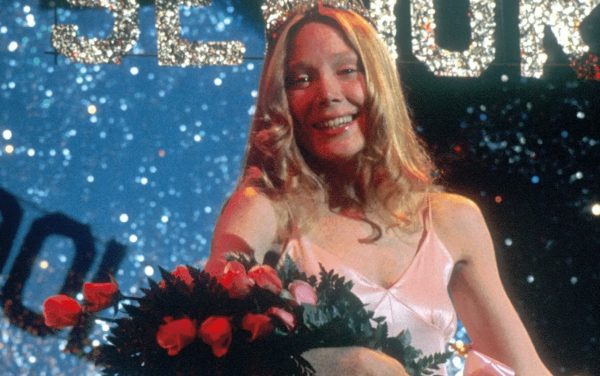
Around this time a horror novel by a little known writer came to De Palma’s attention. The book in question was Carrie, the debut of none other than Stephen King, who unless you’ve been living under a rock for nearly half a century is one of the most prolific, influential, and celebrated suspense writers of all time. De Palma was captivated by King’s story of a misfit teenage girl and bought the film rights as soon as he could.
Carrie White (Sissy Spacek) is a lonely teenage girl bullied and ostracised by her peers at school and psychologically/physically abused by her zealous religious fanatic mother Margaret (Piper Laurie). Little do they know, however, that Carrie has an extraordinary gift, a gift which after years of torment she decides to use to take revenge.
Carrie works because De Palma juxtaposes the horror with a slice of life teen comedy and coming of age narrative. This makes the suspense and nervous atmosphere all the more effective, because when the films switches to the straight down the middle teenage drama scenes you’re always nervous about what is coming next. De Palma uses a bright colour palette during the high school scenes and many of the exterior sequences, then immediately switches to a far darker rougher palette for the gothic fever dream location of Carrie’s house, with the various religious artefacts and iconography, combined with its austere 19th century look, creating one of the most iconic horror locations of all time.

Carrie (1976), was a modest production for its studio United Artists, budgeted at just $1.8 million and featuring a cast of young unknown actors such as Sissy Spacek, John Travolta, Nancy Allen, and William Katt. United Artists thought that Carrie would be nothing more than a disposable B movie, but the studio couldn’t have been anymore mistaken however, as Carrie became an instant box office sensation grossing $33 million and positive reviews from critics, with Roger Ebert calling it both a “spellbinding horror movie” and an “observant human portrait”.
Carrie is a movie forever permanently etched into pop culture, filled with unforgettable scenes (especially the finale at the high school prom) that have either been parodied or given homage by other artists since its release in the 1970s. After years as a cult filmmaker, Carrie gave De Palma a household name status that he was previously unaccustomed to.
1976 proved to be one of De Palma’s busiest years, as, in addition to Carrie, he directed the psychological thriller Obsession from a script written by Paul Schrader. A Southern Gothic mystery set in New Orleans, Obsession is the story of a businessman (Cliff Robertson) who fails to rescue his family in a hostage situation. Haunted by his grief, the businessman meets and falls in love with a woman (Genevieve Bujold) who happens to look exactly like his dead wife, which leads to him fearing the worst possible situation.
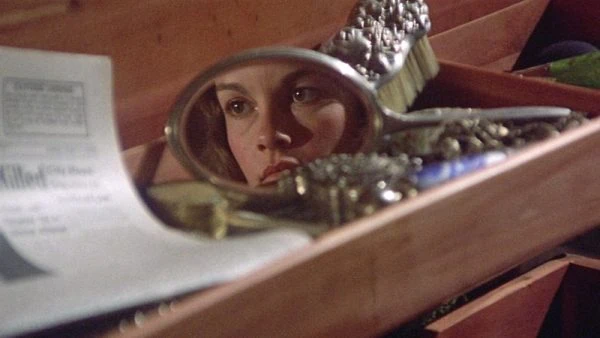
Although it didn’t enjoy the same critical adulation as Carrie, with Pauline Kael (usually a champion of De Palma), calling it a bad Hitchcock imitation, Obsession was a big hit with audiences, proving that the movie- going public couldn’t get enough Brian De Palma. With his new found status as a Hollywood big shot, De Palma was now in a position to get projects of his own choosing green lit. Sadly, his attempt to adapt Alfred Bester’s classic science fiction novel The Demolished Man failed, but that failure informed his subsequent film The Fury (1978).
A science fiction, horror, and conspiracy thriller all at the same time The Fury follows CIA agent Peter Sandza (Kirk Douglas) whose son Robin (Andrew Stevens) has been kidnapped. It turns out that the reason why Robin has been kidnapped is because he is psychic, and the man responsible for his abduction, Ben Childress (John Cassavettes), wants to use Robin and others like him as weapons. Eventually Peter meets Gillian (Amy Irving) a teenager with similar abilities to Robin who agrees to help Peter find Childress.
The Fury is a thriller which truly gets under your skin. De Palma manages to make a dynamic action movie paced at a breakneck speed, a genuinely frightening piece of horror, and a Wally Wood – like slice of B science fiction all at the same time. Underpinning all this is John Williams’s magnificent soundtrack, which, in a decade stacked full of iconic horror scores sits proudly right alongside the likes of The Exorcist, Dawn of the Dead, and Suspiria.
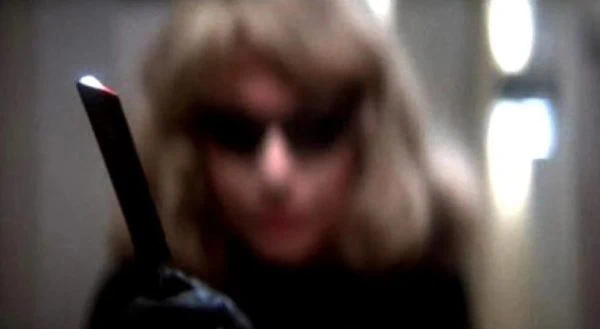
Commercially and critically The Fury proved to be another hit for De Palma (grossing $24 million from a $7.5 million budget), and earning glowing reviews from Roger Ebert and Pauline Kael. Although some critics such as Vincent Canby, declared the movie a bigger budgeted but inferiorly bombastic successor to Carrie, De Palma was too busy enjoying praise from one of his heroes, Jean Luc Godard, to care.
De Palma started off the 1980s with one of his most well regarded yet controversial films, Dressed To Kill (1980), a horror thriller more alike in tone with his earlier work in contrast to the science fiction aspects of The Fury. Liz Blake (Nancy Allen) witnesses the brutal murder of a housewife ( Angie Dickinson). The police believe Liz to be the prime suspect, and despite her pleas of innocence the only person who believes her is the housewife’s son (Keith Gordon). He decides to help Liz catch the killer, but the two of them begin to discover that the perpetrator’s identity and motive are far more complicated than the two of them could have imagined.
Dressed To Kill was easily the most controversial movie De Palma had directed up to this point, receiving flak from various women’s groups for its depiction of violence, as well as from the transgender community for specific reasons I’m not going to spoil in case you want to watch it for yourself. If anything, that latter aspect of the film is more De Palma playing with the same theme of duality that Hitchcock did in Psycho twenty years earlier, just in a much more explicit, post Hays code way.
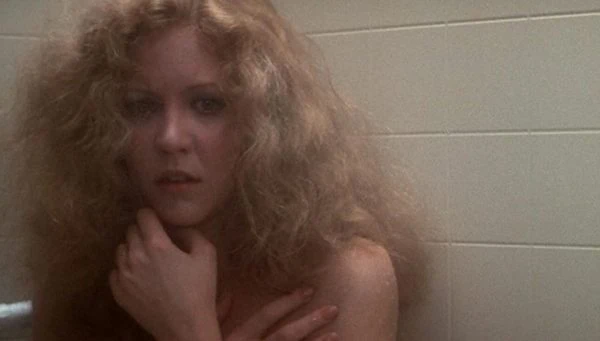
Dressed To Kill, like all art, is a product of its time, yes, certain things definitely could have been handled with more sensitivity and it features multiple sequences that no studio would touch with a 10 foot barge pole today, but labelling the movie and De Palma himself as entirely hateful is reductive and unfair.
Arguably one of the main roles of filmmaking, like any other artistic medium, is to both push the line of good taste and make you feel uncomfortable at times. If a piece of art makes people uneasy, that’s completely understandable but to deny the artistic merit of Dressed To Kill is a cheap cop out from a serious debate. The cinematography of this film is gorgeous to look at, the tension is so thick you can cut it with a knife, and it features some of De Palma’s finest individual sequences, such as an extended set piece taking place in an art gallery. Composer Pino Donnagio’s score (his first of several collaborations with De Palma) is easily one of his best and contributes heavily to what makes the movie so resonant.
Controversy is the best form of publicity a piece of art can get, as Dressed To Kill stormed to a nearly $30 million box office gross and was one of the most talked about movies of the year. Critics were predominantly positive, with New York magazine writer David Denby calling it “ the first great American movie of the 80s”, and others such as Roger Ebert, Gene Siskel, Pauline Kael, and Shelia Benson gave it glowing reviews highlighting the set pieces and stylised cinematography as some of De Palma’s best work.
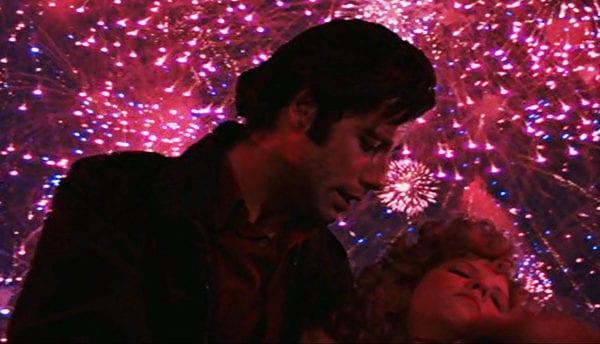
Going from strength to strength, De Palma directed Blow Out (1981) a year later, a strong contender for his best work and my overall personal favourite. Jack Terri (John Travolta) is a sound engineer working on the sound effects for a slasher movie. Out one night recording ambient background noise, Jack accidentally records something that he wasn’t supposed to – the sound of a car crashing over a bridge. Jack immediately dives into the water to rescue the passenger inside, Sally (Nancy Allen), and makes the shocking discovery that the other passenger, a prominent politician, is dead. Being an inquisitive type, Jack begins to investigate the events relating to the car crash, tangling himself in a vast political conspiracy.
Blow Out is one of the best examples of a strain of American cinema filtered through the heady cocktail of distrust that the Kennedy assassination, the Vietnam War, and Watergate created within the American public. Blow Out was part of a long line of movies dating all the way back to Haskell Wexer’s Medium Cool (1973) which focused on a corrupt conspiracy resting at the heart of a political office or institution of some kind, that the protagonist invariably pays the ultimate price for attempting to expose.
The problem was that this specific motif’s heyday was the mid-1970s, with movies such as All The President’s Men, Marathon Man, The Conversation, and Three Days of the Condor. By the time Blow Out was released in 1981 American audiences were shifting gears into a much more nostalgia driven optimistic mindset, more focused on escapist fantasy than anything else. Blow Out suffered from this sea change in taste badly, grossing $18 million from a $13 million budget.
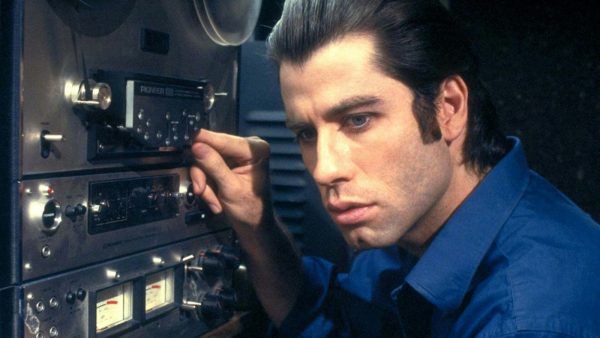
This is a crying shame because Blow Out is as tight as a drum in terms of its plot structure, has interesting things to say about the nature of power and corruption in society, features one of John Travolta’s best performances, and has an unforgettable ending in Philadelphia’s 30th street station. De Palma continued using the giallo like colours that he had adopted while making Dressed To Kill to great effect, with the flourishes of reds and deep blues really adding to the sordid conspiracy narrative.
Voyeurism and the power of looking had long been a favourite recurring theme of De Palma’s, but with Blow Out he added an interesting new dimension to it through his choice of having the inciting incident being heard and not seen. While Blow Out suffered from disappointing box office, it did earn appreciation from critics who immediately saw just how well put together a thriller it was. Since the 1980s, however, like Phantom of the Paradise before it, the movie has gained a substantial cult following and vocal support from later generations of directors such as Quentin Tarantino and Noah Baumbach.
De Palma’s next film, Scarface (1983), a remake of Howard Hawk’s pre code gangster film Scarface: The Shame of a Nation (1932) represented De Palma’s first foray into the crime genre. While his other work had some elements of crime cinema such as those in Dressed To Kill and Blow Out, Scarface represented the first time that he ever explored the genre fully.
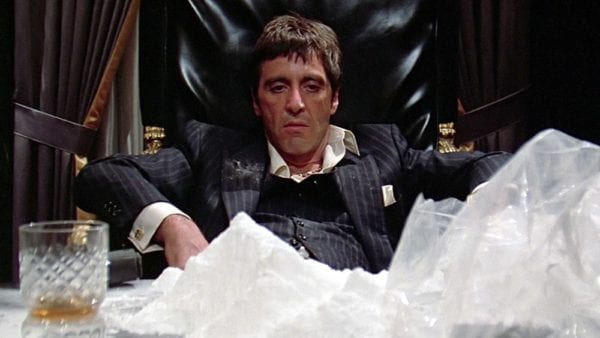
De Palma was not Universal’s first choice of director at all, with Sidney Lumet being the original director in charge and the driving force behind changing the movie from a period piece into being about Tony Montana, a Cuban gangster who arrives in the United States via the Mariel Boatlift, which was a hot button political issue during the early 1980s. Lumet was eventually fired by producer Martin Bregman over creative differences, which lead to De Palma being brought in as his replacement.
De Palma was immediately on board with Oliver Stone’s script, written from a personal vantage point of his struggles with cocaine addiction and convinced the project’s star Al Pacino that he was the right director for the job.
Tony Montana (Al Pacino) is a Cuban gangster who arrives in America as a refugee via the Mariel rescue. While interned in a refugee camp, Tony obtains a green card through killing a despised former Castro apparatchik and alongside his partner Manny (Steven Bauer), charts a rapid rise through South Florida’s cutthroat cocaine trade. As Tony acquires more and more wealth and success, he makes a series of powerful enemies ranging from the D.E.A, the police, to other drug barons, setting him up for as rapid a downfall.
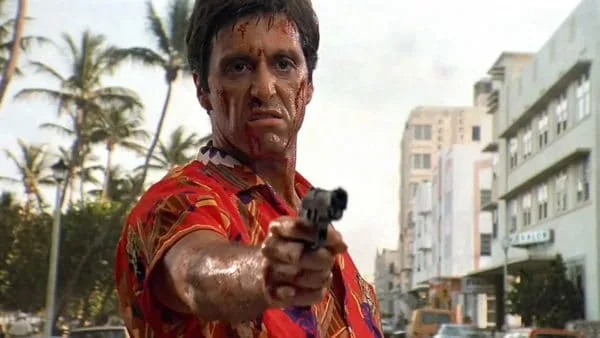
De Palma’s expressive visuals perfectly suited the opulent world of excess that Tony Montana inhabits as a drug kingpin. De Palma’s use of close ups on Tony himself convey the different changes in body language from his humble beginnings to his rise to the top, as well as the wide angles he employs for the many shootout sequences or the chase through the refugee camp scene, showing that his style could work in a different genre.
De Palma’s horror roots are still fully on display, however, the most infamous example being the hotel room chainsaw torture scene, which still leaves the hairs on my neck standing up just thinking about it.
De Palma’s direction does go somewhat unnoticed though, largely because Al Pacino’s performance and screen presence as Tony Montana is so striking the incidental details get lost on a first viewing. Living in a Cuban neighbourhood in Miami, and training in knife combat, as well as boxing (with his teacher being The Hands of Stone himself, Roberto Duran) Pacino gives a mesmerising performance as Montana, creating an anti-hero protagonist permanently entrenched into 1980s pop culture.
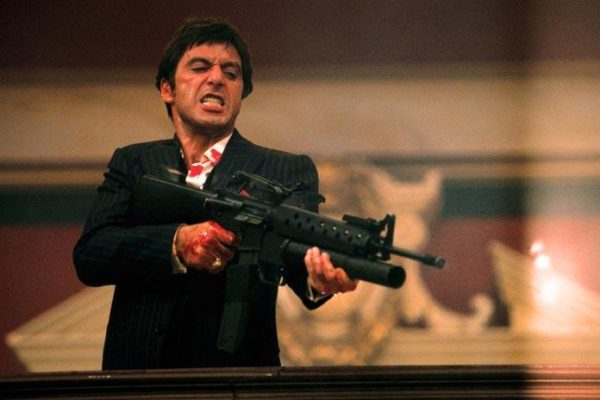
Commercially Scarface was a smash hit grossing $66 million from a $23.5 million budget. Critically, however, outside of Roger Ebert the movie was torn apart by the fustier good taste establishment who criticised its violence, excessive bad language, and extreme imagery. Even Kurt Vonnegut and John Irving both walked out during the previously mentioned chainsaw scene at the movie’s premiere.
Even more so than Phantom of the Paradise a decade before it, Scarface has had the most staying power of any of De Palma’s movies. Its iconic lines from Stone’s script have been paid homage and parodied ad nauseum, it has been adopted by numerous music genres (mainly hip hop) as a cultural touchstone, and through the benefit of hindsight is now considered one of the definitive modern gangster films.
Body Double (1984), was a return to De Palma’s familiar stomping ground of psychological horror. A satire of 1980s Hollywood excess, Body Double is the story of Jake, a struggling actor (Craig Wasson) who via a housesitting for a friend, becomes voyeuristically obsessed with a beautiful woman who lives nearby (Melanie Griffith). Jake’s voyeurism of course, comes with a cost, as he finds himself the prime suspect in a violent murder.
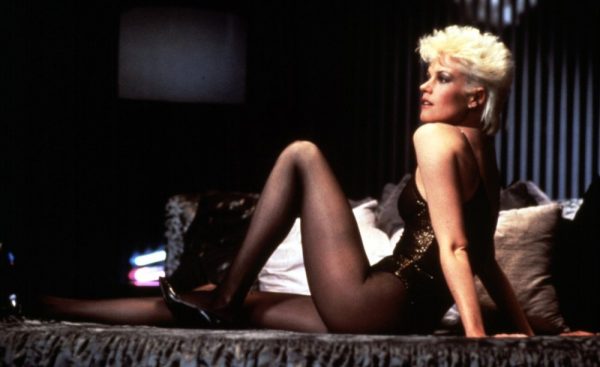
With Body Double De Palma sought to create a feeling of artificiality to compliment the superficial nature of the story’s Los Angeles setting. To achieve this, he used extensive rear projection to create an uncanny sense of unreality in the same vein that Hitchcock did with Vertigo.
Although critics at the time accused Body Double of merely being De Palma re-treading his favourite themes, beneath the surface there is some blackly funny satire around Hollywood and celebrity culture which in an age of social media and the erosion of privacy is as relevant today as it was back in 1984.
By the mid-1980s the slasher sub genre was at its absolute height, and like his contemporary Martin Scorsese six years later with Goodfellas, Body Double was De Palma’s cinematic declaration that he wasn’t behind Nightmare On Elm Street and Friday the 13th or their many imitators.
Crime comedy Wise Guys (1986) was an experience that De Palma would rather forget, describing production on the movie as something that he wished he hadn’t done and that he should have just taken his director’s fee and walked away rather than dealing with MGM. The end result was a box office non-starter ($8.4 million from a $13 million budget) and a majority panning by critics.
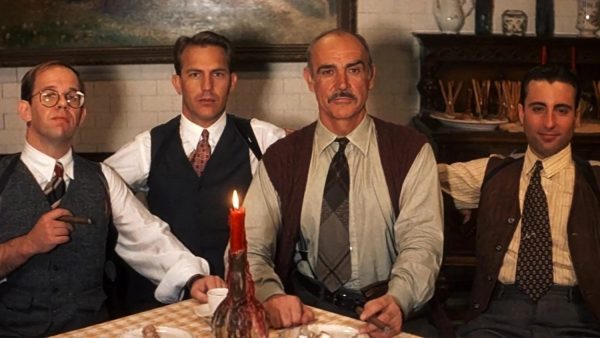
The Untouchables (1987) was as strong a comeback for De Palma as it got. A historical crime epic set during the prohibition era, The Untouchables follows a group of Chicago cops lead by the incorruptible Elliot Ness (Kevin Costner), trying to bring down the illegal booze monopoly of Al Capone (Robert De Niro). Ness is mentored by hardboiled Irish Cop Jim Malone (Sean Connery) who gives him the necessary guidance to deal with both a corrupt police force and Capone himself.
Directorially De Palma is on fire in this movie, everything from the Eisenstein homage stairway sequence to Capone’s famous declaration of war speech, showed that his misstep with Wise Guys was a mere blip. The Untouchables is a perfect storm due to the combination of David Mamet’s punchily quotable script and an impressive cast, with the movie establishing the careers of Kevin Costner, Patricia Clarkson, and Andy Garcia as well as featuring a great De Niro performance as Capone. It’s Sean Connery as Malone, however, who of course steals the show. Connery’s acting style, De Palma’s direction, and Mamet’s dialogue are a match made in heaven, netting him his first and only academy award for best actor.
The Untouchables showed that De Palma was still a relevant filmmaker, as the film was both a box office success and nominated for four Oscars, netting him a level of positive feedback that he hadn’t been accustomed to for a while. De Palma finished the 1980s with one of his most disturbing works, the Vietnam war drama Casualties of War (1989).
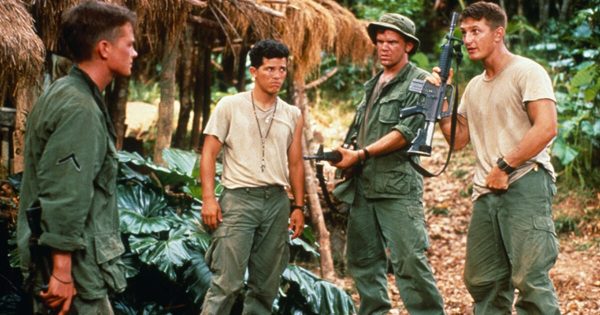
Headlined by two young stars in Michael J. Fox and Sean Penn, Casualties of War is a cinematic retelling of the Hill 192 incident in 1966, when a Vietnamese woman was abducted from her home village by a group of American soldiers, and subsequently raped and killed. Michael J. Fox plays Eriksson, a soldier who refuses to take part in the others’ actions and is determined to expose his unit’s crimes. Eriksson finds out, however, that the chain of command will do everything in its power to bury what happened.
In a post The Deer Hunter, Apocalypse Now, Vietnam war drama saturated marketplace Casualties of War found itself buried under the success of Oliver Stone’s Platoon and Stanley Kubrick’s Full Metal Jacket largely because it’s a movie which, to De Palma’s credit, pulls no punches in depicting just how cruel and sadistic the US army were to the Vietnamese people. While being critically acclaimed, it was a movie with a graphic nature which, when contrasted with the coming of age aspect of Platoon for example, proved to be almost impossible for Columbia to market properly.
Both Penn and Michael J. Fox were big box office draws at this point, so for a studio to be unable to market a movie featuring two popular young actors and with a commercially viable subject matter to boot, goes to show just how disturbing this movie’s depiction of the Vietnam war truly is. Over time Casualties of War has been hailed as an overlooked diamond in De Palma’s career, with the likes of Quentin Tarantino declaring it to be the best film about the Vietnam war ever made and later reviewers praising its uncompromising attempt at historical accuracy.
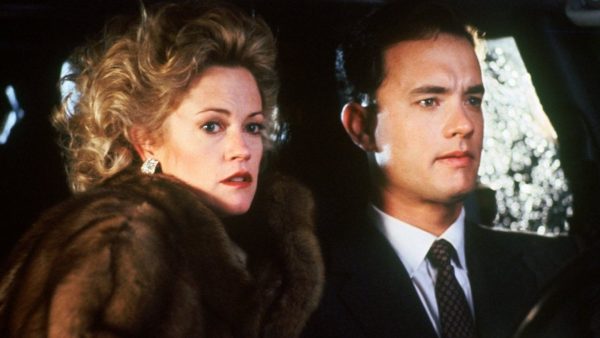
The 1990s would not begin well for De Palma at all, as his first movie in the new decade was an adaptation of Tom Wolfe’s critically acclaimed biting New York satire The Bonfire of the Vanities. Since the book’s publication in 1987, every Hollywood studio was chomping at the bit to get the film rights. Before De Palma was brought in Mike Nichols was in charge of an adaptation but quit over creative differences.
A panoramic social satire, The Bonfire of the Vanities follows a rich Wall Street executive Sherman McCoy (Tom Hanks), who while driving with his mistress Maria (Melanie Griffith), runs over a black teenager while getting lost in the Bronx. A gossip journalist, Peter Fallow (Bruce Willis), finds out about the story and uses his column to sway public opinion during the pair’s legal proceedings.
When De Palma was brought in, his attempts to cast either Jack Nicholson or John Cleese as the journalist Peter Fallow were turned down, with Warner Bros. forcing him to cast a completely unsuitable Bruce Willis in the part instead. For the part of southern belle gold digger Maria Ruskin, De Palma wanted an upcoming actress named Uma Thurman in the role, but was vetoed by the movie’s lead Tom Hanks.
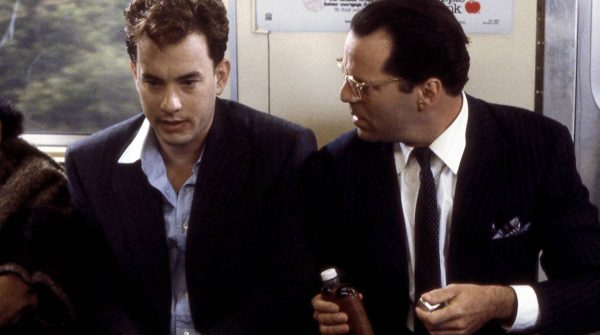
Production ran colossally over budget, and almost everything that was clever and unique about Wolfe’s original novel was systematically taken out of the adaptation by Warner Bros. Because of the vast $47 million budget involved the studio tried to make the character of Sherman McCoy far more likeable than Wolfe did in the book, as well as removing many of the intricate subplots that made the novel so interesting, to whittle down a 700 page epic into a 2 hour film.
Audiences avoided The Bonfire of the Vanities in their droves, and critics rightfully called it an inferior miniaturisation of a brilliant book with the most savage review coming from Steven Rea in The Philadelphia Inquirer who wrote: “Big books have been bastardized by Hollywood before – it’s a time-honoured tradition that counts Hemingway, Faulkner and the scribes of the Old Testament among its victims – but you’d be hard-pressed to find an adaptation that screws up as royally as Brian De Palma’s take on The Bonfire of the Vanities. Miscast, misguided and miserably unfunny, Tom Wolfe’s black satire about avarice, prejudice and criminal injustice in the loony-toon town of New York has been raped and stripped of all ambiguity and dimension… what a mess”.
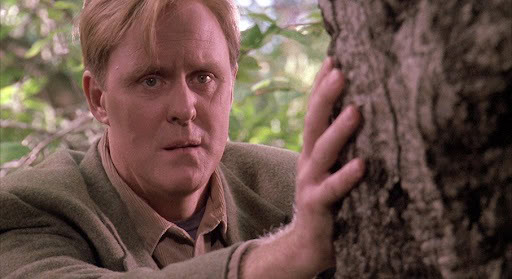
De Palma’s professional and artistic reputation had taken a substantial dent as a result of The Bonfire of the Vanities. This is why he decided to go back to horror with his next movie Raising Cain (1992) a genre that he hadn’t explored since Body Double eight years earlier. The story of a renowned child psychologist (John Lithgow) slowly losing his mind and developing a kind of multiple personality disorder, Raising Cain was a kind of Celebrations box of De Palma’s previous and more interesting work in the horror genre. Crucially the film did modest box office after the colossal turkey that was Bonfire of the Vanities, which helped to get De Palma back into major studio good graces.
Carlito’s Way (1993), an adaptation of Edwin Torres’s hardboiled crime novel of the same name and its sequel After Hours, was a project that had been in development hell since the 1970s after the film’s star Al Pacino met author Edwin Torres in a New York gym. John Mackenzie and Abel Ferrara were attached to direct at various points but the script eventually found its way to De Palma.
While De Palma was reluctant, at first, to take on Torres’s realistic and semi-autobiographical novels out of fear of rehashing Scarface, he was deeply impressed with David Koepp’s script and immediately recognised that Carlito Brigante was a sharply contrasting character to Tony Montana, so he changed his mind and decided to direct the film.
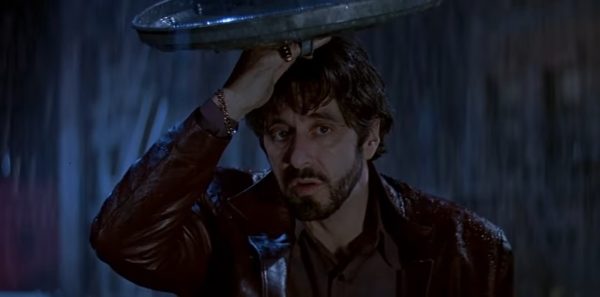
Set in 1970s Spanish Harlem, Carlito’s Way chronicles the story of its eponymous protagonist, a recently released Puerto Rican career criminal (Al Pacino). Given a second chance, Carlito tries his best to stay away from his old life, but finds that he cannot escape his past.
De Palma turns Torres’s original book into a sweeping operatic epic, with Pacino giving a late career defining performance as Carlito. Shooting the movie in a neo noir style, De Palma vividly evokes the violent world that Carlito lives in to the audience. What makes Carlito’s Way work as a movie is that it’s more a tragedy than it is a crime film, while De Palma still uses clever editing and explosive set pieces (especially in the final sequence in Grand Central Station) it’s a character study about a man desperately trying to go straight in a society that won’t let him.
The supporting cast, Sean Penn, Penelope Ann Miller, John Leguizamo, and Luiz Guzman are all excellent in their respective roles, with both Penn and Miller rightfully being nominated for best supporting actor awards at the Golden Globes. It’s absolutely criminal however that Pacino was not nominated for an Oscar or a Golden Globe, a snub which is right up there with some of the most egregious of the 1990s.
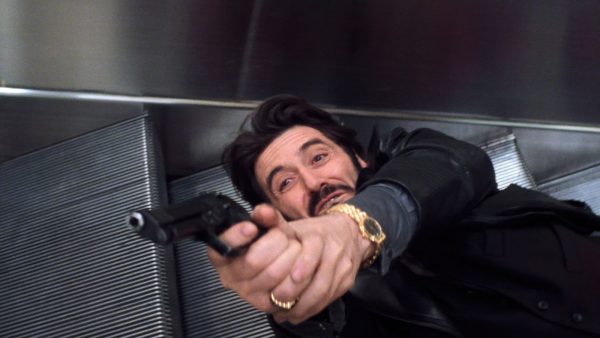
Carlito’s Way debuted to so-so critical reception and box office, however once it appeared on home video the movie quickly became a cult favourite and is now considered one of the most beloved of De Palma’s career. Although De Palma hadn’t quite reached full Coppola status as a pariah, it didn’t take a master detective to spot the resentment many of Hollywood’s major producers still harboured towards him for Bonfire of the Vanities.
After a three year period of career purgatory, De Palma’s career received the shot in the arm it needed via a meeting with Tom Cruise. Cruise, a huge fan of the 1960s spy show Mission Impossible (1996) was using his star power to try and get a big budget movie reboot of it underway. When negotiations with Sydney Pollack to direct fell through, Cruise turned to De Palma after meeting him at a dinner with Steven Spielberg. After a marathon watch of his previous work, Cruise became the loud A-list advocate that De Palma needed and subsequently found himself hired for the job.
When Ethan Hunt (Tom Cruise), an American spy, becomes a fugitive, he recruits a crack team including a skilled hacker (Ving Rhames) and a mercurial pilot (Jean Reno) to break into a secure CIA building to retrieve evidence of his innocence. De Palma’s claustrophobic shooting style and his ability to create spectacular set pieces proved to be a winning combination for Mission: Impossible with the paranoid atmosphere that De Palma loves to create being the perfect tonal backdrop for a conspiracy thriller.

Opening to stunning box office success ($457 million off an $80 million budget) and largely favourable reviews from critics, Mission: Impossible wiped De Palma’s slate clean overnight. As a director fresh from contributing to the start of a multi-billion dollar action franchise, De Palma’s stock was the highest it had been since the late 1980s, which is what made his subsequent film Snake Eyes (1998) so frustrating.
Aiming to score big with another action/conspiracy thriller, Snake Eyes tells the story of Rick Santoro, a corrupt cop (Nicolas Cage), who witnesses a major politician being assassinated during a high profile boxing match. When an important witness (Carla Gugino) escapes the scene, Santoro discovers a grand web of espionage and intrigue.
While the movie features some of the usual stylistic flourishes from De Palma, and strong performances by Cage and Gary Sinise, it’s ultimately an inferior copy of some of his earlier and better thrillers. The 2000s proved to be a rough decade for the director. First there was the bizarre foray into family science fiction with Mission To Mars (2000) which, although praised for its visuals, was panned for everything else. Femme Fatale (2002) was De Palma’s first horrific suspense film since Raising Cain and, despite the star power of Antonio Banderas, was seen as being the work of a director who had been superseded by his acolytes trying to stay relevant. Unlike Mission To Mars however, Femme Fatale has developed somewhat of a vocal cult following which declares it to be a misunderstood chapter in De Palma’s output.
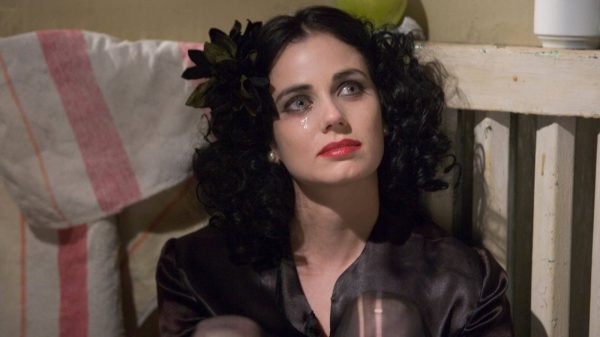
The Black Dahlia (2006), an adaptation of the first novel in James Ellroy’s celebrated LA Quartet series of books, was a huge critical and commercial misstep. However this is not entirely De Palma’s fault as his original three hour rough cut, which James Ellroy praised, was chopped and changed by Universal to achieve a two hour length. Redacted (2007), Passion (2012), and Domino (2019) all represent a largely depressing decade or so of work from a great director.
Overall, Brian De Palma will be remembered as a risk taking, boundary pushing auteur whose work in the 1970s-1980s can easily stand toe to toe with that of his contemporaries. While in a perfect world he would be making movies in his later years of a quality on a par with the likes of Scorsese and Spielberg, his main contribution of shaping the suspense thriller in a post Hitchcock vacuum and doing more than anybody not named John Waters to systematically breakdown the good taste brigade, will ensure his place in the history of American cinema.
To borrow a phrase from Manchester United, De Palma will be forever hated, adored, but never ignored by cinephiles the world over.
Simon Thompson