Robert Kojder chats with Exit 8 director Genki Kawamura…
A prolific producer because Japanese cinema – ranging from stamping his name on the works of Hirokazu Koreeda, Makoto Shinkai, and more – Genki Kawamura is breaking into writing and directing himself. With one feature-length and short to his name so far (the latter of which bears similar themes to what is here), buzzy Cannes selection Exit 8 (based on the video game from Kotake Create) not only received much-deserved acclaim, but through its success implies that perhaps there is no curse when adapting from the medium, as long as the filmmaker has a strong angle.

That is present here, as the filmmaker took on the challenge of adapting the 2023 walking simulator, which has no story and is more of a looping puzzle that forces players to find physical or auditory anomalies in a subway station hallway. Naturally, one has been added (writing alongside Kentaro Hirase), but brilliantly so, without sacrificing the gameplay aspect, which has been similarly smartly translated to the screen and depicted cinematically, functioning in tandem with his psychological horror tale, seemingly punishing characters with guilt. Hailing something as one of the best video game adaptations ever made isn’t necessarily a high bar to clear, but it does show that gameplay itself can be adapted to another medium without losing anything in translation.
As such, it was a pleasure to talk to Genki Kawamura about pulling that off and what inspired him. A representative of the ever-evolving entertainment landscape, the film is a blend of the two media, not to mention psychologically compelling in its own right. We also discuss the immersion (which is akin to simultaneously playing a game and watching a movie), the challenges of shooting scenes involving such endlessly looping hallways (he has terrific nicknames for each hallway to minimize confusion for the actors), a conversation with Nintendo’s Shigeru Miyamoto, casting decisions, and the thought process behind creating some of the more visually haunting imagery. Enjoy the interview below:
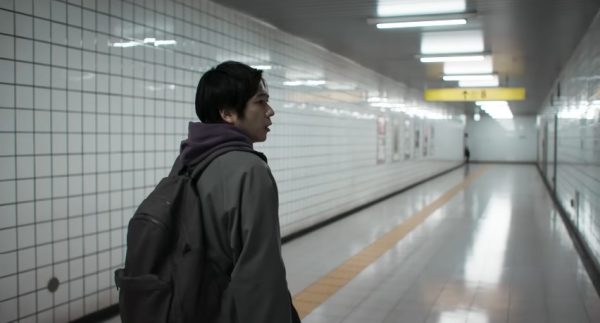
This is great psychological horror! In my experience, most gaming adaptations look for ways to strip down or cut out the gameplay. Here, you kept the gameplay, and you made it cinematic, functioning within the story you are telling. I didn’t know that could be done successfully until watching your adaptation of Exit 8. What convinced you that it could be done?
As you mentioned, it’s a huge challenge, which is why I abandoned the idea of turning this into a video game adapted into a film, and rather focused on trying to blur the boundaries between the video game medium and the movie medium and create a new type of movie-going experience. I got a lot of clues for this when I had a talk with Nintendo’s Shigeru Miyamoto; he said really great games obviously have to entertain the players, but they need to be equally fun for people watching the players play the game, and whatever is on the screen. So, in the film as well, I tried to put the audience in the player’s shoes and, at times, made it seem as though they were watching a live stream of someone else playing a video game. So I wanted to capture the phenomena that was happening in the video game industry at large with the players, the streamers, and the viewers, and translate that into a film.
I love the way you put that because when I was watching the film, it did feel like I was on a Twitch stream looking for anomalies myself.
That was very intentional. I wanted the audience to search for anomalies with the characters in the film. And I did this using different camera angles during the actors’ performances. So there were instances where audiences might notice certain anomalies before our protagonists, and instances where the protagonists would notice something but the audience wouldn’t see it yet. So this is very strategically done.
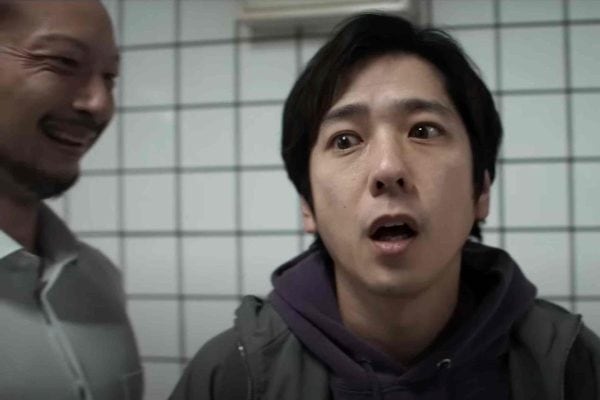
The story you have conceived here feels like some of these characters are being punished for moral failings in the real world, which is something in common with the Silent Hill games. Was that part of the inspiration for your story, and did you look toward any other games at all for inspiration for the story?
I love the Silent Hill games as well, but I would say a larger part of the inspiration came from Dante’s Divine Comedy and this idea of purgatory, where humans are judged for their sins in a similar way. I think the corridor judges the players who enter it based on the guilt they carry with them every day, projecting it back at them.
You make the bold decision to switch perspective to two other characters throughout the film. What gave you the confidence that this would work on a structural level and that the audience would be able to invest in The Walking Man and The Boy?
While writing the screenplay, I watched a lot of different Twitch streams and archives of different people playing Exit 8. What I realized was that there are as many stories as there are players and as many instances of drama they created. Since the game’s design is so simple, I think it allows for a lot of different reactions and ways players interact with it. That also made me realize that this game served as a device to look into human nature itself. So I wanted the corridor to be almost the main character of this film, and the yellow Exit 8 sign, sort of the god overseeing the domain of this corridor, as different players wandered into that space.
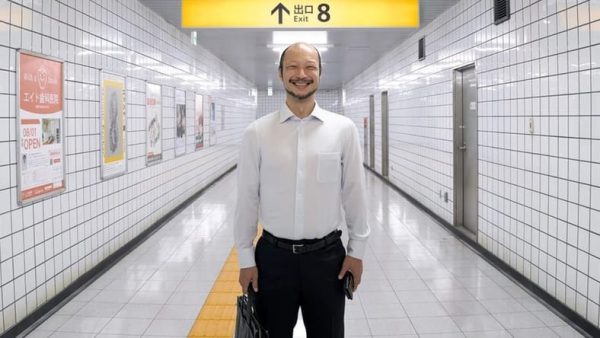
Speaking of the corridor being a character here, from what I understand, this is based on an actual Japanese subway station. I’m assuming you didn’t actually film there, but can you talk about the production design and any challenges in recreating these looping hallways?
Correct. A lot of that had to do with the actual set design, and we had created two identical corridors. It was a copy-and-paste of itself, which is how we were able to take those really long shots, those long edits, and actually physically loop within the space. So, The Walking Man, played by Yamato Kochi, he actually, after walking past the camera, had to get on a bicycle at the end of one corridor and bike to the beginning of the other corridor, catch his breath, and walk down again as the camera passed by to create that effect that we were in an infinite loop. So it was a very analog, practical style of filming, completely powered by humans. But because we had two identical corridors, the cast and crew would often get lost. So we had to give corridors names. One of the corridors we called Hitchcock, the other one we called Kubrick.
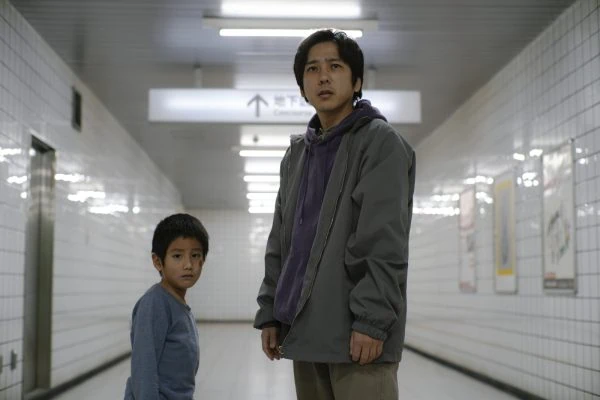
That’s awesome. Great names. About The Boy: that role is difficult for a young actor because there is minimal dialogue, and he has to convey a high level of perceptiveness. So talk to me about casting that role and what you were looking for.
We auditioned over 300 kids for this role, and towards the end, we whittled it down to two different candidates. One was a great actor; he could cry and laugh, and he was very good at delivering dialogue. And the other, who we ultimately ended up with, Naru, he wasn’t able to cry or laugh or act, or receive direction. He was almost cat-like in that it was hard to give him direction and make him do what we wanted, but I felt that unpredictability was the exact perspective we needed through the child’s lens to go through this corridor. So I think it was the perfect cast in the end.
At times, we hear the cries of a baby, and as an audience, we understand the thematic purpose of why The Lost Man is hearing it, but there is nothing to prepare us for actually seeing the visual representation. Can you walk me through designing that horrifying sight??
Yes, it’s kind of a projection of what might be happening within his girlfriend’s body and the manifestation of that. But also, I don’t know if you noticed at the beginning, when he was scrolling through his smartphone timeline, there was actually a graphic on the social media platform of a rat with an ear on it. This is something that actually exists. It’s sort of this human experimentation, in terms of when doing reconstructive surgery on humans, they would attach the ear to the rat to grow the cartilage, and humans do a lot of cruel things to animals. And then, well, I thought if we can make ears on rats, then maybe we would try and grow mouths, eyes, noses as well. So if all of those gathered together and formed this weird mashup of a face, that would be a really, really scary scene.
It was very scary. Thank you very much for your time. This is great and one of the best video game adaptations I’ve ever seen.
Thanks so much.
Many thanks to Genki Kawamura for taking the time for this interview.
SEE ALSO: Read our review of Exit 8 here
Robert Kojder