Casey Chong with ten essential Italian horrors of the 1980s…
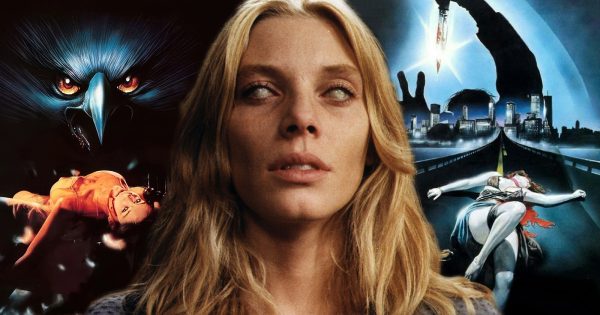
If the 1970s marked the golden era of Italian horror, offering us genre-defining classics from The Bird with the Crystal Plumage to Deep Red, and of course, Suspiria, then the 80s era was best described as the culmination of the country’s distinctive flair for the genre. The era may have seen a few downsides, but it sure has its moments of glory. Bold visuals, surreal atmosphere, and stark imagery dominate the 80s era of Italian horror, capitalized by the genre experts from the likes of Dario Argento and Lucio Fulci. Below is our curated list of ten essential Italian horror movies of the 1980s…
Inferno (1980)
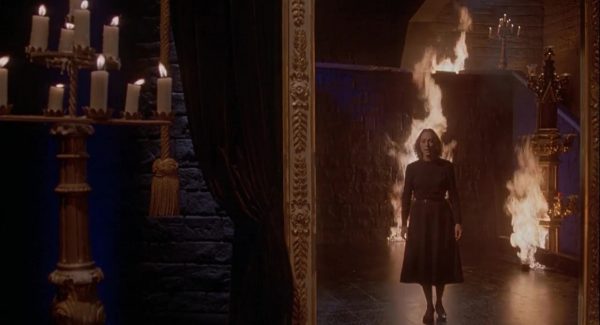
Although not as widely acclaimed as Suspiria, Dario Argento’s quasi-sequel to that 1977 defining giallo classic is no slouch either. Right from the onset, Argento opens with protagonist Rose (Irene Miracle), a poet in New York City come across an ancient book titled “The Three Mothers”, triggering her curiosity to look for the clues. The opening stretch itself is a masterstroke of build-up tension and suspense, notably during the scene where Rose discovers an opening in the floor under the building, leading to her swimming underneath the submerged ballroom to retrieve a key.
The story subsequently introduces more characters, including Rose’s brother, Mark (Leigh McCloskey), and his friend Sara (Eleonora Giorgi), where the seemingly disjointed narrative can be a turn-off for viewers searching for coherence. But Inferno is best experienced as a fever dream of supernatural horror, as Argento’s garish visuals of predominantly red and blue make you feel like you are in the realm of an alternate reality. The violence and numerous kill scenes are just as vivid, with the gruesome rat attack at one point in the movie quickly coming to mind.
City of the Living Dead (1980)
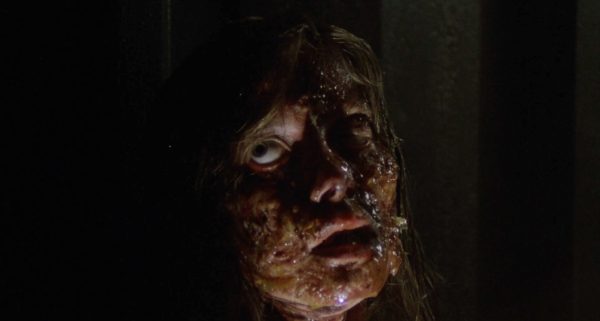
Lucio Fulci’s first film in the Gates of Hell trilogy, City of the Living Dead combines the familiar zombie tropes with plenty of gory scenes on display. He sets the ominous tone right from the beginning: a séance, where a psychic named Mary Woodhouse (Catriona MacColl) experiences a haunting vision of a priest hanging himself in a Dunwich cemetery. The result of the priest’s suicide unleashes a gateway to hell, and this is where Fulci begins to fill in his movie with enough dread and violence.
Disturbing yet graphic imagery, from the unsightly appearance of maggots to a girl shedding tears of blood, even keeps vomiting up her internal organs, and a scene where a drill runs through a young man’s head, permeates the movie. The final thirty minutes culminate in an all-hell-breaks-loose stretch, showcasing a horde of undead terrorizing the city as Mary and the rest of the survivors try to overcome the ordeal. Fulci’s cynicism towards his depiction of hell is as bleak as it gets, suggesting hope is futile as evil prevails – a recurring theme that will carry on in The Beyond and The House by the Cemetery.
The Beyond (1981)
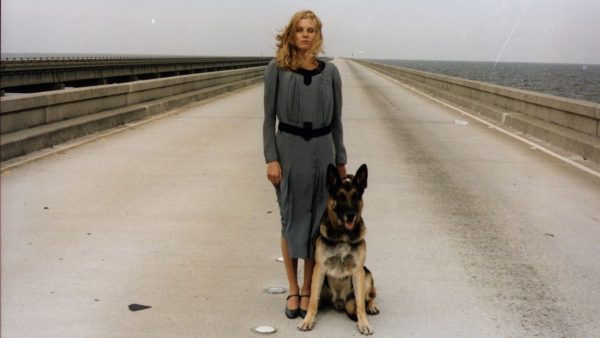
Of all the three films in Lucio Fulci’s Gates of Hell trilogy, The Beyond is frequently cited as the best of the lot. And frankly, it’s easy to see why: Fulci embraces the nightmare logic and all things surreal, veering off from the grounded reality that he clearly wants you to experience the hellish cinematic ride rather than trying to make sense of everything. What you need to know is that a New York-based protagonist, played by Catriona MacColl, inherits a hotel somewhere in the rural side of Louisiana. The hotel is unfortunately cursed by the fact that it’s built over the land of damnation, linked to the seven gates of hell.
Strange things begin to occur, leading to a series of creepy and shockingly violent moments of death, with the scene revolving around the tarantula spiders, easily ranked as one of the most unsettling set pieces ever made in the Italian horror genre. Fulci’s uniquely dreamlike visuals equally elevate The Beyond as one of its kind, combining visceral shock and atmospheric dread to prominently successful results.
The House by the Cemetery (1981)
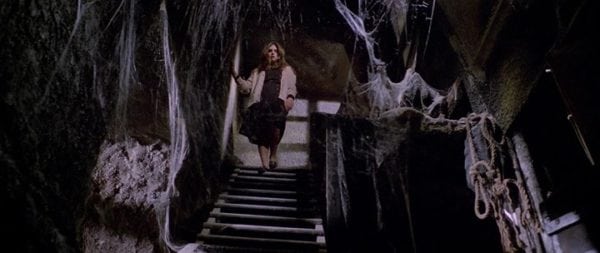
The third and final entry in the Gates of Hell trilogy, Lucio Fulci effectively blends a ghost story with haunted-house tropes in a giallo style. The story follows the Boyle family – Norman (Paolo Malco), along with his wife Lucy (Catriona MacColl) and their young son Bob (Giovanni Frezza) – who have recently moved into the titular countryside house. The house itself has a violent history, belonging to Norman’s former colleague and mentor, who ended up committing suicide after killing his mistress.
The House by the Cemetery is deliberately paced like a supernatural thriller, complete with ominous dread and an eerie atmosphere creeping in throughout the movie. Being a Fulci film, he doesn’t forget to satisfy the genre fans with a generous amount of gory murders, one of which involves a young woman being stabbed with a kitchen knife in the back of her head and through her gaping mouth. His overall tone is equally pessimistic, leading to a violently cynical ending as the movie gradually reveals the evil lurking within the house that’s been terrorizing the family.
Tenebrae (1982)
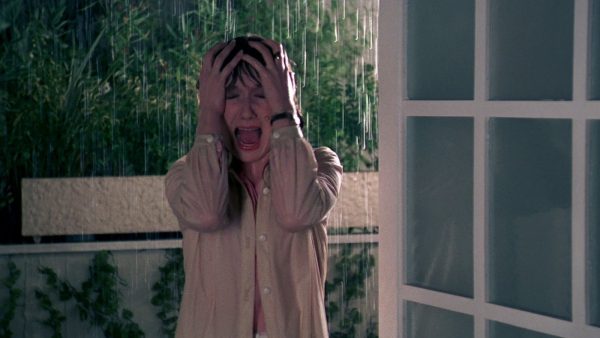
Tenebrae features a killer who obsessively murders the victims by reenacting the writing from the novelist’s (Anthony Franciosa) titular horror book. It’s a giallo movie at Dario Argento’s best, showcasing his understanding of the subgenre with his intriguing blend of whodunit and thematic darkness on identity, obsession, and voyeurism. A great Dario Argento horror wouldn’t be complete without a meticulously composed opening stretch, evidently in a scene of a young woman (Ania Pieroni) on her way back home after hitching a motorcycle ride, and encounters a perverted vagrant. After a brief respite from danger, as she manages to reach home safely, what follows is a bloody murder of her being slashed to death by a gloved hand holding a straight razor.
More murders happen as the killer picks the victims, often a few steps ahead, that not even the police in charge, Captain Germani (Giuliano Gemma) and Inspector Altieri (Carola Stagnaro), manage to stop the bloodshed. Red herrings dominate Tenebrae as the movie goes on, presenting possible suspects that may or may not be the killer, before it peaks in an unbelievably twisted ending.
The New York Ripper (1982)
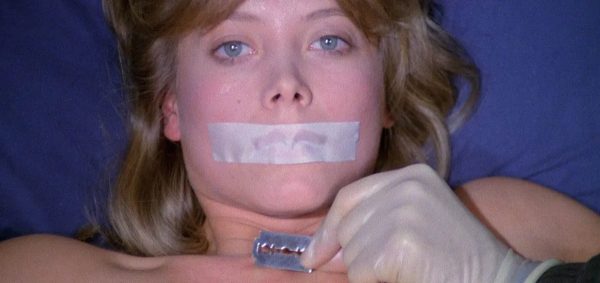
Director and co-writer Lucio Fulci capitalized on the 1980s slasher movie craze and gave it a lurid giallo twist in The New York Ripper. The movie doesn’t waste time establishing the macabre tone right from the get-go, from a dog discovering a severed, rotten hand in her mouth to a young woman on a Staten Island Ferry who ends up brutally stabbed by an unseen killer wielding a switchblade. Interestingly, the killer’s trait is somehow unusual, whose voice is reminiscent of a Donald/Daffy Duck-like quacking sound.
Fulci made it clear with his uncompromising approach to blood, gore, and violence. Each killing is as visceral and mean-spirited as they get, ensuring these scenes are vividly framed in a stark manner possible. He also doesn’t shy away from portraying New York as the city of urban decay, all drenched in sleaziness and madness, which perfectly mirrors the killer’s no-holds-barred depravity and murder spree. The identity of the killer is deliberately kept in the dark, allowing the viewers to play a guessing game as the movie progresses, with a few red herrings thrown in for good measure.
Demons (1985)

Lamberto Bava, who also co-wrote the screenplay with producer Dario Argento, goes for the jugular in this blood-soaked horror fest in Demons. The story is a classic, claustrophobic single-location setup: Strangers, among them are Cheryl (Natasha Honey), are being invited to watch a free movie premiere at the Metropol cinema. As more people show up for the screening, which turns out to be a horror film, a bizarre event happens after one of the female audience members accidentally scratches herself with a demonic mask on display in the cinema lobby. The scratch somehow turns her into a zombie-like demon, which then infects others as well, leaving only a few human survivors trying to fight their way out alive.
The trapped-in-the-cinema novelty allows Bava to stretch his imagination to turn the location into a battleground of all things horror. The result is an unapologetically gory mayhem throughout its lean 88-minute runtime, thanks to Bava’s brisk direction. The practical effects are top-notch, and not to forget, an eclectic blast of 80s soundtrack covering from Billy Idol to Mötley Crüe perfectly complements Demons’ wildly frenetic tone.
Phenomena (1985)
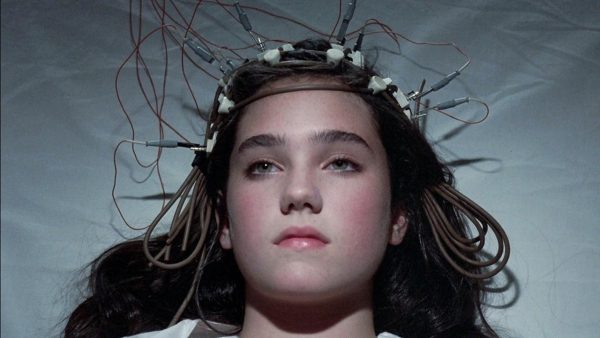
Phenomena is right in Dario Argento’s wheelhouse, blending an erratic but intriguing mix of supernatural horror, psychological fantasy elements, and giallo film into a surrealistic cinematic experience. The protagonist is Jennifer Corvino, played by then-newcomer Jennifer Connelly in her first leading role, showcasing the young actress’s ethereal beauty with a subtle mix of pathos and vulnerability.
Her character is an interesting one, notably with her unique ability to communicate with insects, which she uses to her advantage to solve the brutal murders taking place at a Swiss boarding school. Argento alternates from supernatural to slasher and vice versa, while Goblin’s progressive rock soundtrack pairs well with the movie’s unsettling tone. Phenomena doesn’t back away when it comes to graphic violence, featuring moments of grisly beheadings and stabbings.
Opera (1987)
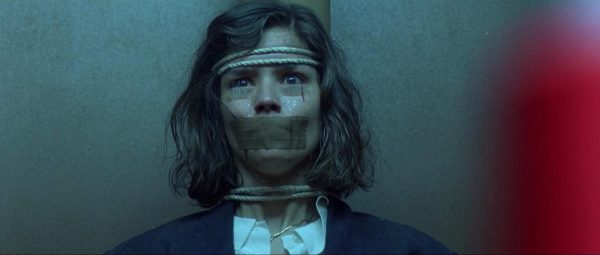
Arguably, the last great giallo film from Dario Argento, the genre maestro, uses the historical curse of a Macbeth play as a jumping-off point to depict the operatic horror of this sensational story of murder and obsession. A stroke of bad luck imbues Opera right from the start, with Argento’s roving camerawork shot from the perspective of a raven drifting in and around the opera house like a stalker and a voyeur. The subsequent murders take place once Betty (Cristina Marsillach), an understudy who is given the chance to replace the injured prima donna as the new Lady Macbeth in an upcoming play.
The killer is depicted from the first-person perspective, only revealing the gloved hands and a penchant for taping the needles under Betty’s eyes, forcing her to watch a victim being killed in a vicious way possible. The brutal killing recurs as Argento escalates the sick, psychological game of cat and mouse between the seemingly helpless Betty and the killer’s dominance in exercising control over her.
Stage Fright (1987)
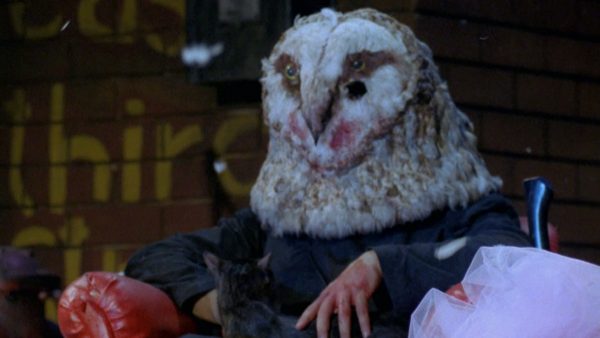
Michele Soavi brings his experience from his days working as an assistant director for Dario Argento in Tenebrae and Phenomena to making his first narrative feature in Stage Fright. The result? A straight-up, giallo-style slasher set within the confines of a single location in a theater. The story revolves around a temperamental director, Peter (David Brandon), who insists everyone must stay back and keeps rehearsing for their upcoming musical about a masked Night Owl murderer. He even goes as far as locking the door and hiding the key, ensuring no one will leave under any circumstances. Of course, that comes across as a bad idea after a crazed killer donning the large night owl mask starts picking them one by one.
Soavi doesn’t disappoint in the gore area, with lots of vicious killing and dread-inducing moments, turning the theater into a nihilistic cat-and-mouse visual playground. Among the movie’s most memorable moments is the silent Night Owl killer, who is onstage strategically placing the dead victims as if they are on a show before taking a seat while petting a black cat. Then, there’s the ending as Soavi goes meta with the final shot of the killer, rendering it ambiguous by blurring the line between fact and fiction.
SEE ALSO: The Gruesome Brilliance of 1980s Italian Horror Cinema
What are your favourite Italian horror movies of the 1980s? Let us know on our social channels @FlickeringMyth…
Casey Chong