Vanessa Maki with a selection of dystopian horror movies for your watch list…

It’s not savory to think about in the slightest, but the fact remains that the world is a very scary place. We’re currently enduring a very bleak timeline, where it feels like a dystopian atmosphere, therefore it feels like a perfect time to discuss dystopian horror. If you’re wondering what the subgenre entails, it’s quite simple: dystopian horror focuses on societies that have collapsed, fallen victim to authoritarian control, experienced environmental strife and collapse, and so on. The subgenre is meant to highlight the possibilities of failure and ruin for society, one way or another. So, let’s hop into various dystopian horror film universes to see how bad things are for their inhabitants…
Videodrome (1983)

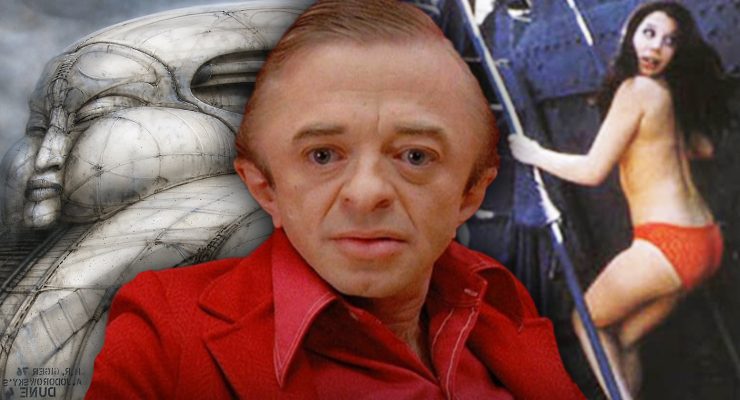
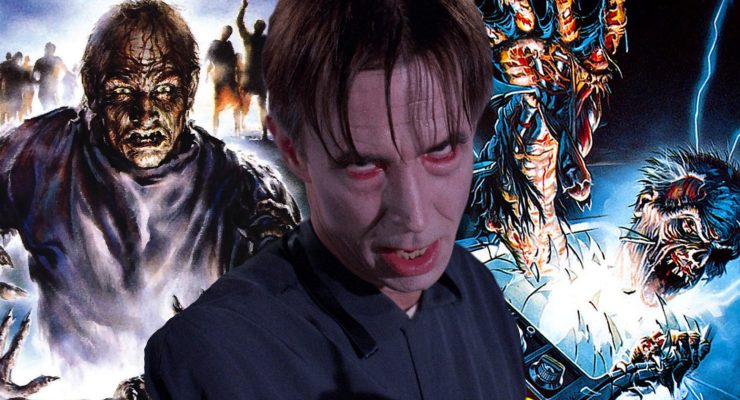
Imagine stumbling upon a channel on television to shows snuff films. Videodrome follows a man in Toronto in the ’80s whose search for the source of snuff film broadcasting begins to spiral out of control. This is considered one of David Cronenberg’s most notable films, and for good reason because the body horror is especially fantastic. Not to mention Debbie Harry has a role in this film and that’s iconic in and of itself.
But ultimately it’s quite scary to think of a mysterious broadcasting of especially bizarre snuff films. And there’s a level of dystopia to that being possible on regular cable television. Not to mention having someone stumble upon that broadcasting and have their life unravel because they wish to uncover this mystery.
Society (1989)

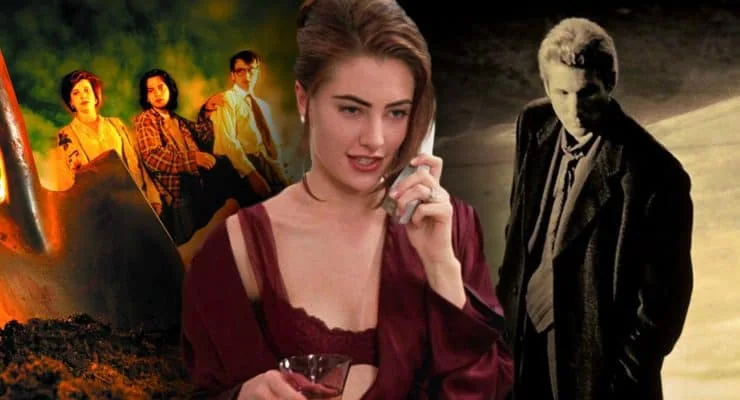
Absolutely nothing will prepare you for the third act of this film. Society follows a teenage boy who begins to suspect the people in his town are part of a bizarre cult. The body horror is bonkers in Society and there’s a lot of commentary/satire surrounding the ultrarich, capitalism, classism etc. Having the rich literally not be like everyone else is one thing, but for them to be capable of the body horror that they are in this film is another.
If you want a horror film with very specific dystopian elements, you’ll find it here. Despite how Society may not center around an apocalyptic event, the plot is very dystopian and if you’re watching the film for the first time, you’ll realize why. It’s best not to spoil anything for yourself with this one.
Prometheus (2012)

The Alien franchise is incredibly dystopian, and this entry certainly goes to mind-boggling places as far as science goes. Prometheus follows a space crew who is searching for the answers to humanity’s origins, only to find more than they could’ve ever imagined. It’s safe to say that Prometheus isn’t everyone’s favorite, but for society to be broken down enough that space is the best option is very much dystopian.
Throughout the film, the advancements with science are even more extreme, especially with machines being able to perform surgery. Considering the way the world is during this timeline, it doesn’t seem so far-fetched at this point. Though, it’s doubtful that anyone is going to travel to space like the crew in Prometheus anytime soon.
10 Cloverfield Lane (2016)

Instead of focusing on what’s going on outside, this sequel focuses on a terrifying situation happening inside. 10 Cloverfield Lane follows a woman who finds herself in a bunker after an accident, where one of the men insists that it’s dangerous to be outside, which creates a sense of dread, both inside and outside the bunker.
Having the world go into apocalyptic terror because of aliens is a different feeling compared to the giant creature of the original Cloverfield. It’s a much different beast to tackle, giving us a societal breakdown and disarray that feels extra hopeless. 10 Cloverfield Lane doesn’t thrust you outside midway, but it does build up to a climax that’ll have you gnawing at your fingernails.
Train to Busan (2016)

In terms of a zombie apocalypse, Train to Busan really hits you in the heart with a sledgehammer. Train to Busan follows some folks struggling to survive during an active zombie apocalypse, all while traveling on a train to Busan. Rather than dealing with a plethora of unlikable characters, this film offers us complex characters that you may root for. And the zombies aren’t the only reason to keep your eyes on the screen.
Zombie apocalypses easily go hand in hand with dystopian horror. It’s not only from the mere concept but due to how quickly society collapses under threats like that. Train to Busan is the perfect type of horror film to throw on if you’re looking for how an apocalypse manifests in different parts of the world.
The First Purge (2018)
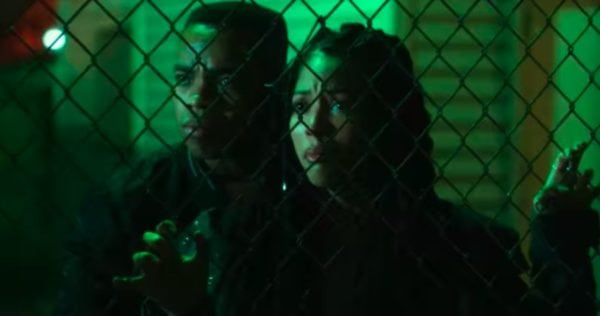
It’s alarming how the concept of the Purge doesn’t even come across as impossible at this rate. The First Purge follows the origins of the Purge and why it came to be, including what happened on the night of the first Purge. Much to nearly anyone’s surprise, this film is one of the best in The Purge franchise. And we don’t need to even compare this film to what actually goes on in the world. Everything is quite terrifying.
The First Purge tackles hard subjects about how marginalized communities, specifically Black and Brown folks, are seen as expendable. There’s no avoiding the outright political statements being made in this film, much like with horror in general. When a dystopian world starts to be more reminiscent of our waking life, that’s when things get really eerie.
The Platform (2019)
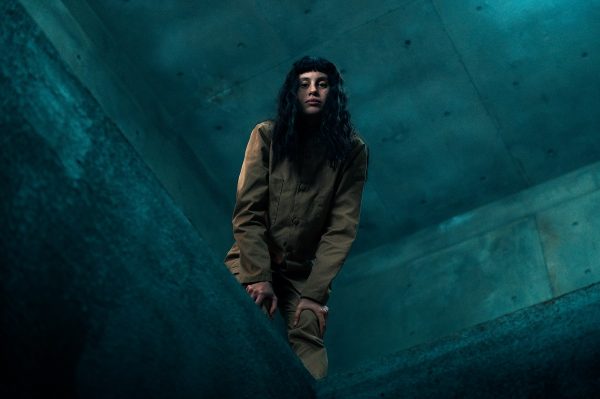
Imagine if there was a prison where the people higher up are able to eat as they wish, while people below them only get scraps. The Platform follows individuals who are in an industrial prison tower, and are forced to eat off platforms in which those higher than them are allowed to eat more. It’s quite obvious what the film is trying to say about capitalism, classism, inequality, selfishness within people, and more.
The setting is bleak and so reflective of how selfish people are in the world, even without a platform where you’re forced to eat people’s scraps. The Platform depicts a different type of prison and how people would absolutely behave in such a situation. This is the type of dystopian setting that’s deeply uncomfortable to picture.
Crimes of the Future (2022)

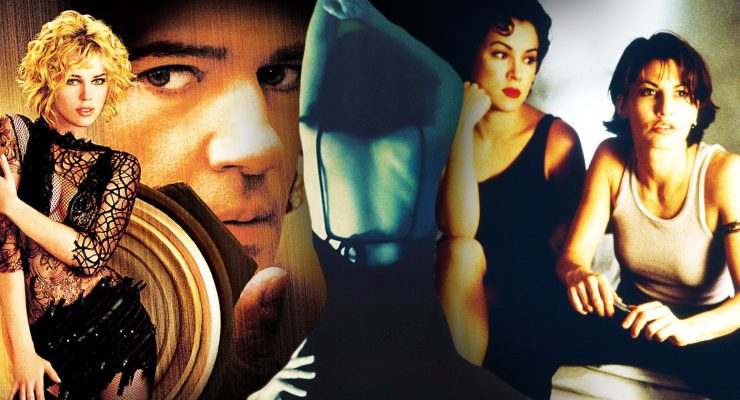
Leave it to David Cronenberg to deliver memorable body horror and dystopian universes. Crimes of the Future is set in a universe where human beings have evolved and meshed with technology, and follows a couple who do performances involving performing surgery. Technological advancements can prove to be world altering, which is explored so explicitly in this film. Dystopian worlds don’t always need to involve zombies, vampires, or anything of the sort. And this is a fascinating exploration of the society we know morphing into something else entirely.
Crimes of the Future offers a glimpse into the possibilities of technology, and how dangerous it can get. There’s not an abundance of happiness in the world of this film, it’s actually quite bleak and complicated for most of the characters. If you’re looking for something very thought-provoking with intense body horror, Crimes of the Future may be your jam.
The Long Walk (2025)
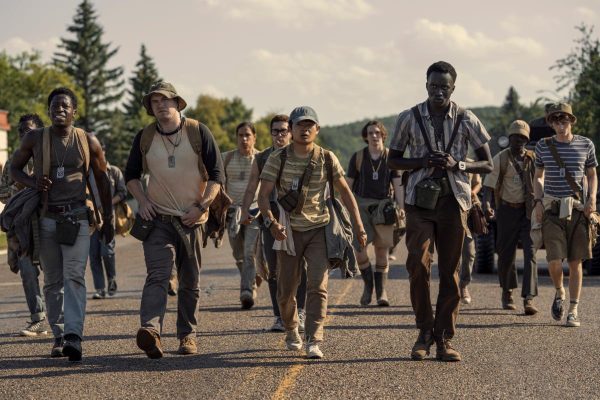
There have been countless of adaptations of Stephen King’s books, and The Long Walk was added to the list last year. The Long Walk is set a dystopian ’70s universe where a group of boys partake in a deadly challenge that involves walking until there is only one person left standing. The treacherous nature of the challenge is difficult to imagine, much less watch. Of course, the film is heavily about capitalism, the senselessness of war, totalitarianism, how people will do anything to improve their class status etc.
It’s not an easy dystopian horror film to throw on and watch on any given day. However, if you want to have your heart shattered into a million pieces (especially because of the relationship at the very center of the film) then absolutely watch it. But don’t go into it expecting anything supernatural or nonstop gore moments.
28 Years Later: The Bone Temple (2026)
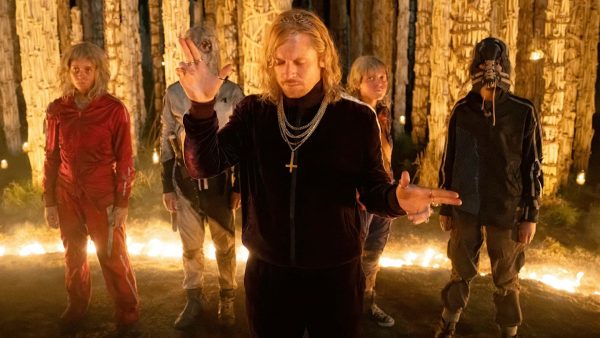
Infected people aren’t the only threat in the world these characters reside in. 28 Years Later: The Bone Temple is set after the events of 28 Years Laterand follows Dr. Kelson (Ralph Fiennes) as he has a realization about the infection and Spike (Alfie Williams) who is struggling to be part of Jimmy Crystal (Jack O’ Connell)’s dangerous cult. Currently, it’s in theaters and that’s the perfect way to experience this film for the first time.
Exploring dystopia in a way that taps into the emotions of being stuck in such a world makes for an interesting experience. 28 Years Later: The Bone Temple will reel you in and have you feel unraveled by the end of it. There’s quite a bit to appreciate and love about Nia DaCosta’s direction in this sequel.
What are your favourite dystopian horror movies? Let us know on our social channels @FlickeringMyth…
Vanessa Maki