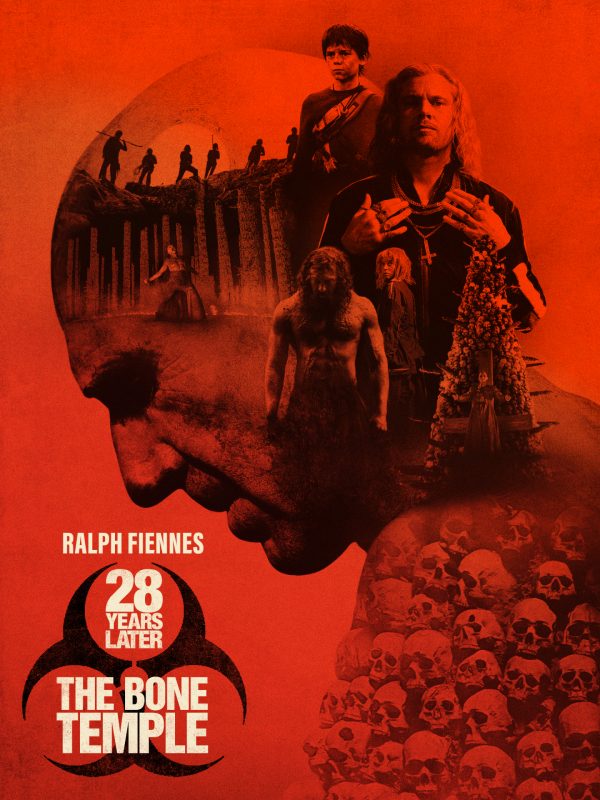
28 Years Later: The Bone Temple, 2026.
Directed by Nia DaCosta.
Starring Jack O’Connell, Alfie Williams, Connor Newall, Ralph Fiennes, Erin Kellyman, Robert Rhodes, Chi Lewis-Parry.
SYNOPSIS:
As Spike is inducted into Jimmy Crystal’s gang on the mainland, Dr. Kelson makes a discovery that could alter the world.
Well, we’ve come a long way from Danny Boyle’s original 28 Days Later, haven’t we? Having gone from being ‘a thing’ during those tricky years before the 2000s horror scene really defined itself with torture porn, grindhouse homages and remakes to a full-blown franchise with token Americans, star names and a more generic action movie feel with 2007’s 28 Weeks Later, and then the re-emergence of the IP with 2025’s frankly baffling 28 Years Later, we now arrive at a direct sequel to that movie with Nia DaCosta’s 28 Years Later: The Bone Temple, so now we can really get the answers we were looking for after the bizarre ending of the previous movie, right?
Don’t get your hopes up. This movie begins where the previous one left off, with young Spike (Alfie Williams) being initiated into the Fingers, the gang of Jimmy Savile-inspired Satanists led by Sir Lord Jimmy Crystal (Jack O’Connell) who rescued him from the infected, by having to fight to the death with another ‘Jimmy’. Alongside this, Dr. Ian Kelson (Ralph Fiennes) is regularly drugging the infected Alpha beast Samson (Chi Lewis-Parry) and teaching him about how to be a human again. In truth, Samson is addicted to the morphine in Kelson’s darts so he allows himself to be shot, but Kelson’s methods seem to be working and Samson’s humanity gradually comes back as he does not attack Kelson and learns how to speak again.
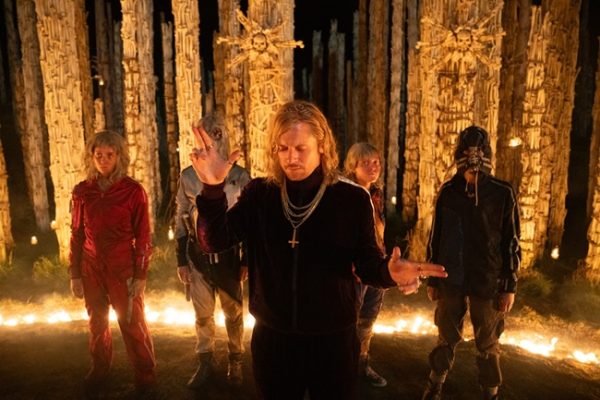
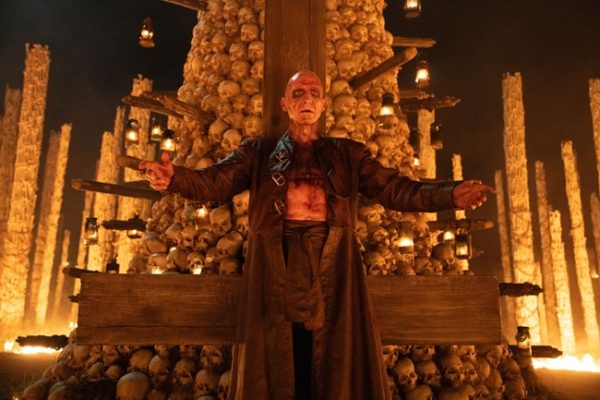
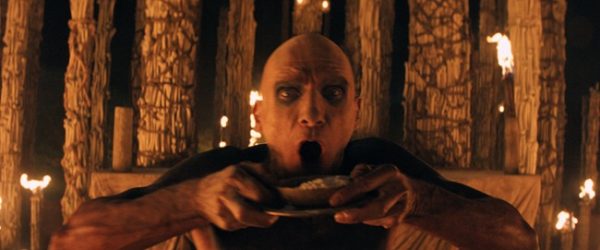
So we have our two groups of main characters and you know eventually they have to meet, and they do as the Fingers pursue a band of survivors before doing horrible things to them and discover Dr. Ian living amongst his ossuary made of skulls. The Fingers’ minions believe him to be ‘Old Nick’ – the voice of Satan that Jimmy Crystal uses to influence the others in the gang – but Crystal, concerned that his grip over the gang is slipping, convinces Kelson to pretend to be Satan in order to pacify the other members, and if he doesn’t then Crystal will kill him. Kelson plays along and does what he is told, until he recognises Spike and realises that the infected may not be the baddies here.
So let’s start with the positives – 28 Years Later: The Bone Temple is easily the best-looking movie in the franchise, which isn’t really that difficult if you are honest, but the greens of the English countryside, the reds of skulls being ripped apart and eyes being gouged out along with the orange iodine on Dr. Ian’s skin all create a colour pallet that the previous movies didn’t seem to want to paint with. Maybe it was because of the filmmaking techniques of the times they came out in – let us not forget that the original movie made it okay for washed-out digital vistas in mainstream movies, inspiring the trend for that decade – but this movie really does look superb and the detail leaping off the screen in 4K UHD is stunning.
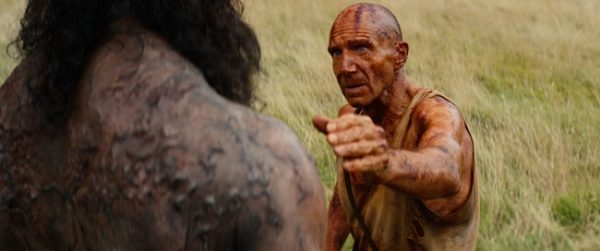
Ralph Fiennes is also another reason to watch this, as his committed performance is what holds the movie together. One scene in particular sees the actor doing something that a few years ago he would probably never have dreamed he would do, but the movie’s bastardisation of 1980 and ‘90 pop culture drives a lot of the choices made here and if you’ve ever wanted to see an alternative music video for Iron Maiden’s ‘The Number of the Beast’ then look no further, as Fiennes fully embraces his inner Bruce Dickinson (or Eddie, Maiden’s zombie-like mascot, to be more accurate). When Dr. Ian is teaching Samson about music he sings Duran Duran lyrics, and it is a little ridiculous hearing those words coming out of Fiennes’ mouth, but the survivors are clinging onto the last remnants of their previous lives, and the motif of Dr. Ian using music – whether it be heavy metal or new romantic pop – as a learning tool and a method of coercion is a potent one that Ralph Fiennes sells brilliantly.
But it is this bastardisation of late 20th-century pop culture that also gives us the Fingers, with Danny Boyle having gone on record saying that their Jimmy Savile-inspired look is about clinging onto memories – or fragments of memories – whatever they may be and that is what keeps them human, albeit twisted psychopaths but still human. However, this side of remembering the collective past is never delved into aside from Jimmy Crystal gushing forth about The Teletubbies, and one has to question the internal logic of the Fingers and their bizarre appearance as it is never referenced anywhere. It was an awkward twist at the end of the previous movie, and in this one it is just frustrating as a suggestion of something with no grounding or reason for being.
The main issue with 28 Years Later: The Bone Temple, however, is that there isn’t really much of a story to it, instead the movie acting as a bridge between the previous entry and whatever is coming next, but 28 Years Later was fairly thin on plot, we are no longer in the same world of 28 Days Later and nothing has been set up with regards to a direction for it to go. Yes, there is a coda at the end that will delight fans of the original movie, but fan service will only get you so far and it just adds another tonal shift to an already busy movie, albeit a busy one where not a lot actually happens, especially when it comes to the infected, as aside from Samson and his psychedelic lessons in humanity there is not a lot of zombie action (yes, they’re not technically zombies but the template is the same so, for all intents and purposes, they are).
Overall, 28 Years Later: The Bone Temple is a more straightforward movie than its predecessor, with Nia DaCosta choosing not to utilise Danny Boyle’s experimental camera style quite so much, although it still has the flavour of the 28… movies at its heart. Not only is it the best looking of the series but it is also the goriest and most violent, mainly thanks to Jimmy Crystal and his merry band of lunatics. The trouble is that all of this bloodshed just feels detached from anything else going on, the performative madness of Jimmy Crystal as random as the stabs of dark humour that don’t always hit.
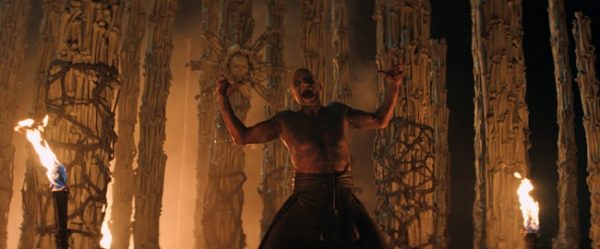
For a franchise that always felt like it was aiming higher than your average zombie movie, this one feels a little less like a social statement and more like a post-apocalyptic character drama that happens to be extremely violent for no other reason than it can be, which may or may not be enough for fans of the series, but aside from the Iron Maiden scene – which is the best moment in the series since Cillian Murphy walked through a deathly quiet London back in 2002 – 28 Years Later: The Bone Temple is an incoherent collection of vague ideas in a series with nowhere to go apart from where we’ve been already.
Flickering Myth Rating – Film: ★ ★ / Movie: ★ ★
Chris Ward
Originally published April 24, 2026. Updated April 25, 2026.