The Testament of Ann Lee, 2025.
Directed by Mona Fastvold.
Starring Amanda Seyfried, Lewis Pullman, Thomasin McKenzie, Matthew Beard, Christopher Abbott, David Cale, Stacy Martin, Scott Handy, Jeremy Wheeler, Tim Blake Nelson, Daniel Blumberg, Jamie Bogyo, Viola Prettejohn, Natalie Shinnick, Shannon Woodward, Millie-Rose Crossley, Willem van der Vegt, Esmee Hewett, Harry Conway, Benjamin Bagota, Maria Sand, Scott Alexander Young, Matti Boustedt, George Taylor, Alexis Latham, Lark White, Viktória Dányi, and Roy McCrerey.
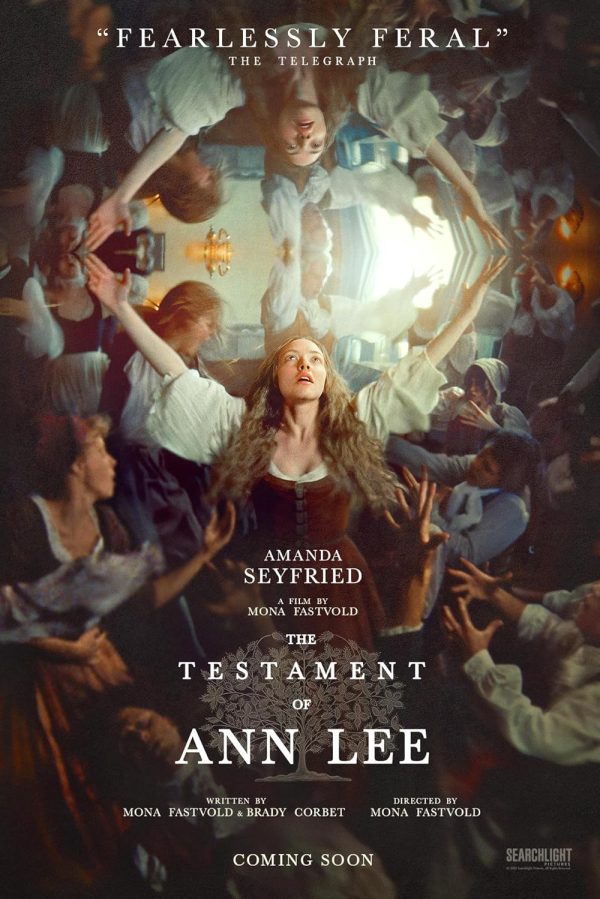 SYNOPSIS:
Ann Lee, the founding leader of the Shaker Movement, proclaimed as the female Christ by her followers. Depicts her establishment of a utopian society and the Shakers’ worship through song and dance, based on real events.

The second coming of Christ was a woman. Narrated as a story of legend and constructed as a cinematic epic, co-writer/director Mona Fastvold’s The Testament of Ann Lee tells the story of the eponymous 18th-century preacher who occasionally experienced divine visions guiding her on how to teach her and her followers to free themselves and be absolved of sin.
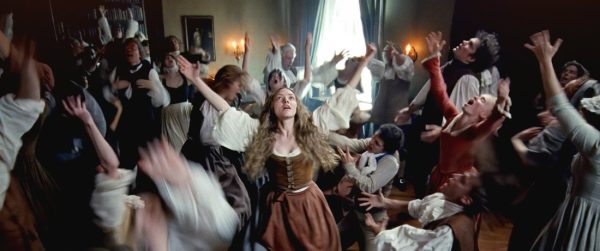
This group, an offshoot of Quakers known as Shakers, did so by stimulating and intoxicating full-body rhythmic dancing movements set to many hymns beautifully sung by Amanda Seyfried and others. The key distinction between the group, and arguably the toughest selling point of the film aside from the religious nature of it all, is that Ann Lee asserted that the only way to achieve such pure holiness is by giving up all sexual relations, living a life of celibacy (as evident by some laughter during the CIFF festival screening when she made this decree, which quickly subsided as it is relatively easy to buy into her mission and convictions).
It shouldn’t necessarily come as a surprise that Mona Fastvold had trouble getting this one off the ground. Perhaps what finally secured the project’s financial backing was all those awards The Brutalist (directed by her husband Brady Corbet and co-written by her, flipping those duties and credits this time around) either won or was nominated for, which was notably another film that almost no one had interest in making. The point is that this should serve as a reminder that there is an audience for anything and everything.
Whether one doesn’t care about religious movements or is a nonbeliever, The Testament of Ann Lee is remarkably hypnotic in its craftsmanship. It features a flat-out career-best performance from Amanda Seyfried, who blends all of her strengths as an actor and unleashes them at the peak of her talent. Yes, there are moments of tragedy and trauma, but the film refuses to wallow in misery, chartering her Shakers movement with hope, miracles, and perseverance as the journey takes them from Manchester to Niskayuna, New York, in search of expanding their follower base while dealing with other setbacks within the movement and personally.
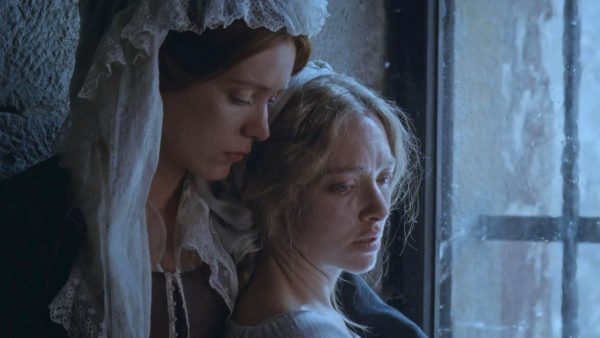
Chronicling Ann Lee’s life with precise editing that rarely drags (and mostly fixates on the early stages of the Shakers movement and decade-plus long attempt to battle sexism as a female preacher and find a foothold amidst escalating tensions between British and Americans), the film also offers insight into the events that gave her a repulsion for sexual intimacy, her marriage with blacksmith Abraham (Christopher Abbott), and dynamics with her most loyal supporters which includes brother William (Lewis Pullman) and Mary (Thomasin Mckenzie, also serving as the narrator). Given the unfortunate nature of how most women, especially wives, were expected to have zero agency compared to their male counterparts and deliver babies, it is also organically inspiring watching her find a group with similar beliefs willing to trust her visions and take up celibacy. Whether or not all of them succeed is part of the journey and, interestingly enough, shows who is genuinely loyal and in her corner.
This is no dry biopic, though. Instead, it is brimming with life and energy, mainly through those “shaking” sequences depicting those outstandingly choreographed seizure-like dance numbers (typically shot by William Rexer from an elevated overhead angle, looking down at an entire room, capturing a ridiculous amount of motions all weaving together and creating something uniformly spellbinding). The songs throughout are divinely performed, adding another layer to this film’s transfixing pull. Nearly every image is sublime, right up until the perfect final shot. Admittedly, the film loses a bit of steam in the third act as one awaits a grim confrontation with naysayers who feel threatened by her position, movement, and pacifism regarding the burgeoning American Revolution.
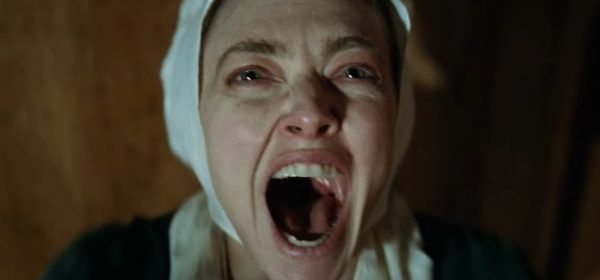
Still, whatever reservations one has about watching a religious movement preaching peace and celibacy while laboring away building a utopia (an aspect that puts it in great juxtaposition with The Brutalist) will wash away like sin. That’s the power of the movies; even someone who isn’t religious will find it hard not to be swept up in Ann Lee’s life. Fact, fiction, bluff… it doesn’t matter; the material is treated with conviction and non-judgmental respect. In The Testament of Ann Lee, Amanda Seyfried channels that for something holy, empowering, infectious, and all around breathtaking.
Flickering Myth Rating – Film: ★ ★ ★ ★ / Movie: ★ ★ ★ ★
Robert Kojder