Villordsutch chats with Christopher Cantwell and Megan Levens, the creative team behind Star Trek: Red Shirts…
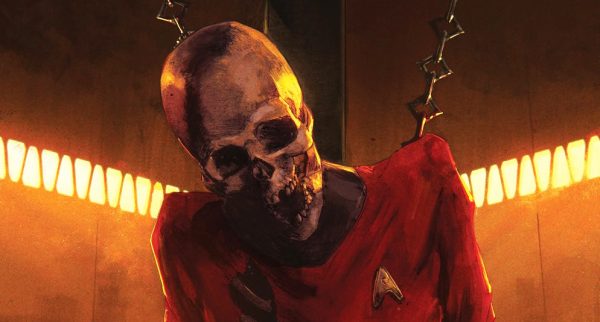
When Star Trek fans hear the phrase “red shirts,” they usually brace for the worst. Numerous jokes and memes are shared across the web tied to the hapless security personnel of Starfleet, but IDW Publishing’s comic series Star Trek: Red Shirts flipped that legacy on its head by leaning into the stark, grounded realities those crew members face. Writer Christopher Cantwell and artist Megan Levens have brought a raw, unvarnished look at life on the front lines of the final frontier, exploring danger, sacrifice, and the stories normally left untold. I spoke with the creative duo to talk about the origins of this approach, the tone shaping their series, and why these often-overlooked officers finally deserve the spotlight.
Star Trek is a closely guarded and much-loved franchise. Were there any moments in your script or artwork that proved a little too gruesome, earning a polite “I’m afraid that won’t be happening,” and ultimately had to be toned down or cut from the final story?
Megan Levens: I can only speak to the art stage of production, because I don’t know if there were scenes in earlier script drafts that maybe had to be reined in. But even before I began drawing, editor Heather Antos pitched the idea to me by saying “Remember that scene from an earlier comic that was too grisly and you had to tone it down? Yeah, do the exact reverse of that for this book.” I was given explicit instruction to lean further into my dark side, which honestly just felt like my team had a lot of faith in my versatility as an artist.
Christopher Cantwell: I actually don’t think so. Then again, I didn’t pitch anything TOO crazy that I was certain Paramount would say “no” to. But I’d been working with them for years at that point, so I felt like I knew what was okay. The biggest thing I thought I’d get pushback on was the ending… which I did not.

What first drew you both to the idea of setting the Red Shirt record straight? Were you simply tired of the memes, or was there a deeper motivation to show that these Starfleet officers were far more than background cannon fodder?
ML: Before I had any clue about the true emotional depth this story was going to have, what drew me to Red Shirts was that these are the “unsung heroes” of Starfleet. My favorite TNG episode is “Lower Decks”, and obviously, I love the animated series of the same title. I’m always on board to tell stories about the characters who aren’t always front and center on the bridge, but who are just as vital to the mission. In this case, it happened to be the folks who die more often on screen, because they take the bigger physical risks. That’s what they sign up for and train for. They’re actually GOOD at their jobs.
CC: Well, it’s a fascinating part of Trek, especially TOS, and I wanted to actually get to know these officers as people. But it also set up extremely high jeopardy for everyone; all bets were off because of the very premise of the book. And as we get to know them, their deaths are going to carry emotional weight. I wanted to accomplish that.
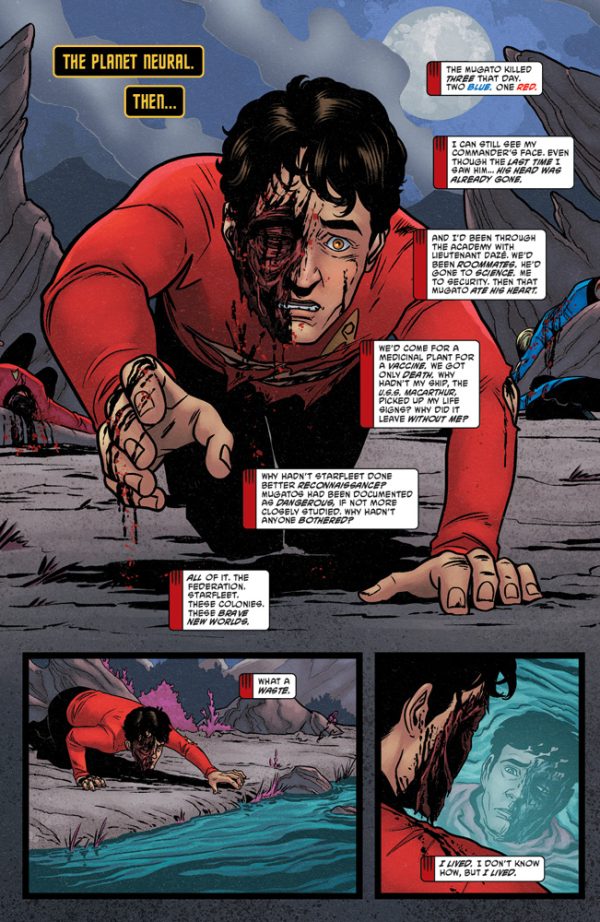
When it came to deciding the fates of the Red Shirts, did you map out their unfortunate ends early in the process, or was it more a case of, “I’ve got the perfect death for them!” as inspiration struck along the way?
CC: I’ll be honest, I was very “outside-in” about this. I wanted a transporter accident because of how scarring I found that to be in the Motion Picture. I wanted a creature attack. I wanted a major starship battle because this is Star Trek, so I didn’t want everything to happen on the planet. But from there, it kind of flowed from character. That told me how people should go. And even the things I wanted, I was careful to thread them through and make them feel earned. The big one again is in the final issue. I knew I wanted that to happen, but it’s because I knew what I wanted to do with a certain character from the very beginning.
The series walks a clever line between classic Trek adventure, genuine horror, and a smudge of dark humour. How did you find the right balance so it never stepped too far into parody or full-on gorefest?
ML: I had strong guidance from Chris’s writing on this, but for me, what kept things balanced was that the focus was always on the characters’ emotions. There’s quiet resignation, true shock and horror, and grief happening for these people as they watch their friends die horribly around them and face death themselves. If you can make those feelings believable, it helps ground scenes that might otherwise be flat-out cartoonish.
CC: I wanted the story to be sincere. It was never going to work if it was just joke deaths. These are real characters, and I put as much work into them as I do anything else. So the sincerity was always going to carry us forward first. But the book also had to live up to its premise. Some deaths had to be bombastic. But it’s counterbalanced with some of them feeling dramatically very intense and emotional.
Star Trek fans are quite passionate about their near sixty-year-old love. Were there any particular fan reactions, memes, or bits of lore that influenced how you approached certain scenes or characters?
ML: I’m a pretty big fan myself, but I don’t know if the fandom at large had as much influence as just my obsession with studying each era’s production design aesthetic. I was more trying to make sure that this absolutely visually felt like TOS... I could of course, stretch beyond what a 1960s television budget could achieve with sets, monsters, and visual effects, but for the styling on the characters, I was basing hair and makeup off of sixties standards.
CC: I’m a huge TOS fan. So that was part of it. I was dying to write in that era. That and the idea of a “red shirt” has permeated the culture beyond Trek. So I wanted to dig into that.
Megan, the visuals in this series often deliver a real punch. Are there any panels you’re especially proud of—either for their absolute emotional impact or because they presented a unique artistic challenge?
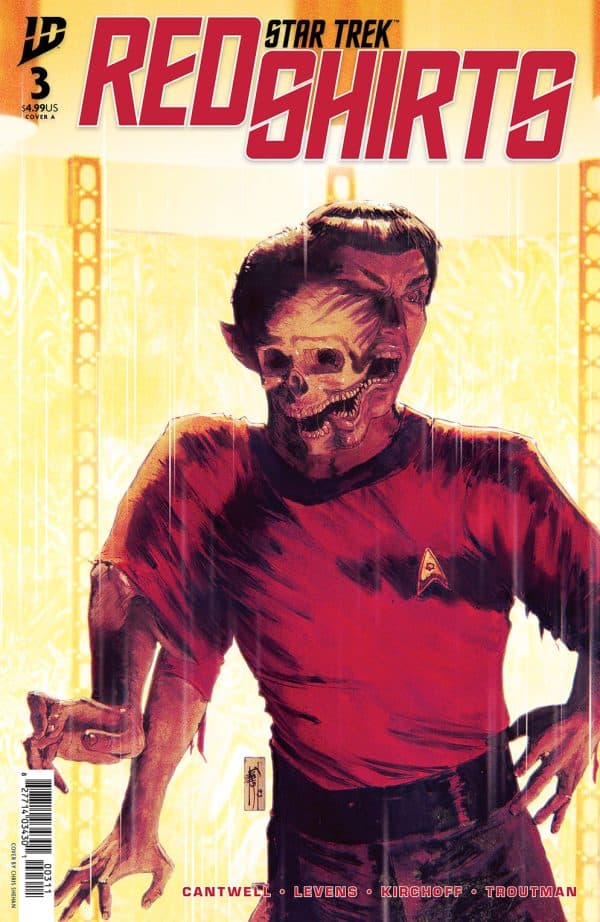
ML: This is such a tough series to narrow down a favorite image or sequence because every few pages there’s either some emotional gut punch or improbably horrific death! The two deaths in Issue #3 were challenging to design, and I felt like I executed them well in the end. But ultimately, my favorite moments are the quiet emotional beats. Borvik’s last moments, admitting to his own fear, or the crew of the buried ship accepting their fate and having the most mundane conversation before the end. The scene that broke my own heart is coming up in the final issue!

Christopher, the Red Shirts series gives new life – and sometimes very brutal endings – to these overlooked Trek characters. How did you approach balancing respect for the Star Trek canon with the freedom to take creative risks, taking these Red Shirts down paths most people would never have even thought of?
CC: Again, it’s about making the story sincere. And making the characters feel like real people. Trek is full of wonderful characters first and foremost, so if we got that right, it felt like we were on the right track.
If you were handed the keys to the Trek universe again, is there another dark corner of Starfleet history or lore you’d love to explore in comic form?
ML: Maybe we could do the dark side of the science division next. Like what happens when an experiment goes wrong, and you have to suddenly contend with a new life form you accidentally created or a couple of ensigns who are now .002 degrees out of phase with their own quantum reality. BLUE SHIRTS! It would be all body horror and Tuvix/Exocomp style moral quandaries.
CC: The complete and total future of Star Trek. No looking back. Boldly going. No nostalgia. Just going right at the great unknown of exploration.
Finally, what are you both working on next that we should keep our eyes open for in the future?
ML: I’m currently working on an unannounced comic miniseries that I should be able to reveal soon, and on my recently-crowdfunded graphic novel High Street Hellcats with writer Janet Harvey (you can find out more about Megan’s work here.)
CC: I’m currently writing The Flash with Mark Waid, and I’ve showran the third series of The Terror, which premieres next year. And there will be more comics stuff around the bend, I’m sure.
A huge thank you to Christopher Cantwell and Megan Levens for opening up about the world of Red Shirts. Their series reminds us that Starfleet’s spirit isn’t defined only by the captains on the bridge, but by those who face danger first and are remembered least.
@Villordsutch