Adam Page delves into the world of the video nasty to see which of the controversial shockers deserve critical re-evaluation…
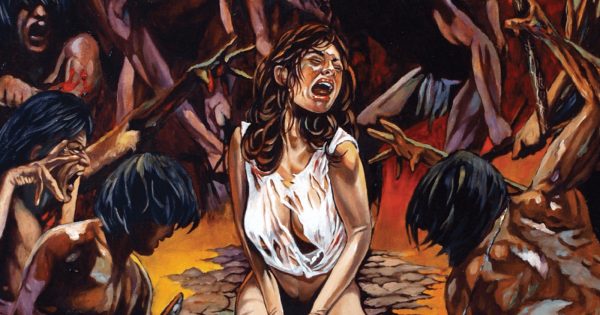
I get it, I really do. Back when Mary Whitehouse and her gang of pearl-clutching warriors put together their list of 72 movies they deemed too dangerous for the British public in 1984, they were not exactly focused on artistic merit. It was “Protect the children!”, moral decay and the final collapse of Western civilisation. You know, the usual suspects that are trotted out whenever something truly interesting emerges that threatens the beige peacefulness of polite society. Objectively, I understand. But the thing about moral panic? It makes for terrible movie criticism.
Four decades later, the dust has settled and the VHS format has been relegated to the hipster bin of nostalgia. It’s now worth asking if some of these so-called Video Nasties might be worth watching for reasons other than ironic appreciation or the obsession of completists. To wonder if, beneath the gore and grainy transfers and sometimes terrible dubbing, there may be something like art. Not surprisingly, the answer is complicated.
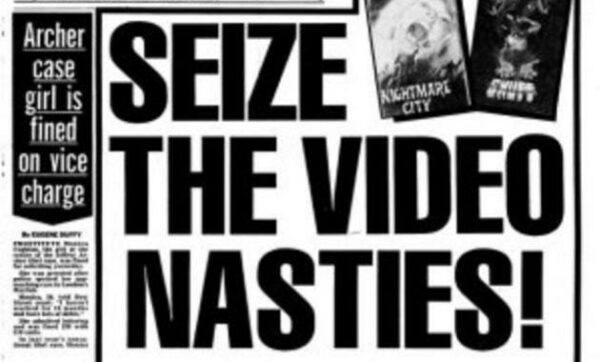
To start with, lets establish what we’re dealing with. The Video Nasty list wasn’t some thoughtfully curated collection of avant-garde transgressions. No, it was a hodgepodge, a grab-bag of horror movies, exploitation movies and real grindhouse trash that happened to be available on the new home video market. Some were the Italian giallo movies with honest pedigree. Others? Zero-budget zombie cash-ins clearly filmed in someone’s back yard.
The unifying thread, however, was they made certain people deeply uncomfortable. And okay, that’s fair. A lot of them were made for that exact purpose. But discomfort isn’t the opposite of art, as any decent artist knows. Sometimes its the point. The key lies in distinguishing movies that use shock for it’s own sake, like a drunk frat boy screaming obscenities, and those who use transgression as a tool to examine something true about our nature, our society or even the genre itself.
Starting with the elephant in the room, or more accurately, the impaled woman on the stake in the room. Ruggero Deodato’s Cannibal Holocaust was maybe the most infamous entry on the Video Nasty list, and with good reason. The movie remains honestly disturbing, with real animal killings that are still indefensible. Its imagery is so extreme that Deodato was briefly arrested on suspicion of actually murdering his actors.

But if we take away the exploitation elements, and I’m not saying forgive them, just look past them for a minute, and you find something resembling a thesis. Cannibal Holocaust is a brutal critique of Western colonial attitudes and media exploitation. A found-footage movie way before The Blair Witch Project made that technique respectable. The movies twist, one delivered with all the subtlety of a machete to the cranium, is that the “civilised” documentary makers are a lot more monstrous than the indigenous people they are there to sensationalise.
Heavy-handed? Totally. Is its own critique undermined by wallowing in the same exploitation it tries to condemn? You can argue that until the VHS tape snaps. But there is an intention, a real anger at media colonisation, and false spectacle that gives the movie an odd sort of integrity. The atrocities aren’t being shown for kicks. Deodato is making you complicit. You are forced to confront your own appetite for watching. This doesn’t make it easy to recommend watching, but it makes it more than just shock fodder.
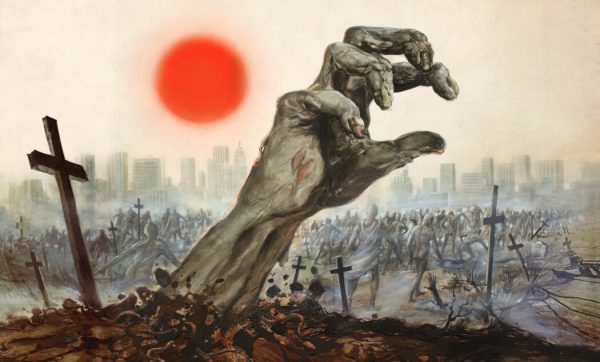
Then we have Lucio Fulci, an Italian maestro who gave the world Zombie Flesh Eaters (1979), The Beyond (1981) and The House by the Cemetery (1981). They all found themselves on the banned list. His movies do not work like normal narratives. In its traditional sense, plot is something that happens to other directors. What Fulci does is deal in pure and uncut nightmare logic. Causality can sit down, in favour of atmosphere and imagery.
Watch The Beyond, and its like someone filmed a fever dream on bad acid after reading too much H.P. Lovecraft. The plot, which is vaguely about a hotel built over one of the gates of Hell, doesn’t really matter. What matters is the build-up of images: faces melted with acid, spiders chewing on lips and the final shot of the protagonists wandering an endless landscape. That lingers with you.
At the time, the critics focused on the gore and eye trauma. The deep nihilism. They missed the poetry. Yes, I said poetry. Fulci understood something something basic about horror. That it operates on an almost subconscious level. That the best horror works like a dream, or a drug trip. It follows its own logic, and rational thought is bypassed.
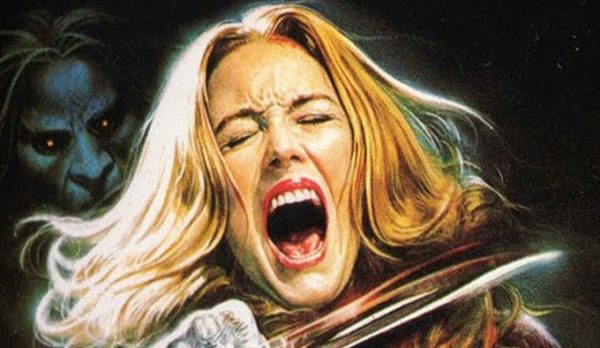
There’s no real beginning, middle and end to The Beyond. Instead, it’s trying to hold a mood of cosmic dread, the feeling that the universe in incomprehensible and basically hostile. The surface reality we exist in is extremely thin, just hiding something malevolent and vast.
Fulci is an acquired taste, no doubt. The pacing could be outrun by a glacier, the dubbing is horrific and the plots are incomprehensible. But there is a vision, a real artistic sensibility that uses gore to build atmosphere and existential unease. He isn’t interested in making you jump, but he wants you to realise the universes total indifference to human suffering. Maybe not everyone’s cup of blood, but it’s more than just nastiness.
Where it gets interesting is, intentional or not, several of the Video Nasties work as a crude social commentary. They hold up a shattered mirror to the 1970s and early 80s fears about gender, class, violence and social breakdown.
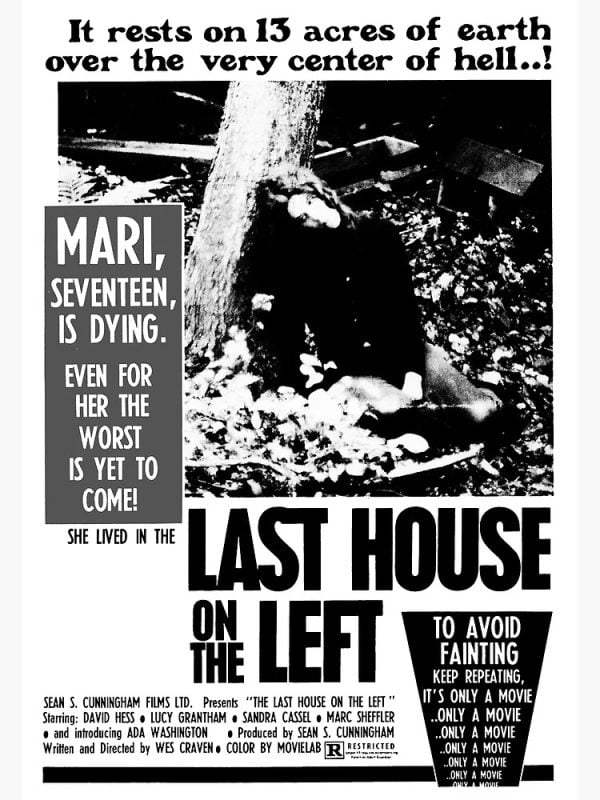
The Last House on the Left, Wes Cravens 1972 feature movie, is at its heart a loose remake of The Virgin Spring, by Ingmar Bergman. And that should tell you something straight off. It’s not just random sadism. It’s deliberately uncomfortable, making all the nice middle-class viewers confront their own capacity for revenge and violence. The parents who brutally kill their daughters murderers are not shown as heroes. We watch them descend to the same level as the criminals they hate. It’s not at all subtle, and its execution is uneven, but the intent is there.
In a similar vein, I Spit on Your Grave (originally titled Day of the Woman) has been reassessed by a lot of feminist critics as a rape-revenge movie that, problematic as it is, features female agency and shows prolonged sexual violence for what it actually is. It’s not sexy or titillating. It is horrific and degrading. There is nothing triumphant in the revenge scenes; they too are disturbing. Everyone is diminished by the violence.
I’m not saying these are masterpieces. Shit, no. They are rough and amateurish, and most of the time tasteless. But they engage with real fears about sexual violence, about the breakdown of civilisation and what happens when our nice social contracts fall apart. They ask us deeply uncomfortable questions about revenge and justice. Are we really so different from the monsters we fear?

One thing we shouldn’t overlook when talking about these movies is their distinctive aesthetic. These movies were usually shot on a threadbare budget, with whatever light was available and whatever location they could afford. Because of this, they tend to have a gritty, documentary-like look that makes them feel disturbingly real. Here, the low-fi quality isn’t the bug, it’s the feature.
There is something about the texture of these movies. Their grainy 16mm footage, the colours that are washed out, shooting in real decrepit buildings, these all combine to create an authenticity that big-budget horror just can’t. Watching movies like Don’t Go In The House, or The Driller Killer, we aren’t seeing a carefully made up Hollywood image of poverty and decay. We are seeing the real thing, filmed guerrilla-style on the mean streets of 1970s New York.
Ostensibly, Abel Ferrara’s The Driller Killer is about a struggling artist who finally snaps and starts killing homeless people with the titular Black and Decker. But it’s also a true snapshot of the art scene in pre-gentrification New York, and the desperation that comes with economic uncertainty. The elements of horror almost come second place to the movies portrait of a psyche and city in collapse.
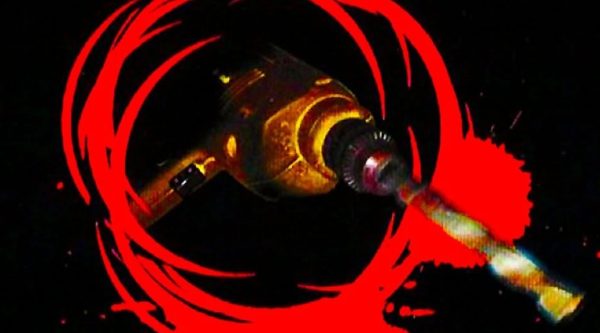
These movies caught something about their moment. Their anxiety, the seediness and the very real sense that things were falling apart. They have become a time capsule, showing us a historical moment of urban decay and social dysfunction. The documentary quality, the real grime, they are things you can’t fake, and wouldn’t be able to recreate if you tried.
Several Italian giallo movies ended up on the Nasties list. Movies from directors like Mario Bava, Sergio Martino and Dario Argento show us a totally different case. They didn’t make crude exploitation movies, but stylised, often beautiful meditations on voyeurism, violence and the act of watching itself.
Argento’s Tenebrae, originally on the list, is a meta-textual thriller about a horror author who becomes implicated in murders that mirror his books. It’s a movie about the relationship between art and violence, and questioning whether depicting brutal violence makes you complicit in it. The killings shown are almost balletic. Argento shoots violence the way any other director would shoot a dance sequence. There is careful choreography and tracking shots that make you consider the aesthetics of destruction.
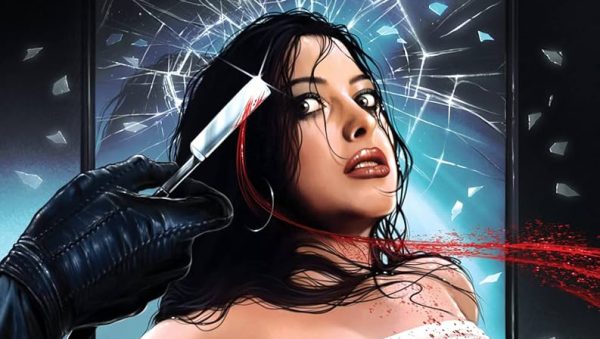
Is this morally troubling? Maybe. But, it is also cinema. These movies understand that how you show something is just as important as what you’re showing. Their style isn’t just window dressing, it’s vital for the meaning. When Argento uses a crane shot, filming a murder from an impossible angle, he is reminding us that a director is there, making choices about what to show and how. The giallo movies did what the best genre movies always did: used the conventions of a popular form to dig into ideas about identity, spectating, and the pleasure we get in watching violence from a safe distance.
Now, in case I’m accused of mindless contrarianism, or of being a shock-value apologist, I want to be as clear as I can. Many of these Video Nasties deserve to disappear into obscurity. For every Cannibal Holocaust, with something like an argument to make, there are ten others of cynical, hateful crap only there to titillate and degrade.
Movies like SS Experiment Camp, Gestapo’s Last Orgy or Nightmares in a Damaged Brain aren’t misunderstood masterpieces. They are exploitation in the worst possible sense. They use images of atrocities and sexual violence for no purpose other than to appeal to our basest appetites. There’s no art involved, no real reason for anyone to suffer through them except morbid curiosity or a need for completism. And to be honest, even the better movies on the list come with real caveats. The genuine animal killings in Cannibal Holocaust and Cannibal Ferox aren’t excusable, full stop. The misogyny in many of them isn’t being subversive or critical. It’s just misogyny. The racism is often overdone and disgusting. These elements can’t be simply excused with historical context or artistic intent.
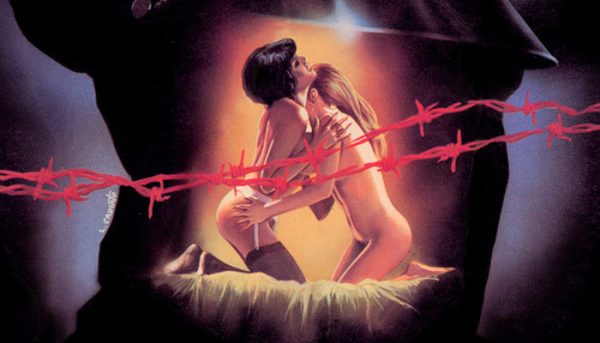
I’m not arguing that these movies were all secret masterpieces, or that the moral pearl-clutchers were completely wrong. I’m just looking for a nuanced approach, where we can acknowledge real artistic merit in some of them, along with their very real problems. I think the real question underneath all this is; what’s the purpose of transgressive art? When can you justify shock value and when is it just exploitative?
I would argue that when it pierces complacency, when it makes you confront something real that polite society would rather ignore, then it has value. This is something the best horror has always done. The scientific hubris dealt with in Frankenstein, the racial tension in Night of the Living Dead and the Vietnam-era anxieties about the American family in The Texas Chain Saw Massacre.
Some of the Video Nasties do this. Yes, they’re often crude and offensive but they engage with real social issues and fears in a way that mainstream cinema couldn’t. They show us the rot underneath the pleasant suburban facade, the violence lurking under the thin veneer of civilisation. Others just show us garbage, because they know garbage sells. The trick is learning the critical vocabulary to tell the difference.
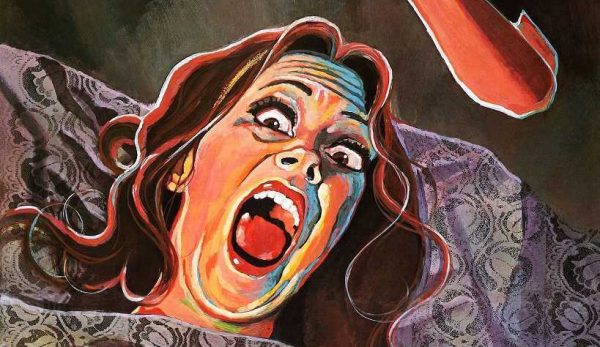
What is really interesting is that the cultural reappraisal of the Video Nasties is still going on. Movies that, at one time, were confiscated and burned by the British authorities are now subjects of academic papers, or given retrospectives at film festivals. Criterion has released movies that were once literally banned. Wes Craven and Tobe Hooper went from Video Nasty criminals to respected Hollywood names.
So what changed? In part, distance helped. Time lets us see these movies in their historical context instead on immediate threats that need to be destroyed. Part of it is the ever changing nature of what we consider shocking. In today’s era of torture porn and extreme brutality on prestige TV, an eye getting popped out with a broken piece of wood in Zombie Flesh Eaters now looks rather quaint.
But mainly, I think, we have developed more sophisticated ways about thinking of genre cinema. No longer do we have the simplistic idea that horror is somehow degrading, or the notion that anything transgressive has to be either totally embraced or rejected. We can acknowledge both artistry and exploitation, vulgarity and vision.

We can treat these movies as what they are: complex cultural artifacts that show us their moment while occasionally transcending it.
So what’s the verdict? Which of the Video Nasties deserve a critical re-evaluation? Mainly, the ones that have something to say other than “look at this terrible thing.” Ones where we can see a real artistic vision at work, even if the execution is flawed.
Cannibal Holocaust, in spite of its unforgivable elements, for its criticism of media exploitation.
The Beyond, and the other fever dreams from Fulci for committing to nightmarish logic and cosmic dread.
The Last House on the Left for an unblinking examination of violence and revenge.
Tenebrae, and other giallo movies for being stylistically audacious and for playing meta-textual games.

These aren’t movies I’d recommend for a casual Friday night get-together. They’re hard work, often unpleasant and sometimes deeply upsetting. But in spite of all that, they’re documents of their times. They are experiments in pushing boundaries and attempts, flawed as they may be, to use horror cinema to examine ideas on human nature, violence and society.
Watching them, we’re reminded that moral panic makes for awful movie criticism, shock value and artistic merit aren’t mutually exclusive and sometimes the more interesting art comes from around the edges, from those places that polite society will not look at. And that, now that I think about it, might be the most subversive thing about them.
What are your thoughts on video nasties? Do any deserve critical re-evaluation? Let us know your thoughts on our social channels @FlickeringMyth…
Adam Page