The Bride!, 2026.
Written and Directed by Maggie Gyllenhaal.
Starring Jessie Buckley, Christian Bale, Jake Gyllenhaal, Annette Bening, Peter Sarsgaard, Penélope Cruz, Jeannie Berlin, John Magaro, Julianne Hough, Louis Cancelmi, Linda Emond, Matthew Maher, Stephanie Troyak, William Hill, Massiel Mordan, and Karin Dreijer.
SYNOPSIS:
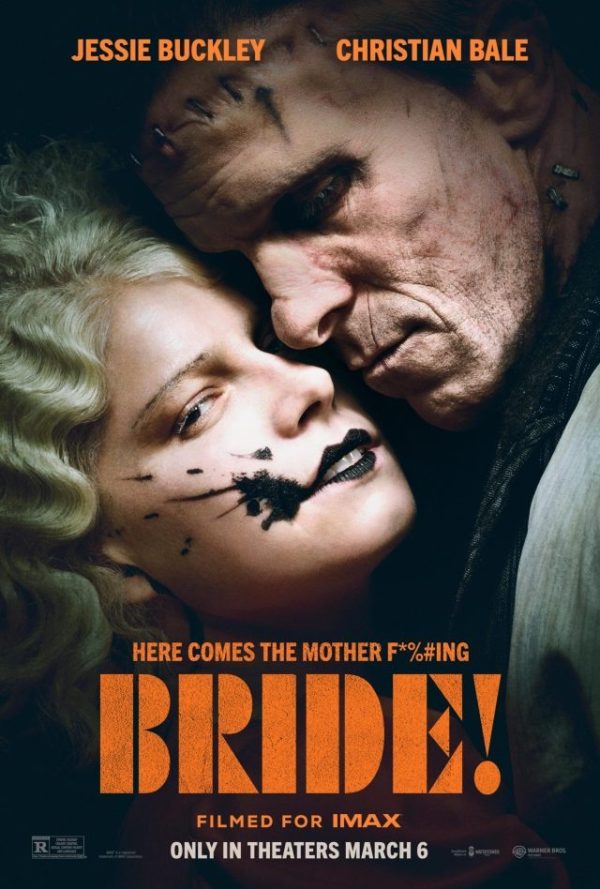
In 1930s Chicago, Frankenstein asks Dr. Euphronius to help create a companion. They give life to a murdered woman as the Bride, sparking romance, police interest, and radical social change.
A Bride of Frankenstein/Bonnie and Clyde monster mashup is, on paper, an enticingly bold concept that should satisfy just about anyone interested. To writer/director Maggie Gyllenhaal’s credit, The Bride! is rarely dull. However, when it’s all over, it disappointingly never coheres into anything emotionally impactful or even, well, coherent.
Rather than sticking to and developing one idea or genre, Maggie has several to cram into this narrative. Undeniably audacious to a fault, by the end, The Bride! has become its own Frankensteinian misfire with enough questionable creative choices. It’s a film that wants to take the horror elements and mix them with the criminals on-the-run aspect, while also having 1930s musical reverence and aspirations, that also wants to pay respects to Mary Shelley and finish her story (saying things she couldn’t say at the time of her writing) by taking a simplistic but functionally effective Bride of Frankenstein framing device and turning it into a possession angle, that essentially amounts to justifiable feminist rage and a whole lot of unhinged rhyming, dual-accented word salad from Jessie Buckley desperately in need of subtitles.
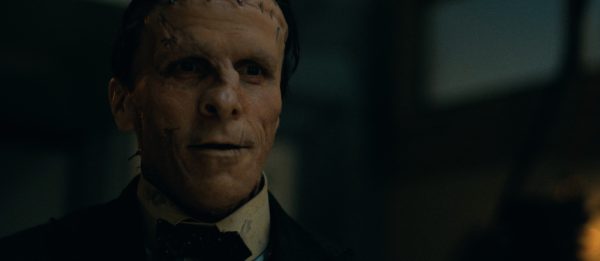
Or perhaps not, considering this is more a case of a character representing thematic ideas than dialogue or personality, the latter of which is reduced to motormouth craziness or bluntly stating what the movie is about. At times, watching The Bride! feels like what people naturally assumed Todd Phillips’ Joker sequel would be in tone, yet still far apart. There is an ensuing romance, complete with the eponymous Bride becoming a symbol of radical change and empowerment, pushing back against patriarchal norms and abuse, inspiring a dedicated cult of followers who do cosplay, something that feels almost no different from watching Joker’s supporters cause anarchy in the streets. Even Christian Bale’s take on the monster, shortened to Frank here, is obsessed with musicals (particularly a movie star who has overcome obstacles, played by the filmmaker’s brother, Jake Gyllenhaal) and occasionally envisions himself on-screen in theaters (with plenty of scenes inside them).
Speaking of Frank, he is a sensitive and lonely soul who has been wandering the earth as a reanimated corpse of stitched-together body parts, now in 1930s Chicago, with a request to Dr. Euphronius (Annette Bening with a mad scientist hairdo) to bring him to life a bride. Understandably, she is reluctant to do this at first, although it isn’t long before they dig up the body of Ida (Jessie Buckley), first seen in a club with disdain for a local mobster, before the spirit of Mary Shelley (also Jessie Buckley depicted in some sort of spirit realm) takes hold of her bring out English-accented rants and rage. What follows leads to a tragic death.

When brought back to life, Ida retains the well-read, deep vocabulary of Mary Shelley, yet doesn’t seem to realize what Frankenstein’s Monster is, and vice versa, in that he doesn’t always realize that the author or someone is sometimes taking over her consciousness. There is simply so much about this concept that makes little sense beyond its intended purpose, which is to serve as a bridge between the words and fury Mary Shelley probably wanted to get out of her system but couldn’t. The film certainly doesn’t make it clear. Anyway, as Ida, without memories, reacquaints herself with a world of misogyny, sexism, and sexual violence, the hybrid character only becomes more infuriated.
Eager to dance, with Frank willing to let her do as she pleases (he and the doctor explain that Ida is awakening from an accident while concocting a story that she is his bride), he knows that mingling with humanity probably won’t end well, given his own century-long journey of rejection. This soon manifests with attempted sexual violence that he brutally protects her from, but not before they are photographed in the act and garner a Bonnie and Clyde-like fame, fleeing and hitting up theaters in different cities that might be playing other musicals, starring the previously mentioned Jake Gyllenhaal celebrity. The dead are taking revenge while tackling the world’s injustices.
On the trail is a law enforcement duo played by Peter Sarsgaard and Penelope Cruz, in a dynamic where the former has to put on a smug, sexist persona, since no one believes the latter is capable of detective work, even though these distractions routinely allow her to find clues that point them in the right direction. Once the Chicago mob boss learns that Ida is still alive, it sets off another group looking to end them.
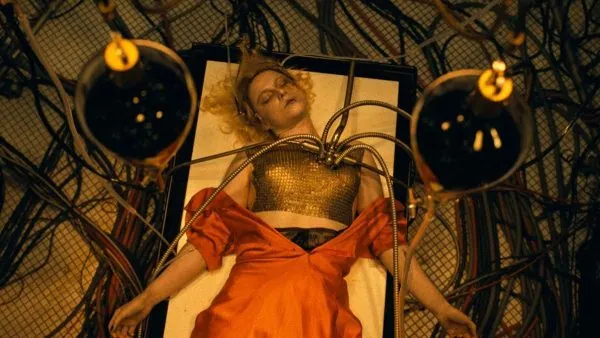
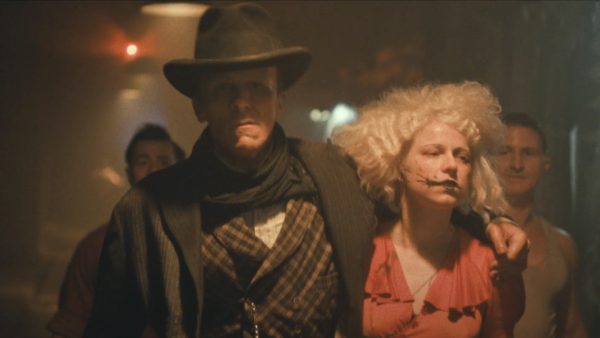
With Christian Bale somewhat dialed back and Jessie Buckley freaking out every other minute, there isn’t much opportunity for characterization here. If there is, it typically gets buried beneath tone-swirling spectacle, whether it’s the striking character designs (especially the stained black blotches over The Bride), an admittedly showstopping dance number, or the whole Ida/Mary Shelley fusion that, quite honestly, nearly sinks the film in its opening minutes. That’s without getting into either the detective angle or the gangster storyline, sliding into this story without any grace.
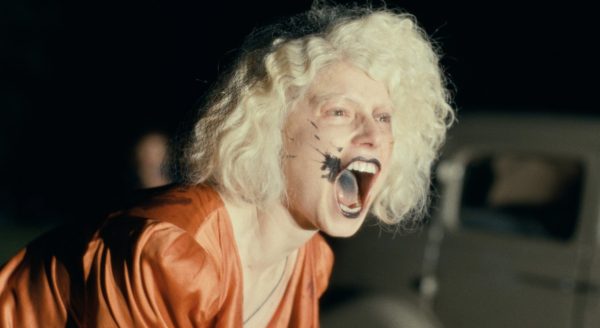
Perhaps unsurprisingly, The Bride! most works when it’s operating under the baseline Bonnie and Clyde approach. Considering the stunning production design, character appearances, and gonzo commitment in physicality and performance, it’s a wonder what could have been if Maggie Gyllenhaal hadn’t stacked ideas on top of one another, or more specifically, bad ones on top of good ones. The ending credits song is so out there that it’s also a perfect summation of how tonally off-the-wall and just plain unwieldy the film is. And yet, there’s no denying that it’s also so nutty that parts occasionally come alive.
Flickering Myth Rating – Film: ★ ★ / Movie: ★ ★ ★
Robert Kojder