4-Film Collection: Tennessee Williams
SYNOPSIS:
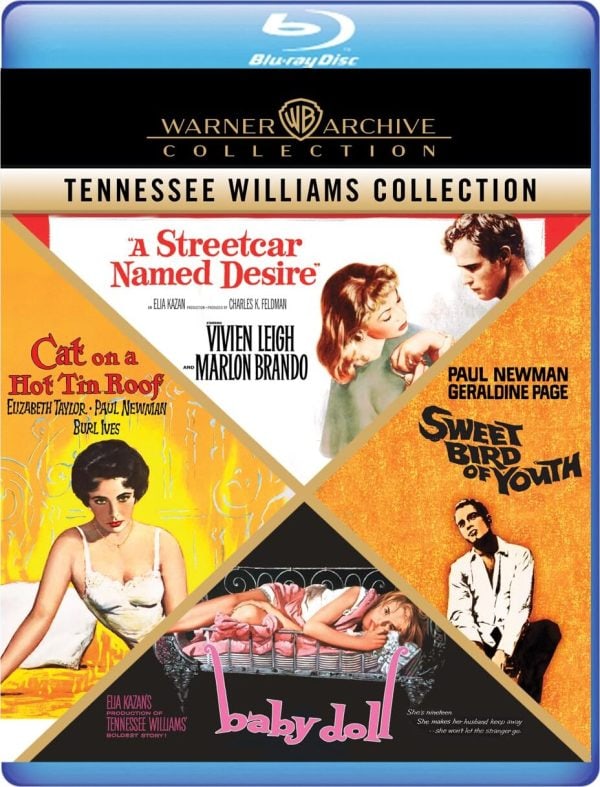
Warner Archive turns its focus to playwright Tennessee Williams and four films based on his plays: Baby Doll, Cat on a Hot Tin Roof, Sweet Bird of Youth, and A Streetcar Named Desire.
My look at Warner Archive’s series of 4-Film Collections rolls along with a package of movies based on plays by Tennessee Williams. You’re probably expecting me to say that his themes remain timeless and so forth, but, no, I think the intervening decades have definitely dated his stories’ sensibilities.
That doesn’t mean there’s no reason to revisit them today. I’m just saying that these films offer a certain point-of-view that’s very antiquated in many ways, that being the straight white man who’s king of his castle. Sure, these stories deflate those men, but they don’t offer much in the way of counterpoints to look at instead; the alternatives tend to be pretty shitty too.
But that said, I think this is a quartet of movies worth watching for the crackling dialogue, which tends to be where stage plays shine, of course. Williams was among the best of them.
Baby Doll (1956)
Directed by Elia Kazan.
Starring Karl Malden, Carroll Baker, and Eli Wallach.
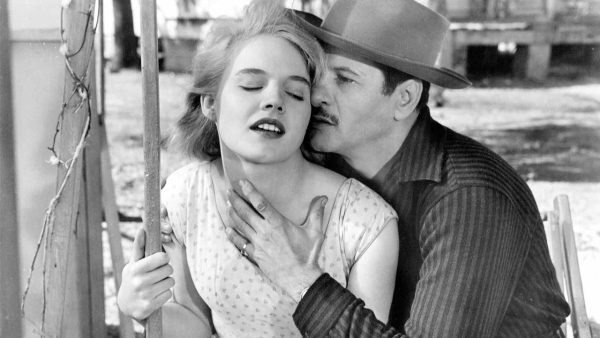
Carroll Baker stars as as the titular main character, who’s on the cusp of turning 20 and has been married to Archie Lee Meighan (Karl Malden) for two years. It was an arranged marriage, and Archie entered into an agreement with Baby Doll’s now-deceased father that he would provide for her for two years before he could, ahem, consummate the marriage.
Part of providing for Baby Doll involved buying a house that was once the grandest in the county but has now fallen into a state of serious disrepair. Meanwhile, Archie’s cotton gin is failing due to broken equipment, and newcomer Silva Vacarro (Eli Wallach, in his screen debut) has managed to take much of his business away from him.
As a result, Archie drinks heavily and has defaulted on payments to a pay-as-you-go furniture company, which has repossessed nearly all of the furniture in the house. Baby Doll chides Archie, who turns to arson to damage Silva’s business and try to recoup some lost business.
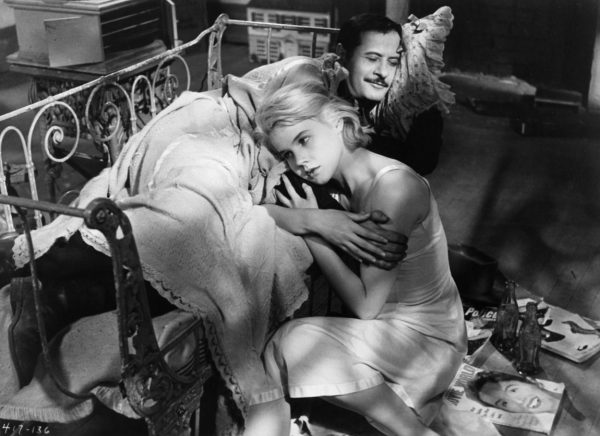
This leads to Silva bringing a load of cotton to Archie’s ranch for processing, despite his strong suspicions that Archie set fire to his gin, and he aggressively flirts with Baby Doll, who tries to play the two men off each other. The second half of the film plays out that cat-and-mouse game, leading to a shades-of-gray-infused ending.
There isn’t much in the way of extras here, but you do get the 13-minute See No Evil, which was shot in 2006 and includes the three main cast members looking back on the production. You also get the theatrical trailer.
Flickering Myth Rating – Film: ★ ★ ★ ★ / Movie: ★ ★ ★ ★
Cat on a Hot Tin Roof (1958)
Directed by Richard Brooks.
Starring Elizabeth Taylor, Paul Newman, Burl Ives, Jack Carson, and Judith Anderson.
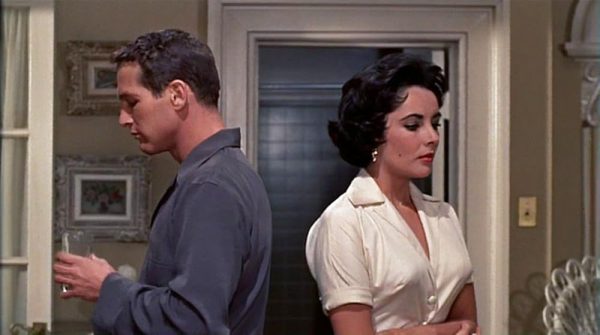
Elizabeth Taylor was at the height of her powers and Paul Newman’s career was kicking into high gear when they co-starred as a married couple in this adaptation of Williams’ 1955 play. The story centers around the Pollitt family, whose patriarch, Big Daddy (Burl Ives) has returned home for his birthday celebration, having received what he was told was a glowing bill of health from his doctor.
Newman is Brick Pollitt, who peaked in high school and has struggled with alcoholism in recent years, due to the death of a close friend, while Taylor is his wife, Maggie (“the Cat”), who is irritated by the way Big Daddy seems to prefer Brick’s brother, Gooper (Jack Carson), and wife, Mae Flynn (Madeleine Sherwood).

The story plays out during a single day and evening, as the Pollitt family bickers with each other and Big Daddy shows himself to be not only a lousy father but also a pretty bad grandfather too. He doesn’t treat his wife, Big Mama (Judith Anderson), very well either, but the reasons for all of that reveal themselves as Big Daddy learns the truth about his medical condition and he and Brick have a heart-to-heart in a basement filled with tons of stuff.
Bonus features are pretty scant here too, but you do get a very informative commentary track by Donald Spoto, who has written biographies of Taylor and Williams, as well as a ten-minute featurette that he pops up during as an interviewee. And you get the trailer.
Flickering Myth Rating – Film: ★ ★ ★ ★ / Movie: ★ ★ ★ ★
Sweet Bird of Youth (1962)
Directed by Richard Brooks.
Starring Paul Newman, Geraldine Page, Shirley Knight, Ed Begley, Rip Torn, Mildred Dunnock, and Madeleine Sherwood.

Newman returned to Tennessee Williams’ world four years later playing a very different character: a gigolo and aspiring actor named Chance Wayne who travels with over-the-hill film star Alexandra Del Lago (Geraldine Page).
He returns to his hometown with her, where local political kingpin Tom “Boss” Finley (Ed Begley) had previously tricked him into leaving to get him away from his daughter, Heavenly (Shirley Knight).
Chance is desperate for Alexandra to help him become a movie star too, although she’s usually so strung out on drugs and booze that she doesn’t remember what she said to him the day before. He also wants to reconnect with Heavenly, although Finley’s son Tom Jr. (Rip Torn) does his best to stop that from happening.

Secrets are eventually revealed and Chance finds himself frustrated by Alexandra and willing to do almost anything to turn his life around. The ending is satisfying, albeit one where the main character pays a heavy price to get what he wants.
Bonus features include the nearly 12-minute featurette Sweet Bird of Youth: Chasing Time, the theatrical trailer, and some screen test footage that uses the more graphic language from the stage play that had to be sanitized for this adaptation.
Flickering Myth Rating – Film: ★ ★ ★ ★ / Movie: ★ ★ ★ ★
A Streetcar Named Desire (1951)
Directed by Elia Kazan.
Starring Vivien Leigh, Marlon Brando, Kim Hunter, and Karl Malden.
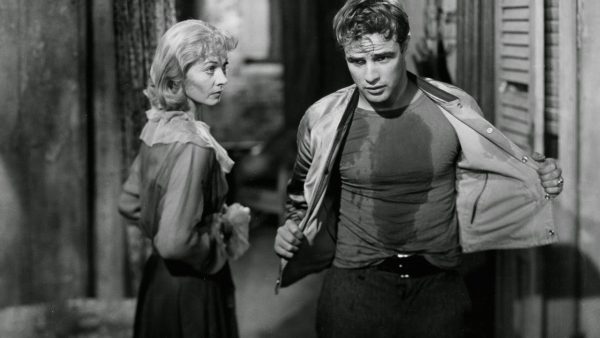
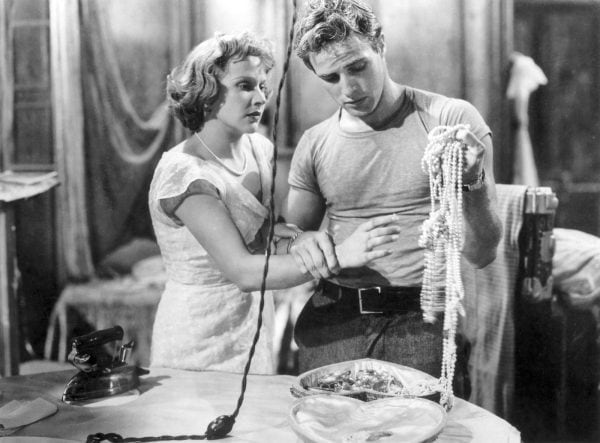
This collection wraps up with, of course, the most well-known of Tennessee Williams’ plays that became movies. Marlon Brando stars as Stanley Kowalski, who lives with his wife Stella (Kim Hunter) in New Orleans. When Stella’s sister Blanche (Vivien Leigh) arrives to stay with them, tensions rise as Stanley accuses his sister-in-law of hiding an inheritance.
This one is probably the most antiquated of Williams’ stories, with Stanley portrayed as a mush-mouth with few redeeming qualities. Blanche’s fate at the end of the film also feels off when compared against modern sensibilities, but as I said in the beginning, we have to look at these films in the context of the era in which they were made.
The cast is superb, of course. It’s always wonderful to see Brando at the height of his powers, long before he entered his own Fat Elvis period of his life and became a caricature. And it’s easy to overlook Karl Malden as Stanley’s poker-playing buddy — between this film and Baby Doll, he certainly demonstrates that he was an underrated actor in his prime.

Unsurprisingly, this disc is the most packed when it comes to bonus features, leading off with a solid commentary track led by well-known documentary maker Laurent Bouzereau, which includes thoughts from Malden as well as film historians Rudy Behlmer and Jeff Young.
You also get a 75-minute documentary about Kazan’s career, along with another 84 minutes or so of featurettes, Brando’s screen test, footage outtakes, audio-only outtakes, the original theatrical trailer, and a pair of trailers for the 1958 and 1970 rereleases of the film.
Flickering Myth Rating – Film: ★ ★ ★ ★ / Movie: ★ ★ ★ ★
Brad Cook