The Super Mario Galaxy Movie, 2026.
Directed by Aaron Horvath, Michael Jelenic, Pierre Leduc, and Fabien Polack.
Featuring the voice talents of Chris Pratt, Anya Taylor-Joy, Charlie Day, Brie Larson, Keegan-Michael Key, Jack Black, Benny Safdie, Donald Glover, Luis Guzmán, Kevin Michael Richardson, Issa Rae, Glen Powell, Juliet Jelenic, and Ed Skudder.

SYNOPSIS:
Mario ventures into space, exploring cosmic worlds and tackling galactic challenges far from the familiar Mushroom Kingdom.

For better or worse, the NCU (Nintendo Cinematic Universe) is here. The Super Mario Galaxy Movie isn’t merely doubling down on the typical Hollywood trend of making the sequel bigger, louder, and more expensive, but rather desperately emulating Marvel-esque spectacle that is only concerned with filling each frame with as much nostalgia, fan-favorite characters, enemy types, familiar classic soundtrack riffs, and action as possible. Even with the occasional passable burst of action through vivid color and expensively rendered CGI, it all becomes too much, amounting to nothing more than noise and chaos with no real effort into doing anything with the five or six new characters, let alone the existing plumbing brothers duo of Mario and Luigi (once again voiced by Chris Pratt and Charlie Day with the faintest attempt of an Italian accent and little personality; the latter still slightly succeeds more simply because he is naturally a more funny actor).
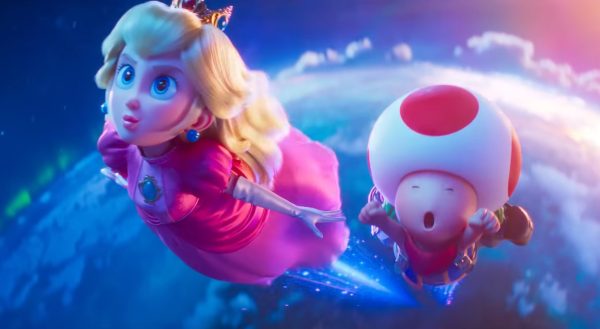
As the title implies, the stakes are higher this time with the entire galaxy on the line, as Bowser Jr. (voiced by Benny Safdie), a child version of the infamous spiky, power-hungry turtle (Jack Black) obsessed with kidnapping Princess Peach (Anya Taylor-Joy) for a myriad of reasons ranging from infatuation to hoping to use her magical stardust powers to charge a doomsday weapon, has taken up the mantle following the failings of his father (who, like at the end of the first film, is shrunk into miniature size and living within a similarly sized castle, watched over by the Mushroom Kingdom). The enraged son flies around in a spaceship, heading off to another galaxy to kidnap Princess Rosalina (voiced by Brie Larson), all while donning metallic armor and bringing a magical paintbrush into battle that can materialize weapons or creatures through a thick purple substance to fight alongside him.
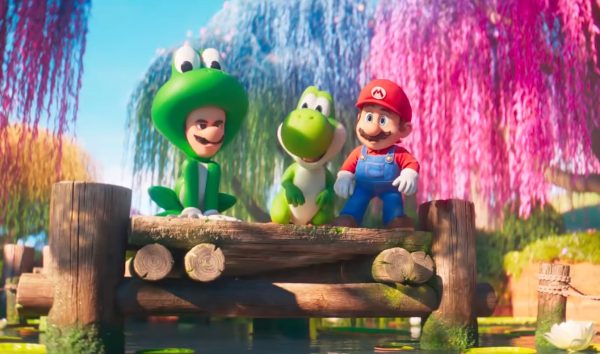
With that in mind, if The Super Mario Bros. Movie was all about paying respects and cramming in as much material as possible regarding the older games from retro gaming consoles, this next iteration is, perhaps fittingly, leaping forward to the next couple of gaming generations. At the very least, this means that the sequel isn’t repeating itself, which does count for something given that there is a 40-year history to pull from and to continue pulling from (the exception here being Donald Glover’s voiceover presence as the lovable small green dinosaur Yoshi, who has been around since the early days).
The problem is that the filmmaking team of Aaron Horvath, Michael Jelenic, Pierre Leduc, and Fabien Polack (alongside screenwriter Matthew Fogel and the numerous Japanese creatives at Nintendo giving input) are not only concerned with simply putting the characters into the movie without giving them much of a narrative function or characterization, but also doesn’t know when to stop, now pulling from other Nintendo franchises bringing in Fox McCloud (from the Star Fox games, voiced here by Glenn Powell), teasing other movies to make with an admittedly much more appealing animation style.

The greater takeaway is that, whether or not the storytelling earns it, Nintendo is determined to get the universe off the ground. Nothing I write will prevent that from being a brilliant financial decision, but humongous box-office grosses can’t salvage a lack of substantial, meaningful artistry. Not even Yoshi mugging for the camera, adorably repeating his name in a variety of situations and tones, does much here, since, like most characters, his inclusion comes across more as a decision to make fans happy rather than a conscious choice with a purpose.
What makes that all the more frustrating is that when The Super Mario Galaxy Movie does stick to its gaming roots and tries to visualize the essence of platforming gameplay into a cinematic experience, the results are exciting, gorgeously animated, and carry an imaginative reverence for the source material and how to translate that into a movie rather than the laziness of bombarding viewers with references. There is a montage here where Mario and Luigi interact with a board, much like one found in the games, transporting them to different levels with different objectives, fueling the running and jumping. Another late highlight essentially amounts to a pre-final boss level loaded with death traps; someone is going to have a field day taking that madness and re-creating it into one headache of an experience in one of those games predicated on players making their own Mario levels.
As for the humor, the only bits that occasionally work involve Bowser torn between actually wanting to change his evil ways and be a better father, and, most importantly, being present to his son, which inevitably turns into the two of them wreaking havoc and seeking to overtake the galaxy together. Considering that The Super Mario Galaxy Movie also opens with Princess Rosalina attempting to read a storybook about the princesses or Mario and Luigi to the various Luminaries, the filmmakers do appear to want to say something about parenthood and the stories we pass down to others. Whatever that may be is, unsurprisingly, lost in the hectic, nonstop action that, while sometimes entertaining, often comes across as a sugar-rush overload solely meant to satisfy children and become the next Marvel machine.
Flickering Myth Rating – Film: ★ ★ / Movie: ★ ★
Robert Kojder