Casey Chong with ten essential revenge thrillers you may have missed…

Revenge thrillers have been a cinematic mainstay, giving us the pleasure of watching the protagonist set out on a vengeance route to kill the person(s) responsible for a murder. Popular movies from Oldboy to Man on Fire, the Kill Bill duology, and of course, the John Wick franchise have dominated the big screen with their respective successes. But somewhere in between, there are a few underrated revenge thrillers that deserve equal attention. Here are the selected ten of them below…
Vigilante (1982)
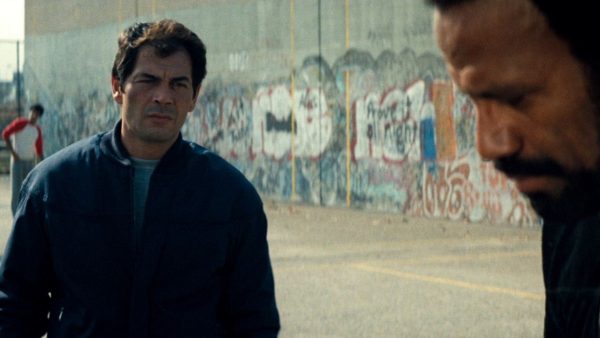
At one point in William Lustig’s Vigilante, Robert Forster’s Eddie Morino believes there’s “a system of laws”, to which Nick, played by Fred Williamson, blatantly disagrees: “System? System, my ass.” The system in question doesn’t work on a street thug like Rico (Willie Colón), who is arrested for brutalizing Eddie’s family, only to be set free with a two-year suspended sentence. This doesn’t sit well with Eddie, who is expecting Rico to serve a longer sentence.
Interestingly, Lustig doesn’t go for the straightforward Death Wish-like route, at least not in the way of depicting Eddie’s immediate quest for vengeance. Instead, Lustig puts his character through the mill as he ends up in prison for contempt of court, while deliberately navigating his revenge arc. He focuses on Eddie, whose initial belief in the legal system leads to his personal and emotional descent into vigilante justice. The movie also runs parallel from Nick’s perspective, highlighting his act of vigilantism with the help of his group whenever the law fails to punish the perpetrators. Lustig doesn’t glamorize the violence, opting for the gritty and even nearly matter-of-fact approach that also underlines the thought-provoking themes of institutional failure, social decay, and the loss of public trust, forcing ordinary citizens like Eddie to take matters into his own hands.
Rolling Thunder (1977)

Co-scripted by Paul Schrader, best known for his work in Taxi Driver the year before, Rolling Thunder once again follows the PTSD-inflicted descent of a Vietnam War veteran. But instead of Robert De Niro’s Travis Bickle’s eventual loss of sanity stemming from chronic insomnia, severe loneliness, and psychological decay, William Devane’s Major Charles Rane is more of an emotionally detached shell of his former self, who only cares about revenge.
Already a traumatized veteran who returns home after enduring torture during the Vietnam War, Schrader and director John Flynn take their time establishing how Charles is silently coping with the so-called normalcy of a suburban life, only for everything to fall apart after his wife and son are killed in cold blood by a gang of outlaws. Once Charles’s quest for vengeance is set in motion, the movie remains clinical in its approach before all hell breaks loose in the visceral third act. Rolling Thunder also features one of the earlier performances from Tommy Lee Jones, who plays Devane’s war buddy as Master Sergeant Johnny Vohden.
The Horseman (2008)
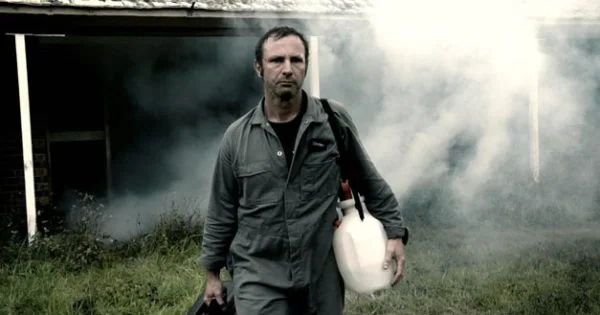
Steven Kastrissios’s directorial debut The Horseman gets down and dirty with its revenge angle, focusing on Christian’s (Peter Marshall) relentless quest to track down whoever is responsible for the death of his teenage daughter. Christian is an emotionally broken, working-class father who has nothing to lose, and Marshall does a good job of inhabiting the role without resorting to histrionics. Kastrissios also introduces another character in the form of a teenage hitchhiker (Caroline Marohasy’s Alice), where she subsequently forms a daughter and father-like relationship with Christian.
The inclusion of Alice also serves as an emotional and moral compass in this otherwise straightforward revenge thriller, rekindling Christian’s side of empathy and compassion beyond his single-minded mission of revenge. When it comes to violence, Kastrissios maintains a sense of palpable rawness in showcasing Christian’s rough-around-the-edges and rage-fuelled vigilantism. He even forgoes the wish-fulfillment revenge fantasy, with none of the heroic or empowering moments, but rather inflicts more physical and emotional damage from Christian’s actions.
7 Days (2010)
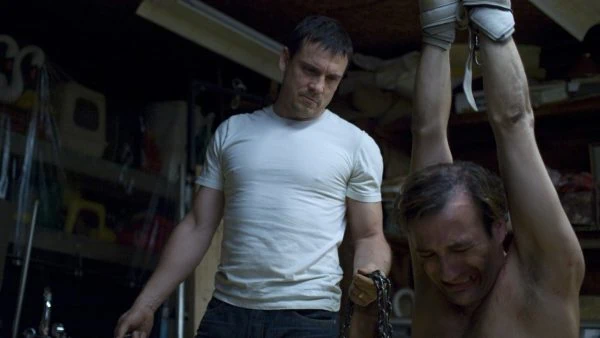
The thought of losing a loved one is indescribable, and in the French-language 7 Days, Montreal director Daniel Grou delves into the unspeakable trauma of a grief-stricken surgeon-father (Claude Legault’s Bruno Hamel), whose life is completely torn apart after he finds out about the death of his daughter (Rose-Marie Coallier’s Jasmine). The police managed to catch the culprit (Martin Dubreuil), but instead of letting the law dictate the punishment, Bruno chose the vigilante way of handling things.
Grou’s deliberately cold direction follows Bruno’s titular quest of kidnapping the man and locking him in a secluded property, where no one knows the location. This leads to a seven-day torture, and the movie’s nearly two-hour runtime reflects the prolonged agony that Bruno torments him from smashing his knee with a sledgehammer, to even degrading him by urinating all over his face. Such a movie could have gone for the exploitative shock value, but Grou denies the kind of catharsis typically associated with the revenge story as he keeps his 7 Days both emotionally and psychologically uncomfortable right until the end.
The Fury of a Patient Man (2016)
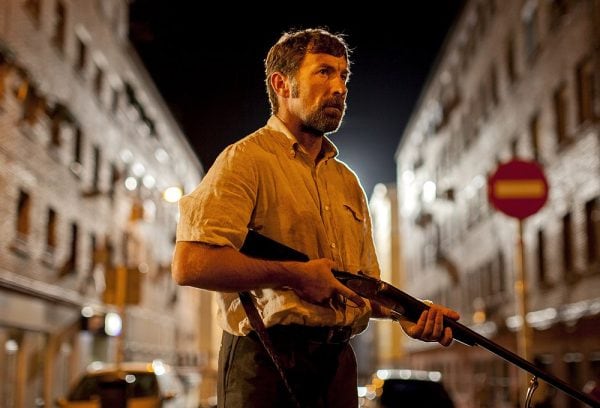
Raúl Arévalo’s Spanish-language The Fury of a Patient Man immerses right from the cold open: a tense, you-are-there perspective from the backseat of a getaway car during a botched heist, all filmed in a bravura unbroken take. Then, Arévalo makes things interesting by eschewing the chronological structure in favor of a timeline-jumping narrative surrounding José (Antonio de la Torre, bringing a subtle level of stoicism), Curro (Luis Callejo), and Ana (Ruth Diaz).
All you need to know the story eventually leads to the titular patient man, referring to José, who is on a vigilante-style mission to avenge the death of his loved one, which somehow ties with the heist. The revenge part is where the movie becomes linear, pivoting from the first half’s character-driven slow burn to a brutal vengeance thriller that doesn’t shy away from graphic violence. The Fury of a Patient Man took home four Goya Awards, winning Best Film along with Best New Director for Arévalo’s feature-length debut, Best Supporting Actor for Manolo Solo, and Best Original Screenplay.
Dead Man’s Shoes (2004)
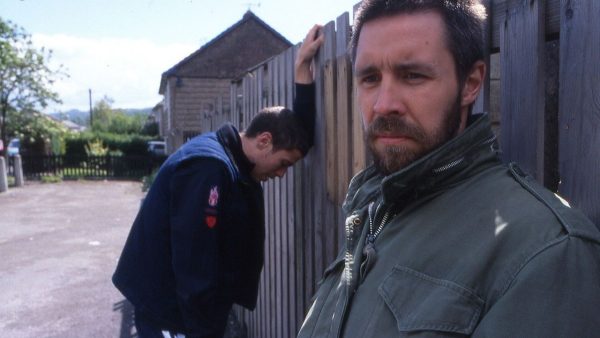
For the bulk of Dead Man’s Shoes, director and co-writer Shane Meadows structures his movie in a gritty revenge thriller mode. The story centers on Richard (Paddy Considine), a soldier who returns to his hometown and reunites with his mentally challenged brother, Anthony (Toby Kebbell, in his film acting debut). We learn from the recurring black-and-white flashbacks that the local small-time thugs have humiliated and abused Anthony when Richard is in the army.
Now that Richard is back, he’s looking to exact vengeance on these thugs. Considine’s no-nonsense performance is intimidating, and at the same time, psychologically disturbed as we watch his character deliberately taking his time to taunt and punish the thugs. What makes Dead Man’s Shoes even more engrossing is Meadows’ subsequent shocking narrative shift, resulting in a bleak yet emotionally devastating drama that gives the movie added depth.
Death and the Maiden (1994)
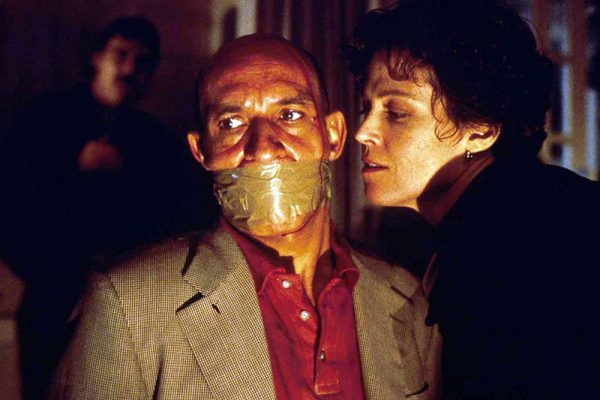
Adapted from Ariel Dorfman’s 1990 play of the same name, Roman Polanski adopts the chamber drama structure that takes place predominantly in a remote house somewhere in South America. It was nighttime, and the storm had caused a power outage. Paulina Escobar (Sigourney Weaver), a housewife who used to be a revolutionary during the country’s dictatorship era, discovers a stranger (Ben Kingsley’s Dr. Roberto Miranda) who gives her lawyer husband (Stuart Wilson’s Gerardo Escobar) back home, is the same person responsible for torturing her back in the day.
Here is where the movie gets interesting: How could Paulina be certain that Miranda is the one, since she was blindfolded at the time of her imprisonment? Despite her insistence that she recognizes his voice, pet phrases, and even his smell, nothing is concrete since Polanski intentionally avoids visual flashbacks, making us wonder if Miranda’s prolonged trauma causes her to be delusional.
Polanski uses the confined setting to his advantage, allowing him to maximize tension and an intriguing sense of uncertainty as we witness Paulina tie Miranda to a chair and force him to confess his crime. Although Weaver and Wilson carry their roles well, it was Kingsley who excels the most as Dr. Roberto Miranda, whose ambiguous character is subtly portrayed from looking innocent and clueless to possibly being manipulative.
Ms. 45 (1981)
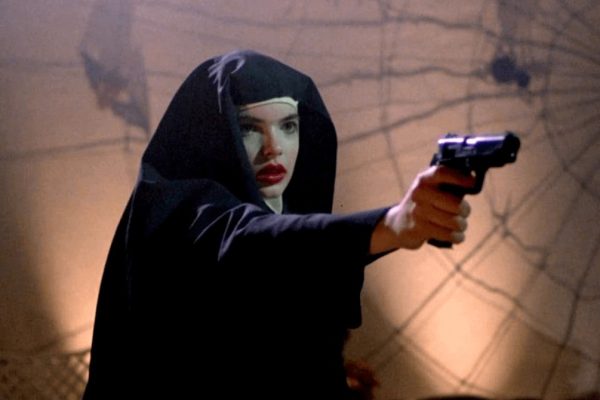
Abel Ferrara’s sophomore feature Ms. 45 takes the rape-revenge film angle and turns it into a riveting mix of exploitation cinema of wish-fulfillment fantasy, and disturbing character study. The character in question is Thana (Zoë Lund, in her first lead role), a mute seamstress who ends up brutalized and assaulted twice on different occasions, leaving her shell-shocked ever since.
From here, Ferrara and screenwriter Nicholas St. John explore the deep-seated trauma that subsequently shaped her into an emotionally and psychologically unstable vigilante, who begins to kill random men with a .45 pistol. Lund relies on dialogue-free methods through expression, gesture, and eye contact to project her combined emotions from distress to fear and rage without resorting to overacting. Ms. 45 is equally notable for its memorable finale filmed in a stylized slow motion during a costume party where Thana dresses as a nun, shooting every man on the floor.
Prevenge (2016)

Alice Lowe pulls multiple duties both onscreen and offscreen, serving as star, writer, and director in Prevenge. She plays Ruth, a pregnant widow whose husband dies in a climbing accident. His death causes her emotional and psychological imbalance, to the point that her unborn baby inside her tummy becomes the voice of reason to make her commit murder. Is the voice supernatural or simply all in her head?
Lowe never goes for the easy answer, preferring to keep her movie ambiguous while gamely combining pitch-black comedy with dry humor and a violent revenge thriller, where the latter sees her character embark on a vigilante mode to kill those who are responsible for her husband’s death. At the hands of a lesser director, such an unusual genre hybrid would have collapsed under its own ambition, but kudos to Lowe for having a firm grip in blending them effectively, while subtly delving into her character’s grief, pregnancy, and mental health issues.
Vengeance (2009)
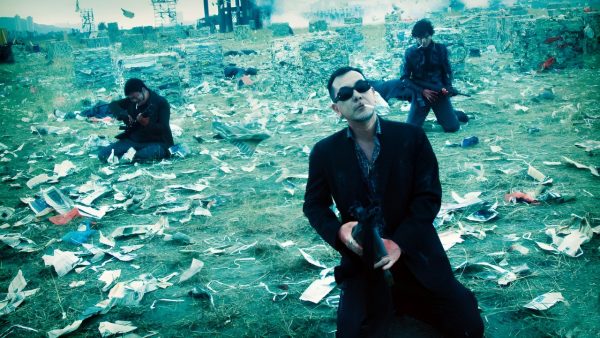
Renowned Hong Kong auteur Johnnie To cast French pop star Johnny Hallyday (the director originally favored Alain Delon, but the actor declined the role) as Francis Costello, an aging chef and former assassin, whose family is killed by the mob hitmen. The story then follows Costello on a revenge mission to track down the people responsible for the hit in Macau. But here lies the problem: Costello has short-term memory loss, causing him to repeatedly forget names, locations, and other important details.
His disability adds an emotional depth, and Hallyday made good use of his craggy stoicism to subtly convey his melancholic acting style of grief, exhaustion, and world-weariness. To also enlist his regular stars – Anthony Wong, Gordon Lam, and Lam Suet – to play the hitmen who agree to help Costello. Likewise, the trio never disappoints with their characters’ male bonding, loyalty, and brotherhood. The action is particularly a highlight here, showcasing To’s signature flair for stylized shootouts from the picnic area in the woods under the shifting moonlight to a heroic bloodshed-style gunfight at a windy landfill.
What revenge thrillers would you add to this list? Let us know on our social channels @FlickeringMyth…
Casey Chong