Hasitha Fernando dives into the story behind the classic martial arts drama series Kung Fu…
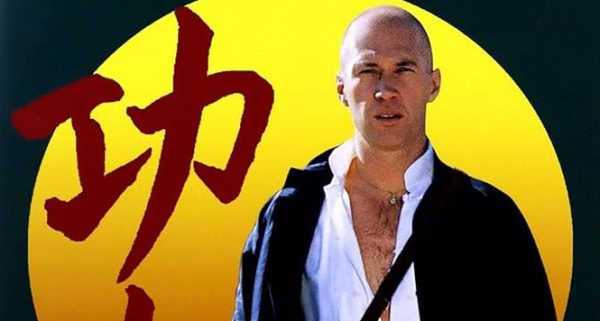
It’s hard to find anyone who hadn’t watched the popular TV show Kung Fu when it was televised in the past. The series made David Carradine a household name and introduced us to an unforgettable pop culture phenomenon that blended solid action, engrossing storytelling and the philosophical musings of blind Master Po. In this short write up we revisit the beginnings of the popular show, what went on behind-the-scenes and the legacy it left behind.
The show’s creation was inspired by Akira Kurosawa’s Rashomon
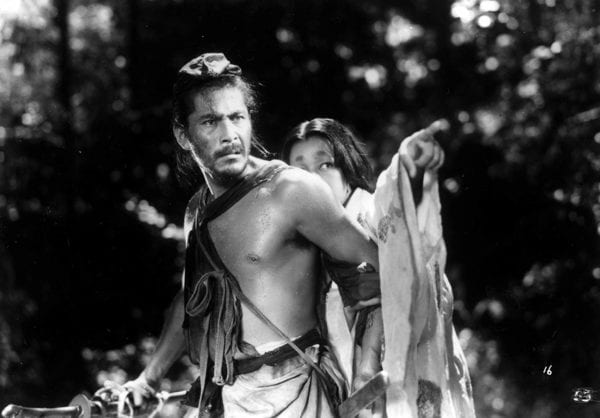
Born to a working class Jewish family in Brooklyn, New York, Ed Spielman developed a passion for Asian culture after watching Akira Kurosawa’s masterpiece Rashomon. Entering Brooklyn College at the age of sixteen, Spielman attended class during the evenings whilst working clerical tasks in day-time quiz shows at ABC TV, New York. It was during his time at ABC TV that Spielman met his close friend and confidante Howard Friedlander, with whom he’d work with later on. With his keen interest in Asian culture Spielman enrolled to study Mandarin Chinese, which only had four other students attending at the Chinese language department. It was during this period in the 1960s that the budding young creative also discovered kung fu. At the time the martial arts system was not open to non-Chinese nationalities and was guarded secret of sorts passed down from generation to generation and kept between families. But being the determined bloke that he was, Spielman acquired a fair understanding of kung fu through sheer hard work doing research in New York’s Chinatown and other similar areas.
Still obsessed with Kurosawa and the Asian culture Spielman decided to hammer out his first treatment for a feature film centered around Japan’s most famous samurai – Miyamoto Musashi. In this first draft, Musashi travels take him to the Shaolin Temple in China where he befriends one of its monks and learns kung fu. Sometime later Spielman handed the draft to Friedlander to get his thoughts on it and immediately the guy was hooked on the premise but proposed a few changes. Friedlander suggested changing the setting to the American Old West and have the story revolve around a Shaolin monk. The duo headed back to their apartment and started writing an initial outline. It was during this spit balling session that Spielman decided to make Kwai Chang Caine a half-American, half-Chinese Shaolin monk wandering the American frontier. Together they crafted a four-paged treatment titled “Kung Fu: The Way of the Tiger, The Sign of the Dragon”.
Controversy regarding Bruce Lee’s involvement in the beginning

As described above it was Ed Spielman who wrote the first treatment of Miyamoto Musashi the samurai travelling to China to learn kung fu, along with his writing partner Howard Friedlander. However, there was another famous martial artist and actor who has also staked his claim about who came up with the idea for the Kung Fu TV show and that was none other than the legendary Bruce Lee. In 1971 he pitched a similar concept – about a martial artist wandering the old West – to both Paramount and Warner Bros. as a television series which would have been titled Ah Sahm, but the studios responded that they had already begun development of a similar property for the small screen. Lee’s widow Linda Lee Cadwell even backed up this claim but Mathew E. Polly’s authoritative biography Bruce Lee: A Life as well as Fred Weintraub’s memoir Bruce Lee, Woodstock & Me, however, contradict the above claims. In any case, Lee’s vision was brought to life half-a-century later by his daughter Shannon Lee in the form of Netflix’s period martial-arts drama Warrior with Andrew Koji in the lead role.
The project took some time to be officially green-lit
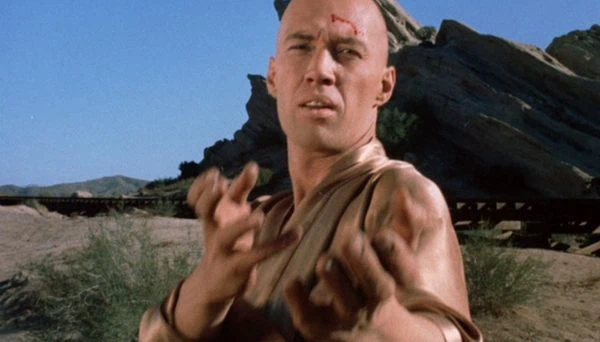
Spielman and Friedman’s treatment was submitted to Peter Lampack, an agent over at William Morris, and he seeing potential in the property turned it over to Fred Weintraub, who was executive producing Enter the Dragon for Warner Bros. Weintraub liked the idea of this “East-meets-West tale of a young Shaolin monk from China roaming the American West of the 1800s, righting wrongs with pacifist, Eastern philosophy”. He liked it so much that he gave the duo $3,800 to hammer out a screenplay to be made into a feature film. After they handed in their 160-page screenplay in early 1970, Weintraub had to sell it to top Warner Bros. executives to get it bankrolled. It was during this period that the producer met Bruce Lee, who was coaching one of his close friends. After chatting with Lee Weintraub realized that the dashing martial artist would be ideal actor to play Kwai Chan Caine. But fate intervened and the project fell apart because the studio deemed the venture too risky with an Asian lead. To minimize the risk Weintraub then suggested reviving the property as a TV movie for ABC, produced by Warner Bros. television. Speilman and Friedman’s script was rewritten as a 90-minute TV movie by Jerry Thorpe and Herman Miller and this is what became the 1972 pilot film for the show.
Bruce Lee, George Takei, & Mako were considered for the lead role
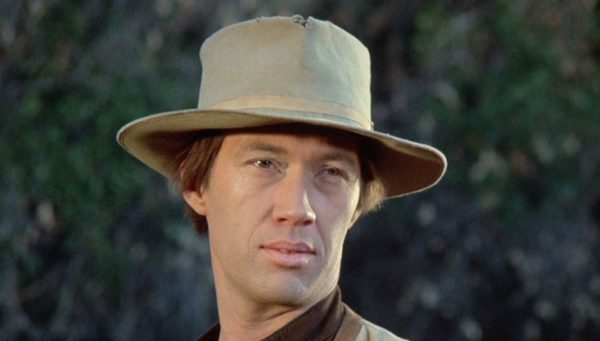
Now that pre-production for the TV movie was well underway, finding the right actor to play Kwai Chan Caine came into the forefront. Since this was to be a half-Chinese, half-American Shaolin monk the producers found it challenging to find the ideal performer for the part. The producers were more than convinced that Bruce Lee would be perfect as Kwai Chan Caine but later on reconsidered as they realized that the role was more cerebral and that Lee lacked the calm serenity they were looking for their character. Mako wasn’t considered due to his strong Japanese accent and George Takei of Star Trek fame was overlooked since he wasn’t the physical sort the producers were looking for. After failing in their task of seeking out Asians in the film industry they turned to American actor who’d fit the bill and this was how David Carradine ended up nabbing the now iconic role of Kwai Chan Caine.
Asian actors weren’t happy with David Carradine’s casting
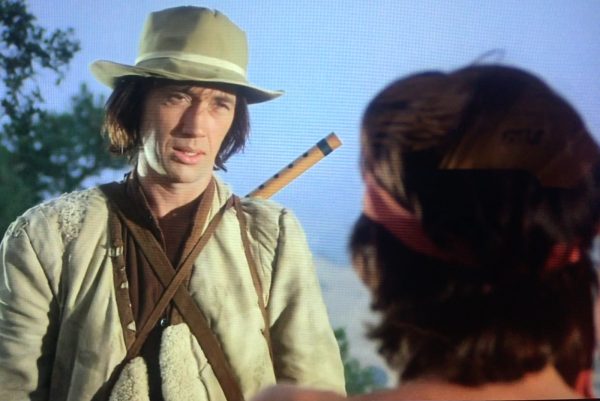
At the time of David Carradine’s casting the likes of George Takei and Mako weren’t too happy with what transpired. So much so, the Association of Asian Pacific American Artists (AAPAA) banded together to file a formal complaint against the studio’s decision. The group were of the opinion that the lead actor for the series should have been from the Asian acting community. But there were some who believed that since work is scarce playing secondary roles in a successful show was better than no work at all and with the show’s success later on they decided their decision was correct. I mean, how can we forget Keye Luke’s blind Master Po and his philosophical musings or Philip Ahn’s Master Kan and his Taoist homilies?
Movie sets from other productions were repurposed and used for the series
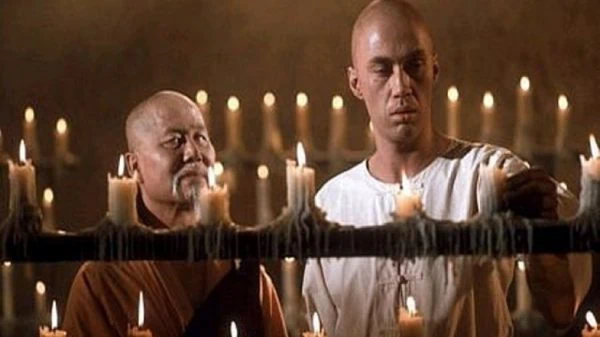
After the show was green lit it was filmed at the Warner Bros. Studios, Burbank, which included the Backlot and several soundstages. In addition, exterior shoots were done at locations like Vasquez Rocks, the Yuma Desert sand dunes (mainly for the opening and closing credits). The Old Tucson Studios and Malibu Creek State Park (then the 20th Century Fox Ranch) were also used. Due to the budget constraints Kung Fu had to repurpose pre-existing sets used for other movies to be used for the Shaolin Monastery flashbacks. A movie whose sets that were extensively converted for the show was the 1967 fantasy musical drama film Camelot, whose production design even won an Academy Award. Since most of the sets of Camelot still remained standing by the time camera’s rolled in 1971, showrunner Jerry Thorpe instructed Eugène Lourié to make use of it for the show.
Critical and commercial success, and international acclaim
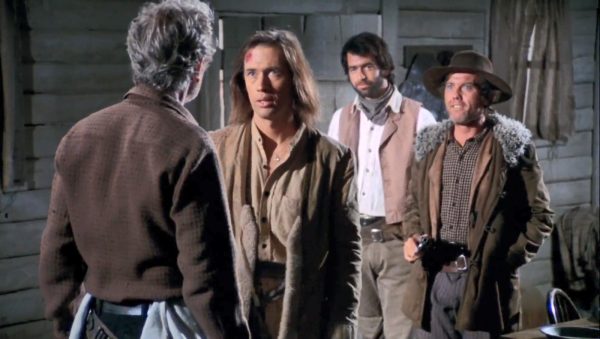
Because the studio was unsure about the viability of the IP they had on their hands they first broadcasted the TV film which functioned more like the show’s pilot on February 22, 1972. ABC and Warner Bros. were overwhelmed with letters, phone calls and telegrams all praising the effort. ABC ordered four more segments and placed them on the Saturday night “death row” slot. Based on the positive response to them the studio contracted 12 more episodes to expand Kwai Chan Caines story and gave the show a prime time slot. The exceptional ratings season one received prompted the network to renews the show for two more seasons. Kung Fu aired on ABC from October 1972 to April 1972 for a total of 63 episodes. Around the same time Bruce Lee’s Fists of Fury became a box-office smash Kung Fu became the number one show on American television garnering a viewership of 28 million in May 1973. The successive seasons too received a commendable viewership, becoming one of the top rated shows in USA at the time. The show received rave reviews and became a hit with international audiences where it was telecast in countries like United Kingdom, Canada, France, Italy, Spain, Japan and Mexico.
The show was not abruptly cancelled as previously believed
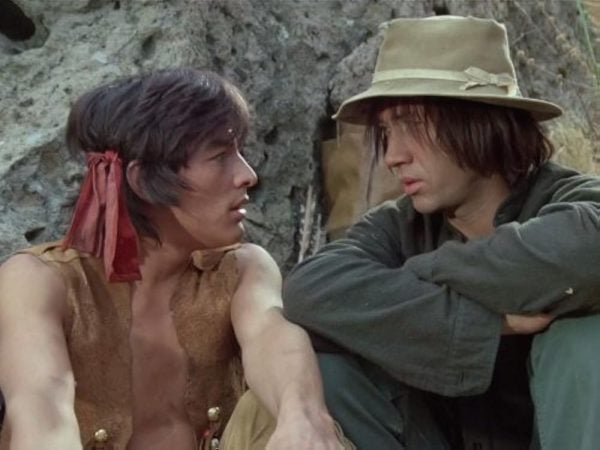
There is a popular misconception that Kung Fu was abruptly cancelled but this is not true. The series’ cancellations was due to a combination of factors, but the chief of which was lead actor David Carradine’s decision to leave the show. Shooting Kung Fu proved to be a challenging one for the actor and it certainly took a toll on him as he did most of the stunts himself and had sustained injuries in the process. In addition, there was an ill-timed drug-related incident which attracted a lot of bad press for the performer which also affected the ratings of the show. Other factors which may have affected the show’s cancellation could have been changes in the writing department and alterations in the program’s time slot. Because of the burnout Carradine had, the actor had previously warned producers that he will not work beyond a third season, so this allowed the writers to tie up all loose ends and bring the show to a satisfying conclusion by season three.
Revivals, reboots & an enduring legacy
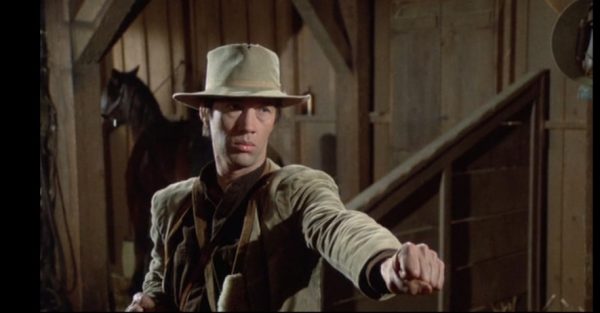
In spite of the controversies the show had undoubtedly fueled there is no denying the impact it had on pop culture and small screen productions in general. After the series’ conclusion in 1973 a made-for-TV film titled Kung Fu: The Movie was released in 1986 with David Carradine reprising his iconic role and the late Brandon Lee (son of Bruce Lee), playing Kwai Chan Caine’s unknown son Chung Wang. The following year a pilot to a new series which became a standalone movie was made titled Kung Fu: The Nex Generation which saw Brandon Lee returning and David Darlow playing Caine’s grandson. However, due to the muted reception the pilot didn’t transition to a full-fledged show.
Two decades later the IP was revisited with the TV show Kung Fu: The Legend Continues, which functioned as a direct sequel to the original series disregarding the two films. The show proved to be a success and renewed audience interest in the property and ran for four seasons from 1993 – 1997. In 2021 a reimagining of the concept took place as a CBS TV show but sadly the series was discontinued after three seasons. If one looks past the controversy generated by the original show there isn’t a shadow of doubt regarding the legacy it left behind. The show introduced mainstream TV-goers to an introspective, character-driven drama which blended good action and engaging storytelling. The show also function as a platform for introducing Eastern Philosophies such as Taoism and Zen Buddhism to Western audiences, unfamiliar with such concepts.
What are your thoughts on Kung Fu? Let us know on our socials @FlickeringMyth…
Hasitha Fernando is a part-time medical practitioner and full-time cinephile. Follow him on Twitter via @DoctorCinephile for regular updates on the world of entertainment.