Casey Chong with a selection of essential gross-out comedies…
Comedies come in different styles and tones, one of which is the subgenre of gross-out comedies. True to their nature, they are meant to offend you with the shock values that can be either raunchy, revolting or plain juvenile. Physical gags are often incorporated into gross-out humor, covering everything from projectile vomit to semen and feces. In the early ‘70s era, we had John Waters breaking taboos by giving us Pink Flamingos, right down to the modern era where the Farrelly Brothers – Peter and Bobby – joined forces in delivering some of the best and most commercially successful gross-out comedies ever made. With plenty of great ones out there, compiling and shortlisting them into a top ten list isn’t exactly a walk in the park, but here goes anyway…
Me, Myself & Irene (2000)
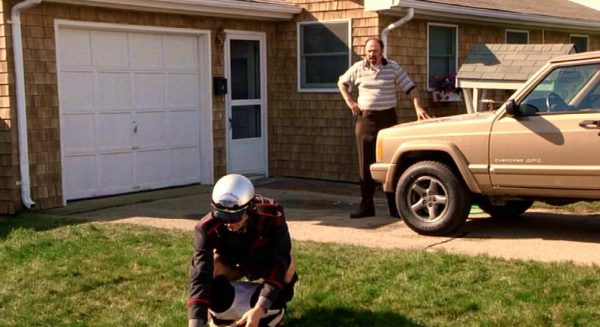
Why settle for one Jim Carrey when you can have two? The rubber-faced comedian reunited with Dumb & Dumber directors the Farrelly Brothers in Me, Myself & Irene, showcasing Carrey’s character suffering from a split personality disorder. One is a mild-mannered Charlie, a Rhode Island state trooper, whose meek personality causes people to take advantage of him. Even his newlywed wife (Traylor Howard) cheats on him. The other side of Charlie is Hank, a polar opposite who is prone to violence and cruelty.
The contrasting personalities allow Carrey to go for broke with his dual characters, resulting in a series of over-the-top, nasty humor that is synonymous with the Farrelly brothers. One of them is a scene where Hank had enough of his neighbor’s dog taking a dump on his lawn, causing him to return a favor by doing the same. Although Me, Myself & Irene isn’t as successful as their previous collaboration in Dumb and Dumber, it remains a peak comedy from the Farrelly brothers.
Road Trip (2000)
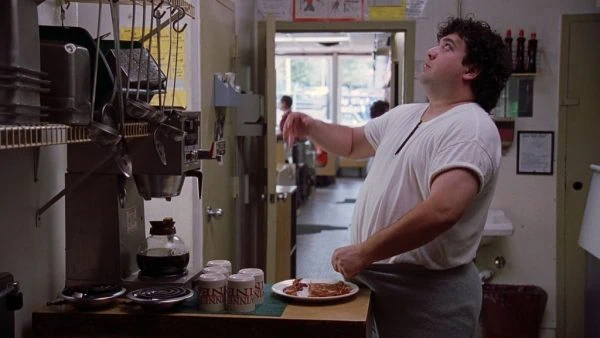
Before Todd Phillips ventured a 180-degree turn by taking a bold detour with Joker and its ill-advised sequel, he got one of his earliest starts making comedies. His directorial debut, Road Trip, centers on Josh’s (Breckin Meyer) race-against-time quest to travel 1,800 miles… to retrieve the sex tape after he mistakenly mailed it to his long-distance girlfriend (Rachel Blanchard).Joining the road trip includes E.L. (Seann William Scott), Rubin (Paulo Costanzo), and Kyle (DJ Qualls) since the latter has a car they need to get to the destination, despite it belonging to his stern father (Fred Ward).
Most of the fun comes from their misadventures, one of which involves a reckless attempt to thrust the car over the broken bridge. There’s an unforgettable gross-out moment in the diner, where Kyle is not satisfied with his breakfast since he specifically requested French toast with no sugar. Well, you know what happens when the rejected food by a customer is brought back to the kitchen. The otherwise smiling server, played by Horatio Sanz, does something to the French toast, which is best described as grossly unhygienic.
Monty Python’s The Meaning of Life (1983)
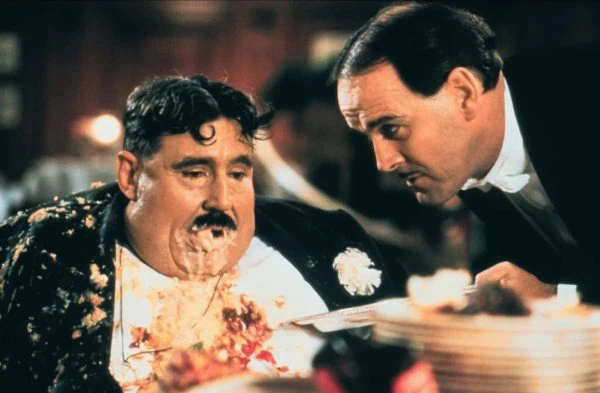
This was the last time the legendary Monty Python troupe performed together – all six of them, to be exact – and the result is one of their best sketch comedies ever made. The Meaning of Life features eight major segments, focusing on the wildly absurd sketches and musical numbers. Director Terry Jones doesn’t shy away from pushing the boundaries of gross-out humor. There’s a scene where a baby is being yanked out of his mother’s womb, but nothing beats the extended moment in a fine-dining restaurant.
The scene in question revolves around a grossly obese customer named Mr. Creosote, played by Terry Jones himself, who arrives at the table to vomit in the bucket first before proceeding to stuff an insane amount of food. If you think the repeated projectile vomit scene is visually repulsive, wait until you see the maître d’ (John Cleese) persuading him to take a bite of a “wafer-thin mint”. It may seem harmless, but what happens next is an epic proportion of grotesque imagery.
National Lampoon’s Animal House (1978)
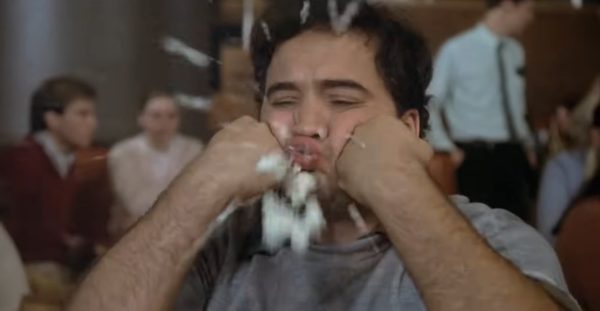
Remember National Lampoon? Once a comedy milestone before fading into obscurity as decades went by, it was worth remembering that the first National Lampoon movie, Animal House, still has its cultural impact. As one of the pioneers in the gross-out comedy, John Landis’s then-groundbreaking comedy chronicles the mean-spirited exploits of the Delta Tau Chi fraternity house. It’s full of slobs and losers, but they sure know how to have unadulterated fun. The primary attention goes to John Belushi, one of the original cast members from Saturday Night Live, who steals the show as the crude and unkempt John “Bluto” Blutarsky. He’s like the ultimate human slob that reflects the chaotic, go-for-broke nature of the Delta Tau Chi fraternity house.
Sure, the gross-out gags in this movie are relatively tame by today’s standards, yet looking back at Animal House, you’ve got to hand it Belushi and his gleefully unhinged comedic act. At one point, he engages in a food fight in the cafeteria and impersonates what it’s like to be a “human zit” by stuffing a fistful of mashed potatoes before he spits them out after puffing out his cheeks using his fists. Interestingly, the infamous “human zit” gag was entirely improvised, showcasing Belushi’s ingenious flair for improv comedies.
South Park: Bigger, Longer & Uncut (1999)
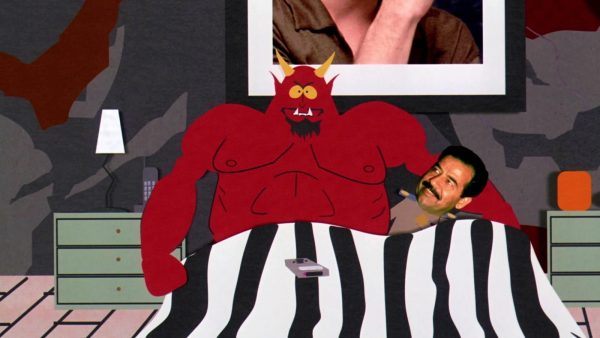
The 1990s era brought us the offensively bold and satirical animated sitcom of South Park. Created by Trey Parker and Matt Stone, it made its debut in 1997 and has since running for an incredible 28 seasons. At the height of their show’s success, they developed a big-screen feature, resulting in South Park: Bigger, Longer & Uncut to both critical and financial successes. The story follows the usual South Park kids – Stan, Kyle, Ike, Eric and Kenny – as they have been longing to catch Terrance and Phillip’s “Asses of Fire” in their local movie theater. Except that they are underage and must be accompanied by an adult since the movie is rated R. Well, these kids manage to make it work, and their exposure to violence and profanities causes them to swear a lot back in school.
Beyond the sardonically mean-spirited musical numbers “Uncle Fucka” and the Oscar-nominated “Blame Canada”, and the profanity-laden humor along with the outrageously absurd sight of Satan and Saddam Hussein portrayed as lovers, this animated black comedy equally satirizes relatable themes of censorship, freedom of expression and human nature.
Bridesmaids (2011)
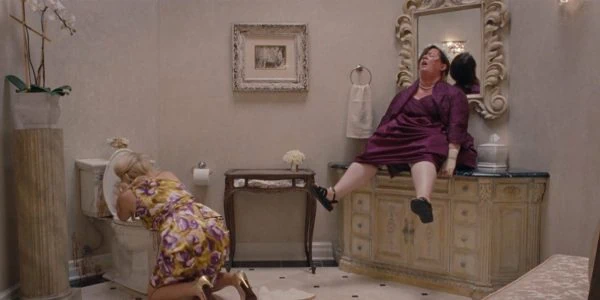
A quintessential chick flick with gross-out elements thrown in for good measure, Paul Feig’s hit comedy remains one of his best works, and it’s easy to see why. He got a strong line-up of funny female cast, led by Kristen Wiig. She plays Annie Walker, a desperately single woman who finds out her best friend, Lillian (Maya Rudolph), is getting married. Then comes Helen (Rose Byrne), the other bridesmaid that Lillian has been extremely grateful for her assistance for everything to ensure her wedding runs smoothly. This makes Annie jealous of Helen’s friendship with Lillian.
Bridesmaids may have been lengthy in some parts, given its stretched-out 125-minute runtime, but the movie delivers enough fun and heart to keep you engaged. Wiig brings great comedic energy into this movie and even becomes wildly unhinged at one point. And not to mention, the memorable food poisoning scene. It’s an elaborate poo gag, and you can imagine how it feels when most of the bridesmaids who had bad food can’t hold it anymore while they are at the bridal boutique. It’s a single, most disgusting moment in the movie, but in a good yet funnier way.
Waiting… (2005)
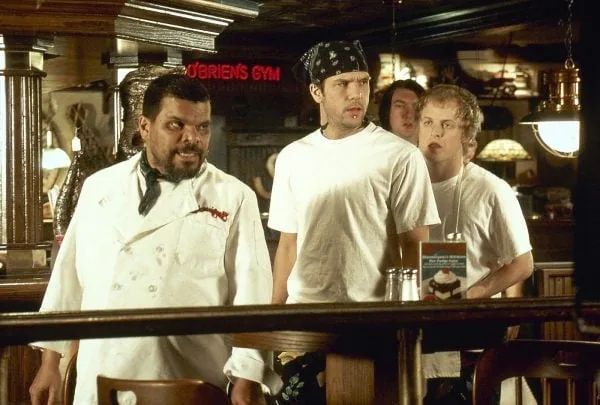
Rob McKittrick’s directorial debut pokes fun at the familiar workplace culture in the foodservice industry, which in this case, is the waiters and waitresses along with the kitchen crew in a restaurant called Shenaniganz. The movie takes place in a single day, where we are introduced to colorful characters like the smug Monty (Ryan Reynolds), the conflicted Dean (Justin Long), and the temperamental Naomi (Alanna Ubach). McKittrick, who also wrote the comedy, spends time establishing these characters’ routine and their shenanigans (no pun intended) in between. There’s a barrage of adult humor and profanities, and of course, gross-out moments.
For the latter, one particular scene is where Waiting… embraces the subgenre wholeheartedly: A fussy customer complains about her food, and what happens next is the kitchen crew each take turn adding “extra ingredients” to the plate. Beyond all the crude jokes, Waiting… resonates a lot with the cynical look of how people in a service job endure rude customers, putting on fake smiles, and getting shortchanged when it comes to tipping. Made on an indie budget, the movie became a surprise hit, leading to a sequel called Still Waiting… four years later.
American Pie (1999)
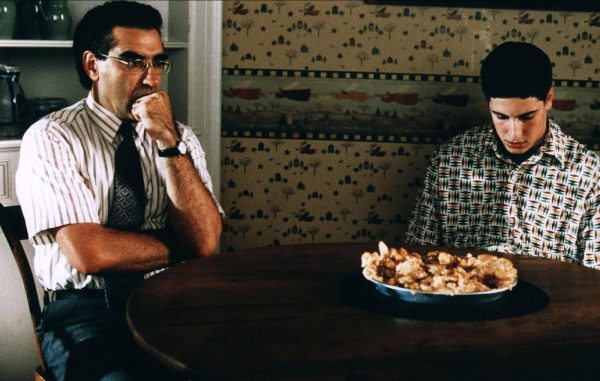
Once upon a time, American Pie defined the then-new generation of teen comedy back in the late 90s and early 2000s. Directed by Paul Weitz, in his feature-length debut after getting his start co-writing Antz, the story goes like this: Four friends – Jim (Jason Biggs), Chris (Chris Kline), Kevin (Thomas Ian Nicholas), and Paul (Eddie Kaye Thomas) – made a pact to get laid, and more importantly, losing their virginity by prom night. And they have just three weeks to achieve their goals.
That title in question? Let’s just say Jim gets carried away with the freshly baked apple pie in his home kitchen, and what happens next will leave it up to you to find out. Weitz has a field day making good use of the R-rating by throwing in plenty of sex regardless of verbal discussion, courtesy of Jim’s awkward dad (Eugene Levy) or physical moments, one of which involves Jim’s embarrassing attempt to seduce the sexy foreign exchange student (Shannon Elizabeth) in his bedroom. Not to forget, the introduction of Stifler (Seann William Scott), whose obnoxious and shameless personality adds chaotic fun to the movie. American Pie proved to be a major hit, more than enough to spawn a franchise with three sequels, and even a series of spin-off films under the title American Pie Presents.
Dumb and Dumber (1994)
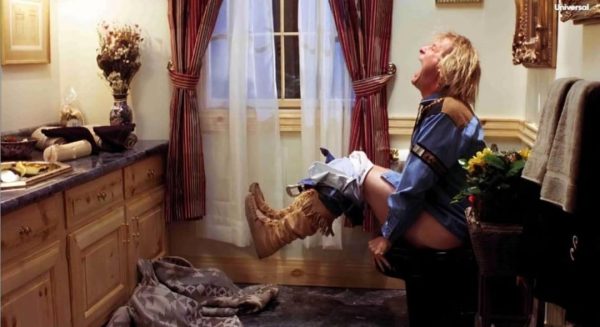
Jim Carrey and the Farrelly Brothers are a match made in heaven (or hell), where the former’s signature rubber-face antics fit well with the directing duo’s brand of crude slapstick humor and outrageous gags. The brothers made their successful directorial debut in Dumb and Dumber, and true to the title, it’s an excess of how profoundly stupid these characters can be. Stupid, but funny would be the right word to describe here. Carrey and Jeff Daniels play the titular best friends, Lloyd and Harry, who are on a cross-country road trip from Providence to Aspen in Colorado. Their intention is to return a briefcase to the owner, but along the way, they face a series of misadventures.
The fun lies in the dynamic of Carrey and Daniels, both of whom did a tremendous job embracing their dim-witted roles. Even in their debut, the Farrelly brothers sure know their stuff in dialling up the gross-out factor. Among them is the scene where Harry experiences severe diarrhea after drinking laxative-laced coffee. The best of the lot has to be the extended dream sequence, highlighting Lloyd’s dream date with Mary (Lauren Holly) before he engages in a series of exaggerated fights against the troubled waiters and a kung fu chef.
There’s Something About Mary (1998)
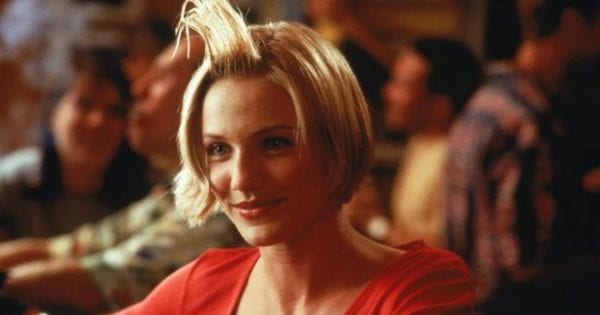
The Farrelly Brothers hit the jackpot again with this one, blending their signature gross-out humor with the sweet-natured rom-com elements. The latter is especially true with Cameron Diaz’s effortless likable performance as Mary is the center of the attraction here. She’s pretty much the heart and soul that highlights her sincerity and levity, while contrasting well with her co-star, Ben Stiller. As Ted, well, let’s just say he can’t seem to catch a break. Earlier in the movie, he accidentally gets his “beans above the frank” following a zipper mishap – one of the few iconic set pieces that the Farrelly brothers know well how to escalate their mean-spirited gag.
For decades, he’s been trying to win over his dream girl, Mary, but a series of (painful) misfortunes keeps preventing him from fulfilling his destiny. Complicating matters is Pat Healy (Matt Dillon), who also falls for Mary after initially hired by Ted to locate her whereabouts. There are others, who are equally obsessed with her, namely Norm Phipps (Lee Evans), a pizza delivery boy who impersonates a British architect under the name of Tucker. The competition between these desperate men trying to persuade Mary leads to more conflicted moments, often to the point of absurd hilarity. Finally, it’s worth mentioning that famous “hair gel” scene.
What are your favourite gross-out comedies? Let us know on our social channels @FlickeringMyth…
Casey Chong