Simon Thompson presents a selection of great crime movies that deserve more attention…
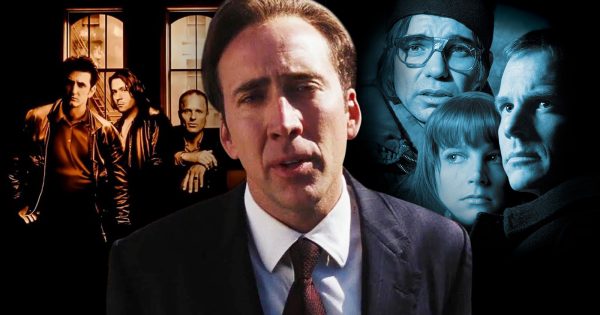
Crime cinema has been a fixture of moviemaking all the way back to the origins of the medium in the late 19th -early 20th centuries. Over time it’s proved to be one of the more malleable genres, evolving from the gangster movies of the 1930s, to noir in the 1940s-1950s, to the despondently cynical New Hollywood thrillers of the late 1960s and 70s, to the neo-noir era of the 1980s and 1990s.
While the majority of the movies featured on this list are American, I have included some international choices as well, because every country with a functioning domestic film industry, has their own version of what a crime movie is. Without further ado, here are ten crime films that I personally believe to be a little underrated when it comes to discussions about the best the genre has to offer…
Lord of War (2005)
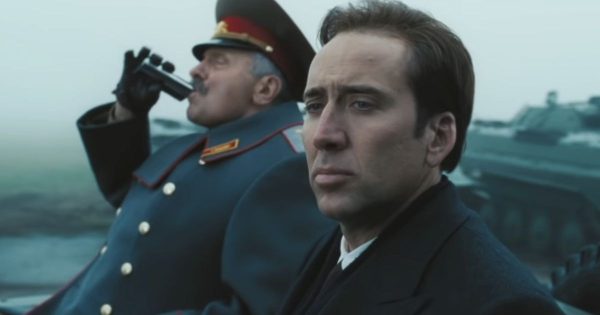
Andrew Niccol is a director who unfortunately is no stranger to making smart, compelling, and interesting movies that for whatever reason fail to generate any kind of box office success despite their obvious quality (see Gattaca for further details). His 2005 crime drama/thriller Lord of War is a stylish, intelligent, darkly comic, yet harrowing look into the military industrial complex and the world of private arms dealers.
Taking place over twenty years starting in the 1980s, Yuri Orlov (Nicolas Cage), is an unscrupulous but moderately successful Ukrainian-American arms dealer, who builds a successful black market gun-running operation with his younger brother Vitaly (Jared Leto). Thanks to the collapse of the Soviet Union in 1991 the brothers spot an opportunity in all of the former nation states’ weapon stockpiles that they can sell to the world’s dictators and militias.
As Yuri begins to become more and more successful, his exploits attract the attention of Jack Valentine (Ethan Hawke) a dogged Interpol agent who will stop at nothing to bring Orlov’s illegal business empire down.
Going under the radar upon its release due to its grim subject matter, Nicolas Cage sadly declining as a box office draw, and an uncompromising tone, Lord of War only grossed $72 million from a roughly $50 million budget, barely breaking even. While at the time Hollywood was still making serious mid budget adult dramas at a solid rate, since those are now close to dodo levels of being extinct, Lord of War has developed a somewhat larger increase in appreciation about 15 years too late thanks to DVD sales and streaming.
If you can handle the depressing subject matter, Lord of War is a first rate crime thriller with a deft, witty script, some of the best acting Nicolas Cage and Ethan Hawke have done in their careers, and even Jared Leto, is actually tolerable here because he has good actors to bounce off and a no nonsense director in Andrew Niccol to keep him in check.
Cure (1997)

Kiyoshi Kurosawa’s Cure is a disarmingly Lynchian, slow burn examination of a uniquely Japanese phenomenon known as strange crime. Because Post World War II Japan (outside of highly structured organised crime), is a very law abiding society it is given to a social phenomenon that one commentator termed ‘strange crime’, dark episodes in the country’s history such as the Vending Machine Killings of 1985 when an unidentified killer left poison spiked drinks inside various vending machines.
When Kiyoshi Kurosawa wrote and directed Cure in the late 1990s the movie caught the mood of a country that was reeling from the crash of the bubble economy, and the shocking Inokashira Park Dismemberment of 1994, when architect Seiichi Kawamura was surgically dismembered, a gruesome murder that has gone unsolved to this day.
Cure follows Kenichi Takabe (Koji Yakusho) a police detective tasked with finding a serial killer whose victims are all left with a distinctive X mark carved into their necks. When Takabe thinks he’s found the perpetrator of these brutal killings (Masato Hagiwara), he realises that he’s bitten off far more than he can chew.
Using constant surreal imagery, long takes and a quiet sound design, Cure is a brilliant example of how quiet can be just as effective in building atmosphere as loud noises. It’s a sobering meditation on the worst impulses that lie dormant within human nature and can be awakened within anybody with the right manipulation. Cure is the kind of film you can watch again and again and have a completely different interpretation of , than the one you had before, a marker of just how interesting its narrative is.
Although it’s been described by the likes of Martin Scorsese and Bong Joon Ho as a masterpiece (you can argue that Memories of Murder is its spiritual successor), it has gone under the radar because of other Japanese suspense media such as Ringu and Audition coming out at around the same time, which diverted attention away from it amongst western audiences.
Gomorrah (2008)
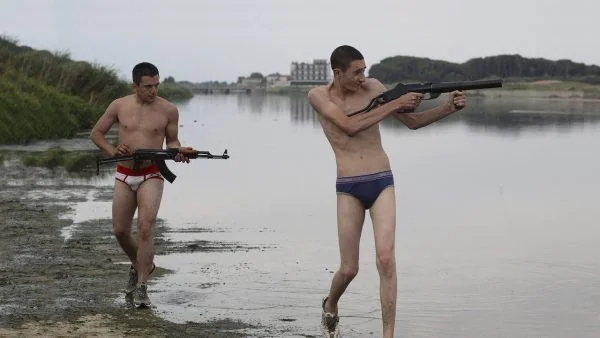
Matteo Garrone’s Gomorrah, is a brutal documentarian style look at the Neapolitan mafia that can be justifiably compared to Z, The French Connection, Investigation of a Citizen Above Suspicion, and The Conformist. Set in mid 2000s Naples, the movie is a Pulp Fiction/Magnolia style anthology that focuses on multiple characters and the various relationships that they have to organised crime within the region.
Distinctly unglamorous and stark in its portrayal of its subject matter, the intentional lack of stylisation and relentlessly bleak imagery made it a hard sell to general audiences in contrast to movies like the brilliant City of God and La Haine, which, while also being brutally honest with their themes and characters are far more deliberately cinematic than Gomorrah is, which helps to sugar the pill.
One False Move (1992) / A Simple Plan (1998)
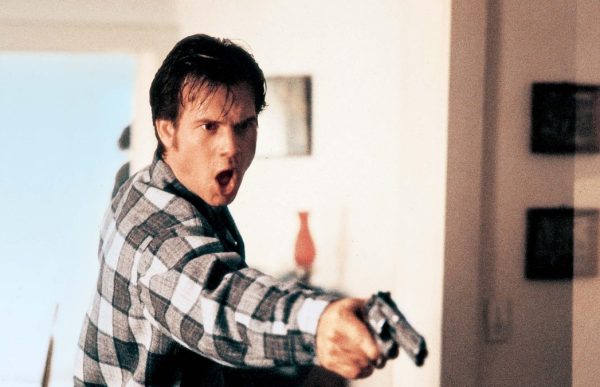
I’ve grouped these two movies together, because not only are both underrated, but also because each one also coincidentally stars Billy Bob Thornton and Bill Paxton (one of my absolute favourite actors and a guy who should have been a much bigger name than he was).
Directed by Carl Franklin and written by Billy Bob Thornton and Tom Epperson, One False Move is an ingeniously plotted southern gothic narrative about a trio of criminals in Los Angeles, Ray Malcom (Billy Bob Thornton), his girlfriend Fantasia (Cynda Williams), and his sadistic yet intelligent partner in crime Pluto (Michael Beach), on the run from the police and heading towards Houston to sell a stash of drugs.
Two LAPD detectives (Earl Billings and Jim Metzler) who are on their trail find that the group is making a stop in the small Arkansas town, Star City, forcing the two big city cops to cooperate with Star City’s gregarious good ol’ boy sheriff Dale ‘Hurricane’ Dixon (Bill Paxton) thrilled to finally have a taste of action for a change.
One False Move is a movie which really depends on you being as blind as possible going into it, so while I won’t spoil plot specifics, I will say that it features an enthrallingly intricate plot, rich neo-noir cinematography, and an unobtrusive directing style by Carl Franklin that allows the actors to breathe.
Made on a shoestring budget of $2.5 million, featuring no major stars, and financed by a record label instead of a film studio, the only reason One False Move even got a theatrical distribution run was through positive word of mouth on the independent circuit.
While critics such as Roger Ebert, Shelia Benson, and Gene Siskel (who named it his favourite movie of 1992) loved One False Move, its lack of a major distributor and a heavy marketing campaign stopped it from gaining an audience in contrast to other independent movies such as Blood Simple, Sex, Lies. and Videotape, Boyz n the Hood, and Reservoir Dogs, which were eventually picked for large scale theatrical releases by major Hollywood studios.
If you love either Thornton’s own Sling Blade or the Coen’s Blood Simple and want a stripped back southern gothic crime thriller to scratch that itch, One False Move is essential viewing (also it’s got a Criterion release so you have absolutely no excuse).
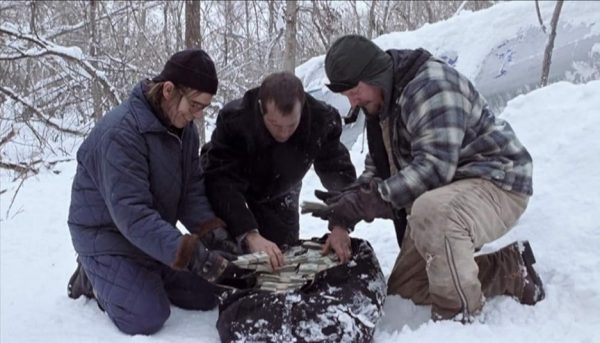
Sam Raimi is a director who is better known for his horror and superhero movie work than he is for making crime films, which is a shame because his lone foray into the genre, A Simple Plan, is terrific.
Adapted from Scott B. Smith’s 1993 novel of the same name (Smith also serves as the co-writer of the film’s script), A Simple Plan is the bleak story of a group of rural Minnesotans, brothers Hank and Jacob Mitchell (Bill Paxton and Billy Bob Thornton), their friend Lou (Brent Briscoe), and Hank’s wife Sarah (Bridget Fonda) who find $4.4 million in a crashed plane. The vast amount of money irrevocably changes their relationships with one another, leading to tragic results.
Coming out in 1998, the film was constantly compared with the Coen Brothers Fargo, a noir movie in a similar setting released two years earlier to justifiable critical acclaim. This comparison is a massive disservice to A Simple Plan, because apart from sharing a setting the two films couldn’t be any more different tonally.
While critics gave A Simple Plan positive reviews, citing Raimi’s seamless transition into making a movie that was the opposite of his idiosyncratic Evil Dead style and Bill Paxton’s performance as Hank as markers of its overall quality, the movie didn’t receive an extensive enough marketing campaign and disappeared at the box office.
Although A Simple Plan has received something akin to a second life on its DVD release, it’s still a film which has gone criminally (no pun intended) under the radar relative to its intelligent plotting, sharp characterisation, and distinct sense of tension.
The Guard (2011)
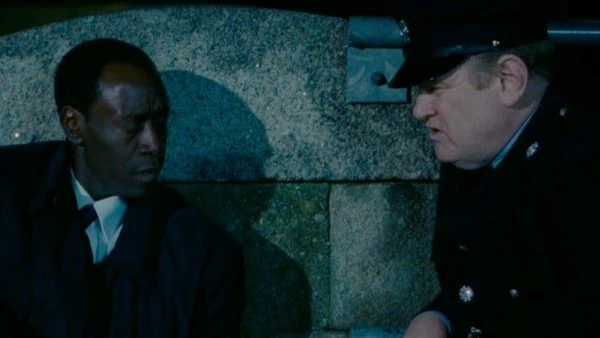
John Michael McDonagh’s The Guard is a raucously witty, crime-comedy that, although a box office success relative to its small budget and receiving critical acclaim, gets overlooked simply because the shadow of its director’s more prominent brother Martin looms large.
Narratively The Guard is a classic fish out of water dark comedy. Wendell Everett (Don Cheadle) is an intelligent, meticulous FBI agent who is brought to County Galway in Ireland to investigate a large scale drug smuggling operation headed by Francis Sheehy-Skeffington (Liam Cunningham). Everett is forced to cooperate with local law enforcement, led by Sergeant Gerry Boyle (Brendan Gleeson) an eccentric, cynical, politically incorrect cop, whose methods are equal parts Chief Wiggum and Frank Drebin leading to him and Everett constantly clashing.
Gleeson and Cheadle’s comedic chemistry is sensational, underpinned by McDonagh’s caustic, richly quotable script that manages to combine humour with an intriguing plot at the same time. The reason it’s underrated is that it doesn’t get as readily brought up in the same conversations as other independent comedies such as Shaun of the Dead, Hot Fuzz, In Bruges, and Four Lions from roughly the same period even though its quality makes it more than worthy to be talked about with that level of regard.
Deep Cover (1992)
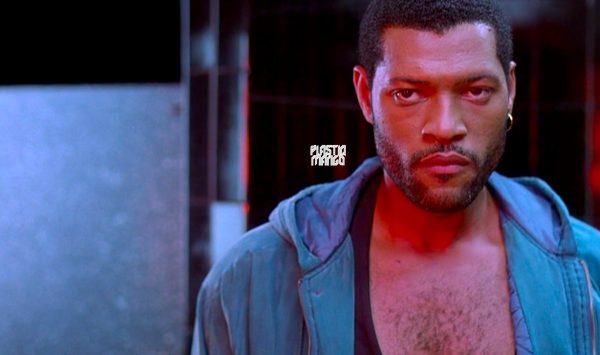
Bill Duke’s Deep Cover is a crime movie that is frustratingly more well known for its soundtrack (the title track was Snoop Dogg’s debut single) than it is for being an excellent, neat and tidy thriller. Hard boiled and despondent, Deep Cover is the story of Russell Stevens Jr. (Laurence Fishburne) a by-the-book Cincinnati policeman who is recruited by a DEA Agent (Charles Martin Smith) to go undercover and infiltrate a California based drug cartel. As Russell gets deeper into the case his boundaries as a cop are pushed to the limit.
Released in 1992, like One False Move it came out during a glut of excellent crime films that were playing in cinemas at the same time, and while it grossed $16 million from an $8 million budget, it still found itself overshadowed. Taking cues from Sidney Lumet, Samuel Fuller, and Michael Mann stylistically, this is a procedural thriller that unapologetically looks at the corruption surrounding the war on drugs in the way that Serpico did twenty years before.
Although Laurence Fishburne has spent the better part of the last two and half decades phoning it in more often than not (Hannibal was a rare exception), Deep Cover is a resounding reminder that there was a time when he was one of the most exciting young actors of his generation, and although he hasn’t had an unsuccessful career by any means, he’s nowhere near the Newman, Hoffman, Pacino, De Niro, Hackman, Denzel Washington, Daniel Day Lewis tier, when he should be.
Angel Heart (1987)

Alan Parker’s Angel Heart is a film that was practically designed in a lab to appeal to me. It’s a mystery, noir, southern gothic, horror, and crime film all rolled into one, starring two of my favourite actors: before having a face like trampled silly putty Mickey Rourke, and Robert De Niro before the real life horrors of starring in family comedies.
Set in the 1950s, the film follows Harry Angel (Mickey Rourke), a private detective in New York City, hired by Louis Cyphere (Robert De Niro), a mysterious businessman, to find a missing singer called Johnny Favourite. Harry’s investigation takes him all the way to Louisiana on Johnny Favourite’s trail, with Harry’s simple missing persons case unravelling into an even bigger mystery with links to voodoo and the occult.
Parker’s tensely claustrophobic direction, when combined with Michael Seresin’s stylishly monochromatic cinematography and Trevor Jones’s eerie soundtrack makes for a viewing experience that you won’t soon forget.
Rourke and De Niro are electric when they’re on screen together, with Parker describing their scenes as being akin to two prize fighters sparring with one another.
Unfortunately for everyone involved Angel Heart was a box office failure in the United States, due to its darkly grim noirish atmosphere and adult storytelling being out of step with what American audiences wanted to see at that time. Parker also faced an uphill struggle with the MPAA who initially rated the film an X (a certificate used for pornography that prevents films with said certificate being distributed by mainstream cinemas), because of an explicit sex scene, with the board’s decision hurting the film’s marketing.
Since being released on video back in the late 80s it’s developed a dedicated cult following, and has gained a new audience amongst another generation of viewers because it’s been cited by Christopher Nolan as a major influence on Memento and by game designer Jane Jensen, whose acclaimed Gabriel Knight point and click adventure game owes Parker’s film a great debt stylistically.
Election (2005)
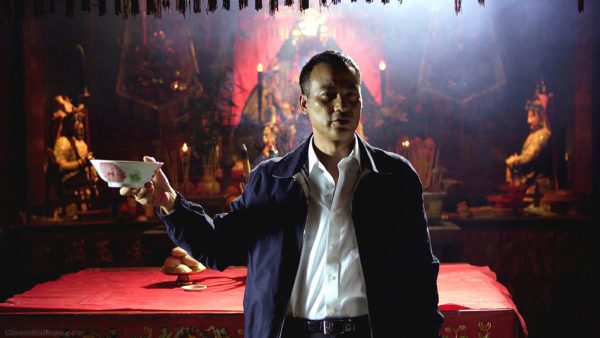
Johnnie To’s work goes under the radar amongst general audiences, because his style is less bombastic (Exiled notwithstanding) than other more prominent Hong Kong directors from the same period such as John Woo, Ringo Lam, Tsui Hark, and Sammo Hung and unlike a lot of his contemporaries never went over to work in America.
Election is a stripped back, brutal look at a mafia power struggle instigated by Lok (Simon Yam) and Big D (Tony Leung Ka-Fai) as they vie to become leader of the Hong Kong Triad. Lok is quiet, patient, calculating, and even tempered whereas Big D is impatient, irascible, and loud, with their contrasting leadership styles being fascinating to watch.
Although it’s been called a Hong Kong Goodfellas I would describe Election as being more akin to David Chase’s The Sopranos in its unglamorous depiction of the mafia lifestyle, and the spiritual emptiness the characters feel despite their immense wealth and power.
Election is a much more low key effort than what many western fans of Hong Kong movies have come to expect, and although it isn’t devoid of action, the violence that is presented by To is swift, messy, and vicious – a far cry from the gun-fu that you can find in a John Woo movie. It’s the quiet tone that has prevented it from finding a bigger audience which a film of its quality should have, however the audience it has found in the west is vocal in its praise, with Quentin Tarantino calling it his favourite movie of 2005.
If you want to experience a difference side of Hong Kong crime cinema, then Election is the best possible starting point, just go in expecting Z rather than Hard Boiled.
King of New York (1990)
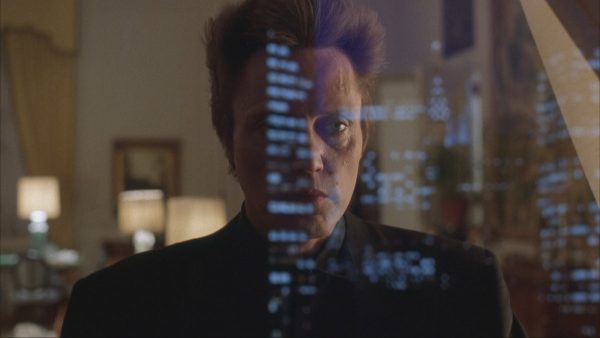
Abel Ferrara is a director who is known for many things, but holding back is not one of them, as shown by the severely overlooked King of New York, a cult film so cool that Biggie Smalls adopted the moniker the black Frank White as a nod to its protagonist.
Frank White (Christopher Walken) is a recently released drug kingpin, who wants to reclaim the New York streets he once ruled with an iron fist. What makes Frank White different from Tony Montana however, is that he wants to use his illicit profits to build a hospital and give back to the local community. Standing in Frank’s way is a relentless police detective (David Caruso), and other local drug kingpins who want his territory for themselves.
The film features a hardboiled script by Nicholas St. John and a ridiculously stacked supporting cast including Laurence Fishburne in a career defining role as Frank’s right hand man Jimmy Jump, as well as early on screen appearances from actors that went on to be household names such as Giancarlo Esposito, Wesley Snipes, Steve Buscemi, and Harold Perrineau.
The film disappeared at the box office due to a limited theatrical roll out, it’s controversial subject matter (especially by having a sympathetic drug kingpin as the protagonist at the height of the War On Drugs – one of the costliest, self-defeating, and needlessly cruel policies in the history of post-World War II American politics), graphic violence that forced Ferrara to re-cut multiple sequences for a theatrical release, downbeat ending, and an unconventional tone made it a tough proposition to market.
Like numerous other cult movies from previous decades, King of New York gained a new found appreciation from musicians, namely hip hop. The movie’s themes and imagery caught the attention of a generation of rappers, just as Brian De Palma’s Scarface did, and even if it’s not mentioned by name explicitly you can hear and see it in the music of various rappers from Ghostface Killah, Raekwon, Nas, Jadakiss, and Jay Z, to Roc Marciano, Pusha T, Freddie Gibbs, Boldy James, Westside Gunn, and Conway The Machine – all of whom have been enamoured by its aesthetic.
State of Grace (1990)
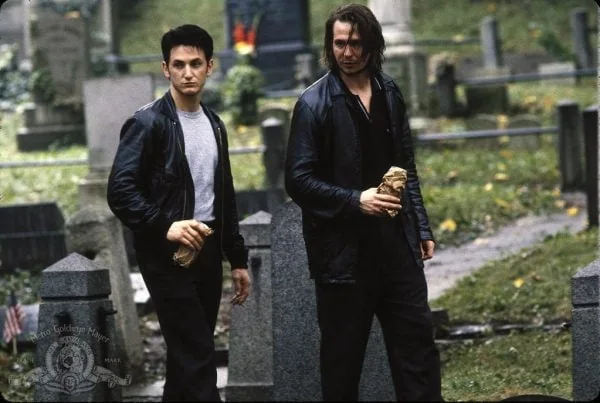
Phil Joanou’s State of Grace is a moody, intense, action packed drama about the Irish-American mafia that boasts an all-star cast (Sean Penn, Gary Oldman, Robin Wright, Ed Harris, and John Turturro), an Ennio Morricone score, and beautifully atmospheric cinematography by Jordan Cronenwerth that maximises the seedy beauty of the movie’s New York City setting.
Terry Noonan (Sean Penn) is an undercover cop, returning to his old neighbourhood of Hell’s Kitchen a decade later. Terry is on an assignment to bring down the Flannery family run by patriarch Frank (Ed Harris) , a small Irish-American criminal outfit whose uneasy dynamic with the much larger Italian American mafia is becoming more and more strained.
The problem is that Terry has far too much personal loyalty to the Flannerys and he can’t bring himself to bring down his childhood best friend and Frank’s young brother Jackie (Gary Oldman) who is deeply involved in Frank’s business, and his first love Kathleen (Robin Wright) Frank’s sister, who’s moved uptown due to despising her older brother and everything he represents.
State of Grace is a crime movie so tense that your stomach is in knots as you continue to watch it. In addition to that nervous intensity it’s also a melancholic tragedy, as Terry Noonan as protagonist is forced to come face to face with the childhood regrets that he ran away to Boston to escape from, and the blurring of his personal and professional life, culminating in the prospect of having to put his closest friend Jackie in jail.
The acting and writing is top notch, and as great as the other actors are in their respective parts, Gary Oldman steals the show in every scene he’s in, giving a performance that’s comparable to De Niro’s in Mean Streets. In particular the final shootout sequence is an action set piece worthy of Peckinpah and Scorsese, with Joanou cutting between the shootout itself and the New York St Patrick’s Day Parade being the movie’s defining sequence.
State of Grace is a movie that had everything going for it except timing, released the same week as Martin Scorsese’s masterpiece Goodfellas, it was understandably buried at the box office by it, grossing only $1.9 million despite the film receiving plaudits from critics for its writing as well as Oldman and Penn’s performances.
If you’re into 90s American crime movies and haven’t seen State of Grace yet, you owe it to yourself to rectify that mistake immediately.
What are your thoughts on these picks? Which crime movies do you think are worthy of inclusion? Let us know your own recommendations on our social channels @FlickeringMyth…
Simon Thompson