Just in case you missed them, you need to check out these recent gems…
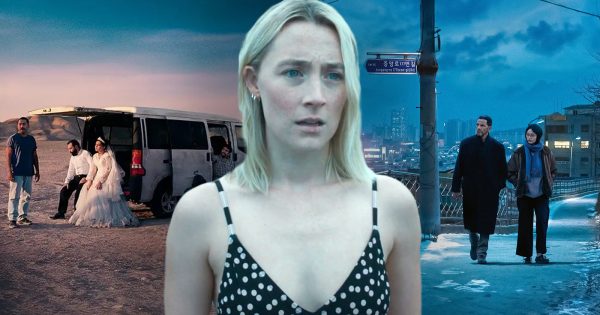
Every year, countless films are released, and it’s inevitable that some slip under the radar. Even those that garner critical acclaim across the festival season might find that by the time the release hits, there isn’t the widespread buzz the film deserves.
When it comes to world cinema, it requires a lot of buzz to catch the eye of viewers in the US and UK, and usually that can come with thanks to making headwaves at the Oscars (such as Parasite). Not every film gets its due at the Oscars, though.
Boutique physical media labels and streamers do their best to highlight great world cinema and indie gems, and here at Flickering Myth, we’re gonna give you some insights too. Here are eight unmissable recent gems you need to see (most of which are on Mubi)…
My Father’s Shadow
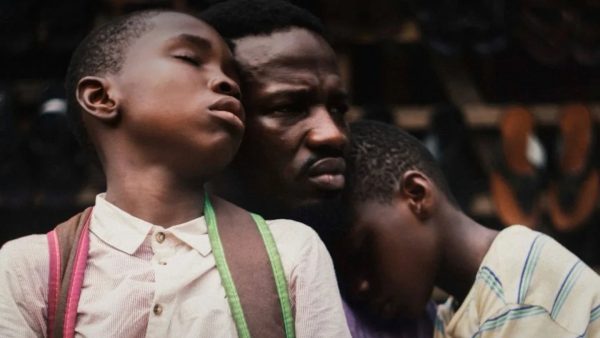
Partly biographical, Akinola Davies Jr’s feature debut picked up a Bafta and should lure some attention in the UK, but this is a film that deserves to travel far and wide. Two young boys out in a small village in Nigeria go on a journey to Lagos with their estranged father. It becomes a sensory overload that excites, dazzles, and occasionally terrifies the boys as they reconnect with a father who leaves for long stretches to work and provide.
It’s all set among political and democratic upheaval in 1993, Davies doesn’t spoonfeed you, but throws you into a time and place that’s earthy and authentic (with a support cast made of non-actors). The film lives and breathes. The odyssey is kinetic and eye-popping, whilst the film has heartfelt moments of reflective drama as the father struggles to contend with his family, his work, and his country. Sope Dirisu’s performance is incredible. Davies’ debut is an assured and mesmerising work that manages to hit hard and leave a lasting impression.
Winter in Sokcho
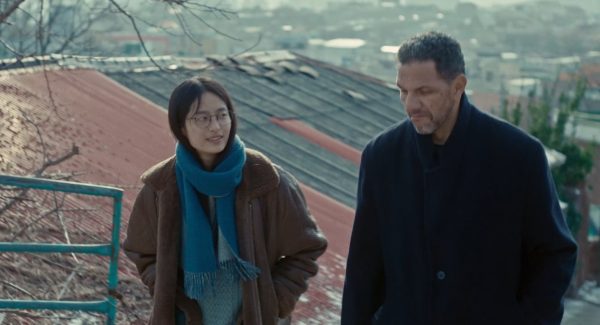
This contemplative character drama set in a snowy seaside town in Korea sees a young girl (who is half French and has never met her father), pulled out of listlessness by the arrival of an idiosyncratic French artist. He intrigues her, whilst offering a tenuous but sometimes compelling link to half of her ancestry she barely understands (besides speaking some of the language).
Koya Kamura’s film is a patient slow burn that rests on the unorthodox relationship, whilst the wintry settings look stunning on screen.
It Was Just an Accident
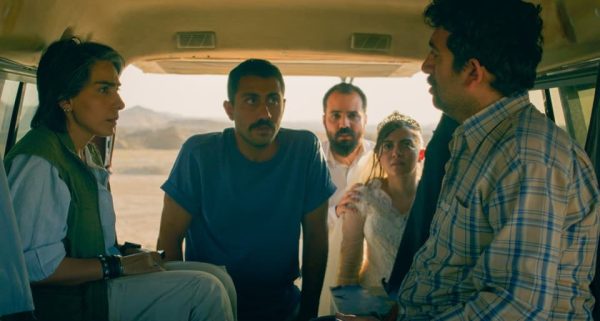
The background of this film and its director, Jafar Panahi, are almost as enthralling as the film. Panahi has laced much of his (Iranian) cinema with social and political commentary, which has seen him imprisoned as well as needing to shoot large sections of his films at high risk and guerrilla style.
Here, a group of loosely connected people comes together after Vahid kidnaps a man he believes is his former torturer. Not 100% sure, he brings together other former victims to confirm whether the man is indeed a former government interrogator, nicknamed Peg-Leg. Despite dark and very real themes, the film has a macabre, occasionally absurd humour that acts as a much-needed release valve among the moments of gruelling post-trauma and tension. It’s a superb film in which Panahi casts mostly non-actors, who are all phenomenal.
Sorry, Baby

Eva Victor’s feature debut is a raw and quietly powerful drama where she adeptly juggles writing, directing, and starring. The film’s complete blank at the Oscars is perhaps the great travesty of the event.
Victor’s film is loosely based on her own experiences and really deftly captures the complexity of understanding and dealing with trauma. The honesty bleeds on screen, giving the film an authenticity and nuance often lacking in American dramas. The film looks great, too, with some simple but beautiful framing, and Victor is always sure not to overcomplicate her blocking or become obtrusive. As for her performance? Beautifully understated.
No Other Choice

Now, it may seem odd to consider the latest film from Park Chan-wook slightly under the radar, but this is a director, and yet another of his films that drew a blank at the Oscars, despite widespread critical acclaim. The master director’s trademark style dazzles as always, and the film has a streak of his dark comedy.
Beneath the thrills, the film bites with satire and insightful social commentary. It’s all anchored by a tour-de-force performance by Lee Byung-hun as the comfortable family man whose life is upended by redundancy, thrust back into the ruthlessly competitive job market.
Monica
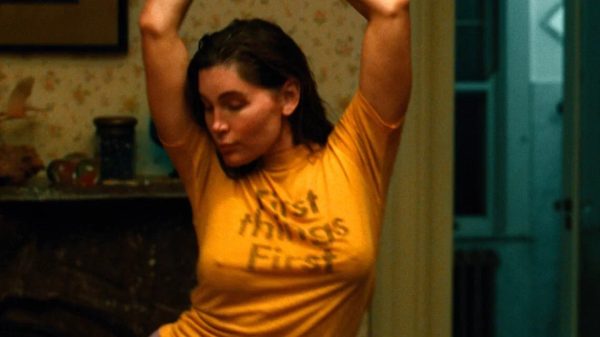
Trace Lysette stars as Monica, a trans woman who returns to her old home to help her estranged, dementia suffering mother. A mother who effectively disowned her but has since largely forgotten about Monica’s transition. As Monica reconnects with her sister and her family, she has to contend with a fractured relationship with her mother, which she knows probably comes without resolution.
Finding peace with that broken relationship must come from Monica herself, now that her mother is beyond the ability to cognitively mend the fracture and seek forgiveness. Lysette’s performance is superb, whilst the movie looks stunning, shot on film and in a portrait-esque narrow frame.
The Outrun

Based on Amy Liprot’s memoir, The Outrun has Saoirse Ronan leading a film that could have opted to take a conventional approach to its style and structure. As it is, Nora Fingscheidt takes creative risks that alienated some critics.
The film flits between intense and reflective in its depiction of addiction and recovery. Ronan, as we’ve come to expect, is all in with a stunning performance that never feels overplayed to the point of caricature.
La Cocina
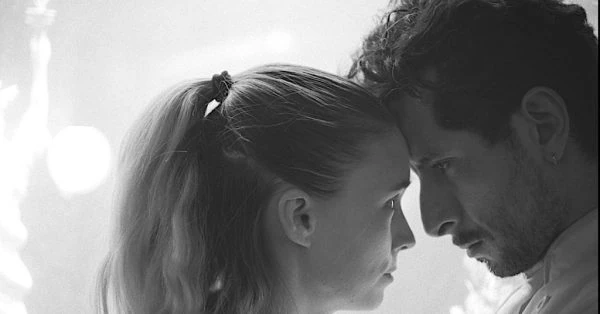
Set in the heat of a fiercely intense New York kitchen, with a motley crew of staff, many of whom are illegals. The film begins with missing money that becomes a lingering background point among plenty of inner drama, from brawling chefs to Rooney Mara’s waitress needing an abortion after a tryst with one of the chefs.
Filmed predominantly in black and white in a (narrow) 1.33:1 aspect ratio, the film occasionally flips to one-toned coloured frames (blue and green) and widens to 185 a couple of times too. It looks great with the film capturing the frenetic kitchens in both dreamy and nightmarish style. This isn’t a wholly gritty (pardon the pun) kitchen sink drama, with director Alonso Ruizpalacios unafraid to have the odd flourish of magical realism and quietly philosophical moments. Mara is great, but the star turn is Raul Briones as the fiery chef and would-be father.
What’s your favourite underseen gem from recent years? Let us know your own recommendations on our socials @FlickeringMyth…
Tom Jolliffe