Lee Cronin’s The Mummy, 2026.
Written and Directed by Lee Cronin.
Starring Jack Reynor, Laia Costa, May Calamawy, Natalie Grace, Shylo Molina, Billie Roy, Veronica Falcón, Hayat Kamille, May Elghety, Emily Mitchell, Lily Sullivan.
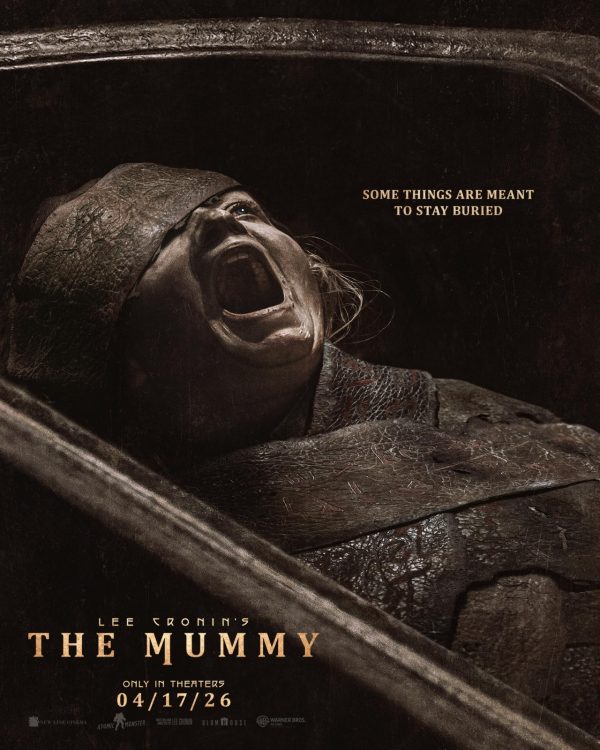
SYNOPSIS:
The young daughter of a journalist disappears into the desert without a trace. Eight years later, the broken family is shocked when she is returned to them, as what should be a joyful reunion turns into a living nightmare.
Bold yet flawed, Lee Cronin’s The Mummy graduates the writer/director from working within Sam Raimi’s most famous creation (Evil Dead Rise) to a bold take on something else, one step closer in his seeming quest to stake the claim as the heir to that celebrated horror maestro. Holding it back from reaching that high is that this particular fresh take on mummification (which, needs to be said, is also taking inspiration from the Deadites as much as it is The Exorcist) is too narratively ambitious, frequently throwing the momentum and pacing sideways until everything smoothly comes together for a third act bombardment of demented thrills elevated by a commitment to detailed practical effects and appropriately disgusting makeup work with some ingenious brutality that cleverly plays a part in preventing a family and a missing persons investigator from dealing with sinister behavior that has reached a fever pitch.
Characters aren’t merely trying to stay alive, but also temporarily offset gnarly wounds in equally exciting, gross ways so they can figuratively fight back (this is a roundabout way of mentioning that something involving a finger and what part of the human body it goes into, for reasons that won’t be spoiled, is so pleasantly and inventively mean-spirited in a manner that demonstrates the resourcefulness of those fending for their lives). Whatever issues there are with the film’s stop-and-start pacing, the extended payoff more than makes up for it.
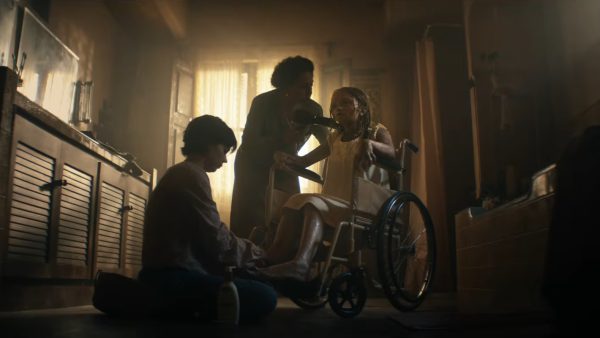
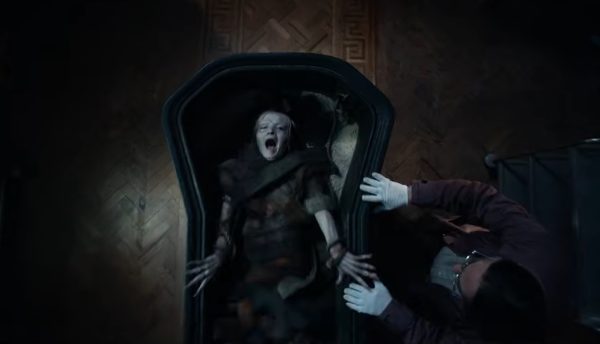
Part of that setup includes Jack Reynor’s TV reporter correspondent Charlie Cannon operating out of Egypt with daughter Katie (Emily Mitchell), son Sebastian (Shylo Molina), and expecting wife Larissa (Laia Costa), a family pushed over to New York with an eight-year jump following the disappearance of their young girl, for her to then be discovered inexplicably inside a mysterious sarcophagus that went down with the plane transporting it.
One feels the various gears and plates spinning to get this premise in motion, but nevertheless, once Katie (now played by newcomer Natalie Grace, excelling at mugging hideously for the camera and the various contortionist, physical aspects of the performance that follow) is back in the family, which now includes eight-year-old sister Maud (Billie Roy), something isn’t right, as she is mostly catatonic with several indentations, marks, and scratches across her face, arms, and legs. She is as disheveled and unkempt as one would expect for someone being locked away for eight years, in serious need of cleaning, which typically goes awry and is mined for more wince-inducing body horror. Katie also has physical outbursts, such as headbutting Grandma Carmen (Veronica Falcón) whenever she invokes God. As expected, the parents and siblings are also targets for terror.
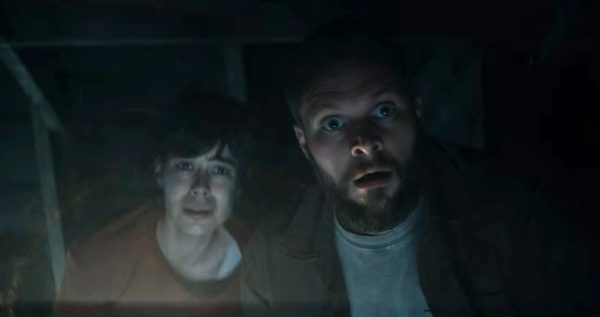
Also involved is Detective Dalia Zaki (May Calamawy), who is unable to find Katie when she first goes missing, and returns to the story once she is found to do some more digging in Cairo. The problem is that Dalia isn’t playing much of a role, with the film often interrupting the escalating tension (some scenes are jarringly cut off, transitioning to her) to observe her gradually discovering more information that, to be honest, mostly just amounts to the fact that the girl was mummified. Despite that mummification, as previously mentioned, the horror that ensues feels more like it’s out of The Exorcist playbook, which is chilling if undeniably familiar and elevated by a sick personality that sometimes borders on comical. It’s the how and why that hold much more curiosity, admittedly with some imaginative reasoning in blending multiple genres of supernatural horror.
Dalia’s now deceased superior had a dismal track record of finding missing persons dead or alive (not necessarily his fault, although he is awfully combative and directly assumes wrongdoing to families such as the Cannons), which has given her ample and admirable motivation to do better, except that it isn’t explored as a characteristic with depth here. She mostly exists for lengthy scenes in which she stumbles upon information that is relayed to the family. With that in mind, it’s also as if Lee Cronin was a bit too eager or overconfident that marrying gross-out body-horror with a family falling apart to a detective procedural would cohere structurally.
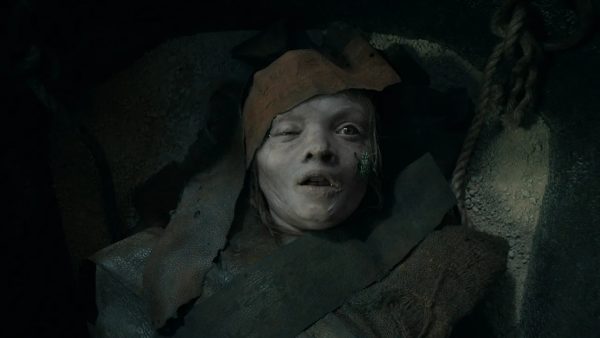
The film is much more dramatically engaging when focusing on the family, whether it be Charlie’s guilt and desperation for answers as a means to absolve them of the former, or Larissa’s misguided insistence that they have the daughter back and that all they need to do is look after her until she snaps out of it. It’s also worth mentioning that Charlie also gets in on the investigative action, noticing that the bandages Katie was wrapped in have an ancient language plastered across them. There is also a refreshing feel that Lee Cronin’s The Mummy isn’t overly concerned with thematic resonance or emotional profundity. Again, it’s overlong and overly ambitious, but when the filmmaker is doing what he is best at, which is impersonating Sam Raimi, no easy feat to begin with, it’s a cruel delight.
Flickering Myth Rating – Film: ★ ★ ★ / Movie: ★ ★ ★
Robert Kojder