Mercy, 2026.
Directed by Timur Bekmambetov.
Starring Chris Pratt, Rebecca Ferguson, Annabelle Wallis, Kylie Rogers, Kali Reis, Rafi Gavron, Chris Sullivan, Kenneth Choi, Jeff Pierre, Jamie McBride, Mark Daneri, Konstantin Podprugin, Ross John Gosla, Philicia Saunders, and Haydn Dalton.
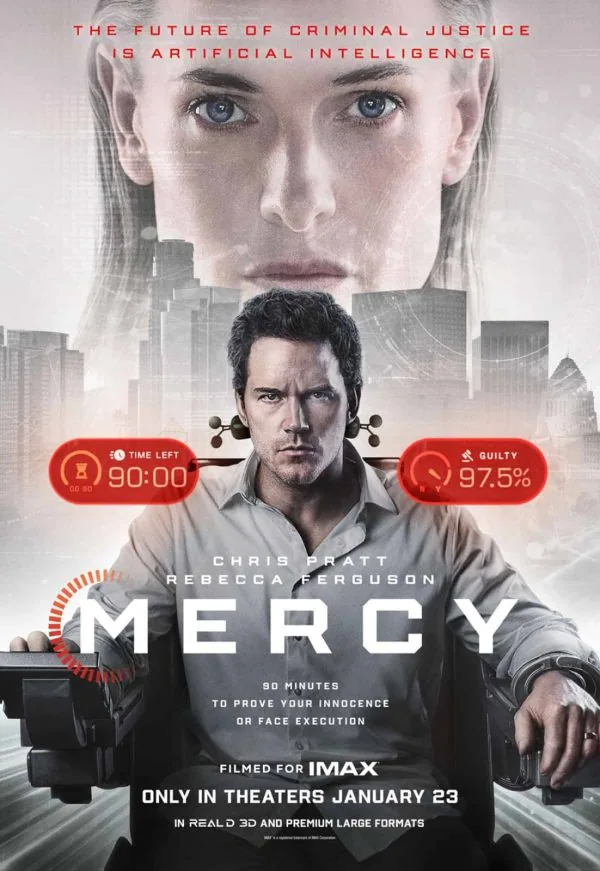
SYNOPSIS:
In the near future, a detective stands on trial accused of murdering his wife. He has 90 minutes to prove his innocence to the advanced A.I. Judge he once championed, before it determines his fate.

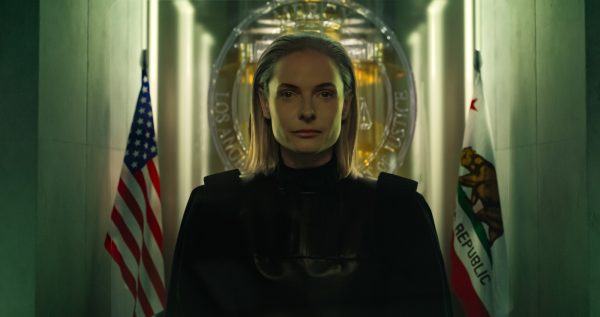
It is the near future. Los Angeles is a crime-ridden hellhole that law enforcement can’t contain without setting up red zone quarantines and a brute force division of officers to keep them in line, even if it means raining down punishment. An AI judge named Maddox (Rebecca Ferguson) is now judge, jury, and executioner for severe crimes, allowing each individual 90 minutes to prove their innocence. This is screen-life guru director Timur Bekmambetov’s Mercy, and its greatest twist is that the screenplay wasn’t written by Donald Trump.
That odorous recognition belongs to screenwriter Marco van Belle, seemingly embracing several right-wing talking points as a backdrop for the admittedly entertaining trash that unfolds here. Mercy is not good, even if one takes personal opinions about political commentary out of the equation, but it does serve as a solid litmus test for whether someone can enjoy a piece of art that is diametrically opposed to nearly everything they believe in. Some are going to come down hard on this film, especially since it stars Chris Pratt. One can’t blame them. However, Timur Bekmambetov is in his element, crafting another propulsive whodunit suspenser from screen footage (ranging from doorbell camera footage, phone videos, social media, LAPD bodycam recordings, drone feeds, and more) that is distinct and kinetic enough to work as a morally repugnant thrill ride.
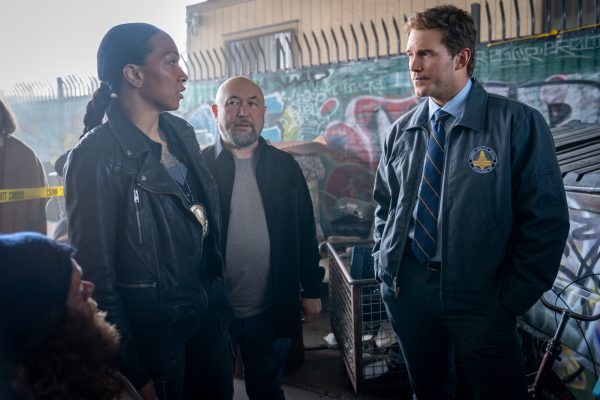
Whether intentional or not, even Chris Pratt’s presence in the hot seat comes across as inspired; the Guardians of the Galaxy star was once beloved until increased skepticism over his character stemming from possible political beliefs and allegiances to other personal controversies (not to mention some disappointing work as an actor as of late). Here, he is ICE, or rather, MERCY agent Chris Raven (seriously? Was Marco watching old ECW wrestling shows when coming up with these character names), 96% suspected of murdering his wife in a passion of crime. Chris had been struggling with alcoholism following some traumatizing moments of loss on the job, and routinely arguing with his wife, Nicole (Annabelle Wallis). There were outbursts of anger caught on various cameras, he had fallen off the wagon during sobriety, and his DNA is all over the crime scene.
The goal is simple: with access to nearly any device storing data on the AI’s universal cloud, Chris can request an investigation into anything he wants in his quest to lower his probability of guilt to 92%, the threshold for avoiding execution. Yes, that means this film is also pro-privacy invasion by the end. Even when that aspect brings him face-to-face with the fact that he doesn’t know everything about his wife and daughter, Britt (Kylie Rogers), the screenplay doesn’t have the smarts to pull on that thread and interrogate how much we can actually know our loved ones, even in a digital age with online footprints.
At one point, Chris agrees with fellow officer Jacqueline Diallo (Kali Reis) that this looks like a crime of passion, even if admitting it might implicate him further, as it is, theoretically, the best angle for seeking the truth. Other intriguing psychological ideas pop up, but the film isn’t interested in them or exploring the ongoing drama within this family and how it correlates to larger discussions about the Internet, online privacy, law enforcement behavior, or much of anything. It’s all in service of pushing the story into a series of set pieces featuring people in Chris’ sphere, including his AA sponsor Robert (Chris Sullivan), who’s chasing anyone who could be a suspect or hiding information not connected to the cloud.
Credit to Timur Bekmambetov and Marco van Belle, as the truth and how it was enacted is absurdly methodical, accounting for avoiding just about everything that could have possibly caught the actual culprit on camera. The actual mystery component is predictable, but the execution is more than enough to remind us why the filmmaker consistently excels in this sub-genre. Concerning, though, is that it’s all building to a plea for coexistence between humans and AIs, and that we make mistakes equally.

Even accounting for mistakes that Maddox may or may not make here, this is also a film that thinks so highly of AI compared to the mess it currently is; this is not to say that Rebecca Ferguson’s performance should be replaced by actual AI, but maybe an inside joke of six fingers or something glitchy reminding viewers that it is not real would have kept up the illusion. As is, even with the intentionally robotic delivery, the desired effect isn’t there, and it feels as if we are watching two humans converse.
As stupidly entertaining as Mercy occasionally is, it squanders interesting ideas while all too comfortably embracing moral ugliness. Humans definitely made a mistake here. That doesn’t absolve AI from being a worthless stain on modern society and an excuse to push for coexistence.
Flickering Myth Rating – Film: ★ / Movie: ★ ★ ★
Robert Kojder