Project Hail Mary, 2026.
Directed by Phil Lord and Chris Miller.
Starring Ryan Gosling, James Ortiz, Sandra Hüller, Lionel Boyce, Ken Leung, Milana Vayntrub, Liz Kingsman, Orion Lee, Priya Kansara, Aaron Neil, and Annelle Olaleye.
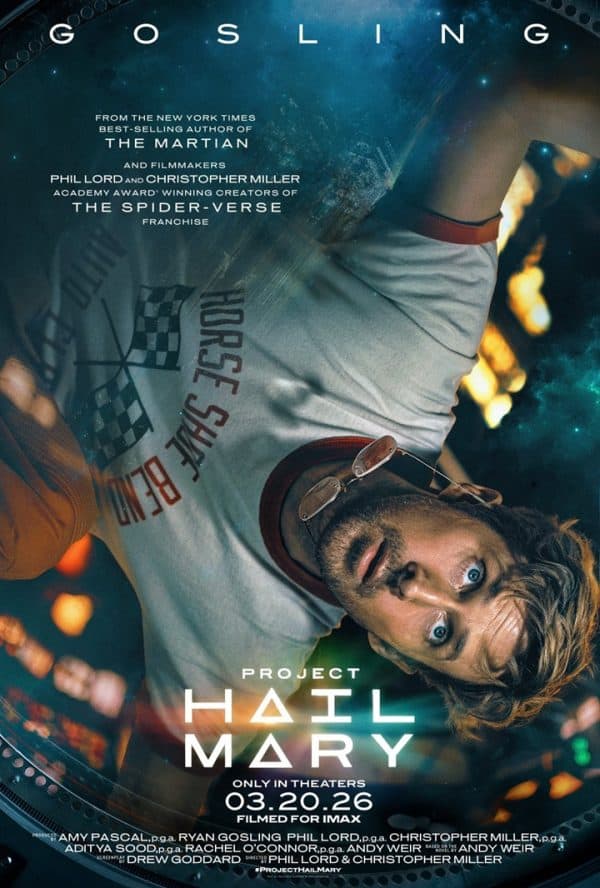
SYNOPSIS:
Science teacher Ryland Grace wakes up alone on a spaceship light-years from Earth. As his memory returns, he uncovers a mission to stop a mysterious substance killing the sun, and save Earth. An unexpected friendship may be the key.

Sometimes, the only person who can save the world, and true bravery, comes from someone who isn’t afraid to piss everyone off and relentlessly pursue their scientific theories.
Project Hail Mary is a Hail Mary of an adaptation from directors Phil Lord and Chris Miller, a duo who have always known how to combine heart and humor to maximum effect, whether in animation (The LEGO Movie and writers of, as of right now, an incomplete Spider-Verse trilogy) or live-action (21 Jump Street, though that one is more of a showcase for their comedic skills). It should go without saying that this sci-fi space adventure is their most ambitious project yet, with the filmmakers touting they finished it without ever resorting to green screen (something I’m willing to believe, wouldn’t be surprised if aspects of that were false, and either way, would make for one of the most remarkably revealing sets of Blu-ray special features in ages).
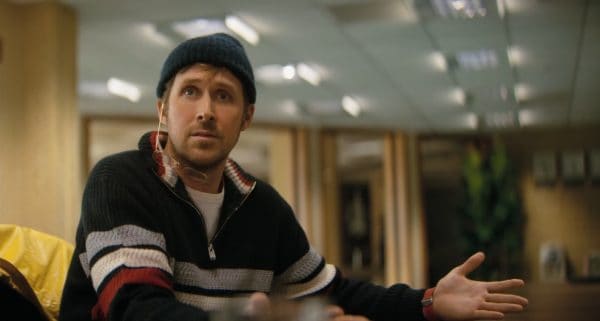
Edited by Joel Negron, the film based on Andy Weir’s award-winning novel (who also wrote The Martian which was adapted by Drew Goddard, coincidently and fittingly the screenwriter here) blends together scenes from before and during the titular mission of Ryan Gosling’s middle school science teacher, Ryland Grace, to save Earth from an energy consuming substance dubbed Astrophage, which is dimming both the Sun and Venus in a straight line, a major problem for our planet considering the former is a necessity and that, within 30 years, twill have resulted in unbearably frigid temperatures.
Without getting into the specifics of what this discovery needs from that star and planet, what can be said is that the line between them is referred to as the Petrova Line. He is approached by the government’s Eva Stratt (played by Sandra Hüller, with the required chilliness of someone who has to shed some humanity to do what this difficult job demands) about an unorthodox approach to biology and certain theories, with that mind and expertise in Astrophage, persistently believed to be useful here.

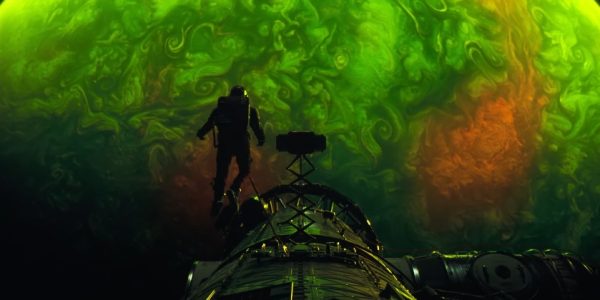
The other collection of scenes involves Grace awakening on a ship fueled by Astrophage (yes, it can also be used as a resource) with amnesia and a dead crew (two bodies), concerned, confused, and a bit too comedic about the situation (thankfully this overt goofiness dies down soon enough), trying to figure out what the hell is happening and what he has been sent into space to do. Whether or not the novel is also structured like this, pinging back and forth between points in time, eschewing chronology is a smart and rewarding creative choice that allows an emotional arc with tantalizing mystery to form about Grace in a manner that feels fresh while offering a beautiful message for dark times in that even a seemingly average person has what it takes to not only make a difference, but exhibit courage they were convinced didn’t exist within themselves.
It’s also an effective storytelling approach that quickly gets to the heart of the adventure while sporadically revealing more relatable aspects of Grace and who he was before this mission started, which seamlessly complements the development of his character in the present.
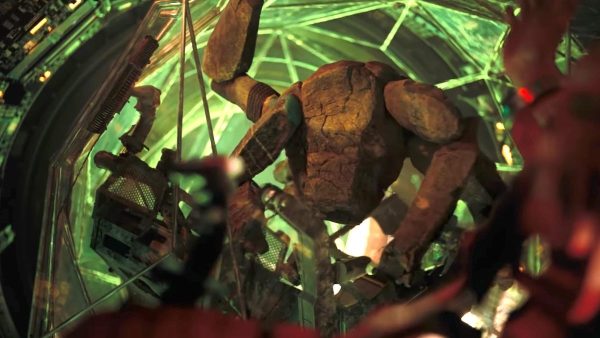
That core comes to involve an encounter with an alien ship, with the introduction of a rock-based extra-terrestrial shaped and configured like a spider (in presentation, it appears to be an elaborately detailed puppet that comes to be voiced with empathy, sensitivity, and quality, fish-out-of-water friendliness by James Ortiz in a performance serving as yet another reminder that most awards bodies, including one time a part of, need to rethink their stance on qualification).
Since there is a lot happening here, and the alien isn’t properly introduced until almost an hour in (something that could be a slight hangup for some, although I implore anyone feeling dissuaded to not be, and to stick with it), all that will be mentioned is that he comes from his own planet aboard a ship that has also had its crew killed by someone or something, while trying to save their planet through exploration and getting to the root cause of the Petrova Line dilemma. He also uses his technology to connect a cave-like tunnel bridge to Grace’s ship, placing himself inside glass rolling balls, which are simple enough to maneuver while protecting him from any atmospheric complications.
However, all anyone needs to know is that, in what often comes across as Steven Spielbergian Amblin movie magic, the ensuing playful bonding and connection (that sees everything from Grace using technology to create methods of communication, to teaching one another about their planets, sharing personal details about their lives, and watching the entire Rocky series after giving that alien that name) is endearing, touching, and gives Project Hail Mary the heart and soul to go along with its spectacular audiovisual ambition. In a time of depressing division in the real world, this is also a film about two species putting their collective smarts to work toward a common goal, and often coming to one another’s rescue whenever the mission endangers either of them. Perhaps above all else, this is a powerful story about the bravery and courage a strong friendship can instill in any of us, even in the most epic and highest-stakes times.
Much of this is accentuated by a heartstring-pulling score from Daniel Pemberton that never feels emotionally manipulative, since the script and filmmaking convey this friendship through sheer skill, expressiveness (human and puppet), and technical craftsmanship. During the previously mentioned perilous sequences, that score continues to match the scope and intensity of what the characters are trying to accomplish.

The only small bungalow here is a somewhat drawn-out ending that possibly could have been slightly condensed. That’s also not to say the ending isn’t extraordinarily moving, because it is. There just comes a point where it feels as if the film should be wrapping up with a bit more momentum, and that the peak of the motion and action has already been reached. The 156-minute running time also likely contributes, though for the most part it earns that length. The setup might also come across as too excessive, but it is necessary to translate this heady fictional science into a simple picture of what is happening and the mission’s goal.
These are small gripes that don’t take away from the uplifting, astonishing, stunning story and practical effects of Project Hail Mary. Phil Lord and Chris Miller have demonstrated that, regardless of medium, genre, or budget, they have a gravitational pull to the heart and endless wonder. There is a centerpiece sequence here that is utterly spellbinding and should serve as a foot through the throat of any pro-AI snake-oil salesman. That garbage isn’t coming anywhere close to replicating the gargantuan spirit, emotion, and awe-inspiring marvel this film achieves.
Flickering Myth Rating – Film: ★ ★ ★ ★ / Movie: ★ ★ ★ ★
Robert Kojder