Casey Chong with seven great portrayals of Frankenstein’s Monster…
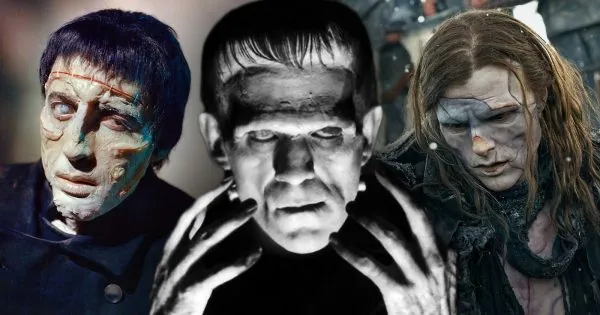
Mary Shelley’s 1818 novel, Frankenstein; or, The Modern Prometheus, has inspired countless adaptations, with hundreds of movies dating way back to 1910. The story of how an obsessive Dr. Frankenstein is willing to go against nature by playing God to bring a corpse to life is a goldmine for filmmakers to explore various themes beyond the horror genre – and of course, no Frankenstein movie would be complete without the iconic Creature. And so, to coincide with the release of Maggie Gyllenhaal’s The Bride! [read our review here], we have curated a list of seven great movie portrayals of Frankenstein’s Monster; check them out here…
Boris Karloff – Frankenstein (1931), Bride of Frankenstein (1935) and Son of Frankenstein (1939)
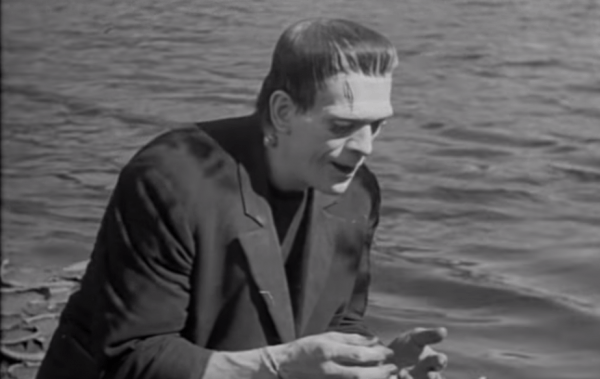
Boris Karloff became synonymous with his iconic portrayal of Frankenstein’s monster, whose first appearance in James Whale’s seminal 1931 horror Frankenstein marked his significant screen breakthrough. His formidable presence owed a lot to Jack Pierce’s legendary makeup design, covering the Monster’s dead-eyed expression to the distinctive flat-top head, neck bolts and hollowed gaunt look. In the first movie, Karloff’s performance is largely non-verbal as he communicates and expresses himself through a series of grunts, growls and groans in monosyllables. Despite the nature of his character, Whale does a great job humanizing Karloff’s role as a misunderstood creature with a childlike IQ, making his sympathetic loneliness throughout the movie hits all the right emotional notes.
The success of Frankenstein paved the way for two more Karloff-led sequels, beginning with the superior sequel of Bride of Frankenstein, notably with the Monster’s previously limited articulation expanded into speaking a few simple lines. He reprised his character one last time in Son of Frankenstein before moving on to diversify his roles, from playing a sadistic titular villain in The Mask of Fu Manchu to a mad scientist in House of Frankenstein.
Robert De Niro – Mary Shelley’s Frankenstein (1994)
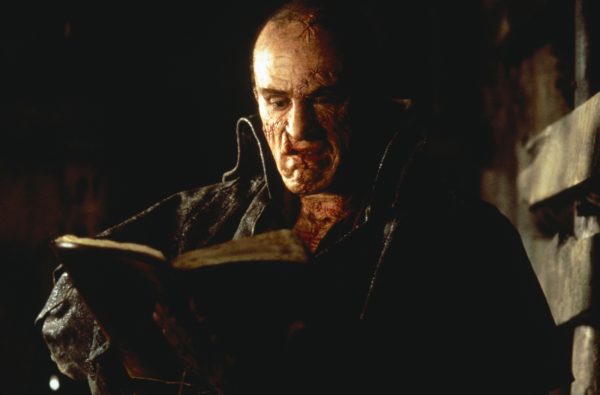
The 1990s saw the resurgence of classic horror adaptations with the success of Francis Ford Coppola-directed Bram Stoker’s Dracula in 1992. Coppola returned two years later to produce Mary Shelley’s Frankenstein, but the directing gig went to Kenneth Branagh, who also played the obsessed scientist Victor Frankenstein responsible for creating the monster. Known as The Creature in this movie, Robert De Niro’s portrayal is very different from Karloff’s version; he’s more articulate, intelligent and emotionally complex, which happens to be more faithful to Mary Shelley’s book.
De Niro is no stranger to playing a lonely outcast, especially given his experience in Taxi Driver as Travis Bickle, who shares a similar trauma of facing societal rejection that mirrors his Creature character. Coupled with the excellent makeup design that gives The Creature’s disfigured face a distinctly grotesque look, De Niro’s performance is one of the best things in Mary Shelley’s Frankenstein. Too bad the movie itself doesn’t reach the same creative heights seen in Bram Stoker’s Dracula, with its shortcomings are mostly directed towards Branagh’s overly theatrical tone.
Peter Boyle – Young Frankenstein (1974)
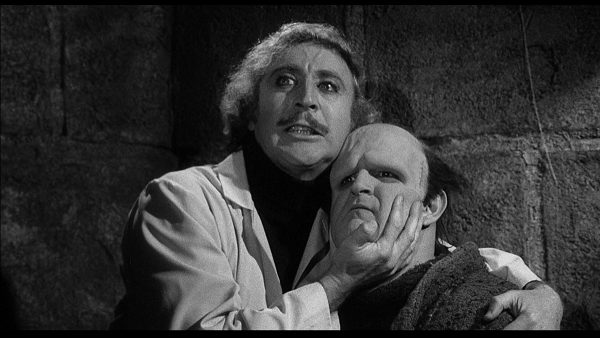
Years before he played the stressed-out police commander in Red Heat and the grumpy patriarch in TV’s Everybody Loves Raymond, one of Peter Boyle’s acclaimed earlier roles was the Monster in Young Frankenstein. Deliberately shot in black and white to capture the look and feel of a classic 1930s movie, director and co-writer Mel Brooks parodied the Frankenstein movie to both critical and financial success.
Gene Wilder has a field day playing the mad scientist Frederick Frankenstein, and he is backed by Boyle’s hilariously deadpan supporting turn as the aforementioned character. His portrayal generally pokes fun at the Boris Karloff era, doubling the childlike and grunt-heavy personalities. Among his most memorable moments in Young Frankenstein are his accident-prone encounter with Gene Hackman’s blind hermit and a song-and-dance routine on stage shouting “Puttin’ On the Ritz!” in an off-key tune.
Christopher Lee – The Curse of Frankenstein (1957)
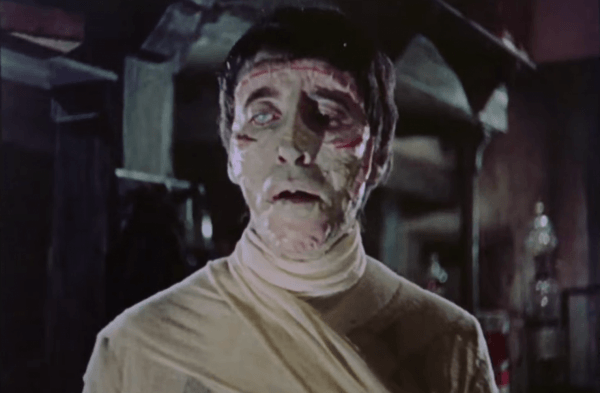
Christopher Lee’s towering stature of 6’5” was put to good use to play the silent Creature in The Curse of Frankenstein. Directed by Hammer Films veteran Terence Fisher, he goes for the jugular in turning this sci-fi horror as mean-spirited as the rating allowed back in the day. Peter Cushing, who would go on playing the memorable Grand Moff Tarkin in Star Wars twenty years later, leads the movie as the scientist who becomes increasingly arrogant and remorseless in his persistent quest to bring the Creature to life.
The subsequent introduction of Lee’s character is best described as scary and imposing, particularly with his hideously scarred and pale-faced appearance. He relies heavily on his body gesture and movements to convey his performance, and unlike the previous iterations of Frankenstein’s monster, Lee’s portrayal stripped off the tragic and misunderstood type populated by Karloff in favor of a more unsympathetic and violent-prone creature.
Xavier Samuel – Frankenstein (2015)

Australian actor Xavier Samuel, who plays Frankenstein’s creature in Bernard Rose’s sci-fi horror (with Danny Huston and Carrie-Anne Moss playing the scientist couple), deviates from what we are usually grown accustomed to this oft-told classic story. The basis remains intact, but the setting takes place in the present day while Samuel’s appearance is first depicted as a good-looking young man named Adam with the mind of a baby. However, his cells become erratic, resulting in the physical deformities that ultimately scarred the face and the rest of the body.
What makes Rose’s modern-day version of Frankenstein unique is the story being told from Adam’s perspective, complete with melancholic voiceover narration every now and then. His character is more sympathetic and emotionally volatile, journeying from acting like a child to slowly learning the way of life the hard way. One of his most memorable moments comes from his interaction with the blind and homeless musician, Eddie (Tony Todd, reuniting with Rose after 1992’s Candyman), showcasing the nuanced dynamic between the two lonely souls seeking genuine connection and friendship. Despite positive responses, Rose’s Frankenstein was largely overlooked at the time of its release.
Glenn Strange – House of Frankenstein (1944), House of Dracula (1945) and Abbott and Costello Meet Frankenstein (1948)

With an imposing height of 6’5”, regular Western film actor Glenn Strange was the perfect candidate to play Universal’s Monster following Boris Karloff. First appearing in House of Frankenstein, his formidable physical build is further enhanced by Jack Pierce’s impressive makeup design, detailing everything on Strange’s facial features from making his forehead and jawline looked wider to the distinctive, shaggier and combed-forward hairstyle.
Strange’s performance leans more on the stoicism and far less sympathetic than the Karloff era. He reprised his role in House of Dracula the following year, albeit in a lesser but still impactful screen time. Three years later, he was given a bigger role in Abbott and Costello Meet Frankenstein, where his no-nonsense presence contrasts well with the movie’s horror-comedy approach.
Jacob Elordi – Frankenstein (2025)

Hailed as one of the best Frankenstein adaptations, Guillermo del Toro’s long-in-the-making passion project is particularly a triumph in the intricate production design and prominent use of practical effects, thanks to a massive $120 million budget at his disposal. Whereas Oscar Isaac’s arrogant and mad scientist character serves as one of the highlights of the movie, it was Jacob Elordi who steals most of the show as the Creature.
Like Glenn Strange and Christopher Lee before him, Elordi’s height helps a lot to make him look physically imposing. His performance echoes De Niro’s portrayal in Mary Shelley’s Frankenstein, where both characters retain the same tragic and highly articulate personalities that define the novel. Credit also goes to del Toro for humanizing Elordi’s character, which makes the Creature worth sympathizing.
SEE ALSO: 10 Essential Frankenstein-Inspired Movies You Need To See
What are your favourite portrayals of Frankenstein’s Monster? Let us know on our social channels @FlickeringMyth…
Casey Chong