Jack Gayer reviews Detective Hole…
Separate the art from the artist. For that matter, it’s also sensible to separate the art from its previous form. Yet as well-intentioned as it is to try to completely separate the previous version of a work with a new one, it’s ultimately a fool’s errand. It’s like asking someone to forget Walter White was once Hal in Malcolm in the Middle.
The recently released show Detective Hole—pronounced more like the sauce “mole”—has been adapted from the novel The Devil’s Star, published in 2003 in Norway, with the English translation coming in 2010.
Before a review can be had of Detective Hole, a few words must be said about this type of adaptation, as many get hung up on what academics would refer to as the “fidelity myth,” or the belief that when turning a book into a film or TV series, it must be utterly faithful to the source material.
When you read a novel, you’re picturing the characters in your mind. You spend enough time with them, you get attached. You get possessive. When that illusion is shattered with an inferior rendition, it infuriates us on a primal level.
This is to say, if you have not read Jo Nesbø, you are watching a different show. You don’t have to separate shit. Tabula rasa for you. No preconceived notions. The downside is you haven’t read one of the best crime writers ever. This also applies to other filmed versions of a work, say, a movie. With this in mind, let’s examine the uneven glory that is Detective Hole.
Perhaps wisely eschewing the character’s full name, “Harry Hole,” Netflix opted for the marginally better “Detective Hole” as the show’s title. Fervent Nesbø fans have been waiting for an adaptation with the rabid anticipation that Harry Potter fans used to have waiting for the next doorstop of a novel, or how Rob Ford’s handlers must have felt as they feared whatever he’d say next.
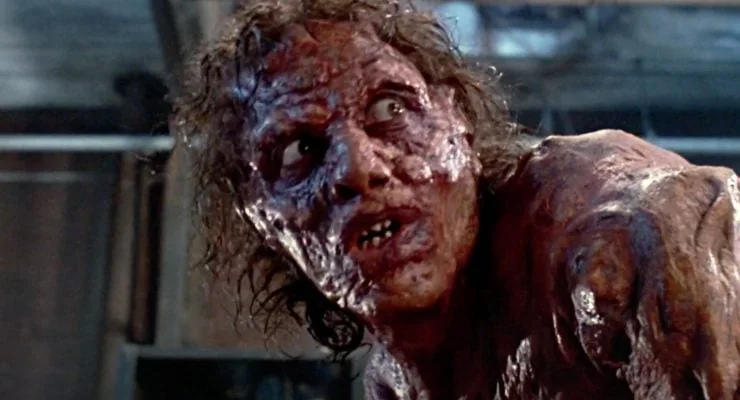
We don’t speak of the dada nightmare that was The Snowman (2017).
Okay, we’ll talk about it a little. It’s a blight upon this world. A horror to end all horrors. If Oppenheimer were alive when The Snowman came out, he surely would have said, “I was wrong; whoever created this abomination is the true destroyer of worlds. What cruel god allowed this to come into creation? I pray for their misguided souls. Now pass me lunch, a quart of martinis, and a pack of cigarettes.” Or something to that effect.
The seventh novel in the Harry Hole series, The Snowman, is also one of the best. Making its failed adaptation all the more heinous. The book is a terrific example of Nordic noir and a 450-560 page book (depending on your copy) that you can get through in a day or two—provided you ignore loved ones, shower occasionally, and get your calories through an IV. Worth it. The film, however, was a perfect storm of bad decisions, kneecapped by a rushed production (according to the director).
The Snowman had a woefully miscast Michael Fassbender, and co-starred Val Kilmer, who had recently lost his voice to throat cancer, leading to all his lines being conspicuously dubbed. Co-written by Hossein Amini, who adapted Drive (2011), and directed by Tomas Alfredson, who directed Let the Right One in (2008), and Tinker Tailor Soldier Spy (2011), the film at least had a promising start in this regard. What happened in the making of the film is anyone’s guess. Alfredson claims that as much as 15% of the screenplay was never shot, although one wonders how much of a difference that really would have made. Alfredson has wisely disowned the final project.
The best way to describe the film-watching experience of The Snowman could be summarized as such: If this writer were facing a jail sentence or the prospect of having to watch the film again, he’d ask for a longer sentence. We can only wonder about the film that could have been, as no less than Martin Scorsese was originally slated to direct.

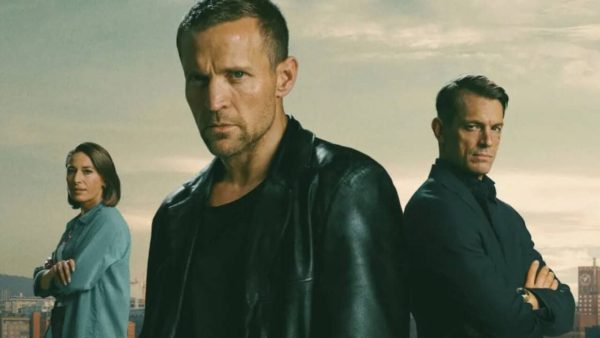
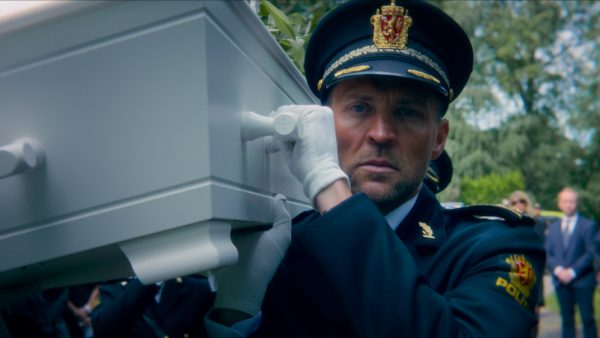
Back to Detective Hole. Tobias Santelmann stars as our man Harry Hole, and if you had the good sense to catch him in Darkness: Those Who Kill, you’ve seen his undeniable presence. With the slightest of looks, we saw the ability to render pathos, vulnerability, anguish, and rage—all prerequisites for a highly internal character like Hole. As a talker, he generally is not. All the more impressive, too, is that Santelmann was playing a serial killer in Darkness. Serial killers have feelings too!—said no one ever.
Santelmann has a face that’s handsome but not too pretty-boy handsome. It’s lived-in, carrying his pain like a stop sign. The show was always destined to live or die on the hill of Hole’s casting, and Santelmann does not disappoint. As good as Kenneth Branagh is in Wallander, he’s practically Mr. Rogers compared to Santelmann’s performance as Harry Hole.
He does a lot with a little. Those microexpressions. The angst shines through in the smallest of twitches. He can do haunted—a much-needed quality in the Nordic noir genre. By God, can he do haunted. He has a face that somehow tells you everything but still conceals much, leaving you wanting to know more. The emotions are plain, but what is he thinking? For the most part, only Hole knows.

Character-wise, Hole is an anti-hero for the ages. He’s not averse to bending the law, but usually in a more sophisticated way. One that doesn’t reek of fetishizing fascism. That is, his rule-breaking doesn’t involve smashing someone in the face because “he needs to get results, and this person is clearly bad, so this is cool.”
Is the dialogue amazing? Uh. Let’s put it this way: no. At least in the first episode, “36 Seconds”. Unless blunt assessments of characters, employing all the subtlety of Tommy Wiseau getting his heart broken screams good dialogue to you. It’s as if a character points at Harry Hole and asks, “What’s he like?” and someone responds, “He’s a broken alcoholic, but brilliant. Did I mention he was broken? Yes? Alcoholic? Yes? Great, then that covers it.”
My God, does it get less and less subtle, too, throughout the first episode. Which is all the more surprising as Nesbø wrote the adaptation. Hang in there, it gets better.
Charitably, we could lay a good deal of the blame at the feet of the dubbing. The subtitled version has its merits, but it also robs you somewhat of Santelmann’s voice, which really grabs you. A warm, deep growl that never feels put on, unlike say, Vincent D’Onofrio’s vocal affectation as the Kingpin in Daredevil (to take nothing away from D’Onofrio’s overall performance).

Speaking of getting better, both the music and the lighting get off to a rocky start. To say they’re not initially appealing or successful is a bit of an understatement. Does the music beat the head clean off the nail? Yes. Also a bit odd, as the score is composed by Nick Cave, who’s hardly an amateur. He composed the score for Hell or High Water and Wind River, among other films not written by Taylor Sheridan. One part of the score that is somewhat off-putting is the “ooooh oooh” sounds that are a bit reminiscent of the “level up” sound heard in Call of Duty.
Does the music grow on you? Also yes. Most of it. There’s a particularly echoey part of the theme that sound like they were taken out of another terrific noir: The Killing, which was imported to the U.S. from Denmark, and also starred Detective Hole’s Joel Kinnaman.
While some of the pop/punk/rock needle drops can feel incongruous, the use of “Heartbeats” is an inspired choice for a revealing scene with Tom Waaler and a male sex worker, taking what could have been something merely morbid and making it poignant and heart-wrenching. “Blister in the Sun” is also surprisingly effective.

On to the lighting. Who cares about the lighting of a show? Usually this wouldn’t warrant mention, except as a nice touch for the tonality. However, in the first episode, the light is bright to the point of distraction. It leaves you wondering why is it so damn bright?
The best assessment might be that it’s supposed to be a metaphorical, if not particularly subtle, nod to how Harry’s life with his girlfriend, Rakel, and her son, Oleg, is literally the light of his life. As following this episode, when everything really starts to go to shit for Harry, they tone down the brightness considerably. And thank god for that. Instead, we can appreciate how the neon-drenched city shots are pure noir. Moreover, the use of heavy fog and desaturated overhead shots of Oslo course correct nicely for the show.
Narratively, the show is initially bogged down. Fortunately, the first episode, which is plodding at best, bore most of this weight, and the show rapidly improves from there. Does it take its time getting to the central serial killer mystery? Boy, does it. The gang war subplot rather weighs down the narrative. While this subplot is eventually revealed to be crucial for the plot, the narrative is all the better for it when this section falls away. And if another biblically-motivated serial killer seems beyond stale, hang in there. You’re in for a pleasant, subversive surprise.

Is the plot easy to follow? Not so much. Not by a long shot. Not at first. But neither is it the sum of its parts. Noir has always lived in the realms of the convoluted. In fact, early in the season, there’s so much going on that it’s easy to lose track that there’s a serial killer on the loose.
But watchable it certainly is. Mostly by dint of Santelmann’s Hole. The character, not his orifice. But with his gravitas, there’s a chance even a scene dedicated to one of his orifices would be just as riveting. However, an orifice does come into “play” later in the show.
Patience is rewarded once you make it to episode two, “Ghosts”. Narratively, we get more room to breathe. Harry’s character develops. His intelligence comes through. His wanton self-destruction. The self-loathing. His single-minded obsessiveness borders on the pathological. A heavy helping of abrasiveness toward his girlfriend’s son, Oleg, where he drunkenly yells at the boy, goes a long way toward separating this anti-hero from the ones that come before him. The show isn’t afraid to go to dark places, as much emotionally dark as blood and guts dark.
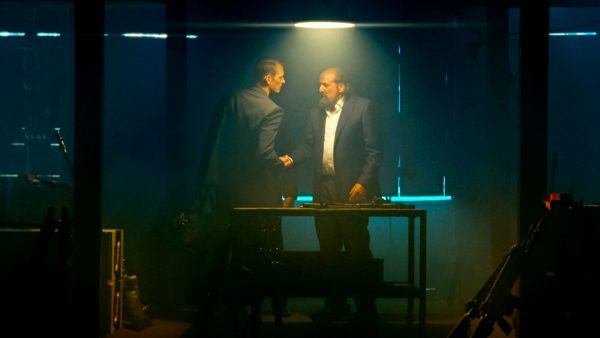
On the topic of dark, besides Harry, the stand-out character is Joel Kinnaman’s secondary villain, Harry’s adversary on the police force, Tom Waaler. Kinnaman, always great, shines with slime and charm here. He’s steeped in charisma and nuance. Never chewing an ounce of scenery. Rarely has he gotten the chance he deserves to showcase his talent, not since his arresting turn in The Killing.

In Detective Hole, he does menace so well. A quiet, often sensual menace. He’s a predator used to being admired, and Kinnaman preens and glides through any given situation, shimmering with a self-adoration that would make Patrick Bateman blush. He has so many scene-stealing moments; to recount them all would be almost giving a complete recap of the show.
Some moments that stand out include in episode four, “After They Are Dead, Before They Are Cold”, where he toys with Harry in a bathroom. In episode 7, “Joseph’s Blessing”, he has a little dance number that’s was one for the ages. He’s nothing short of a revelation. He has shades of decency, giving the homeless money, expressing deep feelings for loved ones, underneath his heavy coloring of amorality. Kinnaman bristles with intensity, provocativeness, and sensitivity. Add in a touch of eccentricity and a good deal of shrewdness, and you have one hell of a character. Kinnaman has frankly never been better. It seems he’s perhaps been underrated and underused for years.
Unfortunately, most of the other characters don’t get as much emotional paint to color with, one character even gets the “woman in the refrigerator” treatment fairly early on; i.e., her character’s death exists mainly to propel that main character’s story forward. A not uncommon plot device.

A couple of stray thoughts: There are strong allusions to Hannibal, bordering on plagiarism. Take Harry’s trance-like states where he puts himself at the scene of the crime; he may as well be referred to as “Will Graham” here. Harry often appears in the same clothes throughout the season, e.g., his Pixies’ Doolittle shirt—this is a nice bit of verisimilitude. Also, it takes a certain someone to pull off this look, the band-tee and sports coat, without looking like a try-hard or a hipster. Santelmann is the exception. Moreover, Harry’s grocery trip, which is restricted to cookies and booze, was a great touch. We’re treated to perhaps the best use of ass-play as a pivotal plot point ever. Although we’re not too sure it has much competition in this category.
We doubt you’ll see the twist coming, and it’s as satisfying as it is logical, unlike some reveals (Scream 7 comes to mind, a hit movie that’s infuriatingly dumb, making Madame Web look like Schindler’s List in comparison). It’s pretty miraculous the show can pull off a bit of levity at the climax, but perhaps no surprise coming from Nesbø, who recently said in an interview for The Guardian, when asked how often he has sex, “I only have sex outdoors, so it depends on the weather.”
Every second watching Detective Hole it’s hard not to measure it against the books. The temptation must be resisted, but it’s nearly impossible to resist. Yearning for the replication of an experience. Teetering on the edge of currying our disfavor. This art, in a new medium, must live up to the old medium, one that largely existed in our heads. But chasing the near-mythical, what we’ve created with our imagination, will almost never succeed. If you’ve read the books, try to put them out of your head. If you haven’t read the books, read them. Especially the ones that came before The Devil’s Star.

What could have been the next Pagan’s Peak is a bit more schlocky, closer to Cross (especially in the opening credits). But ultimately, this may be a good thing. By not falling into the trap of having a phenomenal season 1 that’s impossible to match (cough, True Detective, cough), Detective Hole has every chance to be really excellent in season 2 (much like Pagan’s Peak, a show every crime lover should watch, Nicholas Ofczarek’s Gedeon Winter does brooding nihilism like he’s the heir apparent to a certain beloved character. Hint: it’s not Frank Drebin).
Detective Hole is a messy masterpiece, but a more than fitting Harry Hole adaptation. It took many years, and a very pitiful false start. But there’s a lot to work with. A season 2 of more Harry Hole detection is not only more than welcome: it’s sorely needed. A cerebral thriller that more than occasionally indulges in cliches and tackiness, but a show that works nonetheless. Satisfying. Gripping. Addictive. A lead character that we root for, our heart breaks for. He’s not super slick. He’s damaged in an understated way. What Martin Riggs wore on his sleeve, Hole keeps hidden.
There’s really no other way to say it except despite its sometimes hit-or-miss style and overladen plot, we look forward to more Harry Hole in our lives.
Jack Gayer
Originally published April 6, 2026. Updated April 7, 2026.