Ten years on from its release, Hasitha Fernando explores the story behind Marvel Studios’ Doctor Strange…
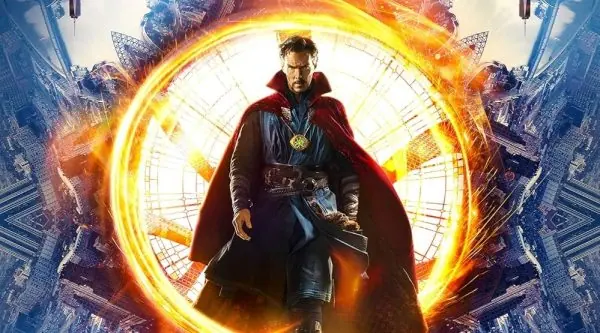
When Doctor Strange arrived in cinemas in 2016, it marked a significant departure for the Marvel Cinematic Universe from a narrative and visual standpoint. Up to that point, Marvel’s heroes largely inhabited worlds shaped by superhuman abilities, science and technology. Scott Derrickson’s film opened the door to a whole multiverse of myriad possibilities governed by magic and mysticism. As the movie celebrates its 10th anniversary we look back its lengthy journey from the comics to the big screen as well as its behind-the-scenes story.
The property was stuck in development hell for the longest time
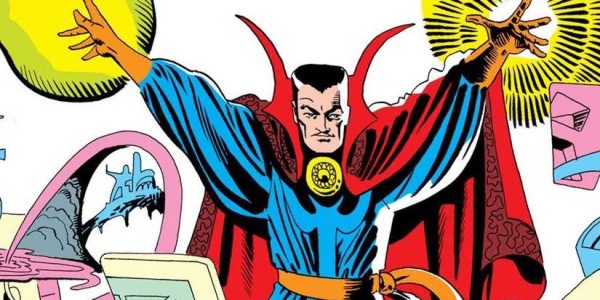
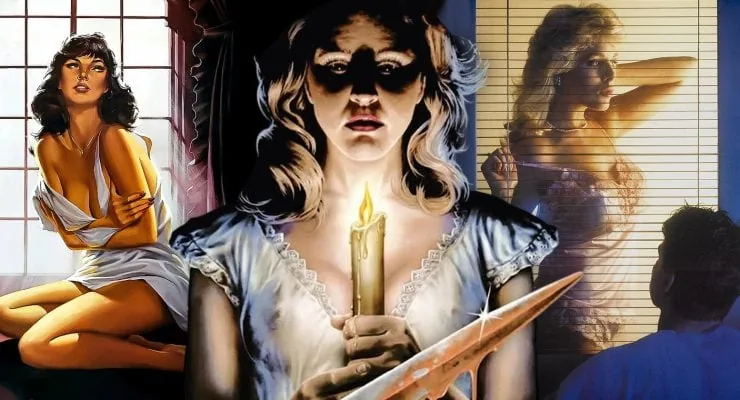
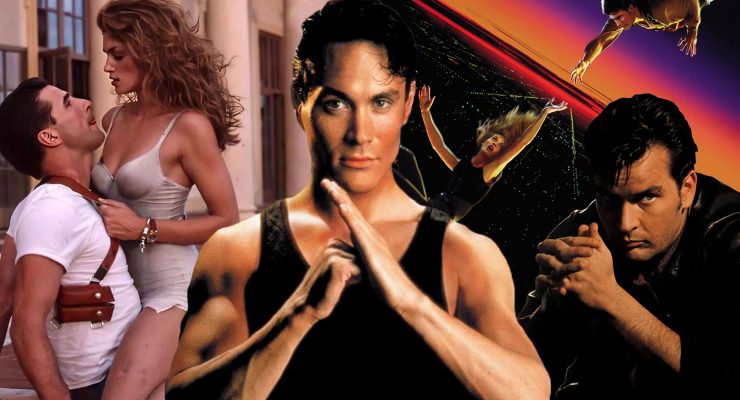
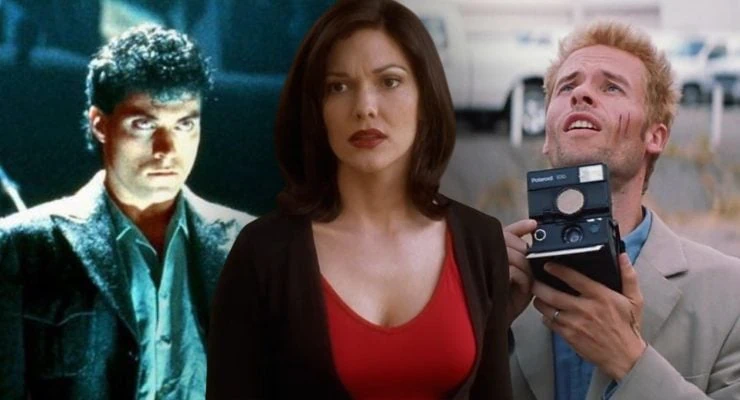
The development of a Doctor Strange film began decades prior to the eventual 2016 Marvel Studios effort that we know and love. The first known attempt came in 1986, when New World Pictures developed a screenplay by Bob Gale, although the project never entered production. In 1989, filmmaker Alex Cox and Marvel’s very own Stan Lee wrote a screenplay which featured their version of Doctor Strange travelling to the Fourth Dimension and confronting Dormammu on Easter Island. This screenplay nearly got produced by Regency Enterprises, until a merchandising dispute between Warner Bros. and Marvel got in the way. Producer Charles Band also tried his luck with the property, by acquiring the rights and developing it through Full Moon Entertainment, but to no avail. The resulting concept was reworked into the 1992 film Doctor Mordrid, whose protagonist shared many similarities with its Marvel counterpart.
Throughout the 1990s the IP continued to change hands across multiple studios and various producers. In 1992, the master of horror Wes Craven was attached to write and direct, with Savoy Pictures distributing. David S. Goyer joined the proceedings at some point, completing a screenplay for the film in 1995. Two years later, Columbia Pictures had acquired the rights but once again the project was stuck in development hell and until in 2000 Columbia officially abandoned the project. Dimension Pictures bought the property and rehired Goyer to write and direct, but before long the rights returned back to Miramax Films and Goyer parted ways with the gig in 2002. The film was slated for release in 2005 whilst at Miramax but even a year prior a proper screenplay wasn’t locked in place, demonstrating how difficult it’s become to develop the project.
The project became a reality with the establishment of Marvel Studios
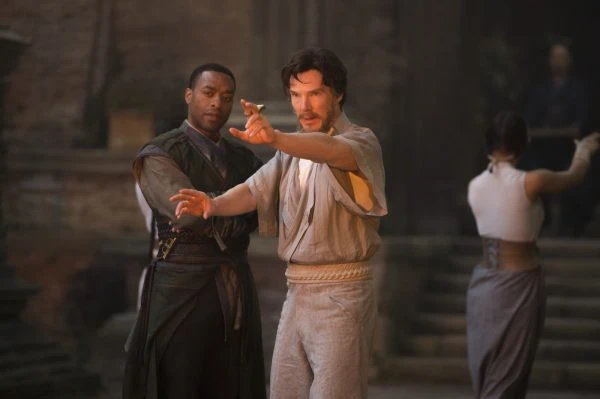
In 2005, the project finally started moving forward when Paramount Pictures acquired the rights from Miramax Pictures as part of Marvel Studios plan to independently finance their own IPs into feature films. The year 2007 saw filmmaker Guillermo del Toro and writer Neil Gaiman pitch a new take on the property heavily influenced by the surreal artwork of Steve Ditko himself, but this vision didn’t pan out either. In 2009 Marvel Studios began actively navigating ways to bring lesser known properties to the big screen and included Doctor Strange in their roster of IPs they were hoping to adapt. The following year, the studio hired the screenwriting team of Thomas Dean Donnelly and Joshua Oppenheimer to pen a new screenplay centered around Doctor Strange, while Patrick Dempsey expressed interest in playing the titular role during this early stage of project development.
By January 2013, Kevin Feige confirmed that Doctor Strange would be introduced as part of Phase Three of the Marvel Cinematic Universe (MCU) and the year following Marvel Studios commenced seriously considering filmmakers and screenwriters to bring their singular vision to life. Several filmmakers – including Mark Andrews, Nicolaj Arcel, Jonathan Levine, Dean Israelite and Scott Derrickson – were being looked for the directing role while writer duo Jonathan Aibel and Glenn Berger, best known for their work on the Kung Fu Panda films, were eyed to revise existing screenplays. By March 2014, the director shortlist have been whittled down to three candidates – Mark Andrews, Jonathan Levine and Scott Derrickson.
Scott Derrickson made an entire concept video to pitch his story to Marvel
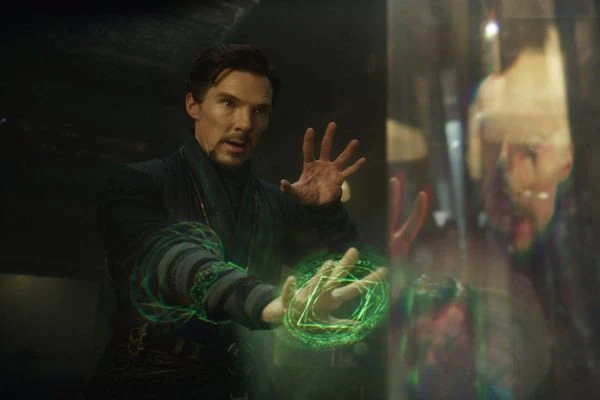
Scott Derrickson is a filmmaker whose efforts are primarily focuses on the horror genre. Derrickson’s debut feature was the straight-to-video Hellraiser: Inferno, the fifth installment in the Hellraiser series. Following this, Derrickson spent years doing script-doctoring work for numerous studios along with co-writer Paul Harris Boardman. The 2005 horror-drama The Exorcism of Emily Rose was the turning point of Derrickson’s career as the effort brought him the due recognition he needed as a genre filmmaker. Derrickson’s next breakthrough effort was the 2012 supernatural horror Sinister, which drew universal acclaim when it debuted and has since been dubbed “The Scariest Movie of All Time According to Science”.
Being a huge fan of Doctor Strange for the longest time, Derrickson certainly made a strong case on why he should helm the titular character’s first outing by making a 90-minute pitch to Marvel Studios which was based on a 12-page scene for the movie he wrote which featured Doctor Strange combatting an assailant in the astral plane while a doctor attempted to save Strange’s physical body in hospital. This concept video was brought to life through a sequence of concept art illustrated by Derrickson himself and storyboarded by professional artists, which cost the filmmaker a lot of money. But impressed by his pitch, the studio hired Derrickson and also purchased the 12-page scene which went on to be featured as one of the film’s main action set pieces.
The spiritualism of Doctor Strange drew Benedict Cumberbatch to the role
Benedict Cumberbatch started his career in the stage before shifting to the small-screen where he gained a wider recognition for his portrayal of a modern-day Sherlock Holmes in BBC One’s Sherlock from 2010 to 2017. Shortly after his success on said TV show, Cumberbatch was cast in several critically acclaimed movies such as Tinker Tailor Soldier Spy, 12 Years a Slave, The Imitation Game and lead roles in several blockbuster flicks like Star Trek Into Darkness and The Hobbit film series. According to the 2021 book ‘The Story of Marvel Studios: The Making of the Marvel Cinematic Universe’ Cumberbatch was first offered the role of Malekith, which eventually went to Christopher Eccleston, in Thor: The Darl World. Despite wanting to join the MCU, Cumberbatch declined the opportunity because he wanted to wait for “something a bit more juicy”.
By the time Doctor Strange was fast-tracked Cumberbatch became Kevin Feige’s first choice to play Dr. Stephen Strange. For a brief period Cumberbatch’s participation was in doubt as he had prior commitments, and it was in this period that Joaquin Pheonix was eyed for the role as a replacement, but once his schedule freed up Cumberbatch was officially cast to play the Sorcerer Supreme. During interviews Cumberbatch has stated that the spiritualism of his character was what appealed to him when he decided to take on the role.
Casting the right actor in the Ancient One’s role wasn’t an easy task
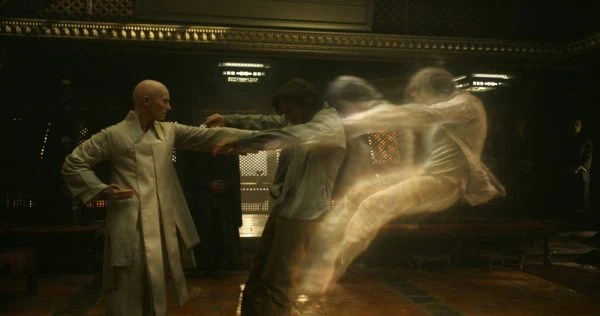
In the comics, the Ancient One is portrayed as a wizened Tibetan man but Doctor Strange co-writer C. Robert Cargill knew that making the character too comic book accurate meant they’d fall into the trap of creating an Asian Fu Manchu-stereotype whilst entangling the story in the Tibetan sovereignty controversy. But conversely, not giving a major Asian comic book character like the Ancient One to a non-Asian actor would also be viewed in a negative light. Derrickson, however, wanted to gender swap the character but he too found it tricky as to whether it should be an older Asian woman, which would invoke the Dragon Lady stereotype, while a younger Asian lady can be a “fanboy’s dream girl” type deal.
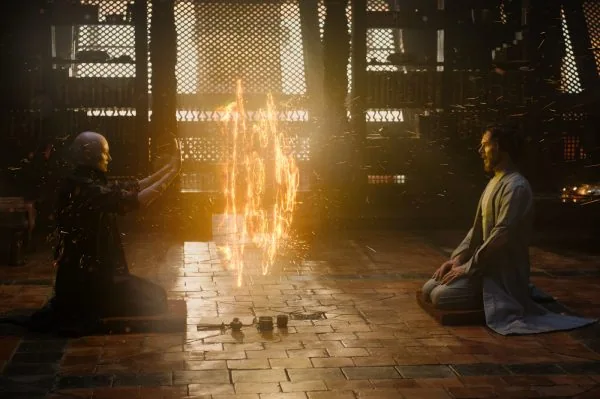
Derrickson also wanted to sidestep the stereotype of a “Western character coming to Asia to learn about being Asian”, so in the end, the filmmaker decided to cast a non-Asian actor in the role and wrote the Asian One’s character with Tilda Swinton in mind as he felt the actress was the obvious choice who could embody the various traits of “domineering, secretive, ethereal, enigmatic, and mystical” which defined the Ancient One’s personality. Morgan Freeman, Ken Watanabe and Bill Nighy were considered for the role of The Ancient One at the very outset.
Working in a VFX heavy movie proved to be a challenge for Mads Mikkelsen
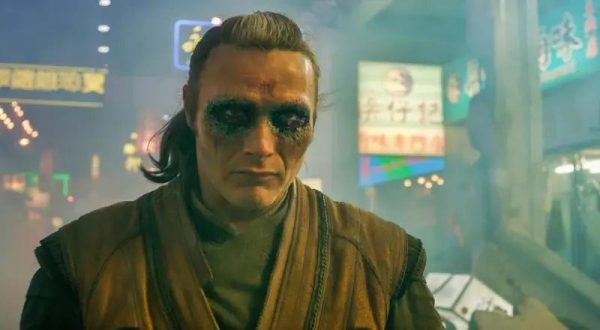
As of writing Danish actor Mads Mikkelsen has been part of some of the most lucrative big budget Hollywood film franchises of all time, including Harry Potter, Star Wars and Indiana Jones. The uber-talented actor gained fame in his native country for the critically lauded Pusher trilogy and gained international recognition playing the primary antagonist of James Bond flick Casino Royale. Mikkelsen has even excelled in the small screen for playing the sophisticated serial killer Dr. Hannibal Lecter in NBC’s Hannibal. Kaecilius was a minor villain in the comics, but for this adaptation he was made the main antagonist and the character was an amalgamation of multiple Marvel villains from Doctor Strange’s rogues gallery including Baron Mordo, Kaluu and the Mindless Ones.
As an actor who hailed from a world of conventional feature film Mikkelsen admitted that he found it rather challenging to film certain scenes, especially the ones concerning the Mirror Dimension, due to their VFX heavy nature. Mikkelsen described Kaecilius as an anti-hero from another dimension who is viewed as a villain in this dimension: “He believes that the Ancient One is just protecting her own power base and that the world may be better off if we were to allow some of these other things through. He’s a man who believes in something else than the hero. He is the antagonist, of course, but he’s not necessarily wrong.”
Chiwetel Ejiofor’s karate training became useful when playing Baron Mordo
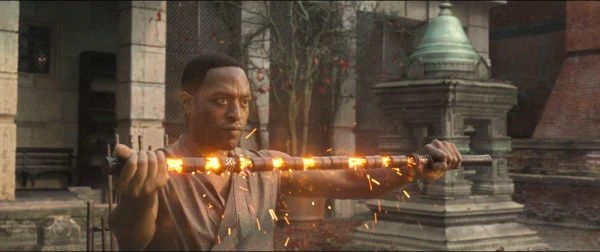
British actor Chiwetel Ejiofor has been the recipient of multiple accolades including a BAFTA and a Lawrence Olivier Award as well as nominations for an Oscar, two Primetime Emmys and five Golden Globes Awards. His most critically acclaimed performance to date has been in 2013’s 12 Years a Slave where he played a Black American kidnapped and sold to slavery in 1842. In the comics the character played by Ejiofor was Strange’s mentor and a close confidante of the Ancient One. So, rather than playing Baron Mordo as a clear-cut villain, Ejiofor had conversation with Derrickson to make him a more complex and layered character.
Derrickson thought of Mordo as a fundamentalist, saying “When someone gives themselves over to an extraordinarily strict moral code, the process of breaking out of that is a violent one. He becomes disillusioned with the Ancient One’s [moral contradictions]. The difference is Strange can accept that contradiction. Mordo cannot cope with it.” This sets Mordo on an inevitable path of conflict against his mentee Dr. Stephen Strange. Being a practitioner of karate, and fifth-degree black belt no less, Ejiofor found the fight training for the action sequences fairly easy to adopt to as similar movements were practically second nature to him.
Rachel McAdams was the first choice to play Dr. Christine Palmer
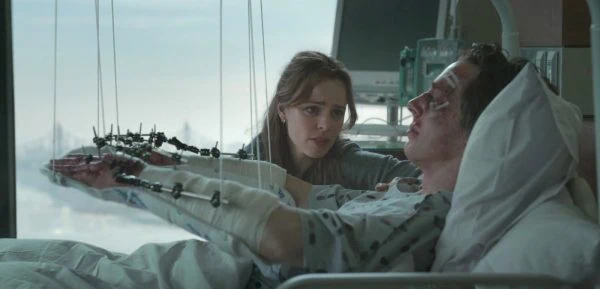
Making her feature film debut in the 2002 comedy My Name is Tanino, Rachel McAdams rose to fame in 2004 with a double-whammy Mean Girls and The Notebook. Her star making turn as Allie Calhoun in the romantic drama The Notebook, opposite Ryan Gosling made the actress a much sought after talent in the industry. McAdams received an Academy Award nomination for her brilliant performance as investigative journalist in 2015’s biographical drama Spotlight.
McAdams has never been overtly fond of comic book movies from the get-go, as a result when she was approached to play Pepper Potts in 2008’s Iron Man, the actress declined. The performer happened to be director Jon Favreau’s first choice to play Miss Potts in the MCU’s first outing. However, due to the ever growing popularity of the Marvel films, McAdams had a change of heart and became interested in being part of any of the MCU’s movies. Unsurprisingly, the actress was the first choice to play Strange’s love interest Dr. Christine Palmer and ended up being cast in the part.
Disney’s Fantasia & M.C Escher’s works were a major inspiration for the movie’s visuals
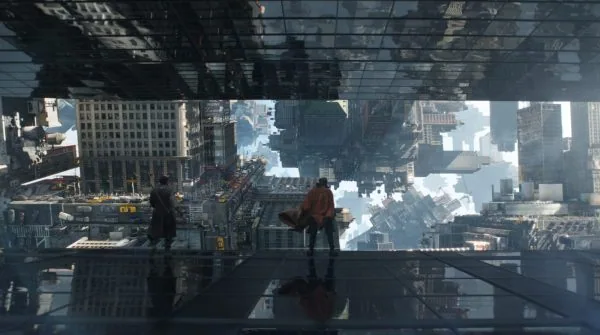
To say Doctor Strange delivered some truly trippy visuals would be a major understatement. As per DOP Ben Davis, who previously worked on Guardians of the Galaxy: Vol. 1, some of these gnarly visuals were influenced by the experimental Disney film Fantasia. Regarding the film’s influence on Doctor Strange, Davis had this to say: “It has a very psychedelic grounding, and most of the work is about other dimensions.” Another source of inspiration, which mainly influenced the reality-warping scenes which saw cities and buildings folding into each other and the creation of various kaleidoscopic cityscapes were strongly influenced by the works of mathematical painter M.C Escher and the fractal concept.
Viewers were quick to point out that Doctor Strange’s visuals were aping the dream sequences seen in Christopher Nolan’s Inception but Derrickson countered these opinions during an interview by elaborating, “I thought Inception was one of the most visually interesting movies of the last six or seven years, but it was seven years ago now that it came out and I felt like it was the tip of an interesting visual effects iceberg and I wanted to go crazy with the idea of spacial manipulation.”
Box office success, critical acclaim and the launch of a franchise
Made on a production budget of $165 million Doctor Strange went on to make a worldwide total of $677.8 million by the conclusion of its theatrical run. On review aggregator site Rotten Tomatoes the film maintains an approval rating of 89% with an average rating of 7.3/10 based on 385 reviews. The website’s critical consensus sums up the movie in the following manner, “Doctor Strange artfully balances its outré source material against the blockbuster constraints of the MCU, delivering a thoroughly entertaining superhero origin story in the bargain.” Variety’s Peter Debruge called the effort, “Marvel’s most satisfying entry since Spider-Man 2” while The Wrap’s Alonso Duralde praised the film’s trippy visuals saying, “In a year where bloated, empty spectacles have induced a crushing level of CG fatigue, this funny, freaky adventure reminds us of how effective VFX can be when they’ve got some imagination behind them.” During awards seasons the film received multiple nominations in its technical aspects, chief of which was the Best Visual Effects category where it received nods at the Oscars, BAFTAs and Critics Choice Awards.
In spite of the positive reception of the first outing, development of the sequel was rife with considerable delays and creative indecisiveness, which led to Scott Derrickson and C. Robert Cargill’s departure from the project citing “creative differences”. Nevertheless, 2022’s Doctor Strange and the Multiverse of Madness, helmed by horror maestro Sam Raimi, proved to be a worthy follow-up to the original, receiving praise for Raimi’s distinctive visual flourishes and the strong performances dished out by Cumberbatch and co-star Elizabeth Olsen. As of writing, Doctor Strange and the Multiverse of Madness is the last film to feature Doctor Strange in a live-action capacity. While the character is slated to appear in Avengers: Doomsday later this year, it remains to be seen when we’d see our beloved, ex-Sorcerer Supreme next, in his own solo film. Only Kevin Feige and the powers that be know.
What are your thoughts on Doctor Strange? Let us know on our socials @FlickeringMyth…
Hasitha Fernando is a part-time medical practitioner and full-time cinephile. Follow him on Twitter via @DoctorCinephile for regular updates on the world of entertainment.