Robert Kojder chats with I Swear star Robert Aramayo…
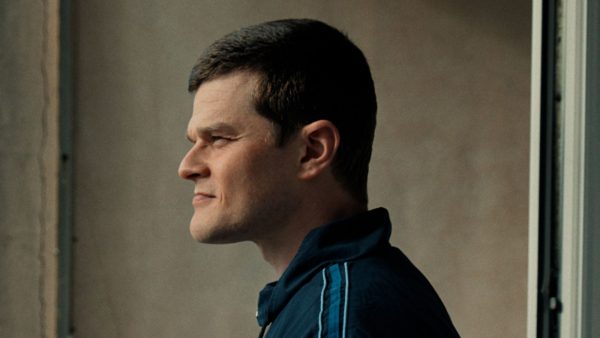
With star Robert Aramayo fresh off a much-deserved acting BAFTA for the Tourette syndrome activist and campaigner John Davidson biopic, titled I Swear and directed by Kirk Jones, and now the North American theatrical release of the film (distributed by Sony Pictures Classics) underway, there is a highly likely possibility that his stock and fame will only continue to rise. Having already appeared on television in small roles for mega-popular fandoms, including HBO’s Game of Thrones and Amazon’s The Lord of the Rings: The Rings of Power, one would have to assume that with a performance this dedicated and brilliantly committed to capturing authenticity and earnest education about an important condition that is often times still misunderstood today, those parts, whether they be in film or television, are about to become bigger.
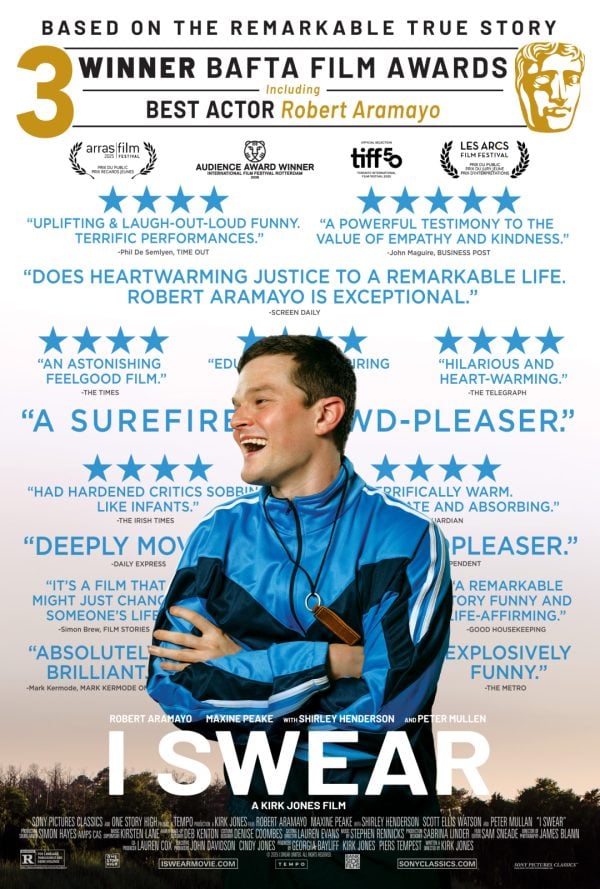
With a Juilliard education, it’s also no surprise that Robert has solid acting chops to begin with. His first on-screen acting role came after a stage play portrayal of Alex in A Clockwork Orange (something I’m a bit bummed I didn’t get the time to ask about, as the Stanley Kubrick film is an all-time classic), and he has also shown flashes of greatness in underappreciated tense thrillers such as The Standoff at Sparrow Creek.
Naturally, it was an honor to virtually chat with Robert Aramayo about taking on the role of John Davidson and the film, Tourette syndrome, humor as a coping mechanism, and how some of these lessons (such as never apologizing for things that can’t be controlled or relate to a condition/disability) are, in some cases, universal across more conditions and disabilities than that one. We also briefly discuss a medical device that, while not a cure, reduces tics, and he reveals a timetable for when it might be available to the public.
Full disclosure: Robert did admit there are some audio issues on his end, which is why the answers aren’t always as detailed as in relation to the question. That is fine; he was always engaged and informative, and he expressed thoughtfulness in stepping into the shoes of a man with Tourette syndrome and sincerity about spreading awareness and education. Enjoy below:
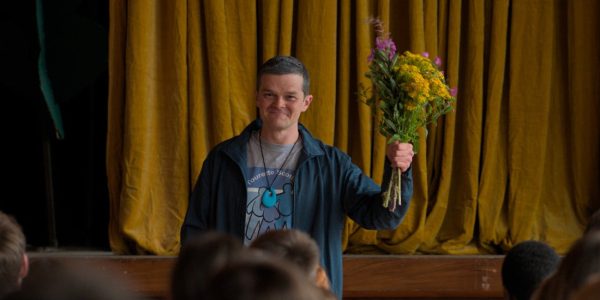
This is a great movie. Your performance is incredible; you earned that BAFTA.
Thank you, Robert!
Yeah. For me, the most impressive part of the performance is that you don’t actually have Tourette syndrome, which I thought you did while watching the movie, if I’m being honest. So, can you talk to me about the process of acting out different kinds of tics and ensuring it feels natural?
For me, it was important to study as much as I could. A lot of the research around Tourette’s came from John, but also from people whom I met. There’s an amazing charity called Tourette Scotland, which set me up with loads of people, and I met with them because I wanted to get a more 360-degree view of Tourette’s. I also read a lot about triggers and how environments can affect things. I read books and watched YouTube videos, just everything I could in the preparation period to try and just understand Tourette’s in as expansive a way as I could.
Do you take that knowledge and stick to the script entirely? Or are there moments of spontaneity?
Kirk Jones [director] was really collaborative, and there were those moments. It was an awesome family on I Swear. Improvisation, to a certain degree, was encouraged at times, but always around the central narrative of the story Kirk wanted to tell. Everything was set up so that any actor could try things.
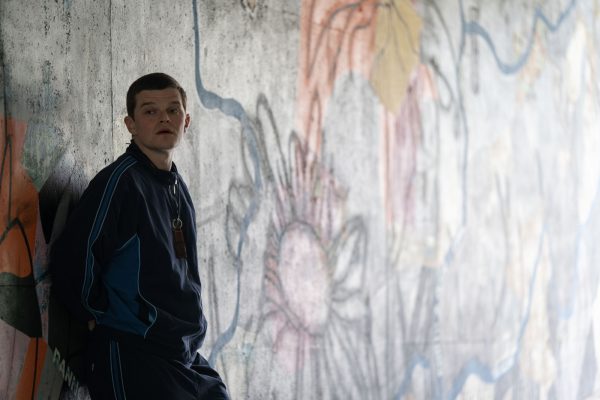
I’m assuming you had to watch Scott Ellis Watson’s performance to ensure there’s consistency across all the tics and the performance in general. What went into ensuring synchronicity?
That was Kirk, really, between Scott and me. The portion when he’s young, there’s a massive time jump, obviously, between me picking up the role from Scott. So, the good tool we had was the set of documentaries John made over the years. You can see that John’s tics changed as he aged and so on. When we meet him, he’s quite different. Tics wax and wane; they change, and some are consistent in younger people. The two stories are quite contained and quite different. It was about sitting above them and, hopefully, trying to tie them together.
You mentioned the documentaries. Do you strictly stick to copying those, or do you experiment?
At a certain point with something like this, when you’re playing a real person, you’ve got to try and take ownership, but I was really lucky that I had John because he was so encouraging and supportive of me, Scott, and the whole film. For anything that I asked him, John would always try to help me. We had an amazing resource in John.
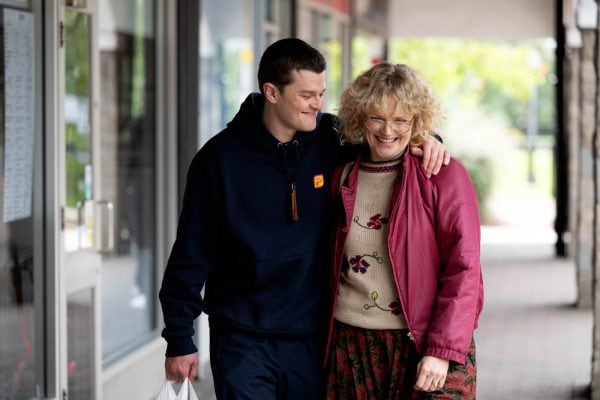
There’s a small scene where John and his friend Murray are painting a wall. And there’s a tic where he starts smearing the paint on his face. Then it turns into something fun. He rolls with it, and he’s getting dirty. It also moved me because I know what it’s like to search for humor as a coping mechanism, whether it’s a condition like this or a disability. Is that something you felt while filming that part or through getting to know the real John?
Yeah, he’s very much like that. That line, “Fuck off, Murray, that wasn’t a tic”, I’ve heard John say that it’s a joke he makes. That’s one of the many beautiful things about John and many other people I’ve met who live with Tourette’s: sometimes they can recognize humor in a situation. Oftentimes, you just ignore the tics, not the person, but sometimes John will smile or laugh along with something. We were keen to get that in because it’s all about his relationship to his condition and how that’s developing as he gets older and his maturity evolves.
Countless times, people are told these are just tics and not indicative of John’s actual opinions, and they still react with outrage, like the courtroom judge. And I know there was much less awareness back then, but that still had to be frustrating?
It’s a difficult thing for people to get their head around. It’s a nuanced, complicated discussion. We were excited to sort of include that whenever we could and just speak to that narrative, which is part of John’s life. It all comes back to education and people Googling Tourette’s and trying to understand it a little bit more, but back then, it just wasn’t seen that way. It just wasn’t even understood. People didn’t even know what it was.
Speaking of education, there’s a medical device we learn about at the end of the film that seems to work fairly well at reducing tics. Can you talk about what it’s like?
It’s still developing and supposed to come out soon. I’m not sure if it’s this summer. It’s in the latter stages, I believe. It’s a tool; the movie makes it clear it’s not a cure. Everybody would have a different response to it, which I think again, is indicative of any of the tools that people can use who live with Tourette’s. Something that will be really helpful for one person can be the complete opposite for another. It’s an important thing to talk about the tools that exist to help people.
This film will be meaningful to everyone, not just those with Tourette syndrome. I think the reach will extend to other conditions and disabilities; for me, living with muscular dystrophy, that has been eye-opening, that there are things I shouldn’t feel the need to apologize for. Is that something you have considered yet?
Yeah, I think that’s been one of the most incredible things. I’m so glad that you feel that way. Kirk and I have had quite a few moments with people living with other neurodiverse conditions or similar experiences, who’ve seen themselves in the film and reached out to share their experiences. It’s led to conversations about them, and that at a basic level, people are hopefully just going to enjoy the film. But that it has led to this kind of conversation has really meant a lot to all of us. I’m really glad that you feel that way.

Thank you so much. Before we part, I want to say I saw you in The Standoff at Sparrow Creek. That movie is awesome.
Wow! That was a long time ago, man.
Thank you so much for your time.
Thank you so much, Robert.
Robert Kojder