George Nash revisits Boyz n the Hood on its 30th anniversary…

In 1986, four boys set off to find a dead body. Along the way, they skip jovially along railroad tracks, wade through leach-infested waters and sleep blissfully under the stars. Stand By Me, director Rob Reiner’s adaptation of Stephen King’s novella The Body, is the quintessential coming of age story: a gentle, at times moving drama about friendship and family that juxtaposes youthful exuberance with the harsh reality of life. Unbeknownst to the optimistic young quartet, what awaits them beyond the rolling fields, the gurgling rivers and the campfire tales of pie-eating contests gone disastrously wrong is the looming spectre of adulthood.
Five years later, four boys of a similar age go in search of a dead body. The backdrop, however, is no longer the sleepy, rural, small-town America of the 1950s but the melting pot of mid-80s South Central Los Angeles. The discovery, a metaphor for the end of childhood, no longer comes during the film’s final moments but within the first half an hour. This time, the boys are largely indifferent to the loss of life. Here, it is simply part of their existence. Here, it seems, innocence died a long time ago.
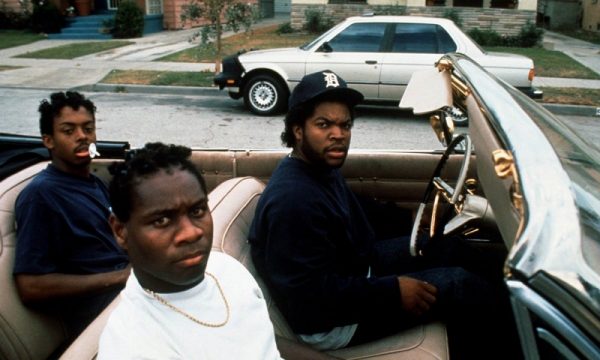
The scene, one of several nods to Reiner’s film, is partly what makes John Singleton’s blistering 1991 debut so profound. A telling riff on the term ‘boyhood’, Boyz n the Hood manifests a striking blend of universality and specificity: fusing intimate genre beats with unflinching realism that transcends any sense of time and place while also powerfully reflecting it.
Just 24 when he wrote and directed the film, that Singleton was able to deliver a work of such depth and fierce intelligence is nothing short of remarkable. Then again, it should hardly be surprising. In focusing on the lives of teenagers Tre (Cuba Gooding Jr), Ricky (Morris Chestnut) and Ricky’s half-brother Doughboy (Ice Cube), Singleton was able to give powerful agency to a generation he was very much a part of. In basing much of the film on his own experiences and those of people he knew, he was able to tell a story from a place of real authenticity and authority.
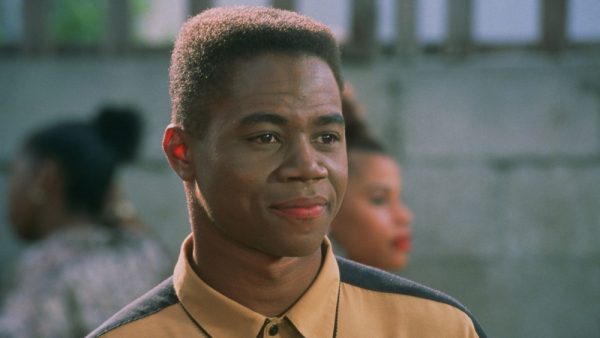
The results are potent. Against the backdrop of LA’s Crenshaw neighbourhood, Singleton paints an uncompromising portrait of black inner-city existence that largely foregoes sentimentality by framing its more conventional coming of age tropes within wider examinations of fatherhood, gentrification, inequality, male responsibility and sex in an era oppressed by HIV/Aids. In exploring such themes, characters pointedly become the inverse of one another: from Tre, the bright, college-bound kid kept on the straight and narrow, to Ricky, a young father and talented athlete who, without a positive male role model in his life, lacks both direction and vital street nous. Then there’s Furious Styles (a career-best Laurence Fishburne), Tre’s strict, compassionate dad whose brand of tough love contrasts with that of Ricky and Doughboy’s mother (an excellent Tyra Ferrell), whose insistence on keeping the plastic wrapping on the couch ultimately assumes terrible significance.
Violence too has its place in Boyz N the Hood, carrying tragic repercussions both on screen and, in the case of actors Dedrick D. Gobert and Lloyd Avery II, off it too. But, crucially, violence never becomes the narrative’s primary focus. On the contrary, Singleton’s film, with its tagline ‘Increase the Peace’, is decidedly anti-violent: a story not willing to merely accept the cycle of violence for what it is but opting to cast a more astute, critical eye over the socio-economic landscape that allows it to endure.
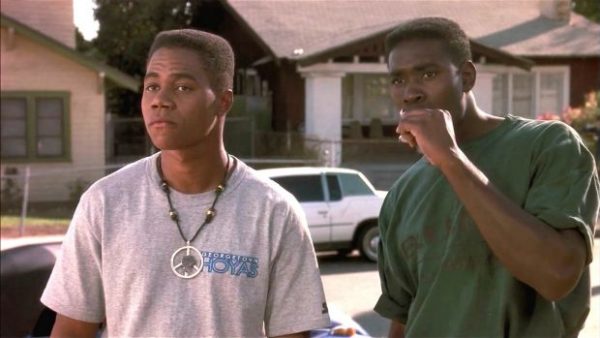
It’s this shrewd approach that gives Boyz n the Hood its enduring power. It speaks to both Singleton’s talents as a storyteller and his place as a pioneer of mainstream Black cinema that such vital, weighty ideas are articulated with seamless maturity and fervent energy. In particular, Ice Cube’s affecting final speech – serving as a tragic epiphany of his character’s own existence – remains a perceptive, poignant note to end on. As he slowly disappears from the film’s final frame – one final tip of the hat to Stand By Me – we’re reminded how the experiences of these characters are informed by a painful reality. How what we are watching extends far beyond the confinements of a cinema screen.
In an era of Black Lives Matter protests, where many of the themes explored in Boyz n the Hood continue to impact those of ethnic minority groups, Singleton and Doughboy’s sobering words – “Either they don’t know, don’t show, or don’t care about what’s going on the hood” – continue to sound with alarming resonance. Thirty years on, we’re left to ponder how much has really changed.
George Nash is a freelance film journalist. Follow him on Twitter via @_GeorgeNash for movie musings, puns and cereal chatter.