Casey Chong with ten essential workplace movies…

Going back as far as the black-and-white film era, workplace movies remain popular even today, even as technology and culture have evolved over the years. But the universal themes of dealing with difficult and obnoxious bosses, office politics, and the banality of working dead-end jobs with zero career prospects still resonate with the audience. This allows the filmmakers to either mirror reality or deliberately exaggerate the workplace struggles by adding different elements, such as a dark comedy or even a revenge fantasy. Below is our pick of the top ten workplace movies worth checking out…
Horrible Bosses (2011)

Here’s a movie that everyone can relate to: facing and putting up with an abusive boss that makes you feel like you are in a literal hell. And in this case, director Seth Gordon underlines three unfortunate friends (Jason Bateman’s Nick, Charlie Day’s Dale, and Jason Sudeikis’s Kurt) dealing with their respective horrible bosses (Kevin Spacey, Jennifer Aniston, and Colin Farrell). You could feel their everyday frustration from being harassed and exploited, which in turn drives them to work together to exact revenge against their bosses after a night of drunken conversation. As in, hypothetically speaking, wouldn’t it be great if their bosses were better off dead?
Gordon uses this revenge fantasy angle and cranks it up with a dark, mean-spirited comedy vibe. Coupled with the on-screen comedic chemistry of Bateman, Day, and Sudeikis, as well as standout supporting turns, notably Spacey’s sadistic boss and Farrell’s coked-up sleaziness of a balding big bully. Horrible Bosses struck a chord with the audience, resulting in an overwhelming box-office success that inspired a follow-up, albeit a less successful sequel three years later.
Margin Call (2011)

Writer-director J. C. Chandor made his feature-length debut in Margin Call, as he dives into the tense real-world work environment of the 2008 financial crisis that largely takes place in a Wall Street investment firm. Chandor’s matter-of-fact realism hits too close to home right from the start, beginning with the firm’s mass layoffs that anger Eric Dale (a sympathetic Stanley Tucci, who plays the head of risk management in the middle of something important but totally ignored).
The stakes escalate when one of the employees, Peter Sullivan (Zachary Quinto), a risk analyst who discovers the over-leveraged assets could potentially crippled the whole company. This, in turn, triggers an event that requires urgent decision-making from the higher-ups (among them are Kevin Spacey’s head of sales and trading, Sam Rogers, and Simon Baker’s head of division, Jared Cohen). Chandor keeps things deliberately cold and pragmatic to reflect the clear-cut hierarchy, where money and power matter the most in the world of trading and risk management. Margin Call made its mark after earning an Oscar nomination in the Best Original Screenplay category, even though it lost to Woody Allen for Midnight in Paris.
9 to 5 (1980)

Colin Higgins’ 9 to 5 may have been dated in some key points (the second half revolving around the frustrated employees end up kidnapping their sexist boss comes to mind), but this workplace comedy remains a fun watch, and even ahead of its time. This is especially true with the then-radical concept of flexible work schedules and job sharing, seen as part of the storyline, which wasn’t a common practice back in the more conservative ‘80s era. The movie equally benefited from the three principal stars – Jane Fonda, Lily Tomlin, and Dolly Parton – who play underappreciated employees often subject to workplace inequality and gender issues, thanks to their terrific on-screen dynamic and chemistry.
Higgins, who also co-wrote the screenplay with Patricia Resnick, embraces the gleeful blend of slapstick comedy and classic farce, notably a chain of misunderstanding events surrounding the company boss Hart (a perfectly oily Dabney Coleman), ending up in a hospital. 9 to 5 was a big hit at the time of its release, grossing over $100 million, while Parton’s iconic titular song became a cultural phenomenon for decades.
Working Girl (1988)

Mike Nichols gamely explores corporate ambition through the power dressing mentality that defines the 1980s working women at the time in Working Girl. Working from Kevin Wade’s screenplay, Nichols highlights how Melanie Griffith’s Tess McGill, a newly-hired secretary from Staten Island, takes the opportunity to secure a merger deal by disguising herself as an executive while her boss (Sigourney Weaver) is recuperating from a ski accident. Using her charm, beauty, and improvisational skill to map out her strategy to convince everyone, even her associate Jack Trainer (Harrison Ford), Tess’s fake-it-till-you-make-it journey showcases Griffith’s assured performance, easily one of the best in her acting career.
Nichols also brings out the best in Weaver, Ford, and Joan Cusack, where the latter plays Tess’s best friend while balancing the high-stakes workplace drama with witty comedy and romance. Working Girl did well at the box office and even received six Oscar nominations, including Best Picture, Best Director, and Best Actress for Melanie Griffith. The movie took home the Best Original Song for Carly Simon’s anthemic “Let the River Run”.
Swimming with Sharks (1994)

George Huang’s debut feature cruelly exploits the abusive working relationship between Kevin Spacey’s tyrannical film producer Buddy Ackerman and his assistant, Guy, played by Frank Whaley. Spacey’s boss-from-hell character is the kind of role that he was born to play, watching him abuse and humiliate Whaley’s Guy like a verbal punching bag. The contrasting power dynamic between these two characters makes Swimming with Sharks such a compulsively watchable acting showcase.
Huang, who also wrote the screenplay, proves to be adept at mixing dark comedy and workplace satire set in the cutthroat world of the movie business. It was a solid debut that he failed to replicate ever since, despite his attempt to diversify his filmography from making a teen comedy (1997’s Trojan War) to an action thriller (2024’s Weekend in Taipei) to uneven results.
His Girl Friday (1940)
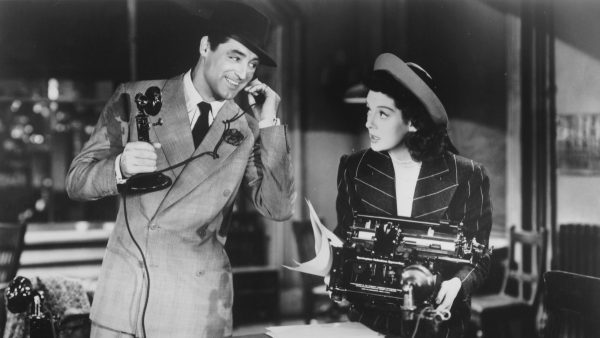
Howard Hawks brings the screwball comedy sensibilities he had succeeded in with Bringing Up Baby two years prior, setting another milestone with His Girl Friday. Adapted from Ben Hecht and Charles MacArthur’s 1928 play The Front Page, Hawks repurposed the source material into a mix of workplace and romantic comedies in a screwball tone, even going as far as flipping Hildy Johnson’s gender into a female character. This allows him to spice up the love-hate dynamic between Cary Grant’s manipulative newspaper editor, Walter Burns, and his ace reporter/ex-wife Hildy (Rosalind Russell).
The story focuses on Walter trying to win Hildy back after learning she’s about to marry another man (Ralph Bellamy’s Bruce Baldwin) by luring her back into the game. Hawks keeps the pace brisk with the overlapping, rapid-fire dialogue snaps, crackles, and pops, thanks to Charles Lederer’s witty adapted screenplay. It also helps that all the actors here are top-notch, notably Grant and Russell. Even over 85 years after His Girl Friday made its theatrical debut, this movie remains a prime example of how to make a funny, yet fast-paced comedy that effectively combines the best of both worlds.
Network (1976)
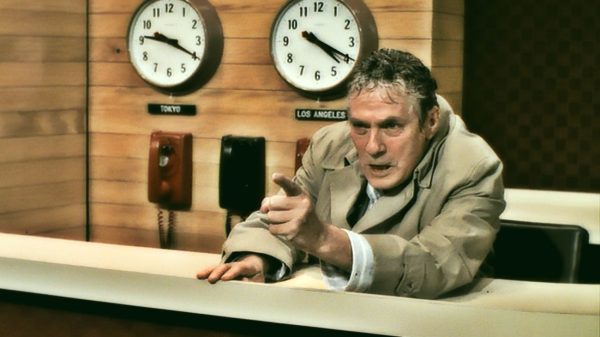
One of Sidney Lumet’s best movies ever made, Network blends pitch-black satire and cynical workplace drama in the cutthroat world of a television network. It’s fun and chaotic, but at the same time, bitingly cold and calculating, treating news more as a byproduct of sensationalism and entertainment, all for the sake of chasing higher ratings. It all started with the ambitious chief of programming, Diana Christensen (Faye Dunaway, whose ruthless performance took home an Oscar for Best Actress), looking for an opportunity to boost the network’s rating by exploiting Howard Beale (Peter Finch), an emotionally unstable news anchor who’s going to “blow his brains out right on the UBS Evening News program, a week from today”.
Finch’s angry catchphrase, “I’m mad as hell, and I’m not going to take this anymore!” still resonates even today, highlighting the ever-relevant workplace pressure, burnout, and a sense of powerlessness over facing impersonal capitalism. Finch’s fiery outbursts, coupled with his electric performance, resulted in a well-deserved, albeit posthumous, Oscar win for Best Actor.
The Devil Wears Prada (2006)
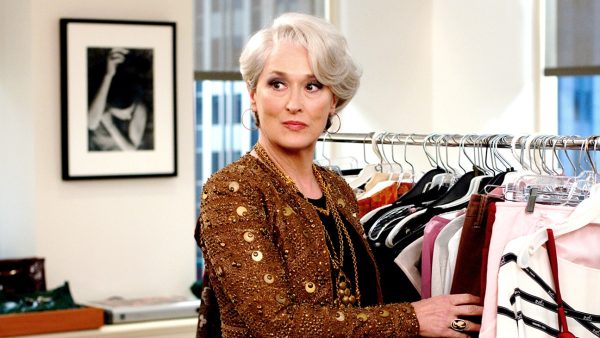
With the current legacy sequel exceeding box-office expectations so far, The Devil Wears Prada, which premiered twenty years ago, may have been a thing of the past, particularly in the traditional print media of the high-profile fashion magazine industry. But it still resonates with the relevant boss-employee dynamic between Meryl Streep’s highly demanding editor-in-chief Miranda Priestly and Anne Hathaway’s aspiring but underappreciated assistant Andy Sachs.
The movie may have been streamlined for a mainstream comedy purpose, but writer Aline Brosh McKenna and director David Frankel didn’t neglect exploring the harsh reality of surviving in a fast-paced fashion and creative industry, while highlighting relatable themes of sacrifice, career growth, and adaptability in coping with the highly pressured work culture. Of course, The Devil Wears Prada wouldn’t be a pop-culture phenomenon if it weren’t for Streep and Hathaway’s memorable on-screen chemistry. Not to mention the feel-good factor of watching Andy’s compelling journey from an assistant constantly being bullied and underestimated to overcoming the hurdles by becoming a more competent professional after learning things the hard way.
Glengarry Glen Ross (1992)
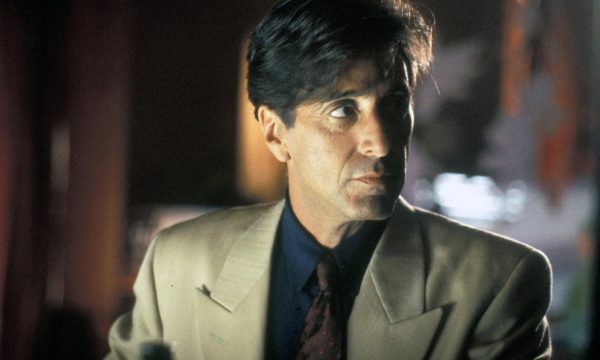
James Foley takes David Mamet’s 1983 stage play of the same name and turns it into a bruising chamber drama primarily set in the confines of a real-estate sales office. Mamet, who also wrote his own adapted screenplay, puts the real-estate salesmen, among them played by Al Pacino, Jack Lemmon, and Alan Arkin, as they are given the leads to close the deals.
Glengarry Glen Ross wastes little time in getting down to the pressure-cooking world of real estate business, addressing the stark do-or-die mentality faced by these salesmen throughout the movie. At one point, a top salesman named Blake (Alec Baldwin, who steals the show in just a single scene), shows up to motivate the team using the “ABC – Always Be Closing” motto. Mamet is no stranger to sharp, acid-tongued dialogue, and here, he makes them sing through the actors’ verbal tension. Despite earning critical acclaim, it’s a pity this otherwise great workplace movie didn’t do well at the box office and earned only an Oscar nomination for Al Pacino in the Best Supporting Actor category.
SEE ALSO: No Effects, No Set Pieces, Just Exceptional Acting: Glengarry Glen Ross Revisited
Office Space (1999)
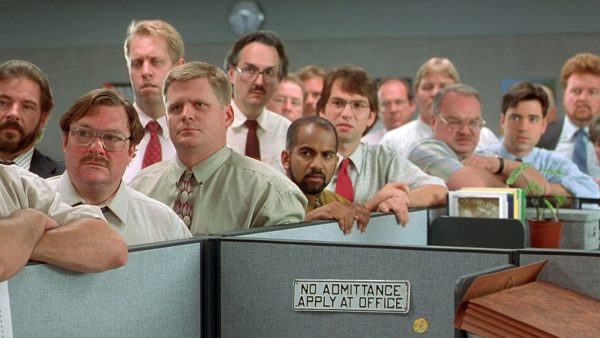
Based on Mike Judge’s own animated shorts, Milton, he captures the relevant feel of what it’s like working a physically and mentally draining, dead-end job, as primarily seen from the perspective of Peter Gibbons. Played by spot-on Ron Livingston, he inhabits the kind of working-class employee (most of us) can relate to, including his boredom and frustration clocking in and out of his office job that he’s dreaded all the time.
Judge also deserves praise for satirizing the everyday cliché of office cubicle life, micromanagement, and dealing with an oppressive yet controlling boss like Gary Cole’s Bill Lumbergh. Shame that Office Space failed to yield respectable box office business when it was first released in 1999, generating only a paltry $12.2 million on a $10 million budget. But the movie has since become a cult classic that still resonates with many people associated with the corporate workplace.
SEE ALSO: Office Space: The Timeless Corporate Satire Revisited
What are your favourite workplace movies? Let us know on our social channels @FlickeringMyth…
Casey Chong
Originally published June 14, 2026. Updated June 28, 2026.