Casey Chong with a selection of essential domestic thrillers from 1991…

1991 may have been the year when The Silence of the Lambs dominated the thriller genre to both box office and Oscar glory. But it also marked a solid year for domestic thrillers that focus on the internal danger within marriage, family, and even the community. An abusive relationship between spouses and other related disturbing matters on the domestic instability behind the closed doors of a presumably idealistic life lie something deeply rotten. Below is our list of six essential domestic thrillers from Sleeping with the Enemy to Deceived that filled the calendar year.
Sleeping with the Enemy
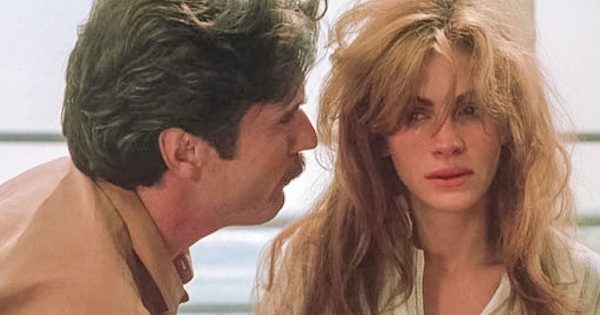
Julia Roberts was already on a roll in the early ‘90s, beginning with her consecutive box office hits Pretty Woman and Flatliners. And the following year, she does a great job of playing a meek wife named Laura Burney, married to a rich husband (a subtly menacing Patrick Bergin as Martin) and living in a beachfront house. Joseph Ruben is no stranger to exploring the domestic thriller angle in The Stepfather, showcasing his directorial flair as he deliberately navigates Ronald Bass’s adaptation of Nancy Price’s novel Sleeping with the Enemy. The story first establishes a seemingly picture-perfect marriage, only to gradually reveal Martin’s underlying toxic relationship and dominance over Laura.
Ruben even weaponizes everyday items like the folded bathroom towels on the rail and canned goods in the kitchen cabinet to create an uncomfortable sense of psychological tension as we see the nervous-looking Laura ensure everything is perfectly arranged as her obsessive husband intended. As the movie progresses, Laura is subjected to her husband’s physical and sexual abuse, prompting her to take action when the time is right by faking her own death.
The second half shifts gears into a series of high-stakes, slasher-like territory, as the relentless Martin won’t stop tracking down her missing wife at all costs, culminating in Laura confronting her fear once and for all. Sleeping with the Enemy was a big hit that year after raking in $175 million worldwide on a $19 million budget.
Mortal Thoughts
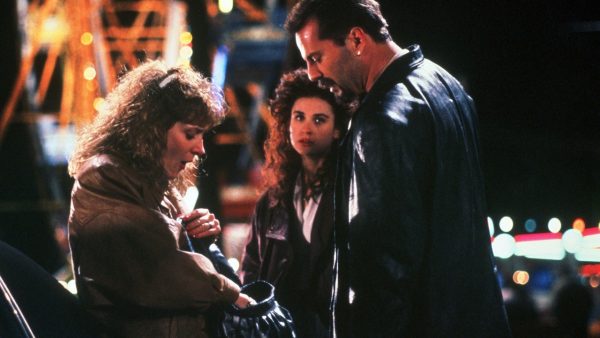
Demi Moore, who also served as a co-producer in Mortal Thoughts, plays Cynthia Kellogg. We first see her being interrogated by two police detectives (Harvey Keitel and Billie Neal) as they begin questioning her about the murder of her best friend Joyce’s (Glenne Headly) husband James (Bruce Willis). The movie then takes us to elaborate flashbacks, alternating between the past and present as she recounts the events from the beginning.
Directed by Alan Rudolph, the movie is specifically told from Cynthia’s perspective as she details everything from working as a hairdresser at Joyce’s salon to putting up with James’s constant advances and helping out her friend to cover her tracks on the night of James’s murder. Is Cynthia telling the truth or simply spinning a lie?
Rudolph highlights the possible unreliable-narrator angle here, making us wonder about Cynthia’s statement as the movie develops. Save for the disappointing finale that nearly derails everything we see, Mortal Thoughts is notable for featuring Bruce Willis in his 180-degree turn to play an abusive husband for a change, showcasing his range beyond screwball comedies (TV’s Moonlighting and his 1987 movie Blind Date) and action thrillers (Die Hard and its 1990 sequel). The movie equally benefits from the on-screen dynamic between Demi Moore’s Cynthia and Glenne Headly’s Joyce as two best buddies, whose friendship is severely tested once the murder changes everything.
Cape Fear
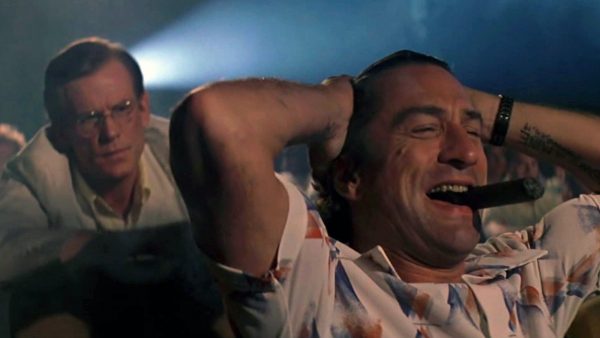
Martin Scorsese’s intriguing remake of the 1962 film Cape Fear, both of which are adapted from John D. MacDonald’s novel The Executioners, zeroes in on the pressure-cooker tension and anxiety of how defense attorney Sam Bowden (Nick Nolte) and his family (Jessica Lange and Juliette Lewis) live in constant fear. This is especially true after convicted rapist Max Cady (Robert De Niro) is looking to make the Bowdens a living hell after releasing from prison. He doesn’t directly resort to external violence, but instead systematically tears the family apart from the inside out using psychological manipulations.
Despite sporting an extensively tattooed body and a bulked-up physique with an intense, psychotic look, Cady isn’t your average violent criminal and stalker. Throughout his imprisonment, we learn Cady studies law that would be beneficial to him later on. At one point, he manages to get his own attorney to file a petition for disbarring Sam after the latter illegally hired thugs to beat him up.
Scorsese also delves into the toxic relationship between Sam and his wife Leigh, particularly the former’s recurring infidelity that leads to their increasingly fractured marriage. And their disillusioned teenage daughter, Danielle, is caught in the middle of the conflict, allowing Cady to exploit her emotional detachment and vulnerability during a controversial scene in which he poses as a drama teacher. The Cape Fear remake isn’t only a box office hit, but also earned De Niro and Lewis Oscar nominations in their respective Best Supporting Actor and Actress categories.
Not Without My Daughter
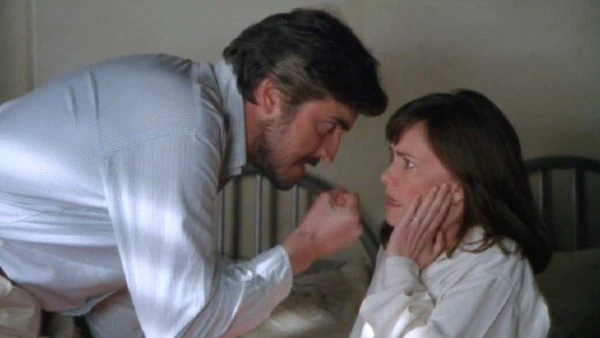
Based on Betty Mahmoody and William Hoffer’s 1987 memoir of the same name, Not Without My Daughter explores the true story of how an initially happy marriage between the US-born Betty (Sally Field) and her Iranian doctor husband Moody (Alfred Molina) turns into a domestic nightmare. It all begins when Moody wants his wife and their daughter, Mahtob (Sheila Rosenthal), to travel with him to Iran to meet his family. Everything seems fine at first, except that Betty has to get used to the strict Islamic customs in Iran.
But things get worse when she learns that her husband forces her and their daughter to remain in Iran. Although Moody’s transition from a loving and mild-mannered husband to a controlling yet abusive spouse comes across as a tonal whiplash, Brian Gilbert’s direction manages to maintain the deliberate marital tension surrounding Betty’s plight to cope with the entrapment, while looking for a way to escape the country.
He doesn’t shy away from the harsh reality of domestic captivity against one’s will, even though it would do his movie a better favor if he didn’t lean on the rigidly xenophobic tone that paints a stereotypical negative picture of the Iranian people and culture in general. Still, Gilbert brings out the best in Field and Molina’s contrasting performances through their characters’ power dynamics remain one of the highlights here.
The People Under the Stairs
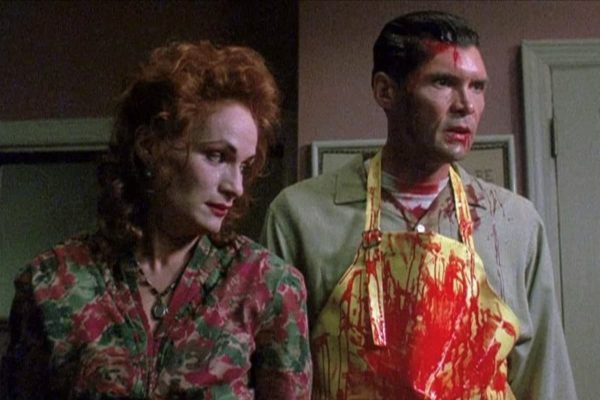
The misguided poster featuring a giant skull hovering over a suburban home suggests this is a supernatural horror. Besides, with Wes Craven attached as both writer and director, it’s easy to expect him to explore the aforementioned path. Except that The People Under the Stairs has nothing to do with supernatural elements, other than depicting them as children and young men who have been kidnapped and locked in the basement by a pair of psychotic landlords (Everett McGill and Wendy Robie). The landlords in question are only known as “Daddy” and “Mommy”, who torture these children before leaving them to rot inside the cellar, especially if they misbehave. These two characters mirror the oppression of greed and capitalism against the weak, allowing Craven to navigate his allegorical storytelling in this cautionary tale of domestic thriller.
He also frames The People Under the Stairs as a darkly satirical comedy, despite the uncomfortable subject matter of physical abuse and imprisonment, even depicting the central antagonists as an over-the-top and often hysterical duo with McGill’s “Daddy” going as far as dressing up in a leather BDSM getup. The movie goes further into subverting audience expectations by highlighting the 13-year-old Black boy Poindexter “Fool” Williams (Brandon Adams) as an unlikely protagonist who outsmarts the ruthless landlords and saves the titular people under the stairs. The People Under the Stairs did surprisingly well at the box office, proving Craven’s versatility beyond his usual horror-movie expertise.
Deceived
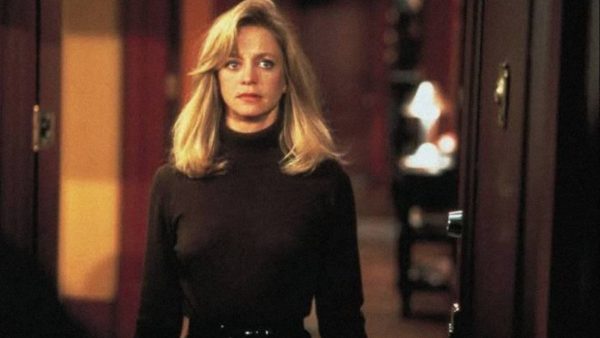
What if the man you sleep and share your life with all this time isn’t the person he turns out to be? For Adrienne Saunders (Goldie Hawn), her life is what defines a perfect life: a happy marriage to her art dealer husband Jack (John Heard) and a lovely young daughter named Mary (Ashley Peldon). But things begin to fall apart when a murder accusation surrounding Jack is involved, and later a suspicious car accident, leading to a shocking discovery about Adrienne’s husband.
Hawn is primarily known as a comedic actress in movies like Private Benjamin, Wildcats, and Bird on a Wire. But she did prove her range for dramatic flair in Steven Spielberg’s The Sugarland Express, and here in Deceived, she demonstrates her ability to play an emotionally vulnerable character forced to cope with the reality beyond the immaculate façade. Her grounded portrayal contrasts well with Heard’s chillingly manipulative performance as a so-called husband with a hidden agenda. The movie may have marked Damian Harris’ sophomore feature after 1989’s The Rachel Papers, but he brings assured direction to this deliberately paced psychological thriller.
What are your favourite domestic thrillers of 1991? Let us know on our social channels @FlickeringMyth…
Casey Chong