Hasitha Fernando looks at the story behind Mission: Impossible III as the film celebrates its 20th anniversary…
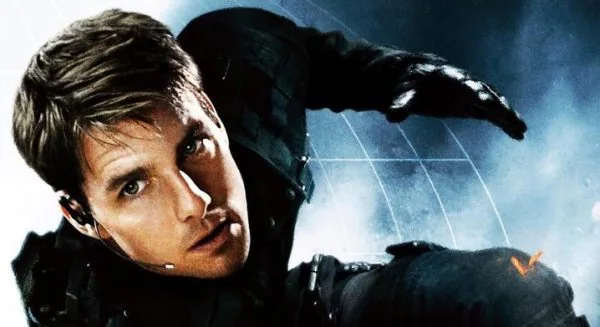
Despite the box-office success of Mission: Impossible 2, the film was a significant departure from Bruce Geller’s original espionage television series as well as Brian De Palma’s twisty-turny 1996 suspense thriller which launched the big screen franchise. However, Mission: Impossible III was able to right many of the wrongs committed in the previous outing and play an important role in revitalizing the franchise and transforming it into what we know today. As the spy actioner turns 20 we look back at its behind-the-scenes story and everything that transpired during the making of the film…
The sequel was stuck in development for the longest time due to creative disputes
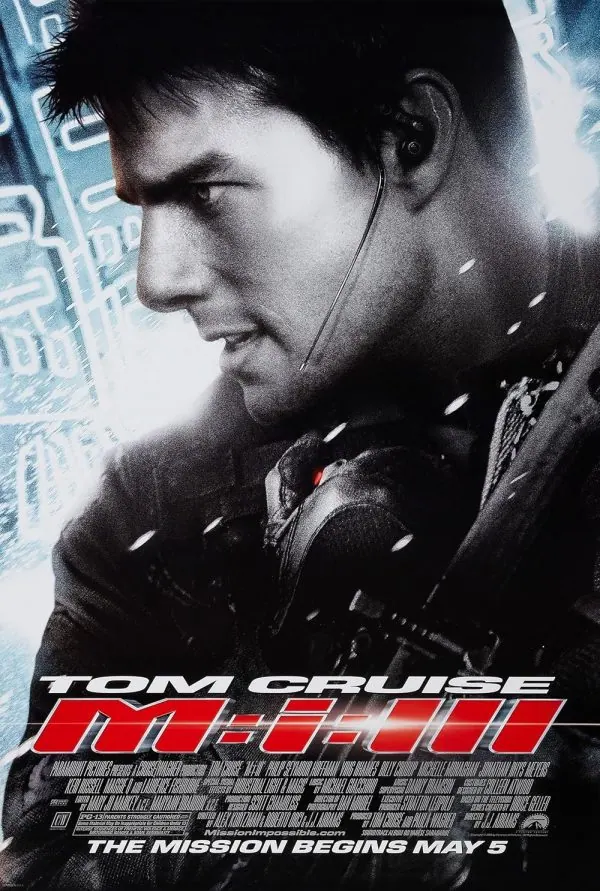
For better or worse, John Woo’s Mission: Impossible 2 changed the trajectory of the series by introducing an Ethan Hunt that was more James Bond than anything, replete with half-a-dozen slow-mo action set pieces and a distinct lack of team dynamics present in the original series and the first movie. The film performed well at the box-office raking in a decent $531 million worldwide but film critics were less kind towards the effort. To right the many wrongs committed in M: I-2, producer and lead star Tom Cruise sought the talents of none other than auteur director David Fincher. Known for his moody, R-rated affairs like Se7en and Fight Club, Fincher was more than excited to helm the next Mission: Impossible film eyeing a summer 2004 release date. Sadly, due to creative differences over the direction of the overall series Fincher dropped out. Following Fincher’s departure Joe Carnahan, who made a bold entry into the industry with the indie actioner Narc, was chosen as a replacement. Carnahan worked on the project for over fifteen months before he too parted ways citing massive creative conflicts. Carnahan’s version of the Mission: Impossible sequel would have seen a Timothy McVeigh type character played by Kenneth Branagh going up against the IMF team members which would have featured characters played by both Carrie-Anne Moss and Scarlett Johansson.
Mission: Impossible III was J.J. Abrams’ feature directorial debut
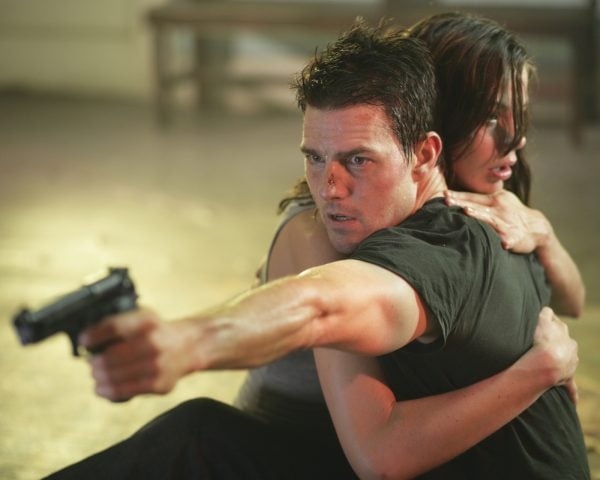
Losing a critically acclaimed creative of Fincher’s stature as well as an up-and-coming talent like Carnahan was certainly a blow for Tom Cruise and company, but the project’s fortunes changed after Cruise binge watched the first two seasons of the then popular television series Alias. Confident that the show’s co-creator and director J.J. Abrams would be the man for the job, Cruise offered the directorial role to him and Abrams was more than happy to oblige, but there was one caveat. Abrams already had multiple contractual obligations to Alias and Lost, and he had to fulfil these before he could turn to Mission: Impossible III. This meant that production got delayed by over a year and because of this Branagh, Moss and Johansson dropped out of the project. Directing the third Mission: Impossible outing proved to be a boon for Abrams, as the filmmaker went on to have a successful career helming movies from multiple lucrative franchises such as Star Wars and Star Trek, effectively making him the tenth highest-grossing film director of all time.
Philip Seymour Hoffman’s Owen Davian will always be the best villain of the franchise
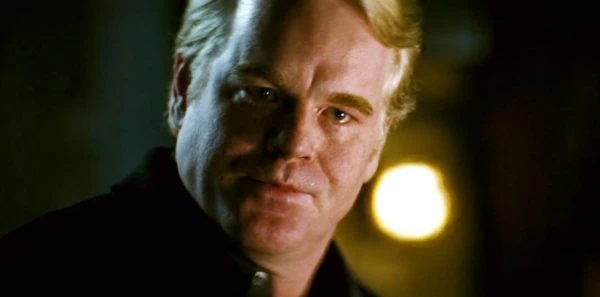
The late Philip Seymour Hoffman was always been regarded as one of the greatest character actors of his generation. Starting out his career in supporting roles in movies like Scent of a Woman, Magnolia and The Big Lebowski in the 1990s, Hoffman slowly transitioned to leading roles with efforts such as Capote, Owning Mahowny and A Most Wanted Man the following decade. Hoffman’s career was primarily confined to the indie-film industry and it was with Mission: Impossible III that the uber-talented actor first got exposed to a broader, mainstream audience, playing nefarious weapons dealer Owen Davian. Hoffman’s performance was praised by critics and fans alike, and many still agree that Owen Davian is still the best villain of the franchise. Interestingly, the role was first offered to Billy Bob Thornton, but the acclaimed actor declined as he didn’t want to be typecast in villainous roles. The villain’s name is also an in-joke of sorts to Hoffman’s long-time collaborator and manager, Davien Littlefield.
Simon Pegg once joked about landing a role in Mission: Impossible III
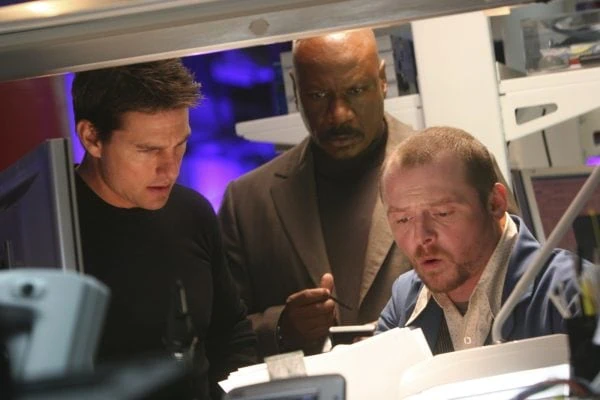
Simon Pegg came into prominence with the Channel 4 sitcom Spaced, which he co-created along with fellow geekhead Edgar Wright. Next the duo collaborated on the much acclaimed “Three Flavors Cornetto trilogy” which comprised of Shaun of the Dead, Hot Fuzz and The World’s End. During an interview conducted with Pegg during his promotional tour of Shaun of the Dead the actor was asked if he considered pursuing a career in Hollywood, to which he jokingly replied, “It’s not like I’m going to be in Mission: Impossible III”. Surprisingly, Pegg nabbed the role of Benjamin “Benji” Dunn, an IMF technician who shared a past with Tom Cruise’s Ethan Hunt. Pegg proved to be so popular with audiences that he reprised the role on five more Mission: Impossible films ending with Mission: Impossible – Final Reckoning in 2025.
Rachel McAdams turned down the part that went to Michelle Monaghan

Making waves with movies such as Kiss Kiss Bang Bang, Gone Baby Gone and Eagle Eye, as well as appearing in TV shows like True Detective, The Path and White Lotus, Michelle Monagahan was cast as Ethan Hunt’s wife Julia Meade when Rachel McAdams turned down the role. This turned to be a blessing in disguise for Monaghan, because the actress reprised the part on multiple Mission: Impossible films, much like Simon Pegg did for his Benji Dunn character. This was a departure from the previous outings of Ethan Hunt, where the secret agent’s ‘entanglements’ were simply confined to that particular movie. Thandiwe Newton, who played Hunt’s love interest in Mission: Impossible 2, was extended the opportunity to join the third outing but the actress declined citing family commitments.
A mix of CGI and practical effects were used for many of the key action sequences
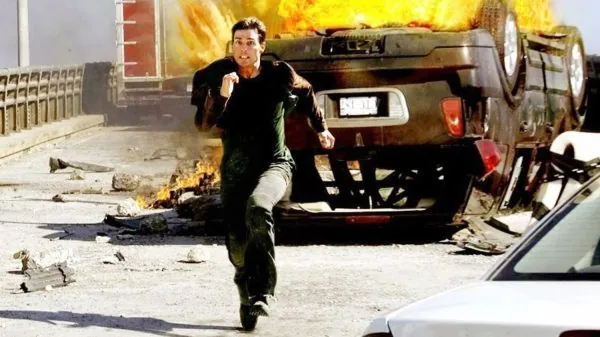
Despite being a more character driven piece Mission: Impossible III also had some exceptional high-octane action set pieces that raised the bar for the franchise. The VFX team at ILM headed by Roger Guyett painstakingly recreated a computer generated Shanghai and the Chesapeake Bay Bridge for the key action sequences featured in the movie. J.J. Abrams & his crew also recreated a 600-foot long section of the Chesapeake bridge somewhere in Los Angeles, as it was next to impossible to shoot in the real location due to logistical constraints.
A promotional shoot for the movie backfired in hilarious fashion
To promote Mission: Impossible III Paramount studios rigged 4,500 random vending boxes that belonged to the Los Angeles Times with digital audio players which would automatically play the Lalo Schifrin’s Mission: Impossible theme whenever the door opened. These audio players weren’t always concealed and in some instances came loose and fell on top of the stack of newspapers for everyone to see. This naturally prompted people to mistake these unknown items as bombs and in a number of cases the police bomb squads were contacted to deal with the situation. Despite this unforeseeable issue Paramount kept the audio players in the boxes until two days after the movie’s opening.
Tom Cruise and the whole “trapped in the closet” controversy of South Park

South Park is well known for its biting satire and “no filter” approach towards controversial subject matter. A month or so prior to the release of Mission: Impossible III a blog entry of Hollywoodinterrupted.com alleged that Viacom, the parent company of both Paramount and Comedy Central, canned a rebroadcast of the South Park episode “Trapped in the Closet” due to Tom Cruise threatening that he’d pull out from promoting the film if they didn’t. Several news outlets such as American Morning and E! News also ran with the story, but when Cruise was interviewed by ABC’s Primetime the actor simply stated that, “I honestly didn’t really even know about it. I’m working, making my movie, I’ve got my family. I’m busy. I don’t spend my days going, ‘What are people saying about me?’”
Box-office success, solid reviews and a franchise course correction

Made on a production budget of $150 million, Mission: Impossible III went on to make a respectable $398.5 million at the worldwide box-office. Although the effort became the first movie in the franchise to gross $100 million worldwide during its opening weekend, Mission: Impossible III possesses the lowest box-office in the entire franchise. The flick found adoration with film critics when it debuted and as of writing holds a solid 73% on review aggregator website Rotten Tomatoes with 248 reviews and an average rating of 6.7/10. Owen Gleiberman of Entertainment Weekly was one of the flick’s biggest fans and described the high-octane actioner as “a gratifyingly clever, booby-trapped thriller that has enough fun and imagination and dash to more than justify its existence.”
There were multiple rumors surrounding the fourth Mission: Impossible film and how the third would be Cruise’s final outing. But the fact of the matter is that Mission: Impossible III functioned, more or less, like a soft-reboot of the franchise by introducing the blueprint that would be copied by the movies that followed. Mission: Impossible III reintroduced the team dynamic in a big way. An aspect that was shamelessly discarded in John Woo’s style-over-substance, James Bond-esque actioner M: I-2. The film also introduced a roster of new characters, like Simon Pegg’s Benji Dunn and Michelle Monaghan’s Julia Meade, who’d go on to reprise their respective roles in future sequels; thus creating a series of inter-connected, character driven stories spanning multiple movies. Also brought back were less OTT and more grounded action set pieces that packed a proverbial punch. Long story short, there’s a lot that Mission: Impossible III contributed to course correct the franchise and transform it into the $4.35 billion action series loved and cherished by all.
What are your thoughts on Mission: Impossible III? Let us know on our socials @FlickeringMyth…
Hasitha Fernando is a part-time medical practitioner and full-time cinephile. Follow him on Twitter via @DoctorCinephile for regular updates on the world of entertainment.