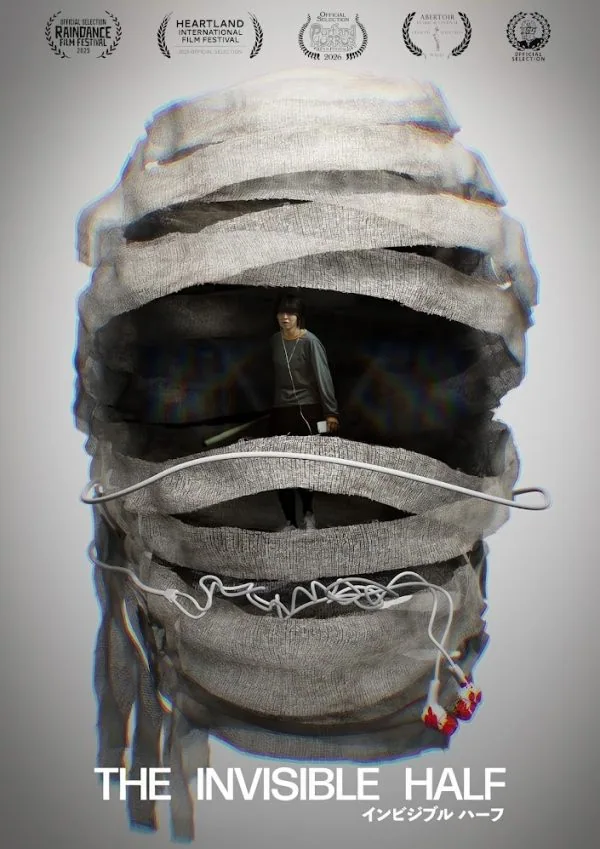
The Invisible Half, 2025.
Directed by Masaki Nishiyama
Starring Lisa Siera, Miyu Okuno, Runa Hirasawa.
SYNOPSIS:
A new bi-racial arrival to a Japanese school discovers that she is being watched a monster that can only be seen through her smartphone and heard through her earphones.
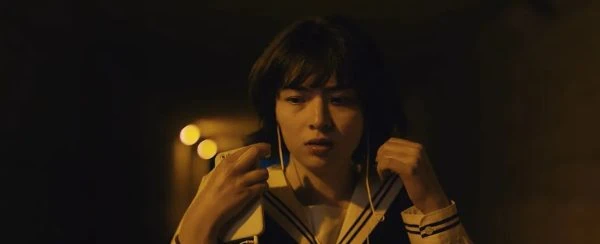
The real horror in Masaki Nishiyama’s creepy debut lies within its deep thematic exploration of racial identity, school bullying, and feeling isolated from the rest of the world. These horrors are effectively examined with an eye on the past of J-Horror’s insidious love affair with technology. This legacy was expertly explored through the analogue tech of Ringu, which started the glory days of J-Horror, before Pulse and One Missed Call headed out into the wilds of the internet and mobile technology in the early 2000s.
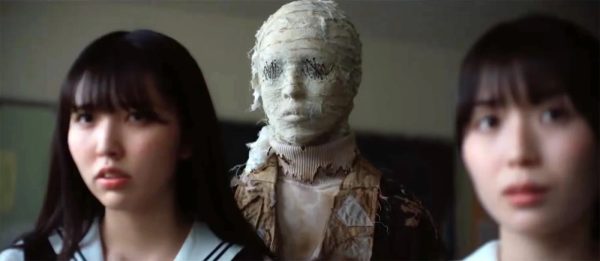
The Invisible Half does a fine job of calling these classic titles to mind. In Nishiyama’s film, the ability to see and hear horrors is offered via a smartphone and earphones to the unfortunate person being stalked. Given that this supernatural threat—a figure wrapped up in bandages—slowly and relentlessly approaches its target, one might also be reminded of the modern pacing of It Follows.
While the film’s slow pacing is genuinely disquieting, it also illustrates a potential problem with the movie: at times, the narrative slows down without generating enough immediate threat. The real terror here is intended to be psychological and social, but even so, there are points in the film where the momentum falters and it feels like the story could speed up a little.
Despite these pacing issues, the trials of the mixed-race protagonist, Elena (Lisa Siera), are exceptionally well observed. Having a British father and a Japanese mother, Elena is a vulnerable new arrival at an all-girls school. Nishiyama masterfully captures the suffocating atmosphere of a conformity-driven environment where the other girls are fiercely keen to fit in, and anything that goes outside of the established social norm is not welcome. This social pressure is perfectly embodied by Nyan Ito (Runa Hirasawa), a student who seems deeply addicted to her smartphone and is always visibly reluctant to take out her earphones.
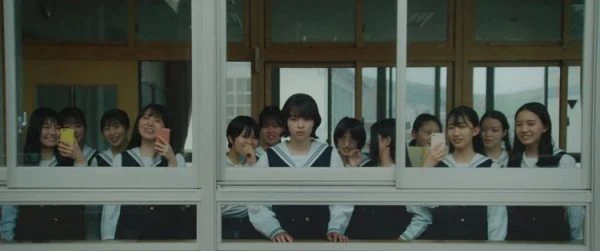
The other main character anchoring this experience is Akari (Miya Okuno), who becomes friends with Elena after they are positioned next to each other on Elena’s first day. Their friendship is strongly and tenderly portrayed. Both performers do a fantastic job of showing how, even in the toughest of circumstances, a decent heart and a genuine ability to empathise can go a long way.
This emotional anchor is crucial because Elena is having a remarkably tough time of it. For one, she does not have an easy relationship with her mother, and she is entirely unsure of where she wants to be. Her memories are fractured, and she has lost her grasp of the English language that she knew when she was younger. She is clearly under an immense amount of pressure.
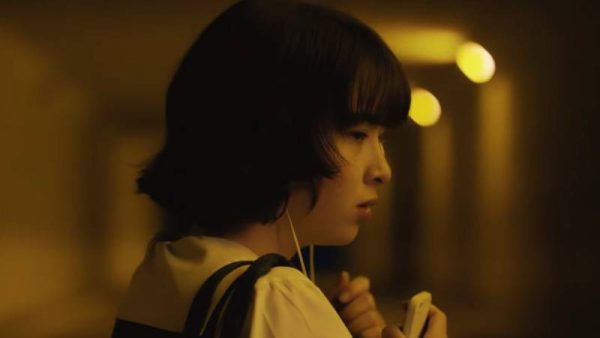
Immense pressure is also something that Nyan clearly harbours. Without spoiling the plot, the emotional and psychological crux of much of the film is that Nyan eventually suffers a severe psychological break in truly shocking style. As Nyan, and later Elena, comes to understand it, the smartphone uniquely offers a way to see and therefore guard against an upcoming threat. Rather than welcoming the evil spirits in, as many classic tech-horror films play with, the phone in this case serves as a vital tool to warn and protect the user.
Visually, the film is expertly shot, utilising shadows and gloom that are perfectly placed to heighten the ambient dread. The Invisible Half is highly recommended to those who appreciate slow-burn psychological thrillers driven by paranormal elements and modern technological threats.
Flickering Myth Rating – Film: ★ ★ ★ / Movie: ★ ★ ★
Robert W Monk