Tom Jolliffe on why Dune: Part Three needs to win the battle of Dunesday against Avengers: Doomsday…
Remember Barbenheimer? That fateful day in a post-COVID landscape saw two wildly different films drop on the same day. Christopher Nolan’s Oppenheimer couldn’t have been any more of an antithesis to Greta Gerwig’s colourful and campy adaptation of the infamous toyline. Both films were backed by critical praise, and though Barbie was probably more immediately built to be a box office magnet, Oppenheimer captured a hell of a run off thanks to the viral spread of Barbenheimer (a movement of film aficionados intent on double-billing the eclectic blend of movies). Christopher Nolan films have become an event in themselves, regardless of what he makes. Still, even the most optimistic Nolan fanboy couldn’t have envisioned an R-rated biopic on J. Robert Oppenheimer pushing damn near a billion dollars on its theatrical run.
In the end, Oppenheimer finished a shade under a billion in its theatrical run. Barbie grossed a shade under a billion and a half. Cinema ultimately won, and both films were mutually beneficial (though you’d have to say Oppenheimer got the bigger boost out of the double act). This kind of viral pop cultural movement was likely a one-off, almost impossible to repeat again. There were attempts to create a double hit with Saw X and Paw Patrol: The Movie, called Saw Patrol. Yeah, that didn’t take off. Neither did a push to create a double bill movement for Wicked and Gladiator 2 (Glicked), which was probably a shame for Ridley Scott, whose long-awaited sequel did good but not great box office numbers.

Both Barbie and Oppenheimer also had their own particular cinematic merits. Nolan has always been a filmmaker whose predominant demographic is male, whilst Barbie, as told by Gerwig, with a feminist slant, was always going to attract a stronger female audience. There was mutual cross-pollination too, with Oppenheimer having a higher than normal representation from the female demographic for a Nolan picture.
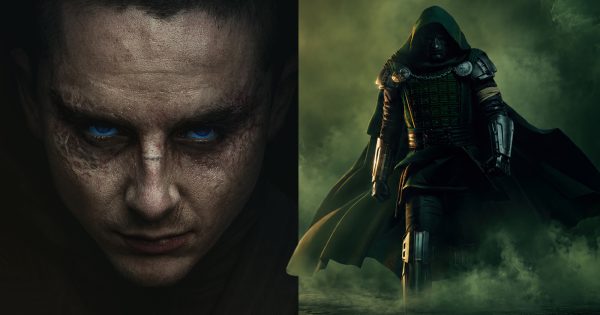
December 18th this year sees a double bill of Dune: Part Three and Avengers: Doomsday that will likely carry a similar theatrical heft and attention as Barbenheimer. Nothing quite as unique, nor will (I suspect) there be quite the same devotion for fans to take on both in a double bill (and on repeated occasions). Still, whether fans are flocking to see both or not, these films in isolation will likely carve out a huge swathe of the box office over the Christmas holidays, into the new year. A key difference here is that on paper, both these big scale Sci-fi/fantasy adaptations of recognisable IPs are within the same ballpark and don’t fit the Barbenheimer mould in the same way. Furthermore, there’s a battle here that also has some potentially major significance for cinema itself. It’s not just bragging rights at stake; it’s the cementation of a cultural shift in audiences that will tell us a lot about the next era of cinema, and Dunesday will point the way.

The MCU movement between Iron Man in 2008 and Avengers: Endgame in 2019 saw a big shift in what younger audiences were drawn to in the cinemas. Marvel cinema and films of a similar ilk, like Disney’s Star Wars, were raking in huge amounts of money. Covid hit, temporarily firing a hammer blow into the cinema industry. That happened well into the point that multiplexes were becoming oversaturated with IP movies, multiverses and interconnecting movies. It felt like we were getting a new Marvel film every other month at one stage. The trouble is, post-Endgame, nothing felt nearly as spectacular, whilst oversaturation also made everything way less essential, as did ever-shortening theatrical distribution windows. Grosses started to wane, and even a slew of Disney+ Marvel and Star Wars shows would end after a season or two (if lucky) with barely a yawn of indifference from viewers (and in part because so many of these shows and movies were terrible).
In the past decade (or two), there was also a real shift in the way big-budget movies were being made. The full drift from movies that felt haptic (textual, detailed, earthy, gritty), to those which felt like optic cinema (surface visuals often devoid of finer detail). A big reason for that is the shift from reliance on practical filmmaking and crafting in camera, to relying on CGI and post-production technology to shape and mould a film. There’s a strange artifice to modern blockbusters, many of which are shot (in huge chunks) in green screen studios with very uniform or flat lighting, to have everything added in post and the lighting and look shaped and refined. It looks plastic, artificial, clean, and frankly boring. Huge CGI set pieces drag on and on because bigger is better (to the point of ad nauseum).
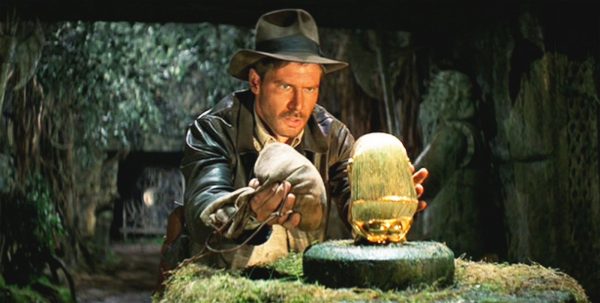
In comparison, let’s journey back to Raiders of the Lost Ark, for example, which is maybe the pinnacle of blockbuster adventure cinema. Sweat, dust, dirt, texture, detail, locations, sets, earthiness, and shot with the kind of meticulous detail you get from sets, locations, interesting light setups, and more. In a confined (albeit often huge) studio bathed in green felt, there’s a limit to what you’re practically doing on the day that can often breed an inherent stiffness and frustration in the actors. Ask Ian McKellen, who found the process in The Hobbit films hugely frustrating in comparison to a far more practical, led approach in Jackson’s The Lord of the Rings trilogy.
With more and more modern blockbusters underperforming at the box office, and younger audiences more drawn to indie films (particularly horror like Obsession), the question now is: do Gen-Z audiences respond positively to old school, meat and potatoes filmmaking? Generally, indie films and horror cinema tend to rest on a higher ratio of practical filmmaking compared to, say, the average Marvel/Star Wars/similar blockbuster. They feel more grounded in reality. There’s also felt like a major drop-off in the quality of CGI in blockbusters, largely because the farming out of work to CGI studios has been so vast that many artists are spread thin, with higher workloads and studios using the more-is-more mentality, and end up with a final product that looks cheap (even if the film cost 300 million dollars to make). Not everyone takes the time and care that James Cameron did (and is afforded) with his Avatar worlds, and even those don’t look quite as majestic as they did in the first film. Sometimes there’s a sense that studios don’t appreciate how discerning younger audiences might actually be, trying to pass off substandard visuals to an audience they believe will just gaze occasionally from their phones.

Here’s the thing: it could well be argued that a reason films like Top Gun: Maverick, F-1 and now The Odyssey have proved successful is that a leaning on practical filmmaking, blended with well-rationed and skilfully composited CGI, is almost a new experience to some younger viewers. They’ve grown up on films reliant on greenscreens that feel uniform in their drab lifelessness, or look like video game cut scenes. Reality, real stunts, and jaw-dropping attention to detail have come full circle and back into vogue again (I hope). Tom Cruise in an actual cockpit pulling serious G’s is better than Chris Pratt in a studio. For actors growing up in blockbusters and knowing one way, it also becomes a rare novelty. Ask Tom Holland whose experience shooting Chris Nolan’s The Odyssey was far more jaw-dropping and enveloping than playing Peter Parker. I’m no Holland fan either, but it doesn’t feel surprising that in Nolan’s practical sets and dazzling locations, Holland gives his best performance.
In the rising AI boom, we’re also left with looming questions over the future of cinema. If CGI and those tools made creating any image your heart desired that much easier, whilst still requiring the diligent work of VFX artists, then AI holds the potential to make any image without even requiring you to hire a team of artists. The keyword is “artist” here. Art. A notion that feels disturbingly dismissed by respected filmmakers like Darren Aronofsky, the Russo Brothers, Neil Blomkamp, Martin Scorsese, George Lucas, and more, who are all too accepting of the technology’s development. They’ve all had their moment in the sun, made their money, and in the end probably don’t care about the next generation of real artists and filmmakers who could well see their limited opportunities limited further. Just ask Elon Musk, because apparently Grok will deliver a full feature and a more “historically” accurate version of The Odyssey later this year, which only idiots will watch for more than morbid curiosity. Did the “real” Odysseus have three arms? Probably. Ever see a Cyclops with two eyes? Maybe. But whilst nana is getting tricked by AI slop videos and pictures, and Gen-X and Millennials play with the toys, it would seem, aside from a growing rise in its use at colleges/unversities, that younger folk are arguably the most critical in the rise of AI. They’re also probably the most wily at spotting it. They appear to be first in the queue at rejecting its use in the creative arts.
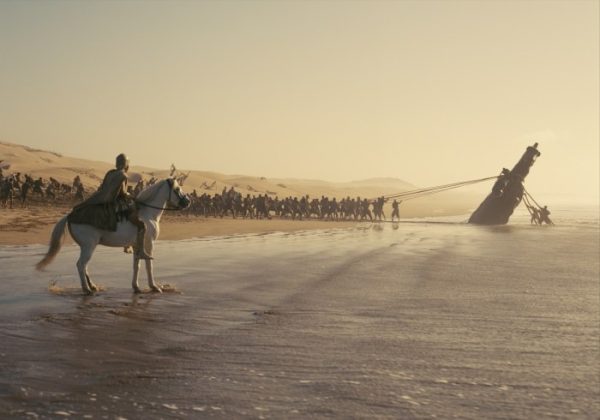
It’s also younger film audiences driving the success of indie films lately, helping a significant uptick in physical media, and popularising a new spike in cinephilia through Letterboxd et al. The success of a film like The Odyssey, even in the face of an ongoing culture war over it, still requires a large audience to push it past $300 million (and rising) after just a week of release. Within that, in a genre and an age rating that doesn’t immediately scream Gen-Z fodder, plenty of under-30s have gone to take in the spectacle of Nolan’s work. Above all the noise, the film has been lauded for its jaw-dropping scale, and Nolan’s almost pedantic obsession with practical filmmaking. For someone my age, it made the film feel like a real old-school throwback, but for someone far younger, it would no doubt feel like an entirely new theatrical experience to see a mass of extras out on a real ship on the ocean, or inside a real cave, or stuffed inside a 35-foot Trojan horse, or a sizable, almost labyrinthine Troy set.
As far as dedication to practical filmmaking goes, no one but Quentin Tarantino comes close in mainstream circles to Nolan. One man who still does as much as possible within the expansive worlds Science fiction requires is Denis Villeneuve. This is a filmmaker who still makes movies to look like movies. He wants his DOP to cultivate the look in camera so it can be tweaked in post (modern mainstream cinema often requires the opposite). A director who will use miniatures where others would just shoot a plate and use CGI. He’ll also build imposing sets, shoot in interesting locations, and craft a film you can almost feel. I watch Dune and have to shake the sand out of my shoes afterwards. Nolan is likely never going to get into bed with an AI tech giant or take the easy out it might allow him on a creative decision. Nor (I suspect) is Denis. On the other hand, the Russo Brothers have admitted to minor use of the technology for their streaming original that no one remembers and no one liked, Electric State (it should have been called “A Right Fucking State”) and have a vested interest in AI development. And it’s a shame, because they’ve made some decent films (and shows) over the years.
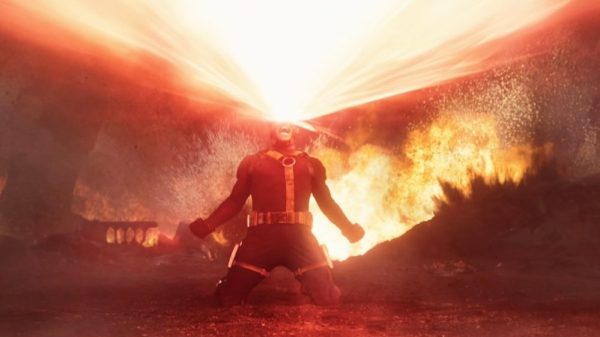
If the box office success of The Odyssey has suggested audiences yearn for rich and earthy filmmaking that your eye can see is physical, then the end of the year could confirm just whether we will see a significant step back toward practical filmmaking. Whilst Dune 3 has released trailers that look impressively grand whilst textured and realistic, Avengers: Doomsday dropped a trailer that looked… well, like it had been dropped by AI. Your average Marvel BTS video will often marvel at how much can be changed from production to post, from costumes to compositing the various actors together in the same scene, even when they may have shot everything separately. Impressive, yes, but does it ever really benefit the film? I’m not convinced. If you need five characters to share a scene, what’s wrong with shooting them together and doing it somewhere real and tangible that each actor can see and touch? Schedule schmedule.
It’s funny to think that filmmaking in the old ways somehow feels new and, for some, almost a revolutionary concept, but perhaps we’re seeing that sea change over the past five years. A wider selection of smaller-scale films that feel largely handcrafted and refined in post (rather than the opposite), or bigger spectacle films that bill themselves as being practical throwbacks and living up to the promise. When it comes to December 18th, do you want the meticulous, creative might of Denis Villeneuve to win the day, or an Avengers film that feels out of date now and looks like a video game (to play fair, they still have months of CGI refinement to do)?
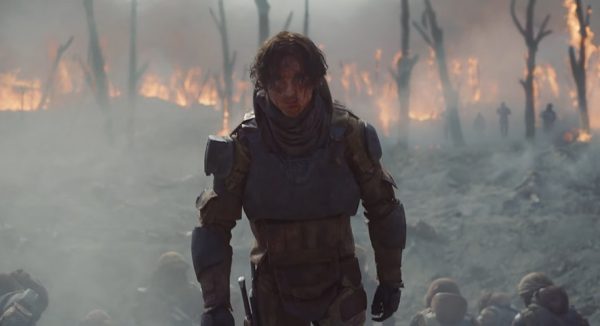
Sure, you can have both, and more ticket sales mean an industry showing further shoots of recovery, but for the sake of auteurism and creative vision, if there’s to be one “winner,” it has to be Denis. I say this having not even been overly enamoured with Dune: Part Two (and I liked but didn’t love the first), for a host of pacing and storytelling issues. As a piece of modern filmmaking, though, it was still a great fusion of old-school practicality with well-blended use of CGI, much like his Blade Runner 2049 (which I loved). A tool, not a crutch or the primary visual factor across the picture. For the sake of cinema, I know who must win the battle. Or would it just mean fifty Zendaya films over the next couple of years?
Which film will you be seeing on Dunesday? Do you want a return to practically driven filmmaking in blockbuster cinema? Let us know on our social channels @FlickeringMyth…
Tom Jolliffe