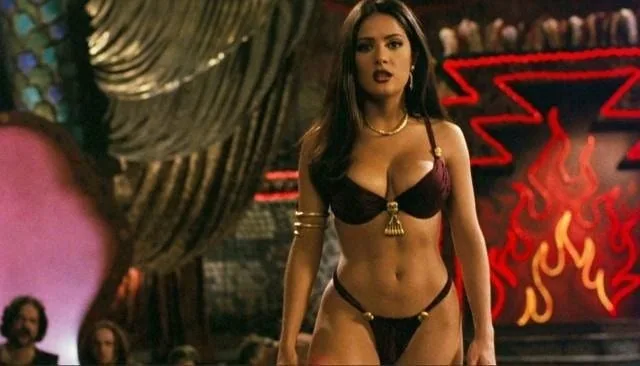
Trevor Hogg chats with Jack Fisk, who was born 67 years ago today, about the craft of production design, and his collaborations with Terrence Malick, David Lynch and Paul Thomas Anderson…
“My mother was artistic in a time that didn’t encourage women to take on a career of their own so she always had me enrolled in art classes where ever we were living,” recalls Jack Fisk when reflecting upon his childhood. “My wife [Sissy Spacek] is an actor/filmmaker, our daughter Schuyler is a singer/songwriter and our daughter Madison is a painter and an art director.” The native of Canton, Illinois became enthralled with cinema while pursuing a different artistic endeavour “When I was studying painting at Cooper Union I went into an empty theatre and watched the Red Desert [1964], Antonioni’s first colour film, and was so excited by it I sat through it two times. Even though I loved the film I did not think about film as something that I would want to do. It never seemed an option. Other films that impressed me during art school were those by Bergman, Jules and Jim [1962], The Cabinet of Dr. Caligari [1920], Woman in the Dunes [1964] and Lawrence of Arabia [1962]. I also was excited in those days by the Bond movies. The cinematic moment that left a lasting impression on me was the first time I saw Eraserhead [1977] at a midnight screening in the Nuart Theater and heard the audience reciting lines from the film. David [Lynch] had worked hard on the film for more than five years and had translated his art into a feature film which had found an audience.”
“It seems that it was completely by accident that I became a production designer, but now after 40 years in film I see how everything I learned and experienced before working in film has helped me be a better film designer,” says Jack Fisk. “I moved to Los Angeles with David Lynch who came to attend the first classes at the American Film Institute. Having seen an impressive show of James Rosenquist’s paintings at the Met in New York, I was looking for work as a billboard painter. There were no jobs available painting billboards, but I learned of a small biker film hiring assistants and signed on to that for $100 a week. I remember on my first day I was holding traffic on Topanga Blvd about a quarter of a mile from filming. I became curious about filmmaking and met a network of young people working on non-union films around Hollywood; that’s how I first started working on films. On each film following I worked to get closer to the action and began working in what became the Art Department. At that time there were few film schools, however, we worked for Roger and Gene Corman and learned a lot about making films.”
“Becoming successful in any profession is a combination of drive [passion], perseverance, and luck,” remarks Jack Fisk. “For production design it also helps if you have knowledge of colours and proportions, can draw a plan and converse easily with people.” When asked for his definition of great production design, the Academy Award-nominee responds, “This is a difficult question because I am still learning about production design. I don’t watch a lot of films, but I believe great production design balances all the elements of a film together so that it is unified. If the sets, costumes, lighting, props, and action are in balance the film will have a pleasant feel to it and everything will seem right. This requires the constant attention of the production designer to be able to adjust or adjust to all of the elements and people contributing to a film. Working with talented and aware costume designers, decorators, and cinematographers makes this daunting task possible because they too are relating their contributions to the other elements of the film. A successful film is the work of many. There are many great designers working today but you can see a balance in the works of John Box [in the films he made with David Lean], Eve Stewart [especially liked her work in Vera Drake and The King’s Speech], Brigitte Broch [The Reader], Sara Greenwood [Sherlock Holmes], Dean Tavoularis [The Godfather I and II], Stuart Craig [The English Patient and the Harry Potter series], Lai Pan [Lust, Caution], and Arthur Max [Gladiator].”
| “A 1976 sketch of the Days of Heaven house; I made this on the airplane flying to Canada to begin construction.” |
| “The house under construction. We only had four weeks to build and dress the Days of Heaven house and barns before shooting.” Photos by Janit Baldwin. |
| “A summer snow while we were shooting Days of Heaven in Canada.” |
“I search to find the challenges in each film I do,” reveals Fisk. “As much as designing settings solving problems is an important part of the job of a production designer. Sometimes it’s the miniscule budget and sometime it is the scope of the film. Each challenge has a solution and finding it is one of the fun parts of film design. I remember PTA [Paul Thomas Anderson] asking me how I was going to build the derrick in There Will Be Blood [2007] and me replying, ‘I have no idea.’ He seemed to like the honesty of my answer but I needed to figure it out. My solution was to build it real just like they would have in 1916. I found plans for an 1896 wooden derrick at the oil museum in Taft, California which I purchased for $3. I added a staircase and put it on the side of a hill, but it was the 1896 derrick. When we finally found the location for Days of Heaven [1978], I learned that because the Hutterite farmers were going to harvest the wheat in 6 weeks I would only have four weeks to design, build and dress the house and buildings around it. We were too young to know it couldn’t be done! We did it with some great carpenters, design shortcuts and a lot of luck. I hired a lot of young Hutterite boys to work every Sunday after church to help in construction. Other challenges that come to me are: the ships in The New World [2005], the airplanes and landing craft in The Thin Red Line [1998], the whole film Phantom of the Paradise [1974] was a challenge, and the fires in Badlands [1973] and Days of Heaven. Building a village in Guadalcanal with native women was a fun challenge; they are hard workers, but the men chewed betel nut and watched.”
| Fisk sketch of derrick. |
| “This is a Sketchup model of the derrick we constructed for There Will Be Blood inspired by an 1896 derrick in Taft, Ca.” |
| “David Crank the art director on There Will Be Blood made this sketch of the derrick, the camp and the church.” |
| Fisk sketch of the Sunday Ranch. |
“I usually work closely with a director in the beginning to try and tune into the film they want to make,” states Jack Fisk who has frequently collaborated with Terrence Malick [To the Wonder], Paul Thomas Anderson and David Lynch. I find that directors are hoping they can hand off the design of a film to someone they trust. They have so much on their plate that they will welcome your input. After working on There Will Be Blood for about two months, Paul asked me one day, ‘Why are you picking all of the colours?’ I gave him a new Benjamin Moore paint swatch book and said, ‘Okay, you pick ’em.’ I watched him carry that colour book around for a few days. When finally he came up and handed me back the swatch book, Paul said, ‘You pick ’em.’ When Paul called me to work on There Will Be Blood we started an interesting creative journey; his first design related comment on that film was, ‘Let’s not have any signs.’ I liked that idea; it fit well with my minimal approach and the design evolved from that. We didn’t look for easy solutions choosing to shoot in West Texas because it was so inhospitable and rough. We worked to keep it real but a stylized real eliminating all the clutter of the actual world. Paul shared his writing research so our sources for the visuals of the film were the same. I am very familiar with David’s style as I have been around him since we shared a painting studio in high school. I work with David by designing in the ‘style of’ Lynch. It can be fun and refreshing to work in someone’s style, especially a style as unique as David’s. Terry Malick and I have been working together for 40 years, since his first feature Badlands, and we have developed a style together. The minimal style first started because we had tight budgets and I started choosing dressing carefully because we could only afford a few things. This led me to an appreciation of painters like Edward Hopper who has a great economy to his images and to minimalist artists. Now, having worked with Terry so long we can communicate pretty well as we have many reference points in our history together.”
| “This is a tree house we built on Badlands in one day. I built a lot of forts as a kid but this was the biggest!” Photo by Janit Baldwin. |
“It happened without me thinking about it, but it seems that my best collaborations have been with writer-directors,” observes Jack Fisk. “The time they have lived with the project breeds a passion that I respect and it is a great help in designing a film. The writer and the director are one voice, and the fact that they created the script gives them license to alter or abandoned scenes easily. Decisions are made in half the time.” Life long friendships have been maintained. “David [Lynch], I have known since 9th grade, and he is a complete original in a world of his own design – as much a painter and furniture maker as a filmmaker. I know that David cannot stop creating and if he is not making a film, he is painting, drawing, printmaking, making furniture, composing music, or writing. To work with David you need to embrace his style, but he is a kind and fun to be around.” A break in the routine was to make a movie with Lynch which was grounded more in reality. “It was fun to watch David take a real story like the one of Alvin Straight and make it his own. I think he was able to draw from his real life to find quirky original moments for Alvin and the film. Working together on The Straight Story [1999] was fun as David would often paint and build on the sets; he loves to work.”
For Terrence Malick, Jack Fisk has always been his production designer of choice. “His films are made today with his select crew, which he describes as like a jazz band, or fingers of the same hand. Of course he is the only one with the music; we all contribute the best we can.” As for what has led Malick to make three films in two years, the resident of Charlottesville, Virginia remarks, “Two things have propelled Terry into making so many films in the past few years. First he has found an enjoyable way, for him, to make films, with a crew that is in synch with his new methods. Secondly, I think Terry has ideas that he wants to put into film and doesn’t know how much time he will have to do it. He works constantly. I asked him why he didn’t take a day or week off once in a while and Terry answered, ‘I took fifteen years off.’” Fisk believes that To the Wonder [2012] was inspired by Malick’s marriage to a French woman which ended in divorce. “Terry’s images could be his story points; they may seem abstract or impressionistic, but they resonate. I believe he works to transform his words into images, and I do not think there is any filmmaker that can assemble images for tone and feeling better than Terry.”
| “David Crank made this sketch of the hiring hall for The Master which we shot on Mare Island in San Francisco.” |
Lingering shots like the adjoining jail cell sequence in The Master (2012) do not add any additional pressure in designing the cinematic environment. “I like the sets to be complete as possible for the actors in the scene so they have it to work with but simple enough to be easily comprehended by the audience,” states Jack Fisk. “It is a stylized reality that appears real, but most sets will stand up to scrutiny.” The American production designer received an Oscar nomination for his previous effort with Paul Thomas Anderson. “The strength of the design of There Will Be Blood is that every part of it was designed and constructed. We rented a 50,000 acre ranch in West Texas and created our world there. Paul and I would walk around dreaming and designing where we would put the church, the town, and the derrick. It is easier to design everything and can make for a more cohesive film.” In regards to the visual research he conducts, Fisk remarks, “I usually try to find photographs and writings of the subject and the time period when researching a film. Much like a detective I approach writing skeptically taking in account the human factor. I love to see period drawings, paintings, photographs and documentary films, if they exist. I usually avoid looking at commercial films for research. I don’t want to be confused by other designers and directors take on a story. By the time we start building the sets I have a feeling for the time and place; I have left the research, and work on instinct and gut feelings.”
“I prefer constructing sets on location rather than in a stage,” states Jack Fisk. “I have found some great things in locations that I might not have thought of. I love the impact of people on a location and the sense of history, but generally I find locations too complex and confused, and spend most of my energy simplifying them.” Fisk has a developed a reputation for being able to recreate period environments. “I believe the key to making period environments believable is to live in them or imagine you do. Not to be too specific about the year and keep the colours natural to the time. While in art school I would spend my summers in upstate Vermont living with my dog ‘Five’ in a cabin with out electricity. My water came from a spring and I borrowed a neighbour’s horses to plow a small garden. To this day, I remember driving the horses down a tree lined dirt road to my place and thinking I was living in an earlier time. It felt familiar. In working on a period film like The New World I read all the journals of the colonists and made decisions on which information I could trust and which I shouldn’t. I befriended Dr. Bill Kelso, the anthropologist who discovered the original Jamestown Fort in 1996; he shared with me all that he had learned about the settlers. I spent time in the environment and would imagine myself a worker in the colonist’s fort or the Indian village. I approach settings like an actor approaches a character. You get to know the voice, the mannerisms and the life experiences of a character, and you can recreate them in any situation. I do the same with sets though I rely heavily on instinct, gut feelings and the generosity of the movie god.”
Contemplating the future of production design, Jack Fisk remarks, “The immediate changes will probably be all digital films from first take to screen and they will be available in your home at the same time they are available in the theatres. Everything from exposure to the colour of walls can be altered in the computer. Eventually sets will be put into digital libraries, and used over and over with modifications. There will be more complex 3D designing, but the sets and backgrounds will be constructed on the computer allowing films to be made anywhere. New software will make it easier to transfer conceptual ideas to computer imaging cutting down the workforce, the time, and the expense of creating digital settings. We will miss film, like musicians miss vinyl records, and painters miss oil paint. The older real film movies will be more treasured, talked about, and shown in museum like settings. Theatres will become event spaces serving food, drinks and other entertainment with the films. The new type of films will reflect the world around them and be immediate in allowing many to express themselves thru the medium, for better or worse. Make a 70mm film while you can!” Fisk has no intentions of leaving his craft though he has previously stepped behind the camera for both the small and big screen. “I enjoyed directing, but I am happy and having a good life as a film designer. The more you know about directing, lighting, and cinematography the easier it is to design sets for films. Your sets will come closer to addressing all the needs of the film.” As for what has enabled him to have a career spanning four decades, the movie veteran observes, “I have survived in this industry because I am excited about working on films. I have worked for a long time, but with few directors. Luckily most of the directors have been wonderful filmmakers and keep making films.”
| Jack Fisk with Richard Gere while filming Days of Heaven. |
Many thanks to Jack Fisk for taking the time for this interview as well in providing sketches and photographs.
Trevor Hogg is a freelance video editor and writer who currently resides in Canada.
Originally published December 19, 2012. Updated April 14, 2018.