Casey Chong presents a selection of essential indie sci-fi movies of the 1980s…

The 1980s era marked the rise of sci-fi cinema dominated by genre-defining blockbusters from E.T. the Extra-Terrestrial to Back to the Future, Aliens, and Predator. Not to mention iconic IPs including Star Wars and Star Trek, which continued to rule the big screen. Mainstream studio sci-fi movies aside, let’s not forget the independent scene either, offering its fair share of creativity blending the genre with different storytelling elements, despite working with limited budgets and resources. Here is our pick for ten essential indie sci-fi movies released in the ‘80s…
Liquid Sky (1982)
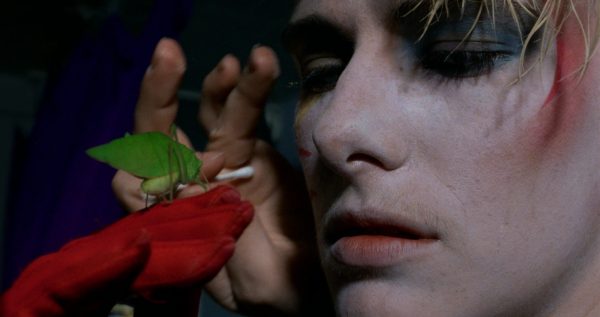
Slava Tsukerman’s $500,000-budgeted Liquid Sky is as bizarre as it gets: a tiny flying saucer the size of a typical dinner plate lands on a Manhattan rooftop. Apparently, the aliens – shown entirely in thermal-style POV shots – are here for the heroin, only to discover better potency comes from human endorphins and pheromones. This is especially true after the protagonist – a drug-addicted fashion model named Margaret (Anne Carlisle) – engages in sex with different partners, where these aliens would harvest their brain chemicals before they mysteriously vaporize into thin air.
Some might find Liquid Sky unwatchable, given the awfully flat acting style and robotic-sounding line delivery. The score can be a real aural challenge to bear, with its repetitive yet ear-piercing synthesizer music that’s more annoying than catchy. And yet, there’s something unique about Liquid Sky, from Anne Carlisle’s colorful dual performance as the bisexual Margaret and the cisgender Jimmy, to the movie’s vibrant Day-Glo expressionism that captures the 1980s New York City New Wave subculture. Liquid Sky made its mark as the most financially successful independent film a year after its initial film festival debut, tripling the profit to $1.7 million during its theatrical run.
Android (1982)
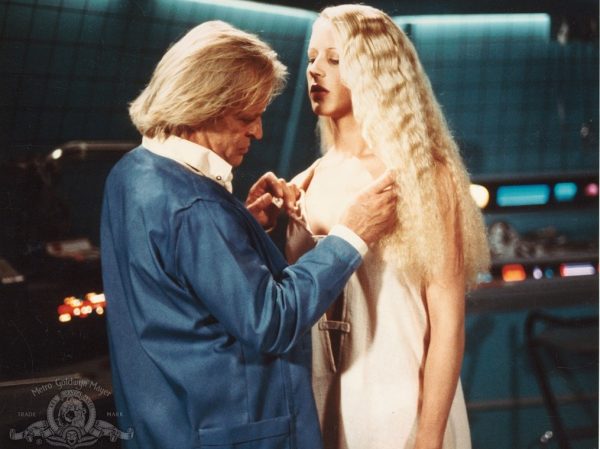
Released in the same year as Blade Runner, Aaron Lipstadt’s low-budget exploration of artificial intelligence frames an intimate story in a chamber-drama style rather than Ridley Scott’s more encompassing genre-defining sci-fi classic. The AI in question refers to the titular android code-named Max 404 (Don Keith Opper, who would later play Charlie McFadden in the Critters quadrilogy), a lonely assistant to his creator, Dr. Daniel (Klaus Kinski, nailing the cold, calculated mad-scientist role), who spends time between fulfilling his daily routines and learning more about human behavior.
Opper, who also co-wrote the screenplay, portrays the android character with wide-eyed innocence and full of curiosity. The latter is especially true when the story introduces three characters – Maggie (Brie Howard), Keller (Norbert Weisser), and Mendes (Crofton Hardester) – on board the space station, who all turn out to be wanted fugitives recently broken out of a prison transport ship. Max is particularly attracted to Maggie, triggering his desire for love and sexual awakening. Lipstadt navigates his movie in a deliberate slow-burn, prioritizing Max’s arc and his subsequent experience with the three escaped convicts before culminating in a tense standoff.
Battle Beyond the Stars (1980)
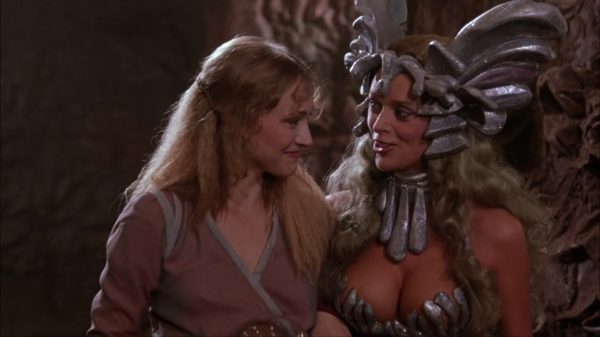
Imagine turning Seven Samurai/The Magnificent Seven into a deep-space adventure, and what you get is Battle Beyond the Stars. The story follows a young farmer named Shad (Richard Thomas) from the farming planet of Akir, who’s on an intergalactic mission to recruit a ragtag group of mercenaries to help save his home from the tyrannical warlord, Sador (John Saxon, who enjoys chewing the scenery in his gleefully over-the-top antagonist role). John Sayles, no stranger to writing genre films such as Piranha and Alligator, cleverly balances his screenplay with tongue-in-cheek pulpiness, sardonic humor, and colorful characters.
For the latter, he introduces mercenaries with distinct personalities, namely Robert Vaughn’s stoic assassin Gelt and George Peppard’s laid-back Space Cowboy from Earth. Battle Beyond the Stars also paved the way for future Hollywood legends, including then-young James Cameron’s impressive art direction and special effects in the miniature work, and James Horner’s orchestral score. The movie was quite a box office hit back in the day and even landed five Saturn Awards nominations, winning the Golden Scroll of Merit for Outstanding Achievement for Sybil Danning, who plays the fearless Valkyrie warrior St. Exmin.
Galaxy of Terror (1981)
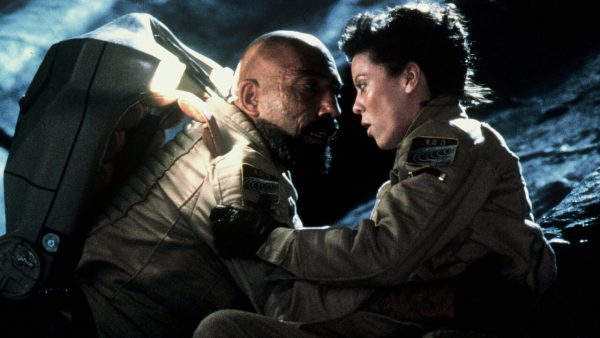
Produced under Roger Corman’s New World Pictures, Galaxy of Terror capitalizes on the then ground-breaking success of Ridley Scott’s Alien, albeit in a low-budget B-movie version. Bruce D. Clark, who also co-wrote the screenplay with Marc Siegler, shared similar storytelling traits, complete with a stressed-out working-class space crew – among the cast are Edward Albert, Erin Moran, and pre-Nightmare on Elm Street’s Robert Englund – on a dangerously desolate planet.
But Galaxy of Terror is far from a shot-for-shot copycat, as Clark approaches his movie from a uniquely surreal sci-fi horror angle. The threat doesn’t come from a terrifying species like Alien, but instead from a mysterious, psychic-like monolithic pyramid that can manifest the characters’ respective fears into psychological weapons. For instance, Englund’s anxiety-driven Ranger ends up confronting the dark side of his own doppelganger. The movie again showcases James Cameron’s earlier work in production design and second-unit direction, creating a distinctly atmospheric visual aesthetic that would become the blueprint for his future sci-fi career in The Terminator and Aliens.
The Brother from Another Planet (1984)
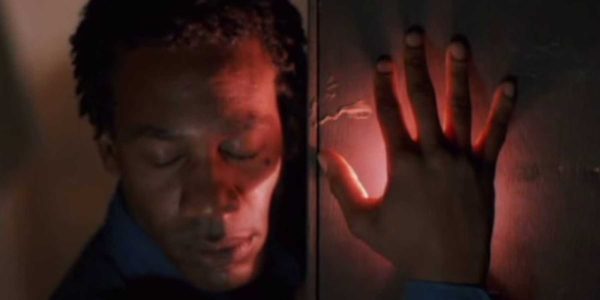
“The Brother” in John Sayles’ sci-fi dramedy refers to Joe Morton’s mute alien protagonist, who looks like a human with a mini-afro hairstyle except for his webbed, three-toed feet. Crash-landed on Earth, specifically at Ellis Island, he doesn’t come across as a formidable alien but rather a harmless, interstellar refugee.
Given the nature of his character, Morton relies entirely on expressive acting through body language and countenance to communicate with people he meets. Sayles, who also wrote his own screenplay, frames his sci-fi angle as an allegory for marginalization and the immigrant experience, focusing on Morton’s role’s daily struggles in the city as an undocumented outsider.
Sayles incorporates a mix of fish-out-of-water comedy and sharp social satire, showcasing how the Brother’s inability to speak means he must rely on others to react to him and make sense of everything he encounters. Morton’s performance is one for the ages, already proving his range as a character actor long before he appeared in major Hollywood blockbusters in Terminator 2: Judgment Day and Speed. The movie also features hilariously deadpan supporting turns from Sayles and David Strathairn as a pair of men in black arriving on Earth to track down the Brother.
Xtro (1983)
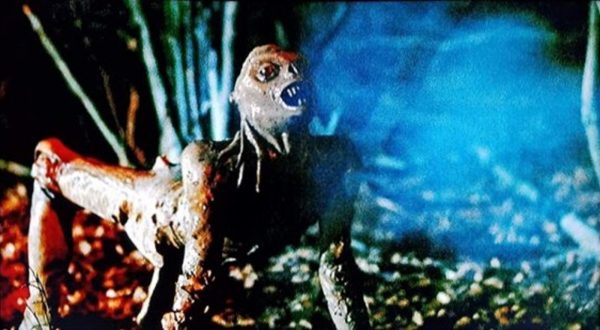
Writer-director Harry Bromley Davenport isn’t kidding that “some extra-terrestrials aren’t friendly” in the Xtro poster’s tagline, as he embraces the video nasty of early Cronenberg-like body horror (the controversially graphic alien birth scene comes to mind) with mean-spirited sci-fi elements. The latter can be seen with Sam (Philip Sayer), the father who was previously abducted and returns as a different person – a hollow shell of a human vessel that’s already taken over by an alien entity, coming home to wreck his family from the inside out. This includes instigating a toxic dynamic with his guilt-ridden wife (Bernice Stegers), who ends up moving on with another man (Danny Brainin) after initially mistaking Sam for abandoning his family.
He also systematically corrupts his young son, Tony (Simon Nash), through a vicious bite mark that turns the once-innocent boy into a cold-blooded murderer, even granting him the paranormal ability (the part where Tony brings the toy soldier and clown to sinister life-size is an integrated movie-making magic using mime-like physical acting, glossy makeup effects, and forced perspective). Davenport went on to direct two more Xtro movies, though narratively unconnected to the 1983 original, including Xtro II: The Second Encounter and Xtro 3: Watch the Skies in the ‘90s.
Bad Taste (1987)
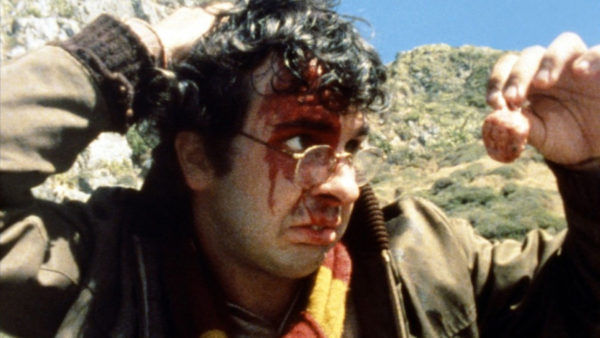
Long before Peter Jackson crossed over to the mainstream cinema, the New Zealand director first got his start making an ultra-low-budget feature. The result? A multi-genre hybrid called Bad Taste that gleefully combines the science-fiction oddity with splatter horror and dark comedy. The story is as bizarre as it gets: Aliens in human disguises, led by Lord Crumb (a scenery-chewing Doug Wren), arrive in the (fictional) small town of Kaihoro, not to invade Earth but to harvest the entire human population for their interstellar fast-food chain.
Humanity’s only hope lies with a quartet of Astro Investigation and Defence Service (AIDS) agents (Peter Jackson, Pete O’Herne, Terry Potter, and Mike Minett), who must save the town. Except they come across as rather incompetent and bumbling fools, far from the typical Hollywood-style action heroes, as Jackson turns his characters into deliberate punching bags of visual comedy.
True to the DIY spirit of indie filmmaking, Jackson doesn’t let limited funds deter his vision, going so far as to design his own special effects (the rubbery alien masks were actually made with liquid latex baked in his mother’s kitchen oven) and an improvised camera rig using makeshift everyday home products. Bad Taste also famously pushes the extreme stomach-churning gore and violence to the limit, which is certainly not for everyone.
Repo Man (1984)
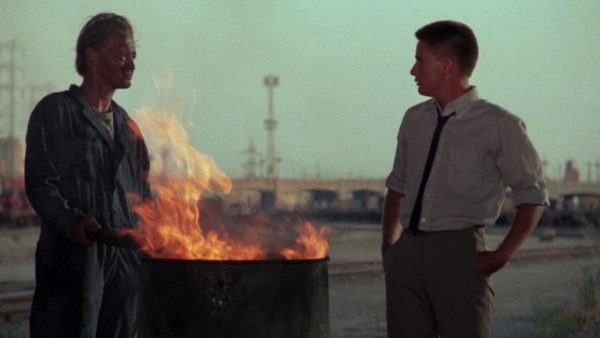
Alex Cox’s satirical take on the 1980s Reagan-era sociopolitical culture in Repo Man encompasses everything from the illusion of choice through generic branding (e.g., plain F&B packaging literally labelled as “Food” and “Drink”) to hardcore punk culture and nuclear anxiety. At the heart of this genre-defying hybrid is Otto (Emilio Estevez), a disillusioned punk rocker who just got fired from his low-wage supermarket job. His life has been in shambles ever since, until he meets a middle-aged guy named Bud (Harry Dean Stanton), who later offers him the titular job as a repo man.
Beyond the coming-of-age angle surrounding Otto’s deliberately messy character arc and the darkly comedic path, Cox also incorporates the bizarre sci-fi elements: a dazed-looking nuclear scientist (Fox Harris’ J. Frank Parnell) drives a vintage Chevrolet Malibu around town, transporting a MacGuffin that emits a blinding glow and vaporizes anyone who opens the trunk.
Scanners (1981)
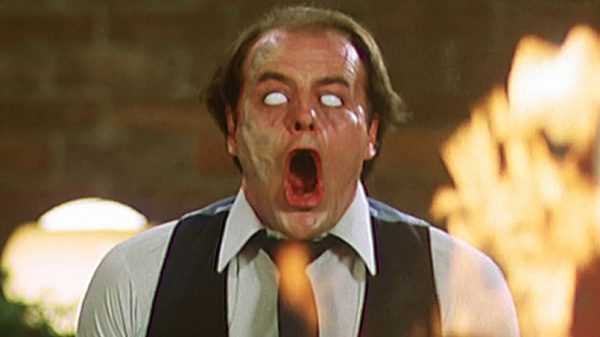
Writer-director David Cronenberg pushes the familiar concept of telepathy in Scanners into a gruesome body horror. And that is turning the psychic superpower into a mind-controlling biological weapon, which can be seen in Michael Ironside’s coldly detached antagonist role as Darryl Revok. At one point, he demonstrates his unique ability as a “scanner” by severely overwhelming the mind of a rival participant until the latter’s head blows up into pieces.
A triumph of practical special effects, the famous exploding head scene was made possible using a combination of a life-sized cast of the actor’s head made from soft gelatine and latex, eclectic fillings, a 12-gauge shotgun blast, and a reverse-editing technique. Cronenberg’s typically clinical direction fits right in his wheelhouse, framing his sci-fi horror cult classic as an allegory for the Big Pharma conspiracy and tech paranoia. Scanners has since spawned two sequels and the Scanner Cop spin-offs in the ‘90s, despite none of them involving Cronenberg in any creative capacity.
The Quiet Earth (1985)
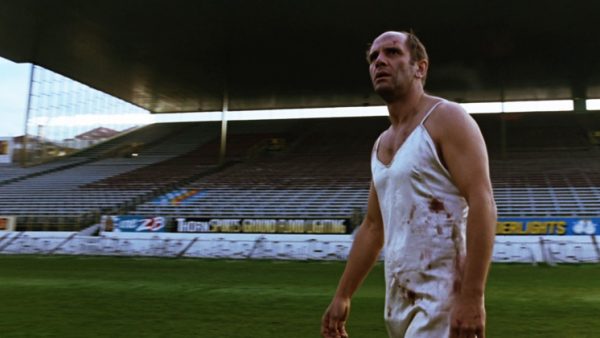
Hailed from New Zealand, Geoff Murphy’s The Quiet Earth forgoes the standard post-apocalyptic sci-fi angle in favor of a deeply existential narrative approach leaning on minimalist filmmaking. The title in question refers to the apparent “last man on Earth” character, a scientist named Zac Hobson (Bruno Lawrence) who finds himself awakened to the fact that humanity has been wiped out.
The movie may have been a low-budget production, but that doesn’t stop Murphy from convincingly depicting the post-apocalyptic setting by filming the empty streets of Auckland and Hamilton in the early morning hours to mimic the look and feel of a desolate landscape. Lawrence carries most of his incredible one-man performance, relying purely on expressive acting and body language. Murphy would go on to direct mainstream features like Young Guns II, Freejack, and Under Siege 2: Dark Territory throughout the ‘90s.
What are your favour indie sci-fi movies of the 1980s? Let us know on our social channels @FlickeringMyth…
Casey Chong